Brazil
Paraty
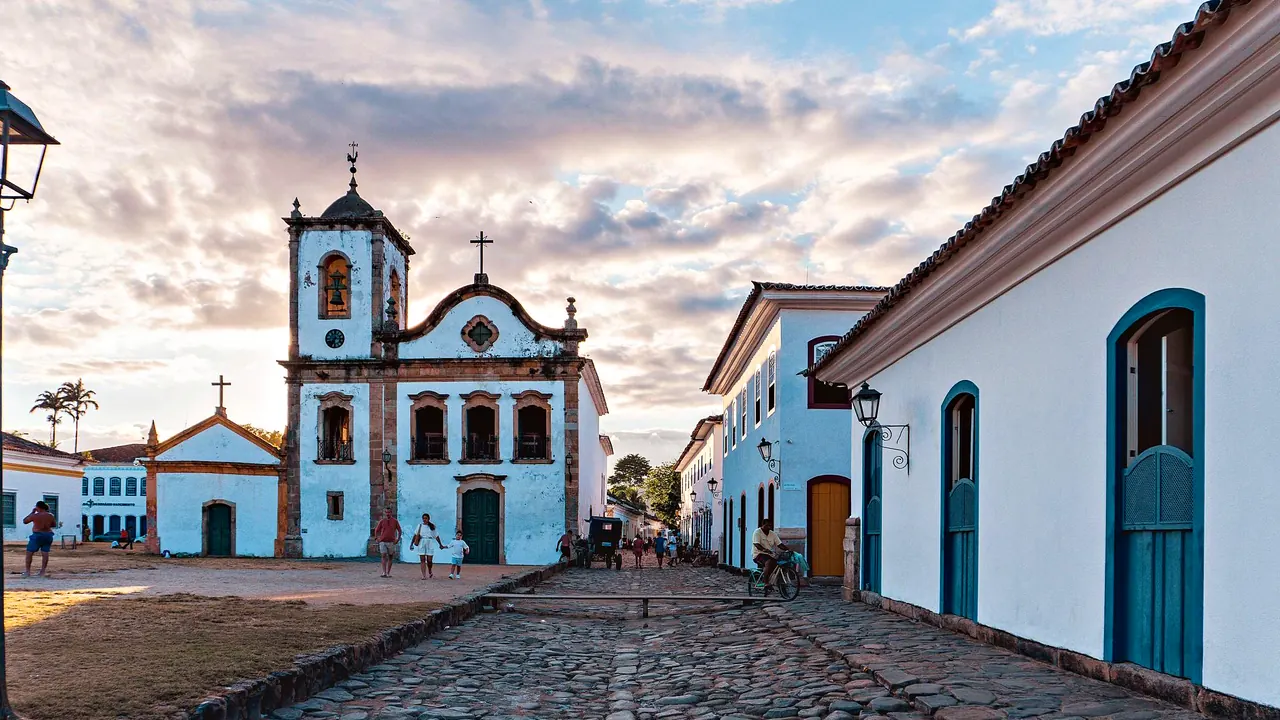
The Santa Rita church and a cobbled street at dusk
- Nature & outdoors84
- Beaches78
- Affordable cities57
Photo: Gabriel Zachi, Pexels License
Match
48
Every category weighted equally
- Beach & sun53
- Culture & arts43
- Food & nightlife43
- Family trip53
- Outdoors54
- Relax & unwind52
- Shopping & style44
- On a budget49
Paraty in twelve categories
Our verdict on each, scored 0 to 100 against the same fixed benchmark cities, so a score means the same thing on every page.
Beaches & swimming. Scores 78 out of 100.
Food & drink. Scores 45 out of 100.
Culture & sights. Scores 50 out of 100.
Nightlife. Scores 30 out of 100.
Nature & outdoors. Scores 84 out of 100.
Day trips. Scores 35 out of 100.
Good for families. Scores 45 out of 100.
Getting around. Scores 45 out of 100.
Shopping & style. Scores 38 out of 100.
Affordability. Scores 57 out of 100.
Live music & performing arts. Scores 25 out of 100.
Wellness & relaxation. Scores 44 out of 100.
Paraty category by category
Beaches & swimming
78The beaches on the town's own edge, Pontal and Jabaquara, are shallow, murky and mostly somewhere to sit at a kiosk. The real beach life happens on the water. Schooners and small boats go out daily to the islands and coves of the Bay of Paraty, stopping at little sandy beaches backed by forest, where the green water is calm and warm, about 26°C in summer and rarely below 22°C.
The other half of the story is Trindade, about forty minutes south, where wider beaches face the open sea and a sheltered rock pool behind the boulders at Cachadaço suits swimmers who want clear, still water. Further out, Praia do Sono and its neighbours need a forest walk or a boat. Summer brings heavy afternoon rain, and the cooler, drier months are often the nicer time to swim.
Food & drink
45Paraty eats from the sea and the local coastal tradition: grilled fish, shrimp, and azul marinho, a fish stew turned blue-green by unripe banana. The historic centre is lined with candlelit restaurants in old townhouses, a few of them genuinely ambitious, while simpler fish places and beach kiosks serve the boats and the bay.
The drink that matters is cachaça. The town was once famous across Brazil for it, and several small distilleries in the hills outside town welcome visitors for tastings. Beyond that the range is narrow: there are no great markets or street food culture, and in the centre much of the cooking is aimed at visitors.
Culture & sights
50The historic centre is the reason to come: a grid of whitewashed eighteenth and nineteenth century houses with coloured doors and window frames, laid over big, uneven stone paving that the sea floods at the highest spring tides. The town grew rich shipping gold from Minas Gerais, and the whole ensemble, with its surrounding forest and bay, is listed by UNESCO.
The sights themselves are few and small. The baroque church of Santa Rita by the waterfront is the classic image, with the churches of Nossa Senhora dos Remédios, Rosário and Dores nearby, and the Forte Defensor Perpétuo on a hill north of town. Most visitors see it all in an unhurried day of walking, which is much of the pleasure.
Nightlife
30Evenings in Paraty revolve around a long dinner in the old town followed by caipirinhas in a bar with a guitarist in the corner. On weekends and in the summer season the streets of the centre stay busy late, and Trindade draws a younger, backpacker crowd with beach-side parties. There are no clubs to speak of, and outside long weekends and the high season the town goes quiet early.
Nature & outdoors
84Paraty sits where the Serra do Mar drops straight into the sea, and the setting is the point. Behind the town, steep slopes of Atlantic rainforest climb into the Serra da Bocaina national park, crossed by stretches of the old cobbled Gold Trail and full of waterfalls and swimming holes, including a smooth rock face locals slide down into the pool below.
In front lies a calm bay scattered with dozens of green islands, ideal for kayaking, stand-up paddling and snorkelling. Saco do Mamanguá, a long, narrow inlet often called a tropical fjord, is reached by boat and has a steep hike up Pão de Açúcar for the view. South towards Trindade, coastal trails link wild beaches through the Serra da Bocaina's coastal reserves. Expect heat, humidity and summer downpours.
Day trips
35Paraty is somewhere to stay rather than a base for touring. The easy outing is Trindade, a fishing village turned beach settlement about forty minutes south. Over the mountains, about an hour and a half by road, Cunha is a quiet hill town known for its wood-fired pottery studios, and Ubatuba, a little over an hour along the coast, is a larger beach town.
Ilha Grande is reachable via Angra dos Reis and a ferry, but it is a long day and most people give it a night or two of its own. Rio de Janeiro and São Paulo are both about four or five hours away, too far for a day out.
Good for families
45Children enjoy what Paraty offers naturally: boat days with swimming stops on calm island beaches, rock pools at Trindade and the waterfall slide in the hills. Brazilian culture is warm towards children and the pace is easy. There are no zoos, aquariums or parks made for them, though, and the old town's huge, uneven paving stones defeat pushchairs and test small ankles. Summer heat and downpours need planning around.
Getting around
45The historic centre is closed to cars and small enough to cross in ten minutes, but its large, rounded stones make walking slow, and the lowest streets flood briefly at high spring tides. Beyond the centre things spread out. The bay beaches are reached by boat from the quay, local buses run to Trindade and nearby villages, and the waterfalls, distilleries and Mamanguá landing are easiest with a taxi, a hired car or a tour. Many visitors arrive by long-distance bus from Rio or São Paulo.
Shopping & style
38Shopping in Paraty means browsing the old town's art galleries, craft shops and small boutiques of linen clothing and handmade jewellery, many set in colonial shopfronts. Local cachaça in hand-labelled bottles, indigenous basketry and painted wooden boats are the typical things to bring home. It makes a pleasant evening stroll, but there is no fashion shopping, no department store and no real market.
Affordability
57By Brazilian standards Paraty is not cheap. Pousadas in the historic centre and the better restaurants charge resort prices, and long weekends, Carnival, New Year and the literary festival push rooms up sharply. For visitors from Europe or North America it still feels moderate: shared schooner trips, local buses, beach kiosks and simple fish restaurants are good value, and staying just outside the old town costs noticeably less.
Live music & performing arts
25Live music in Paraty is mostly informal: samba, bossa nova and MPB played in restaurants and bars around the old town in the evenings. The town has a long tradition of puppet theatre, and its calendar of festivals brings concerts and street performance, but for most of the year there is little formal programme to attend. The best-known event, the international literary festival, is about books and talks rather than performance.
Wellness & relaxation
44Paraty has no bathing tradition, and spa treatments come from pousadas and a few massage and yoga studios rather than anything of its own. What it does offer is pace. Out of season the car-free old town is quiet, mornings are slow, and the best pousadas are garden houses with hammocks and pools. Further out, small retreats in the forest and on the shore of the bay suit people who want to switch off completely.
When should you go?
Pick a month to see what it is like. The climate figures are measured averages, not a forecast.
Paraty in July
Daytime high, °C
Rainfall in the month, mm
The whole year
Shaded against this city’s own year: the deepest cell is its best month for that figure and the palest its weakest.
Where the figures come from
Paraty has no weather station within reach, so its figures come from a gridded climate model rather than a measured record, and read a broad area rather than the city itself.
Temperature and rainfall are climate normals, averaged over the years shown. Paraty: 1991-2020 normals, TerraClimate 4 km grid at the town, no weather station within 90 km.
Before you go
| Measure | Paraty |
|---|---|
| Official language | Portuguese |
| Currency | Brazilian Real (BRL) |
| Sockets | CN60 Hz |
| Driving side | Right |
| Time zone | UTC-3 |
| Emergency number | Police 190, ambulance 192, fire 193 |
| Elevation | 5 m |
| Main airport | Rio de Janeiro Galeão – Tom Jobim International Airport (GIG)157 km from centre54 non-stop destinations |
| Public holidays this year | 14 days |
By the numbers
| Measure | Paraty |
|---|---|
| City population | 47,668 |
| People per km² | 51 |
| Museums within 10 km | 2 |
| UNESCO World Heritage sites within 50 km | 1 |
| Swim season, months above 21 °C | 12 months |
Compare Paraty with
Every comparison with a written verdict behind it.