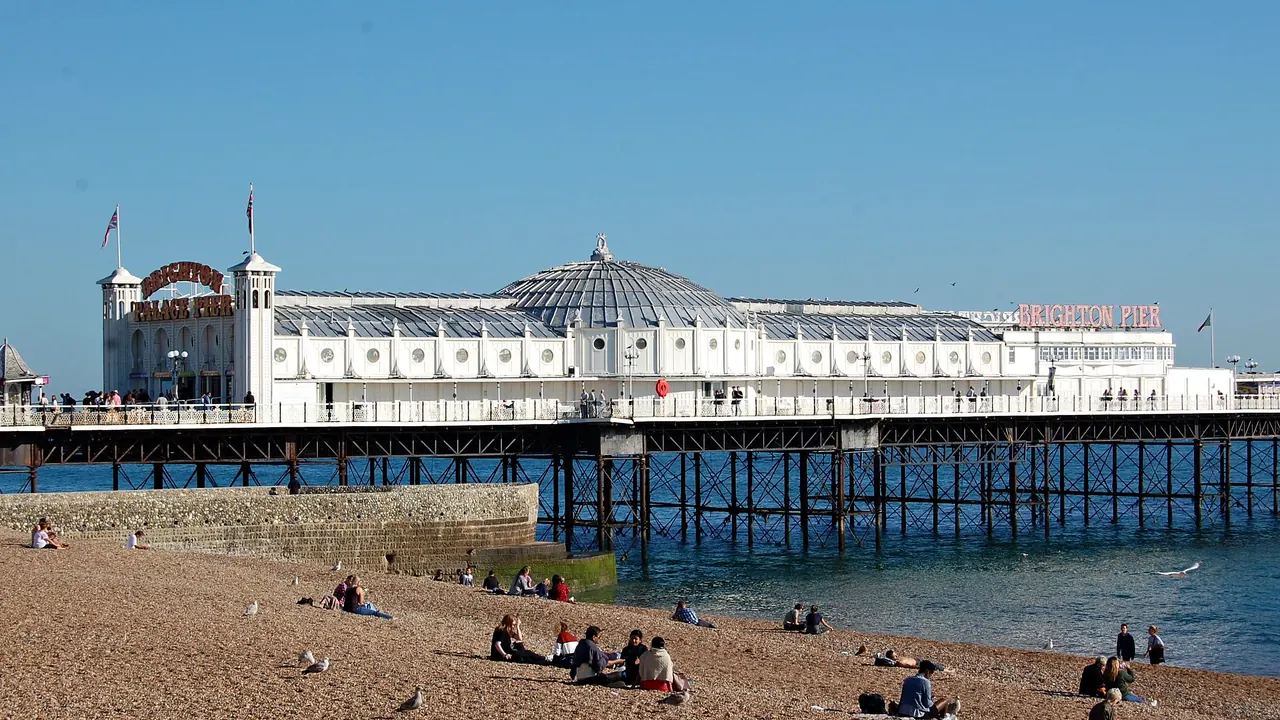
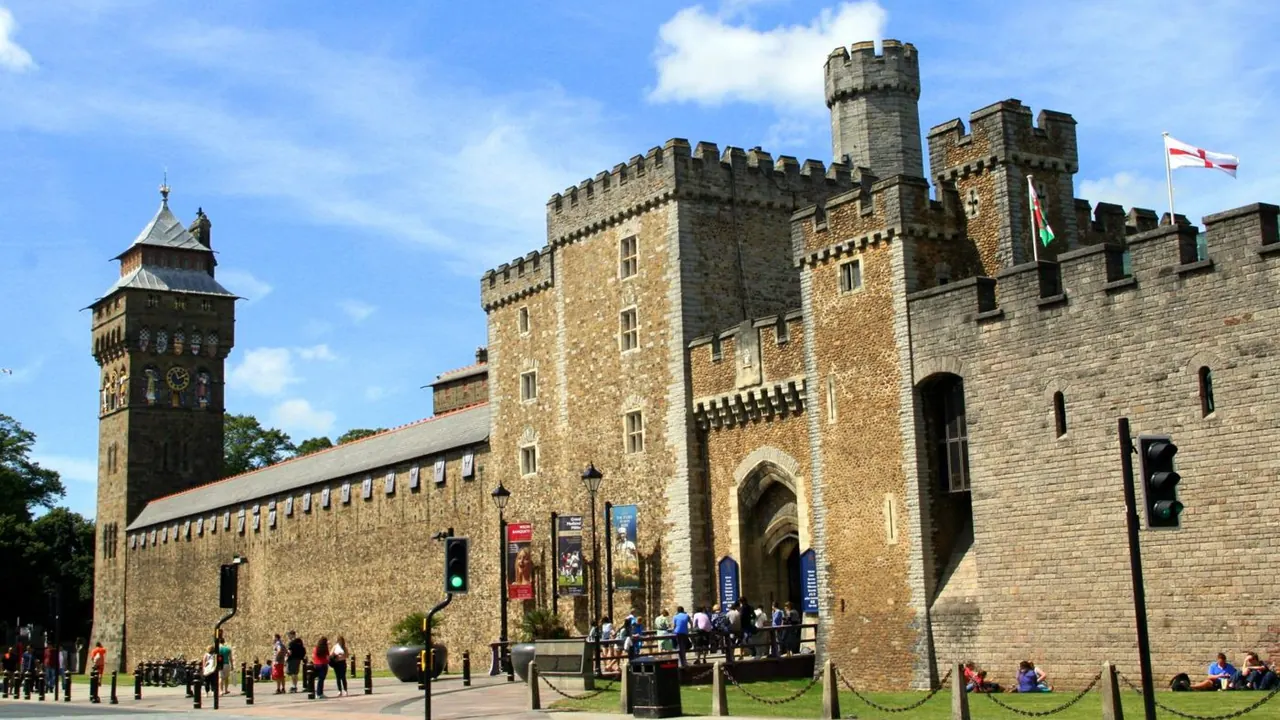
Photos: Brighton by Hassocks5489, CC0; Cardiff by Tevfik Teker, CC BY 3.0, cropped.
Brighton or Cardiff?
Our verdict in twelve categories, each scored against the same fixed benchmark cities, and the climate month by month, so you can choose for your trip.
Choose Brighton for
- nightlife
- food and drink
- beaches
Brighton suits a trip built around evenings and wandering. The pubs and bars fill every night of the week, Kemptown's LGBTQ+ scene is one of the oldest in Britain, and the North Laine packs independent kitchens, coffee and vintage shops into a few walkable streets. The shingle seafront and the South Downs are right on the doorstep, and London is close enough for a day out. You pay more for your room, though.
Choose Cardiff for
- prices
- culture and sights
- nature and the outdoors
Cardiff is the better pick for sightseeing on a tighter budget. A castle stands in the middle of town and the national museums are free, St Fagans among them. Caerphilly, Castell Coch and Tintern are all close, so a few days here go further on history and less on hotels. It also has a distinctly Welsh character, and the Brecon Beacons are near enough for a proper hill walk. The nightlife is mostly a weekend affair and there is no beach in the city.
Scoreboard
Twelve categories on one fixed scale from 0 to 100. The shaded stretch is the gap between the two.
Your match
Pick a travel style or drag the sliders, and both match scores follow your weighting.
Wins on nightlife and food and drink with your weighting.
Wins on prices and culture and sights with your weighting.
What matters to you?
Category by category
What the scores mean for a trip.
Beaches & swimming
Brighton's beach is the town's front garden. It runs the whole seafront from the Marina to Hove, with lifeguards on the central stretches in summer. It is steep shingle and the water is cold, but you can walk straight onto it and swim when the sea is calm.
Cardiff has no beach in the city at all, and the brown tidal water at the Bay is for looking at, not swimming in. Oddly, its nearest beach is sandier than Brighton's: Barry Island is half an hour away by train, and the Gower's wide sands are a longer drive. In Cardiff the beach is an outing you plan, whereas in Brighton it is part of every day.
Food & drink
Brighton eats better day to day, because so many independent places are packed into the North Laine, the Lanes and Kemptown. It is known for vegetarian and vegan cooking, the coffee is taken seriously, and the stalls under the seafront arches sell oysters and whelks. Sussex sparkling wine from the Downs turns up on most wine lists.
Cardiff has fewer standout places, but it has more regional food of its own. In the Victorian market you can try Welsh cakes from the griddle, cawl and laverbread with cockles. The better bistros are out in Pontcanna and Canton, and City Road has a long run of Middle Eastern and South Asian cooking. Skip the waterfront, which is mostly chains.
Culture & sights
Cardiff has more to fill a sightseeing itinerary. The castle's Roman and Norman walls enclose lavish Victorian Gothic rooms, and the National Museum in the white stone civic centre holds a strong collection of French Impressionists. St Fagans can take most of a day, and Llandaff Cathedral and the Senedd add more.
Brighton has one sight of real fame, the Royal Pavilion, with its Indian domes and chinoiserie rooms. Beyond that its appeal is in the streets: Regency crescents in Kemptown and Hove, the alleys of the Lanes, and the skeleton of the West Pier. It is a place for strolling rather than for a list of sights.
Nightlife
Brighton has the deeper and more varied night out, and it keeps going through the week. Kemptown's long-established LGBTQ+ scene, the clubs in the seafront arches and the craft-beer rooms of the North Laine all appeal to different crowds. Hove and the Level offer quieter bars if West Street's stag parties are too much.
Cardiff's night out centres on weekends: big groups on St Mary Street, and a sea of red on rugby international days. Womanby Street, opposite the castle, is where the smaller alternative bars are. Midweek is quiet, and you can get the measure of the scene in a couple of nights.
Nature & outdoors
Both cities sit right beside fine countryside, but the scenery is different. From Brighton you can take a short bus ride onto the chalk grassland of the South Downs at Devil's Dyke. The Seven Sisters cliffs are about forty minutes east, and you can windsurf, kitesurf or sail off the seafront. The scenery is gentle, the sea is close by, and most of it is reachable without a car.
Cardiff's countryside is more mountain than coast. Bute Park leads onto the Taff Trail up the valley, and about an hour's drive away Pen y Fan, the highest peak in southern Britain, makes a proper moorland half-day hike. Choose it if you want hills, and pack for rain either way.
Day trips
Brighton makes the stronger base, mainly because London is about an hour away by fast train. Around that, Sussex adds Lewes, Arundel's castle, Chichester and Fishbourne's Roman palace, medieval Rye and the battlefield at Battle. There are vineyard tastings on the Downs as well.
Cardiff's day trips are mostly about castles: Caerphilly and Castell Coch are close, and Chepstow and Tintern Abbey pair well together. Bath and Bristol are about an hour across the Severn, and Blaenavon and the Big Pit show the mining past. There is plenty to do, just less variety than from Brighton.
Good for families
Both work well with children, but in different ways. Brighton is the old-fashioned seaside: rides and arcades on the Palace Pier, the Victorian aquarium, Volk's Electric Railway and paddling at Hove Lagoon. The downsides are the cold shingle, the steep climb to the station and a centre that gets rowdy late on weekend nights.
Cardiff is better for museums than amusements. Techniquest's hands-on science, the farm animals at St Fagans and rowing boats on Roath Park lake are all easy outings, and the flat centre is easy going with a pushchair. There is no aquarium or zoo, and the sand at Barry Island is a train ride away.
Getting around
Brighton is the easier city to get around on foot and by bus. The station, the North Laine, the Lanes, the Pavilion and the sea are all within walking distance, though the climb back up from the seafront is steep, and frequent buses reach Hove and the edge of the Downs. In town a car is more trouble than help, and you only need one for the outlying villages and country houses.
Cardiff's centre is flat and mostly pedestrianised, but the Bay is half an hour away on foot, or a short ride by shuttle train or water taxi along the Taff. There is no metro or tram, so the suburbs and St Fagans depend on buses. Local trains cover Caerphilly and Barry Island, but you will need a car for the Brecon Beacons and the more remote castles.
Shopping & style
Both are better for independents than for luxury, but the setting differs. Brighton's North Laine is a grid of narrow streets full of vintage clothes, records, retro furniture and comics, and the Lanes add jewellers and antique dealers. It rewards a slow browse.
Cardiff puts its independents under the glass roofs of Victorian and Edwardian arcades, right next to the chains on Queen Street. Lovespoons, Welsh blankets and slate make souvenirs you won't find in Brighton, though most people get round it all in an afternoon.
Affordability
Cardiff is the easier city on your wallet, mostly because of the rooms. Hotels are moderate on ordinary weekdays, though rugby internationals and stadium concerts push prices sharply up. The free national museums and short, cheap train trips keep the rest of the costs down.
Brighton's hotels are expensive, especially on summer weekends when Londoners and party groups fill the seafront. Going midweek or in winter helps a lot. Once you have a room, the beach, the piers and the Downs cost nothing, but a run of rail day trips adds up.
Live music & performing arts
Both cities have a lot on stage for their size, but the style differs. Brighton's big moment is each May, when the Brighton Festival and England's largest fringe take over theatres, churches and pubs. The rest of the year it relies on the Dome, the Theatre Royal, a strong comedy scene and music in rooms above pubs, and Glyndebourne's opera is twenty minutes away in summer.
Cardiff's strength is its national institutions. Welsh National Opera is based at the Wales Millennium Centre, the BBC National Orchestra of Wales is in the city, and the music and drama college puts on frequent performances. Add the small band venues on Womanby Street and a strong tradition of choral singing.
Wellness & relaxation
Neither city is a place to come for spas, and neither has a bathing tradition. In both, relaxing means a hotel or day spa. Brighton does have a ritual of its own: the year-round dawn sea swimmers and the seafront saunas where they warm up, plus quiet out-of-season walks past the beach huts on Hove's lawns.
Cardiff's calm is in its slow pace: an unhurried morning in a Pontcanna café or a stroll along the Taff through Bute Park, which suits a gentle few days better than a real rest.
When should you go?
Pick your month. The climate figures are measured averages, not a forecast.
Brighton in July
Cardiff in July
Daytime high, °C
Rainfall in the month, mm
Where the figures come from
Brighton has no rain gauge within 25 km of the centre, so its rainfall comes from a gridded climate dataset read at the city rather than from a gauge further away.
Brighton's sunshine is measured 37 km from the centre, at London Gatwick Airport.
Temperature and rainfall are climate normals, averaged over the years shown. Brighton: 1999-2020 (sunshine 1981-2010, rainfall 1991-2020) normals, Shoreham Airport (10.3 km from centre). Cardiff: 1991-2020 (sunshine 1981-2010, rainfall 1981-2010) normals, Cardiff-Wales Airport (14.9 km from centre).
The two cities are almost the same temperature all year. Both reach about 20°C in July and August and drop to around 8°C in midwinter, and summer brings much the same amount of sunshine to each. Neither ever gets too hot for walking the streets, and neither gets properly warm for a beach day. In Brighton the Channel reaches about 17°C in August and September, which counts as a brisk swim on a calm day. Cardiff's sea is no warmer to speak of, and the city has no beach to swim from anyway.
Rain is the real difference. Brighton is the drier of the two from spring right through summer, at around 61mm in August, while Cardiff gets about 80mm that month and is noticeably wetter all year. Both get wet and dark from October to December, so for each city the best stretch for walking and outdoor plans is late spring to early autumn. In Brighton that window is more reliable.
Which traveller are you?
For a food and nightlife trip, Brighton wins. Its small independent kitchens, vegetarian cooking and serious coffee sit right beside pubs, cocktail bars and late clubs that stay busy on weeknights too. Cardiff's going out is mostly a weekend affair.
On a trip on a tight budget, choose Cardiff. Hotels are cheaper on ordinary weekdays, the National Museum and St Fagans are free, and the train fares to castles and the coast are low. Brighton charges heavily for rooms, especially on summer weekends.
For a culture and arts trip, Cardiff gives you more to see: a castle in the centre, Impressionist paintings in the National Museum, a whole village of rebuilt Welsh buildings, and Welsh National Opera. Brighton has the remarkable Royal Pavilion, but beyond it there is less to visit.
Before you go
| Measure | Brighton | Cardiff |
|---|---|---|
| Official language | English | English |
| Currency | Pound Sterling (GBP) | Pound Sterling (GBP) |
| Sockets | G230 V, 50 Hz | G230 V, 50 Hz |
| Driving side | Left | Left |
| Time zone | UTC, UTC+1 in summer | UTC, UTC+1 in summer |
| Emergency number | 112 or 999 | 112 or 999 |
| Elevation | 22 m | 41 m |
| Main airport | London Gatwick Airport (LGW)37 km from centre224 non-stop destinations | Cardiff International Airport (CWL)15 km from centre30 non-stop destinations |
| Public holidays this year | 8 days | 8 days |
By the numbers
| Measure | Brighton | Cardiff |
|---|---|---|
| City population | 134,293 | 383,536 |
| People per km² | 1,624 | 2,734 |
| Museums within 10 km | 11 | 9 |
| UNESCO World Heritage sites within 50 km | 0 | 1 |
| Swim season, months above 21 °C | None | None |
Where else could you go?
Every comparison below shares a destination with this one, so you can follow Brighton or Cardiff somewhere new.
- Bristolvs Cardiff
- Bathvs Cardiff
- Londonvs Brighton
- Oxfordvs Brighton
- Oxfordvs Cardiff
- Cambridgevs Brighton