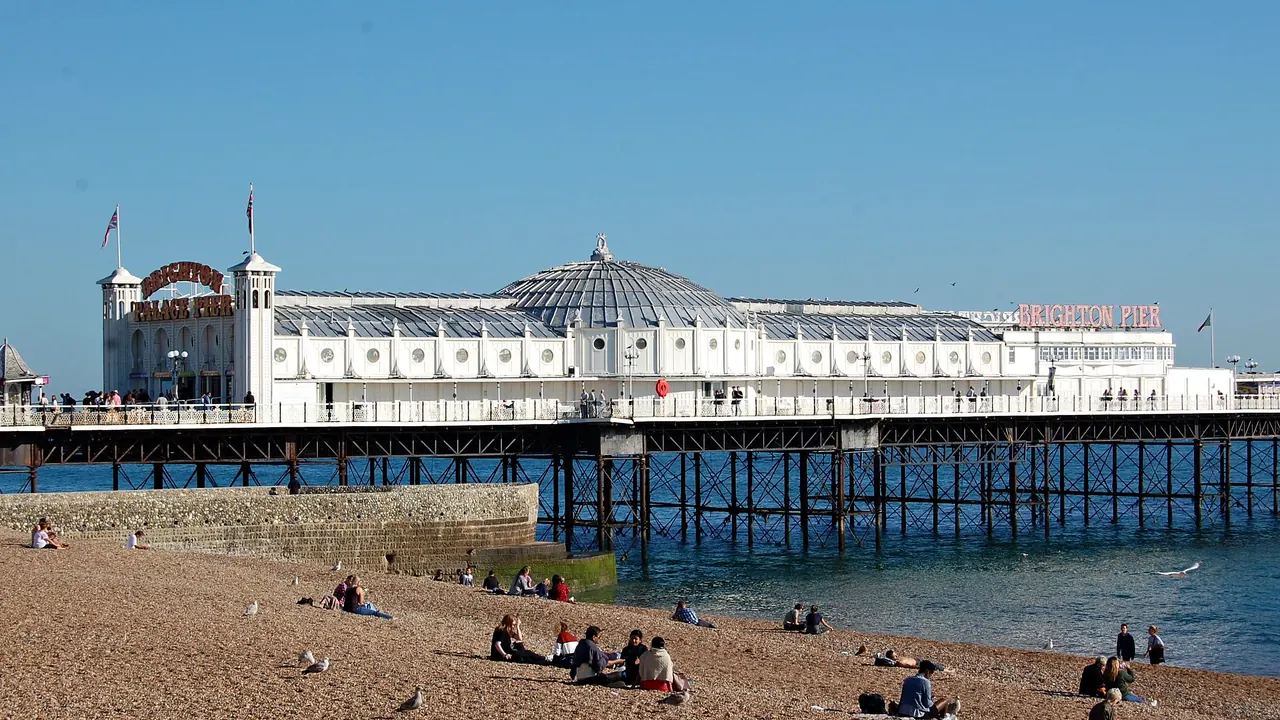
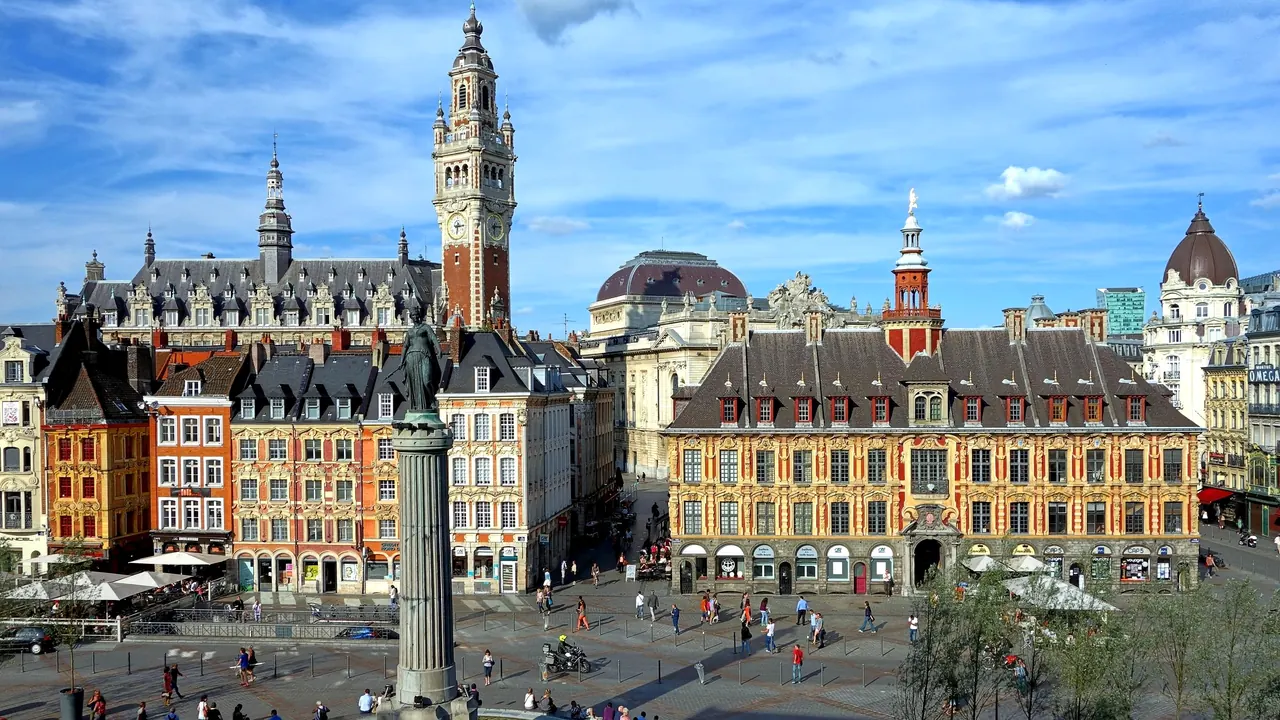
Photos: Brighton by Hassocks5489, CC0; Lille by Velvet, CC BY-SA 3.0, cropped.
Brighton or Lille?
Our verdict in twelve categories, each scored against the same fixed benchmark cities, and the climate month by month, so you can choose for your trip.
Choose Brighton for
- nature and the outdoors
- beaches
- families
Brighton suits a trip built around the sea, the hills and a good night out. You get a proper English seafront, the South Downs on the edge of town and some of the liveliest pubs, clubs and LGBTQ+ venues in Britain. Families after a traditional seaside outing, walkers and people who like festivals and comedy will find more to do here. It costs more, and the beach is shingle with cold water.
Choose Lille for
- culture and sights
- prices
- day trips
Lille is the better pick for art, history and cooking on a moderate budget. The Palais des Beaux-Arts and the Flemish baroque streets of Vieux-Lille give it more to see than Brighton, the estaminets serve a real regional cuisine, and the two stations next to the old town put Brussels, Bruges, Paris and the battlefields within easy reach. You won't find a beach or much countryside here, but it's a very good base for a week of day trips.
Scoreboard
Twelve categories on one fixed scale from 0 to 100. The shaded stretch is the gap between the two.
Your match
Pick a travel style or drag the sliders, and both match scores follow your weighting.
Wins on nature and the outdoors and beaches with your weighting.
Wins on culture and sights and prices with your weighting.
What matters to you?
Category by category
What the scores mean for a trip.
Beaches & swimming
Brighton has a real seafront and Lille doesn't, so this one is clear. Brighton's shingle runs from the Marina to Hove, has lifeguards on the central stretches in summer and gives the town a place to gather on warm days. The water is cold, and you get pebbles rather than sand.
From Lille, the nearest beach is the wide, windy sand at Malo-les-Bains in Dunkirk, about an hour away by train. It makes a bracing day out rather than beach time on your doorstep.
Food & drink
Lille edges ahead because it has a cuisine of its own. Its wood-panelled estaminets serve carbonnade in beer, potjevleesch and the cheese-heavy welsh, Maroilles cheese turns up everywhere, and the evenings run on Belgian and northern French beer. The Sunday market at Wazemmes adds a multicultural food market.
Brighton has no regional dish to match that. What it has instead is a wide spread of small independent kitchens in the North Laine and Kemptown, strong vegetarian and vegan cooking, serious coffee, seafood stalls under the seafront arches and Sussex sparkling wine.
Culture & sights
Lille has more to see. The Palais des Beaux-Arts is a major collection by any standard, and Vieux-Lille, the Vieille Bourse, the UNESCO-listed belfry and Vauban's citadel easily fill two or three days. With art museums in Roubaix and Villeneuve-d'Ascq as well, it rewards visitors who like galleries.
Brighton has one outstanding building, the Royal Pavilion, with its Indian domes and chinoiserie interiors. Around it are Regency crescents, the piers and the alleys of the Lanes, which are better for wandering than for sightseeing.
Nightlife
Brighton is the bigger night out, and for many visitors it's part of the reason to go. Kemptown's long-established LGBTQ+ scene, the clubs in the seafront arches and busy pubs every night of the week give it a range Lille can't match. Friday and Saturday on West Street can get rowdy.
Lille's evenings revolve around students and beer. Cheap bars on Rue Masséna fill up on Thursdays, and Vieux-Lille has calmer cellar bars. There are few clubs, and for a really late night people have traditionally headed over the Belgian border.
Nature & outdoors
Brighton wins easily. The South Downs National Park starts at the city's edge, with chalk grassland at Devil's Dyke and the South Downs Way for walking and riding. The cliffs of the Seven Sisters and Beachy Head are close, and the sea adds sailing and kitesurfing.
Around Lille, French Flanders is flat and farmed. The Citadel park, the towpaths along the Deûle and short climbs on Mont Noir or Mont des Cats are pleasant, but for the coastal cliffs at Cap Blanc-Nez you need a long day.
Day trips
Brighton is a strong base in its own right. London is about an hour away by fast train, Lewes and its castle are a quarter of an hour up the line, and Arundel, Chichester with the Roman palace at Fishbourne, medieval Rye and the abbey at Battle are all within reach. Portsmouth's Historic Dockyard is further west. The vineyards and Wealden country houses are easier by car.
Lille reaches further still, because its stations are so well connected. Brussels is about half an hour away, Ghent and Bruges about an hour, and Paris an hour by TGV. London is close enough by Eurostar for a long day, so one hotel can cover three countries. Closer to home there are the arcaded squares of Arras, Amiens Cathedral, the Louvre-Lens and the Western Front memorials at Vimy and the Somme.
Good for families
Brighton is the more natural choice with children. It has the pier rides, the Victorian aquarium, Volk's Electric Railway and paddling at Hove Lagoon, all within a walk of each other. The cold shingle beach is better for skimming stones than building sandcastles.
In Lille, children's days centre on the Citadel park, with its small zoo, playgrounds and flat paths, plus the hands-on science centre reachable by metro. The biggest family attractions, a large zoo park in Belgium and the aquarium at Boulogne, mean a day out.
Getting around
Both are easy without a car, but in different ways. Brighton's centre is compact and served by a dense bus network, but the climb back up to the station and the streets around Kemptown is steep.
Lille is flat, and its two stations sit right by the old town. The automated VAL metro and the tram reach Roubaix and Tourcoing, though the cobbles of Vieux-Lille are hard on the feet.
Shopping & style
There's not much between them, but they suit different shoppers. Brighton is for browsing independent shops: vintage clothes, records and alternative fashion in the North Laine, and jewellers and antique dealers in the Lanes.
Lille has more mainstream shopping, with chains on Rue Neuve, the Euralille mall and a few luxury labels in Vieux-Lille. Its standout is the Braderie in early September, when the whole city turns into a flea market.
Affordability
Lille is noticeably easier on the wallet. Rooms are fairly priced for most of the year apart from the Braderie and big trade fairs, and estaminet meals and the metro are cheap.
In Brighton, accommodation is the main expense, especially on summer weekends when the guesthouses fill up. Once you've paid for the room, the beach, piers and Downs are free, but train fares add up if you plan several day trips.
Live music & performing arts
Brighton has the busier calendar, thanks largely to May, when the Brighton Festival and England's largest fringe take over theatres, churches and pubs for weeks. The rest of the year there's a deep live-music circuit, strong comedy and the Theatre Royal, with Glyndebourne's opera festival in the Downs nearby.
Lille's programme is more classical and more institutional. The Opéra de Lille, the Orchestre National de Lille and the Théâtre du Nord offer a dependable season of opera, symphonic music and drama.
Wellness & relaxation
Neither is a place to come for relaxation, and neither has a bathing tradition. Brighton's version is the year-round dawn sea swim followed by a seafront sauna, or a quiet off-season walk past the beach huts on Hove's lawns.
Lille offers slow afternoons in Vieux-Lille's tea rooms. For actual thermal baths, take the short train ride to Saint-Amand-les-Eaux.
When should you go?
Pick your month. The climate figures are measured averages, not a forecast.
Brighton in July
Lille in July
Daytime high, °C
Rainfall in the month, mm
Where the figures come from
Brighton has no rain gauge within 25 km of the centre, so its rainfall comes from a gridded climate dataset read at the city rather than from a gauge further away.
Brighton's sunshine is measured 37 km from the centre, at London Gatwick Airport.
Temperature and rainfall are climate normals, averaged over the years shown. Brighton: 1999-2020 (sunshine 1981-2010, rainfall 1991-2020) normals, Shoreham Airport (10.3 km from centre). Lille: 1991-2020 normals, Lille (7.8 km from centre).
The two have similar weather but different summers. Brighton peaks at around 20°C in July and August, and the sea is warmest in August and September at about 17°C. On a calm day you can swim, but it's bracing. Lille is inland and gets warmer in high summer, reaching about 24°C. That's comfortable for walking the streets and rarely too hot. Both get about the same sunshine, with the most from May to August, and winters in both are short-dayed and cold, with highs in single figures.
Rain is where they differ most. Brighton is fairly dry from spring through summer but gets wet from October to December, when the monthly total passes 100mm. Lille's rain is spread more evenly, so summer showers are a little more likely there and autumn is less of a downpour. For Brighton, aim for May to September. Lille is pleasant from April to October.
Which traveller are you?
On a culture and arts trip, Lille is the better choice. The Palais des Beaux-Arts has Flemish masters and Goya, Vieux-Lille is full of carved baroque façades, and La Piscine and the LaM are a metro ride away. Brighton's main sight is the Royal Pavilion.
For an outdoors trip, choose Brighton. A bus takes you up onto the South Downs for walking and mountain biking, the Seven Sisters cliffs are under an hour away, and you can windsurf or paddleboard off the seafront. Around Lille the countryside is flat farmland and canal towpaths.
On a tight budget, Lille goes further. Hotel rooms are reasonable for most of the year, and estaminet meals, beer and the metro cost little. In Brighton the rooms are the problem, especially on summer weekends when Londoners and party groups fill the seafront.
Before you go
| Measure | Brighton | Lille |
|---|---|---|
| Official language | English | French |
| Currency | Pound Sterling (GBP) | Euro (EUR) |
| Sockets | G230 V, 50 Hz | CE230 V, 50 Hz |
| Driving side | Left | Right |
| Time zone | UTC, UTC+1 in summer | UTC+1, UTC+2 in summer |
| Emergency number | 112 or 999 | 112 |
| Elevation | 22 m | 17 m |
| Main airport | London Gatwick Airport (LGW)37 km from centre224 non-stop destinations | Lille Airport (LIL)8 km from centre61 non-stop destinations |
| Public holidays this year | 8 days | 11 days |
By the numbers
| Measure | Brighton | Lille |
|---|---|---|
| City population | 134,293 | 238,246 |
| People per km² | 1,624 | 6,846 |
| Museums within 10 km | 11 | 23 |
| UNESCO World Heritage sites within 50 km | 0 | 6 |
| Swim season, months above 21 °C | None | - |
Where else could you go?
Every comparison below shares a destination with this one, so you can follow Brighton or Lille somewhere new.