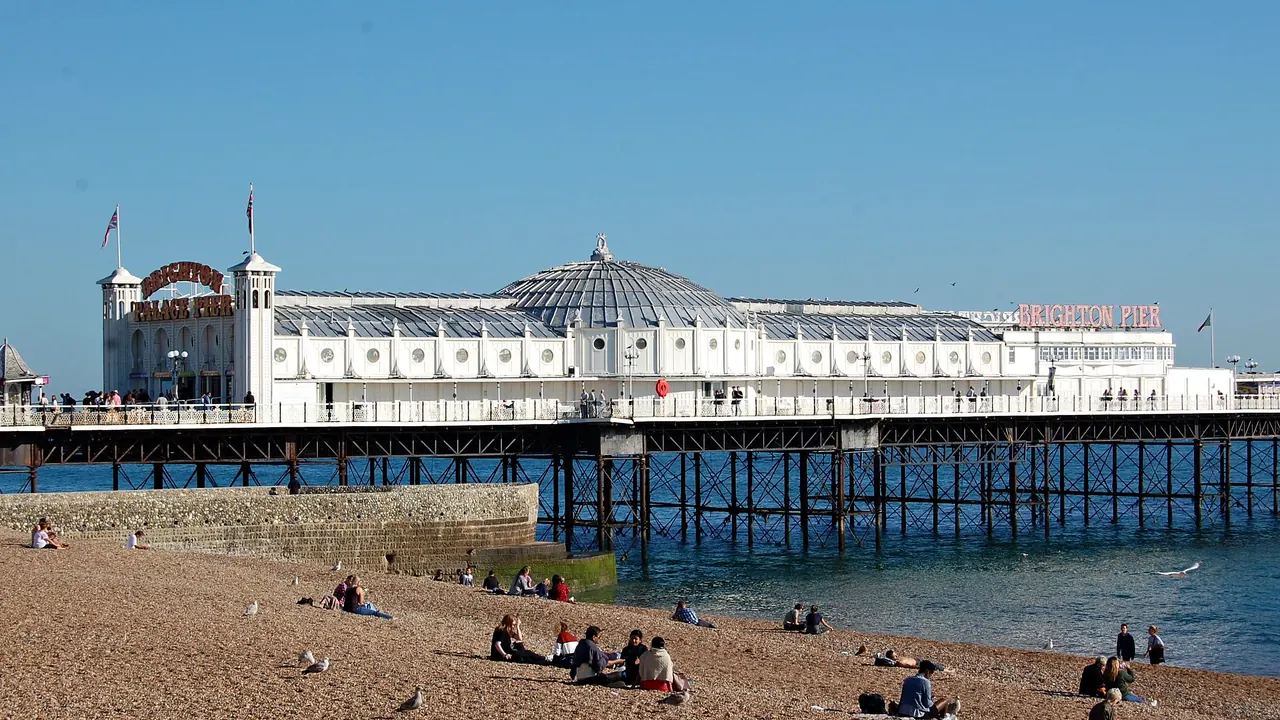
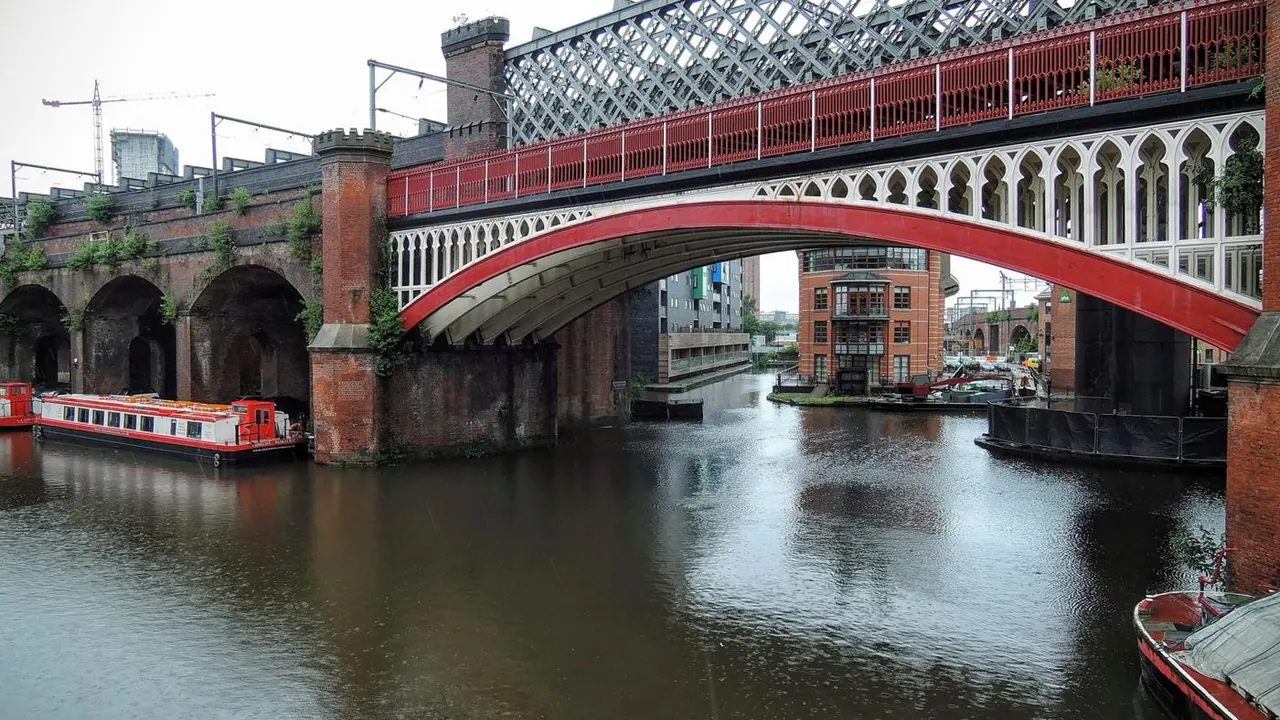
Photos: Brighton by Hassocks5489, CC0; Manchester by IIya Kuzhekin, CC BY 3.0, cropped.
Brighton or Manchester?
Our verdict in twelve categories, each scored against the same fixed benchmark cities, and the climate month by month, so you can choose for your trip.
Choose Brighton for
- beaches
- wellness
- getting around
Brighton suits a seaside break with the town on your doorstep. You can walk from the station to the shingle in a quarter of an hour, browse the North Laine and the Lanes, and still have the chalk Downs and the Seven Sisters cliffs within easy reach. It is the better pick if you want sea air, a late-summer swim, a quiet midweek stroll along Hove's lawns and a centre small enough to manage without ever checking a map.
Choose Manchester for
- live music and the arts
- nightlife
- shopping
Manchester is the stronger choice for travellers who come for music, nights out and a bigger city around them. Its gig circuit, two orchestras and the Northern Quarter's bars give it more depth after dark, and its shops cover far more ground. Rooms are usually a little cheaper and most of the big museums are free, which helps a longer stay. The Peak District moors start at the edge of town for anyone who wants a day of hill walking between gigs.
Scoreboard
Twelve categories on one fixed scale from 0 to 100. The shaded stretch is the gap between the two.
Your match
Pick a travel style or drag the sliders, and both match scores follow your weighting.
Too close to call, 2 points apart
Wins on beaches and wellness with your weighting.
Wins on live music and the arts and nightlife with your weighting.
What matters to you?
Category by category
What the scores mean for a trip.
Beaches & swimming
In Brighton the beach is part of everyday life. The shingle runs unbroken from the Marina past the Palace Pier to Hove, central stretches are lifeguarded in season, and calm late-summer days are good for a cold swim. It is steep pebble rather than sand, and grey days are common, but it is right there.
Manchester has nothing comparable. The Irish Sea coast at Formby's dunes or Blackpool's promenade is a train ride of an hour or more away, and it makes a bracing walk with fish and chips rather than a reason to pack swimwear.
Food & drink
Brighton is the better town for a vegetarian or a coffee lover, and Manchester the better one for a curry or a pint. Brighton's small independent kitchens fill the North Laine and Kemptown, with a long tradition of meat-free cooking, serious roasteries, oysters and whelks from the stalls under the seafront arches, and Sussex sparkling wine on the lists.
Manchester offers range rather than a seaside identity. There is dim sum in one of Britain's larger Chinatowns, cheap curries along Rusholme's Wilmslow Road, food halls in converted Ancoats mills, and craft beer brewed under the railway arches. Fine dining is a small part of the picture in both.
Culture & sights
Brighton has one showpiece, and Manchester has a whole row of places to go inside. The domed, chinoiserie-filled Royal Pavilion is the sight that would be famous anywhere. Beyond it, Brighton is a town for wandering past the Regency crescents of Kemptown and Hove and through the alleys of the Lanes.
Manchester has no landmark to match the Pavilion, but more to fill the days. The neo-Gothic Town Hall, the John Rylands Library, the Science and Industry Museum and a string of mostly free galleries tell the story of the first industrial city over a couple of solid days.
Nightlife
Both are proper going-out cities, but Manchester has more depth. Its dance-music history still shapes the Northern Quarter's basement bars and DJ rooms, Canal Street's Gay Village is among Europe's oldest, and autumn and winter bring big warehouse raves with headline DJs.
Brighton runs it close in spirit. Kemptown has one of Britain's largest LGBTQ+ scenes, and the clubs on West Street and in the seafront arches stay open late, but there is less of it. The seasons also differ. Brighton is busiest on summer weekends, while Manchester quietens once the students leave in summer.
Nature & outdoors
Brighton's countryside is smooth chalk grassland and white sea cliffs. Manchester's is dark gritstone and open moor. From Brighton a short bus ride reaches the South Downs at Devil's Dyke, the Seven Sisters are about forty minutes east, and windsurfing and paddleboarding go on right off the seafront.
Manchester's hills are rougher and wilder. Trains along the Hope Valley line reach Edale in under an hour for Kinder Scout and the ridge from Mam Tor, and the Lake District is within reach too. Expect low cloud and mud more often than on the Downs.
Day trips
Both are excellent bases for day trips, and the choice is really between the south and the north. Brighton has London about an hour away by fast train, plus Lewes, Arundel's castle, the cobbled streets of Rye and the Norman Conquest battlefield at Battle.
Manchester sits at the hub of the northern rail network. Liverpool's waterfront, Chester's Roman walls and York Minster are all an easy train ride away, and Chatsworth, Buxton and the Lake District towns make fine longer outings.
Good for families
Children are about equally well served, but the fun depends on the weather. Brighton is the classic outdoor seaside outing: rides on the Palace Pier, the Victorian aquarium, Volk's Electric Railway and paddling at Hove Lagoon, all best on a dry day.
Manchester has the rainy-day cover. There are hands-on engines at the Science and Industry Museum and dinosaurs at the Manchester Museum, both free, plus an aquarium and a real-snow slope out at the Trafford Centre and football stadium tours. Both centres get rowdy late on weekend nights.
Getting around
Brighton is the easier place to get around because you rarely need transport at all. The station, the North Laine, the Lanes, the Pavilion and the sea are all within a short walk, buses fill the gaps, and the only real drawback is the climb back up to the station.
Manchester's centre is flat and walkable too, but more of what visitors want is further out. That means taking the yellow Metrolink trams to Salford Quays, Old Trafford or the airport, and the trams get crowded on event days. Rain also makes walking between areas less appealing.
Shopping & style
Manchester is the better shopping city because it covers everything. It has the big high-street names and two upmarket department stores around Exchange Square, designer labels on King Street, the multi-storey stalls of Afflecks in the Northern Quarter and the vast Trafford Centre on the edge of town.
Brighton is narrower but has real character. The North Laine is a rewarding few streets of vintage clothes, records and retro furniture, and the Lanes add jewellery and antiques. Anyone after luxury brands or a big department store will find little there.
Affordability
Neither city is cheap, but Manchester is the gentler on the budget. Weeknight rooms are reasonable as long as your dates avoid a home match or a big arena concert. Curry houses and food halls keep meals cheap, and the main museums are free.
Brighton's rooms are dearer, above all on summer weekends when Londoners and party groups fill the seafront. Once you have somewhere to stay, though, the beach, the piers and the Downs cost nothing, and you will spend little on transport.
Live music & performing arts
Manchester is the stronger city for live performance through the year. It has a deep gig circuit, from tiny Northern Quarter rooms up to a vast arena. The Hallé and the BBC Philharmonic play at the Bridgewater Hall, and the Royal Exchange stages theatre in the round inside the old cotton trading hall.
Brighton's big moment is May, when the Brighton Festival and England's largest fringe take over theatres, churches and pubs for weeks. Outside that season it relies on the Dome, the Theatre Royal and a good comedy circuit, with Glyndebourne's summer opera close by in the Downs.
Wellness & relaxation
Neither city is built for a restorative break, but Brighton comes closer. Out of season it slows right down, with long walks past Hove's beach huts, cafés looking out to sea, and a hardy crowd who swim at dawn and then warm up in seafront saunas.
Manchester stays loud and busy, and its grand Victoria Baths are for looking at rather than swimming in. Real calm there means a train to the Peak District or the old spa town of Buxton.
When should you go?
Pick your month. The climate figures are measured averages, not a forecast.
Brighton in July
Manchester in July
Daytime high, °C
Rainfall in the month, mm
Where the figures come from
Brighton has no rain gauge within 25 km of the centre, so its rainfall comes from a gridded climate dataset read at the city rather than from a gauge further away.
Brighton's sunshine is measured 37 km from the centre, at London Gatwick Airport.
Temperature and rainfall are climate normals, averaged over the years shown. Brighton: 1999-2020 (sunshine 1981-2010, rainfall 1991-2020) normals, Shoreham Airport (10.3 km from centre). Manchester: 1991-2020 normals, Manchester Airport (14.8 km from centre).
The two cities have very similar temperatures, with daytime highs of about 20°C in July and August and cool, damp winters. In practice Brighton's summer is the more useful one. It is sunnier, with about 210 hours of sun a month in midsummer, and drier from spring to early autumn. The Channel is at its warmest, around 17°C, in August and September, so late summer is the time for a bracing swim. From October the rain arrives in earnest, peaking at about 105mm in December, and the seafront turns grey and windswept.
Manchester's rain is spread more evenly through the year. Summer is noticeably wetter than on the south coast and there is less sunshine, but winter is a little less soggy than in Brighton. Late spring and summer are the best months for walking the streets and heading out to the Peak District. Because so much of the city's appeal is indoors, in its museums, venues and bars, it holds up better than Brighton from November to February.
Which traveller are you?
On a beach and sun trip, Brighton is the clear choice. The shingle starts at the bottom of town, lifeguards watch the central stretches in season and the summers are sunnier. Manchester's nearest coast is a train ride away and too cold for most swimmers.
For a culture and arts trip, the sights are evenly matched but different in kind. Manchester has a run of free galleries, from the Whitworth to the Pre-Raphaelites, and a Hallé concert or a Royal Exchange play most evenings. Brighton has the Pavilion, Regency streets and its May festival.
On a trip with a tight budget, Manchester is easier to manage. You can spend a wet day going from one free gallery to the next and get a cheap lunch in Chinatown. Brighton is best out of season, when the Undercliff Walk to Rottingdean makes a free day out.
Before you go
| Measure | Brighton | Manchester |
|---|---|---|
| Official language | English | English |
| Currency | Pound Sterling (GBP) | Pound Sterling (GBP) |
| Sockets | G230 V, 50 Hz | G230 V, 50 Hz |
| Driving side | Left | Left |
| Time zone | UTC, UTC+1 in summer | UTC, UTC+1 in summer |
| Emergency number | 112 or 999 | 112 or 999 |
| Elevation | 22 m | 38 m |
| Main airport | London Gatwick Airport (LGW)37 km from centre224 non-stop destinations | Manchester Airport (MAN)15 km from centre211 non-stop destinations |
| Public holidays this year | 8 days | 8 days |
By the numbers
| Measure | Brighton | Manchester |
|---|---|---|
| City population | 134,293 | 547,627 |
| People per km² | 1,624 | 4,737 |
| Museums within 10 km | 11 | 28 |
| UNESCO World Heritage sites within 50 km | 0 | 2 |
| Swim season, months above 21 °C | None | None |
Where else could you go?
Every comparison below shares a destination with this one, so you can follow Brighton or Manchester somewhere new.
- Liverpoolvs Manchester
- Londonvs Brighton
- Yorkvs Manchester
- Oxfordvs Brighton
- Cambridgevs Brighton
- Bathvs Brighton