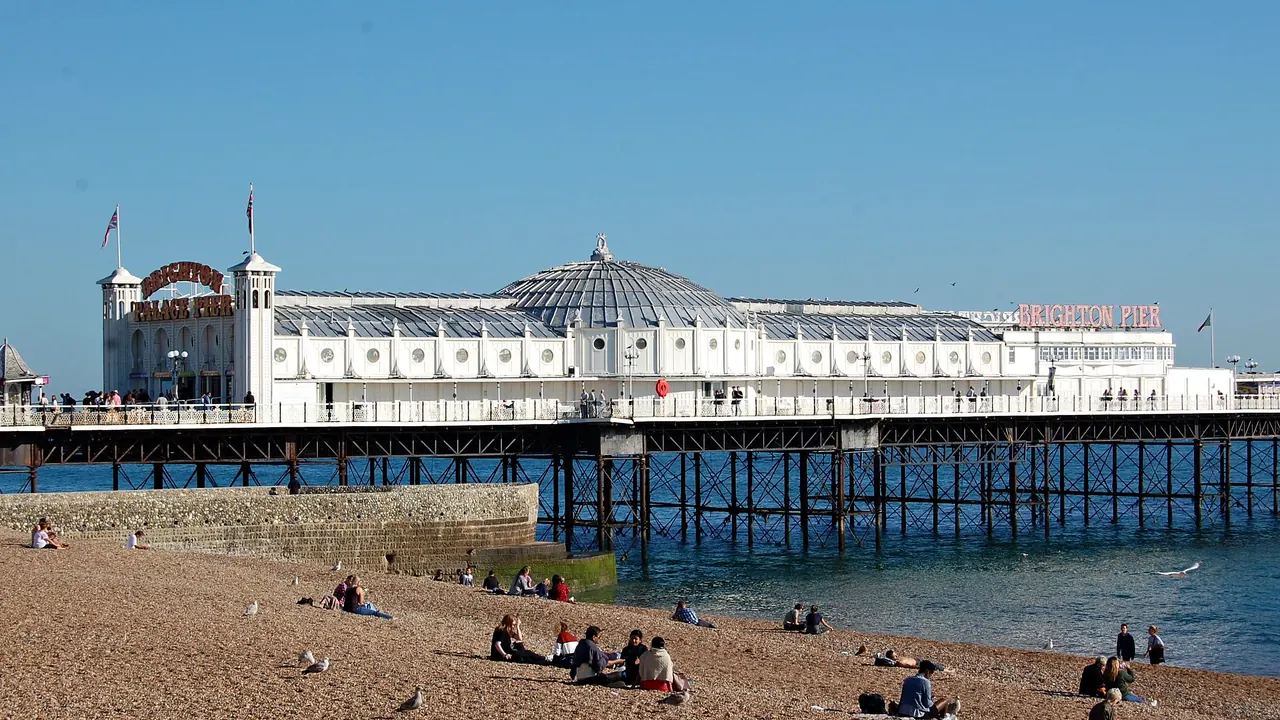
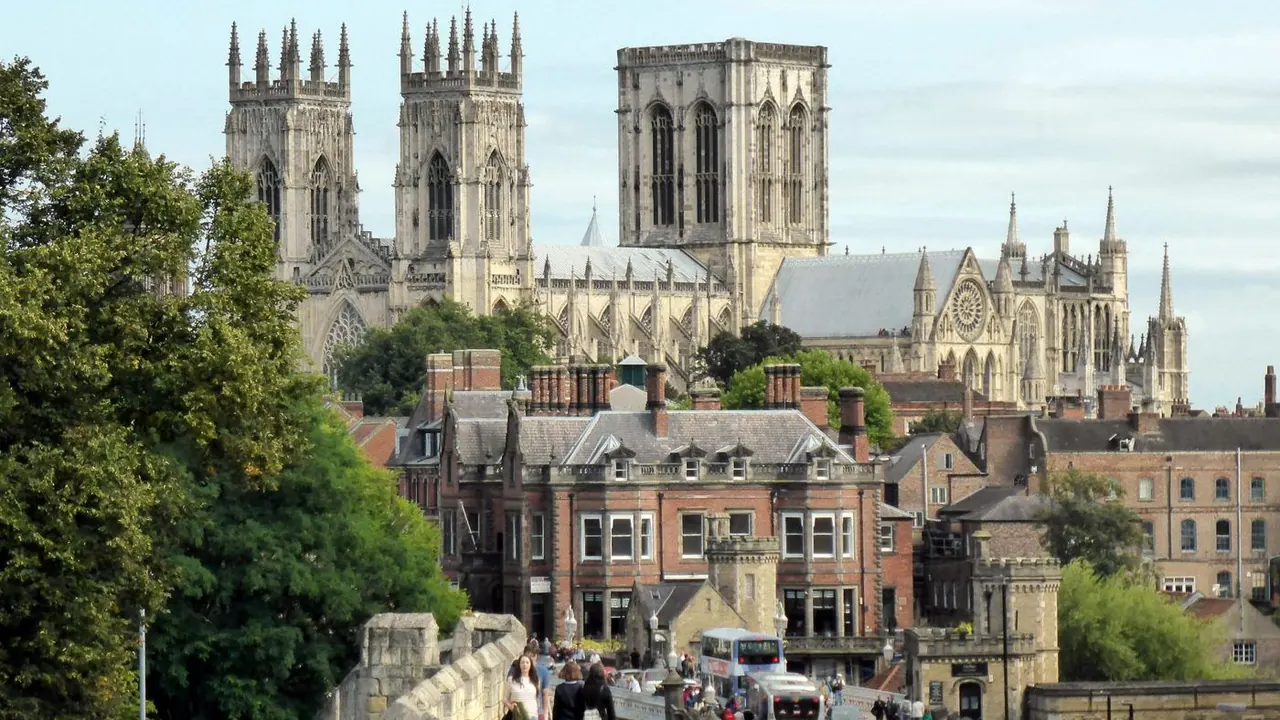
Photos: Brighton by Hassocks5489, CC0; York by PAUL FARMER, CC BY-SA 2.0, cropped.
Brighton or York?
Our verdict in twelve categories, each scored against the same fixed benchmark cities, and the climate month by month, so you can choose for your trip.
Choose Brighton for
- nightlife
- beaches
- live music and the arts
Brighton suits travellers who want the sea, a late night and a lively stage in one compact town. The seafront, the clubs and LGBTQ+ bars of Kemptown, the independent kitchens and vintage shops of the North Laine, and a May festival season all give it more energy than York. Add the chalk hills of the South Downs on the edge of town and London about an hour away, and it makes a sociable, outdoorsy base for a long weekend or more.
Choose York for
- culture and sights
- wellness
- prices
York is the stronger pick if history is what you're after. Its Gothic Minster, walkable medieval walls, Viking excavations and railway museum fit into a flat centre that you can cross on foot in minutes, and there's far more to see than in Brighton. Evenings are quieter and mostly spent in old pubs, the food is traditional, and the moors, the Dales and Durham lie within reach for days out.
Scoreboard
Twelve categories on one fixed scale from 0 to 100. The shaded stretch is the gap between the two.
Your match
Pick a travel style or drag the sliders, and both match scores follow your weighting.
Wins on nightlife and beaches with your weighting.
Wins on culture and sights and wellness with your weighting.
What matters to you?
Category by category
What the scores mean for a trip.
Beaches & swimming
Brighton has the beach on its doorstep. Shingle runs the whole seafront from the Marina to Hove, there are lifeguards in season, and the sea is calm enough for a cool swim in late summer. York has no water to swim in at all, and a beach day means taking the train to Scarborough or Filey.
Oddly, it's York's coast that has the sand, with Scarborough's two sandy bays. The North Sea there is colder than the Channel, though, so neither city offers more than a brisk dip.
Food & drink
Brighton eats more widely. Dozens of small independent kitchens are packed into the North Laine, the Lanes and Kemptown, there's a long-standing vegetarian and vegan scene and plenty of roasteries, and you can buy oysters and whelks from the stalls under the seafront arches. Sussex sparkling wine from the Downs rounds it off.
York keeps to tradition: tearooms serving fat rascals, Sunday roasts with Yorkshire pudding, and real ale in centuries-old pubs. Some of this is done very well, but the choice of international cooking is much smaller, and many places near the Minster cater to tourists.
Culture & sights
York has far more to see. Two thousand years of history are packed inside the walls: the Minster's medieval stained glass, the Jorvik Viking Centre built on an excavated street, the abbey ruins in the Museum Gardens, Clifford's Tower and the National Railway Museum. That's two or three full days of sightseeing.
Brighton has one truly famous sight, the Royal Pavilion, with its Indian domes and chinoiserie rooms. The rest of its appeal lies in its streets: Regency crescents in Kemptown and Hove, the skeleton of the West Pier and the alleys of the Lanes, all best enjoyed by wandering rather than ticking things off.
Nightlife
Nightlife is one of the main reasons people visit Brighton. Students and weekenders from London keep the bars busy all week, Kemptown is home to one of Britain's oldest LGBTQ+ scenes, and the clubs in the seafront arches stay open until the small hours.
A night out in York means the pub, and its old inns on Stonegate and Micklegate are a real pleasure. On weeknights, though, the city goes quiet early, and anyone who wants to go clubbing takes the train to Leeds. Both cities get stag and hen parties at weekends, on West Street in Brighton and on Micklegate in York.
Nature & outdoors
There's little to choose between them for the outdoors, but the landscapes differ. Brighton's countryside begins at the edge of town: a bus takes you up to the chalk grassland of Devil's Dyke and the South Downs Way, the Seven Sisters cliffs are close by, and you can windsurf or paddleboard right off the seafront.
York sits on a flat plain, with riverside paths and the Strays nearby. Further out, the scenery is wilder and more varied: heather moors, sea cliffs at Robin Hood's Bay and the limestone Dales. Most of it is much easier to reach with a car.
Day trips
Both make excellent bases, in different directions. From Brighton, fast trains reach London in about an hour and Lewes in a quarter of an hour. Arundel, Chichester, Rye and the battlefield at Battle cover castles, cathedrals and the Norman Conquest.
From York, the train gets you to Durham's cathedral and castle, Harrogate and Leeds quickly. The best outings, though, are Castle Howard, Fountains Abbey and the ruined abbeys of the moors, and for those you'll usually need a car or a coach tour.
Good for families
Both work well for families, in different ways. Brighton is a traditional seaside day out: rides on the Palace Pier, the Victorian aquarium, Volk's Electric Railway and paddling at Hove Lagoon. The shingle and cold water limit beach play, though, and the centre is no place for children late on weekend nights.
York offers history that children can touch. There are locomotives to walk round at the railway museum, Viking smells at Jorvik, a Victorian street, and the walls to climb, all in a flat, largely traffic-free centre. Two or three days covers it.
Getting around
You can walk almost everywhere in both, and in each the walk from the station to the heart of town takes about fifteen minutes. The difference is the ground. Brighton's walk runs downhill to the sea and means a climb on the way back, while frequent buses reach Hove and the Downs.
York is flat, largely pedestrianised and easy to cycle. Its weakness is the countryside, where rural buses are sparse, whereas Brighton's trains run along the coast and into Sussex towns.
Shopping & style
Brighton is the better place for browsing. The North Laine's narrow streets are full of vintage clothing, records, comics and retro furniture, and the Lanes add jewellers and antique dealers. You can find odd things here that you won't come across elsewhere.
In York, the setting is the main pleasure: the bookshops and boutiques are tucked into the timber-framed buildings of Stonegate and Petergate. The Shambles is mostly souvenirs, though the Christmas markets are worth the trip on their own. Neither city has luxury streets.
Affordability
Both are pricey by British standards, and in both, accommodation is the big cost. Brighton's rooms peak on summer weekends, while York's rise at weekends, on race days and over Christmas. In both, staying midweek helps most.
Once you have a room, Brighton's beach, piers, Lanes and Downs cost nothing, though train fares for day trips add up. York charges admission at the Minster, Jorvik and the castle museums, but the railway museum, the walls and the Museum Gardens are free.
Live music & performing arts
Brighton has much more live performance. In May, the Brighton Festival and England's largest fringe fill churches, pubs and theatres for weeks. The rest of the year, the Dome, the Theatre Royal and a deep circuit of music and comedy venues keep things busy, and Glyndebourne's opera is about twenty minutes away.
York's offer is smaller but very local: early-music concerts in a medieval church, free choral evensong at the Minster, the Theatre Royal's pantomime, and the Mystery Plays when they are revived on wagons in the streets.
Wellness & relaxation
Neither city is a spa destination. Brighton's nearest thing to a ritual is the year-round dawn sea swimming followed by the seafront saunas, and a quiet midweek walk past the beach huts on Hove's lawns.
York has a stronger card nearby. Harrogate is half an hour away by train, and its Royal Baths have a Victorian Turkish bath with Moorish tiled hot rooms. In York itself, early mornings on the walls and long afternoon teas are as restful as it gets.
When should you go?
Pick your month. The climate figures are measured averages, not a forecast.
Brighton in July
York in July
Daytime high, °C
Rainfall in the month, mm
Where the figures come from
Brighton has no rain gauge within 25 km of the centre, so its rainfall comes from a gridded climate dataset read at the city rather than from a gauge further away.
Brighton's sunshine is measured 37 km from the centre, at London Gatwick Airport.
York has no rain gauge within 25 km of the centre, so its rainfall comes from a gridded climate dataset read at the city rather than from a gauge further away.
York's sunshine is measured 48 km from the centre, at Leeming.
Temperature and rainfall are climate normals, averaged over the years shown. Brighton: 1999-2020 (sunshine 1981-2010, rainfall 1991-2020) normals, Shoreham Airport (10.3 km from centre). York: 1991-2020 normals, Linton-On-Ouse (14.9 km from centre).
The two cities have almost the same temperatures through the year. Both reach about 20°C at the height of summer and drop to single figures in winter, so neither gets too hot for walking the streets. June to September is the best stretch for both. Only Brighton has a sea to swim in, and the Channel is warmest in August and September at about 17°C, which is bracing even then. Brighton also gets more sunshine from spring to early autumn.
Rain is where they part. Brighton's wet season starts in October and peaks in December at around 105mm, so late autumn and winter there are often grey and blustery. York is drier in winter, and its wettest months are in summer, with about 67mm in August. That makes a crisp winter visit to York more workable than a winter visit to the coast.
Which traveller are you?
On a food and nightlife trip, choose Brighton. Vegetarian kitchens, serious coffee and seafront seafood are followed by bars and clubs that stay open until late every night. York's pleasures are afternoon tea and a crawl round old ale houses, and the city winds down early.
For a culture and arts trip built around great buildings and history, York is the better choice. The Minster, the city walls, Jorvik and the guildhalls fill several days. Brighton has the Royal Pavilion and Regency streets, but its real strength is festival theatre, comedy and live music.
On a beach and sun trip, Brighton is the only one of the two with a beach at its door. It's shingle with a cool sea and a short season, so it's better for sitting than swimming, but York's nearest sand is an hour away at Scarborough.
Before you go
| Measure | Brighton | York |
|---|---|---|
| Official language | English | English |
| Currency | Pound Sterling (GBP) | Pound Sterling (GBP) |
| Sockets | G230 V, 50 Hz | G230 V, 50 Hz |
| Driving side | Left | Left |
| Time zone | UTC, UTC+1 in summer | UTC, UTC+1 in summer |
| Emergency number | 112 or 999 | 112 or 999 |
| Elevation | 22 m | 25 m |
| Main airport | London Gatwick Airport (LGW)37 km from centre224 non-stop destinations | Leeds Bradford Airport (LBA)39 km from centre69 non-stop destinations |
| Public holidays this year | 8 days | 8 days |
By the numbers
| Measure | Brighton | York |
|---|---|---|
| City population | 134,293 | 208,400 |
| People per km² | 1,624 | 766 |
| Museums within 10 km | 11 | 24 |
| UNESCO World Heritage sites within 50 km | 0 | 2 |
| Swim season, months above 21 °C | None | - |
Where else could you go?
Every comparison below shares a destination with this one, so you can follow Brighton or York somewhere new.
- Londonvs Brighton
- Manchestervs York
- Oxfordvs Brighton
- Liverpoolvs York
- Cambridgevs Brighton
- Bathvs Brighton