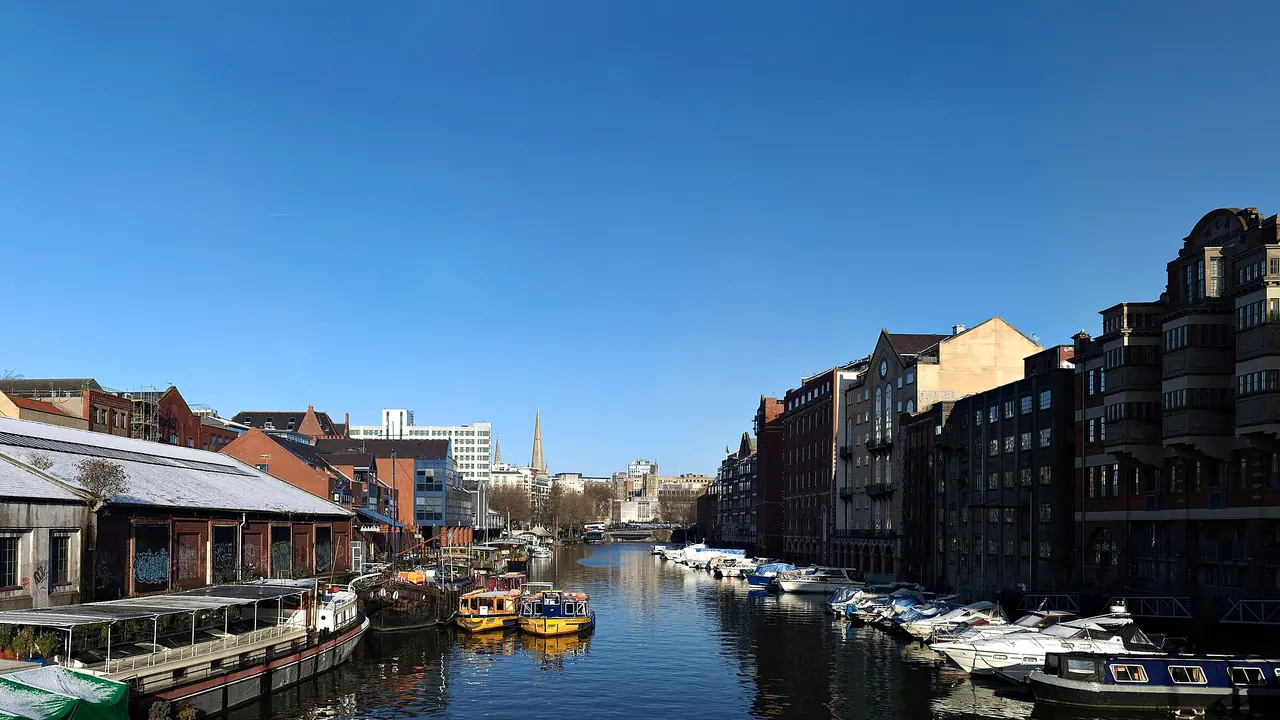
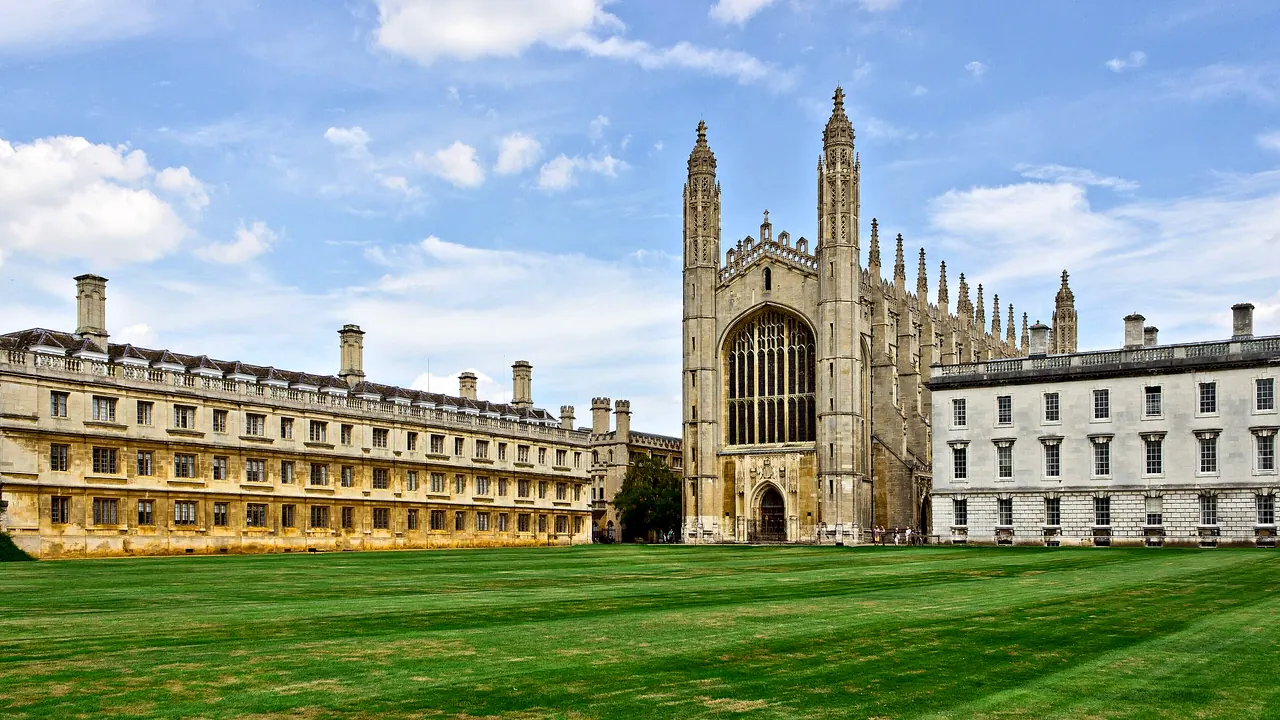
Photos: Bristol by NotFromUtrecht, CC BY-SA 3.0, cropped; Cambridge by Dmitry Tonkonog, CC BY-SA 3.0, cropped.
Bristol or Cambridge?
Our verdict in twelve categories, each scored against the same fixed benchmark cities, and the climate month by month, so you can choose for your trip.
Choose Bristol for
- nightlife
- nature and the outdoors
- food and drink
Bristol suits travellers who want a city with some life in it after dark. Its club culture, independent food stalls and cider pubs give evenings a character of their own. By day the Avon Gorge, Ashton Court and the Mendips are close enough for real walks, and the harbour's maritime and engineering history fills the sightseeing hours. It also works out slightly less expensive, and Bath is a short train ride away.
Choose Cambridge for
- getting around
- culture and sights
Cambridge is the better pick for anyone who travels for buildings, collections and atmosphere. The college courts, King's College Chapel and the Fitzwilliam are packed into a flat centre you can cover on foot or by bike, and choral evensong rounds off the day. Evenings are quieter and mostly spent in the pub, and the countryside is gentle rather than scenic. For a calm, cultured few days, though, with London within easy reach, it is hard to beat.
Scoreboard
Twelve categories on one fixed scale from 0 to 100. The shaded stretch is the gap between the two.
Your match
Pick a travel style or drag the sliders, and both match scores follow your weighting.
Wins on nightlife and nature and the outdoors with your weighting.
Wins on getting around and culture and sights with your weighting.
What matters to you?
Category by category
What the scores mean for a trip.
Beaches & swimming
Neither city is a place for a beach vacation, and Bristol has only a small edge. Weston-super-Mare's sands are under an hour away, though the tide goes out a long way, and the Victorian marine lake at Clevedon gives cold-water swimmers somewhere to dip.
Cambridge is further from any sea, with the Suffolk shingle and Norfolk sand about an hour and a half's drive away. Swimming there means the 1920s lido on Jesus Green or the river at Grantchester Meadows on a hot afternoon.
Food & drink
Bristol is the more rewarding city to eat in. The covered stalls of St Nicholas Market, the container kitchens on the harbourside and the bakeries and coffee roasters along Gloucester Road and North Street make it a city for grazing, and West Country cider and a large craft brewing scene give drinking a local flavour.
Cambridge eats comfortably but rarely excites. Its strengths are old beamed pubs with ales and Sunday roasts, riverside tea rooms and the daily market on Market Hill, with Mill Road's Asian and Mediterranean cooking for variety. Chain restaurants fill much of the centre.
Culture & sights
Cambridge has the richer and more concentrated set of sights. Eight centuries of college courts, chapels and libraries line the Backs, with King's College Chapel among the finest late Gothic interiors in Europe, and the Fitzwilliam's collection is far grander than you would expect in a city this size. Some colleges charge for entry and close around exams.
Bristol's sightseeing has a different flavour, built on the port and Victorian engineering. Brunel's SS Great Britain and the Clifton Suspension Bridge are the highlights, alongside St Mary Redcliffe, Georgian Clifton and M Shed's frank telling of the slave trade. Banksy's street art in Stokes Croft adds a contemporary layer that Cambridge lacks.
Nightlife
Bristol is far the better city for going out. The sound-system culture that produced trip hop and drum and bass still fills warehouses and railway arches around Temple Meads, a boat on the harbour has long served as a club, and Stokes Croft's scruffy bars run late at weekends all year.
In Cambridge, an evening out mostly means a historic inn or a riverside beer garden, with livelier bars on Regent Street and Mill Road. Its small student clubs go quiet outside term, and anyone wanting a big night takes the train to London.
Nature & outdoors
Bristol has far more to offer outdoors. The limestone cliffs of the Avon Gorge, the woods and deer park of Leigh Woods and Ashton Court and the traffic-free path to Bath all start within the city. The Mendips, Cheddar Gorge and the Wye Valley are within about an hour, with Exmoor and the Brecon Beacons for proper hill walking.
Around Cambridge the land is flat fen edge under wide skies. Its pleasures are gentle ones: punting through the Backs, the water meadows on the way to Grantchester, and the birds and wild ponies of Wicken Fen. Hills and dramatic scenery are simply missing.
Day trips
Both make excellent bases, and the difference lies in where they point you. From Bristol, Georgian and Roman Bath is a quarter of an hour by train, Wells, Glastonbury and Cardiff are about an hour, and Stonehenge, Avebury and the southern Cotswolds make full days by car.
Cambridge's big advantage is London, under an hour by train and easy to do there and back in a day. Closer to home, Ely Cathedral is fifteen minutes away and Norwich a little over an hour, and Suffolk's timber-framed wool towns, Audley End and the National Trust estates at Wimpole and Anglesey Abbey are all easy outings.
Good for families
Both cities are easy places to bring children, but they suit families in different ways. Bristol packs its attractions around the harbour, with the SS Great Britain, a hands-on science centre with a planetarium and the aquarium linked by little ferries, and a spacious wildlife park on the city's edge. The steep hills are hard work with a pushchair.
Cambridge is flat and small, which makes it gentler on young legs. A punt, the whale skeleton at the free Museum of Zoology and the dinosaurs at the Sedgwick appeal to most children, and the historic aircraft at Duxford are a full day out. The colleges themselves are rather hushed for small children.
Getting around
Cambridge is the easier city to get around. Colleges, market, museums and river sit together in a flat, largely pedestrian centre, and a hired bike gets you to Grantchester or the outer colleges with no effort. The station is the main inconvenience, a walk of about twenty-five minutes from the middle.
Bristol's core around the harbour and old city is compact too, and the yellow ferries are a pleasant way to cross it. The climb to Clifton is steep, though, and with no tram or metro, longer trips depend on buses that get stuck in traffic.
Shopping & style
Bristol offers rather more choice. Cabot Circus and Broadmead cover the big chains, while Gloucester Road's long run of record shops, delis and vintage clothes, Park Street's boutiques and Clifton's Georgian arcades provide the character.
Cambridge works on a smaller scale. Its speciality is books, from old academic booksellers to second-hand dealers in the lanes, along with the daily market on Market Hill and independents on Trinity Street and King's Parade. It is a pleasant browse between sights rather than a destination for shoppers.
Affordability
Neither is cheap, but Bristol is the easier on a budget. Its hotels are reasonably priced on weekdays, street food and market stalls keep meals affordable, and most of the big museums and churches are free.
Cambridge costs more, mainly because rooms near the centre are scarce and always in demand, especially in summer and around graduations. Free museums, a walkable centre and evensong at no charge help balance this, and a college room out of term can be the best way to save. Note that the most famous colleges charge for entry.
Live music & performing arts
The two are broadly level on the stage but sound quite different. Bristol's strength is live music, with bands, jazz and electronic acts in small venues across Stokes Croft and Old Market most nights, and the Georgian Old Vic, the oldest continuously working theatre in the English-speaking world, as its theatrical treasure.
Cambridge's signature is choral music. Evensong sung by the choirs of King's, St John's and Trinity is open to all during term, while the ADC and the Footlights tradition supply student comedy and drama and the long-running Folk Festival marks the summer.
Wellness & relaxation
Neither city has a bathing culture of its own, and they are much alike here. Bristol's advantage is location: Bath's thermal spa, fed by Britain's only natural hot springs, is a quarter of an hour away by train, and the heated Victorian lido behind Clifton's terraces makes a restful half day in town.
Cambridge offers quieter kinds of rest: a slow punt, a bench in the Botanic Garden or tea in an orchard at Grantchester. In summer its central streets fill with tour groups, so the calm is found early in the day or at the edges of town.
When should you go?
Pick your month. The climate figures are measured averages, not a forecast.
Bristol in July
Cambridge in July
Daytime high, °C
Rainfall in the month, mm
Where the figures come from
Bristol's station stands 178 m above the city centre, so the centre is likely a little warmer than the figures say.
Bristol has no rain gauge within 25 km of the centre, so its rainfall comes from a gridded climate dataset read at the city rather than from a gauge further away.
Bristol's sunshine is measured 43 km from the centre, at Lyneham.
Cambridge's temperatures are measured 59 km from the centre, at Wattisham.
Cambridge has no rain gauge within 25 km of the centre, so its rainfall comes from a gridded climate dataset read at the city rather than from a gauge further away.
Temperature and rainfall are climate normals, averaged over the years shown. Bristol: 1991-2020 normals, Lulsgate Bottom (11.8 km from centre). Cambridge: 1991-2020 normals, Wattisham (58.5 km from centre).
Both cities follow the mild, changeable English pattern, and late spring to early autumn is the best time to go. From May to September either one is comfortable for walking the streets. Bristol peaks at about 20°C in July, while Cambridge is a touch warmer, reaching about 22°C in July and August. Sunshine is close to even through the warmer months. Winter is cool and grey in both, with short days, but it is rarely too cold for a day on foot.
Rain is the clearer difference. Bristol is the wetter of the two all year and turns noticeably wetter from October, with close to 97mm in November, so an autumn or winter visit there needs more indoor plans. Over the year Cambridge, in one of England's drier corners, gets about a third less rain, and the gap is widest from late autumn through winter. The Severn estuary off Bristol reaches only about 18°C in late summer, which is weather for a cold-water dip, not for the beach.
Which traveller are you?
On a food and nightlife trip, Bristol is the clear choice. St Nicholas Market, the harbourside kitchens and the taprooms make for easy grazing, and its warehouse clubs and late bars keep going far past the hour when Cambridge's student-term scene winds down.
For a culture and arts trip, Cambridge offers more within a small area. The college chapels, the Wren Library and the Fitzwilliam's art and antiquities sit within a short walk of each other, and choral evensong in King's College Chapel adds something Bristol has no equivalent for.
On an outdoors trip, Bristol has much more to offer. You can climb in the Avon Gorge, ride the trails at Ashton Court, cycle the railway path to Bath and cave in Cheddar Gorge, while flat Cambridge offers punting, towpath cycling and Wicken Fen's birdlife.
Before you go
| Measure | Bristol | Cambridge |
|---|---|---|
| Official language | English | English |
| Currency | Pound Sterling (GBP) | Pound Sterling (GBP) |
| Sockets | G230 V, 50 Hz | G230 V, 50 Hz |
| Driving side | Left | Left |
| Time zone | UTC, UTC+1 in summer | UTC, UTC+1 in summer |
| Emergency number | 112 or 999 | 112 or 999 |
| Elevation | 11 m | 6 m |
| Main airport | Bristol Airport (BRS)11 km from centre117 non-stop destinations | London Stansted Airport (STN)37 km from centre197 non-stop destinations |
| Public holidays this year | 8 days | 8 days |
By the numbers
| Measure | Bristol | Cambridge |
|---|---|---|
| City population | 472,465 | 123,867 |
| People per km² | 4,311 | 3,043 |
| Museums within 10 km | 23 | 17 |
| UNESCO World Heritage sites within 50 km | 3 | 0 |
| Swim season, months above 21 °C | None | - |
Where else could you go?
Every comparison below shares a destination with this one, so you can follow Bristol or Cambridge somewhere new.
- Bathvs Bristol
- Cardiffvs Bristol
- Londonvs Cambridge
- Oxfordvs Bristol
- Oxfordvs Cambridge
- Brightonvs Cambridge