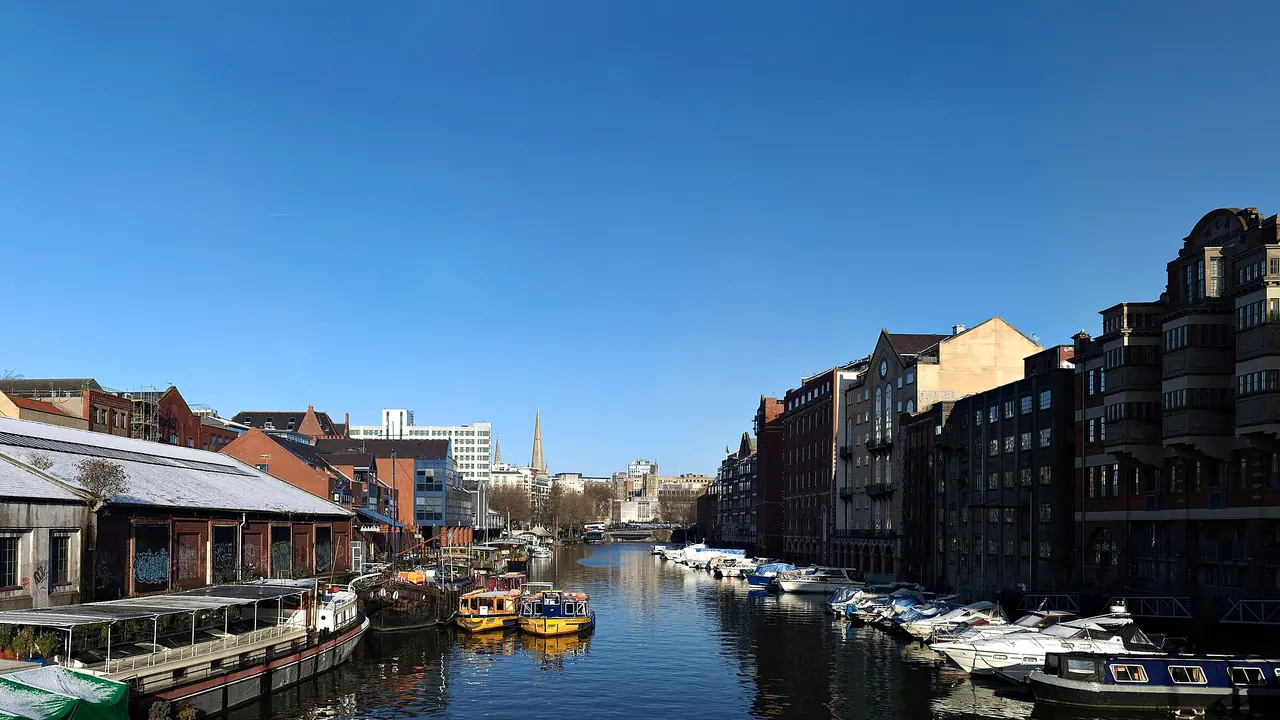
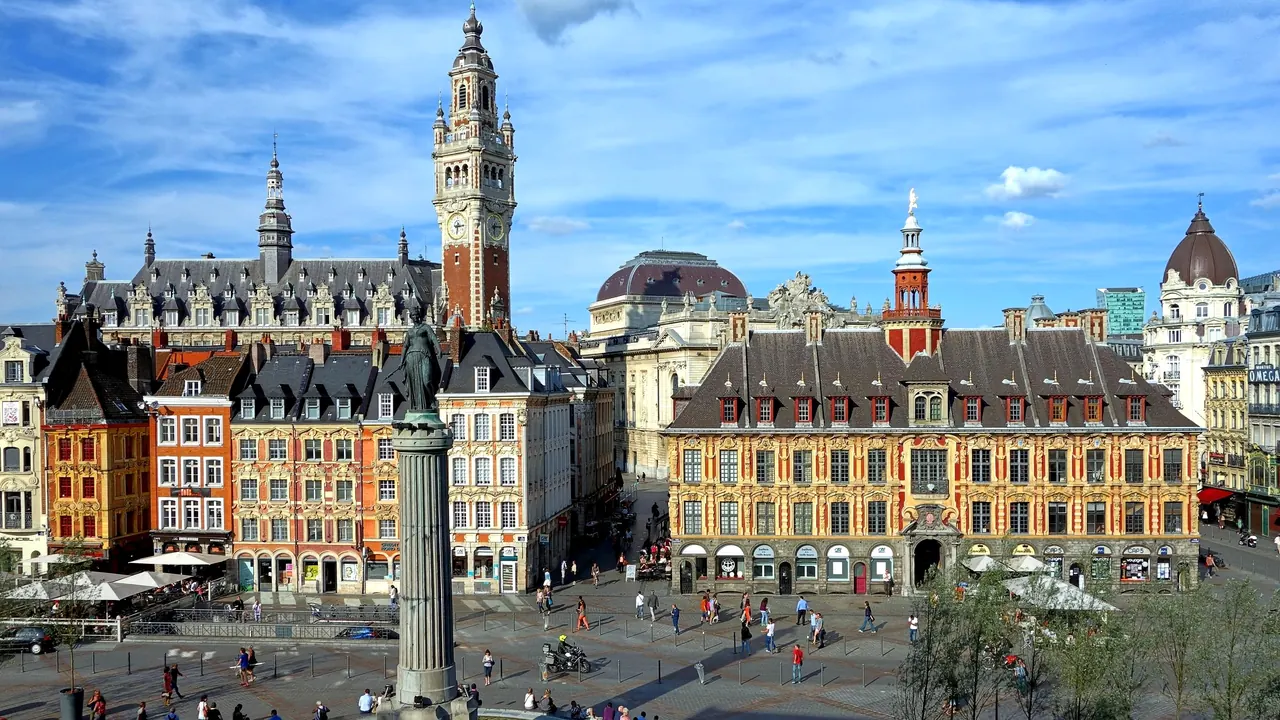
Photos: Bristol by NotFromUtrecht, CC BY-SA 3.0, cropped; Lille by Velvet, CC BY-SA 3.0, cropped.
Bristol or Lille?
Our verdict in twelve categories, each scored against the same fixed benchmark cities, and the climate month by month, so you can choose for your trip.
Choose Bristol for
- nature and the outdoors
- wellness
- families
Bristol is the pick for travellers who want green space and a good night out from the same base. The Avon Gorge, the Downs and Ashton Court sit almost inside the city, the Mendips and Cheddar Gorge are close, and the club scene that grew out of sound-system culture gives weekends a character of its own. Families do well here too, with harbourside museums, ferries and room to run about. Bath's hot springs a short train ride away add an easy way to slow down.
Choose Lille for
- getting around
- day trips
- culture and sights
Lille suits a traveller who wants art, architecture and onward travel, all within walking distance. The Palais des Beaux-Arts and the Flemish baroque streets of Vieux-Lille give it the stronger sights, and the flat centre and automated metro make it easy to get around. Its stations put Brussels, Ghent, Bruges and Paris within day-trip reach, so it works well as a hub for a wider tour of Flanders and northern France. It is also a little gentler on the budget.
Scoreboard
Twelve categories on one fixed scale from 0 to 100. The shaded stretch is the gap between the two.
Your match
Pick a travel style or drag the sliders, and both match scores follow your weighting.
Too close to call, level with your weighting
Wins on nature and the outdoors and wellness with your weighting.
Wins on getting around and day trips with your weighting.
What matters to you?
Category by category
What the scores mean for a trip.
Beaches & swimming
Neither city is a beach destination, but the coasts they lead to are different. From Bristol you reach the muddy, silt-brown Severn estuary, where the tide at Weston-super-Mare retreats so far that swimming needs careful timing. Locals swim in the tidal pools instead, such as Clevedon's Victorian marine lake.
Lille is an hour by train from Malo-les-Bains at Dunkirk, a wide stretch of real North Sea sand. It is windy and the water stays cold, so it suits a bracing walk more than an afternoon of swimming.
Food & drink
Both cities eat well, but in very different ways. Bristol has no dish of its own. You graze through St Nicholas Market's stalls, the harbourside container kitchens and the bakeries and coffee roasters of Gloucester Road and Bedminster, with cider and craft taprooms doing the local work.
Lille has a cuisine of its own. In the wood-panelled estaminets of Vieux-Lille you get carbonnade, potjevleesch and the welsh, with Maroilles cheese in almost everything and Belgian-style ales alongside. Choose Bristol for variety and Lille for a sense of place on the plate.
Culture & sights
Lille has the deeper sights. The Palais des Beaux-Arts is a major fine-art museum by any standard, and the Flemish baroque of the Vieille Bourse, the Grand Place and the UNESCO-listed belfry make the old town a sight in itself. La Piscine in Roubaix adds a memorable second museum.
Bristol's appeal is its maritime and engineering history: Brunel's SS Great Britain, the Clifton Suspension Bridge over the gorge, St Mary Redcliffe and the Georgian crescents of Clifton. Its Banksy street art has no equivalent in Lille, but its art collections are more modest.
Nightlife
Bristol is the stronger night out. The city that gave the world trip hop and a good share of drum and bass still fills warehouses and railway arches around Temple Meads, and there is a club on a boat in the harbour. Stokes Croft adds scruffy, creative bars, and weekend nights go on late.
Lille is friendly and student-heavy, with cheap bars on Rue Masséna and Rue Solférino and cellar bars in Vieux-Lille for a calmer evening. Its clubs are modest, though, and for a really late night people have traditionally crossed into Belgium.
Nature & outdoors
Bristol wins easily outdoors. Within the city you have the Downs above the limestone Avon Gorge, Leigh Woods and the deer park at Ashton Court, plus a traffic-free railway path to Bath. Cheddar Gorge, the Mendips and the Wye Valley are each about an hour or less away.
Around Lille, French Flanders is flat and farmed. The Citadel park and the Deûle towpaths are pleasant for a level ride, but the only real scenery is the chalk cliffs of Cap Blanc-Nez, a long day away on the Opal Coast.
Day trips
Both are excellent bases, but Lille's position at a crossroads gives it more reach. Brussels is half an hour away by fast train, Ghent and Bruges are around an hour, and Paris is about an hour by TGV. Closer to home there are Arras, Amiens cathedral and the First World War battlefields of the Somme and Ypres.
Bristol's range is more English and more rural. Bath is a quarter of an hour away by train, Wells and Glastonbury are to the south, and Cardiff is across the Severn. By car you can reach the Cotswold villages, Stonehenge and Avebury.
Good for families
Bristol is better set up for children. The SS Great Britain is designed with young visitors in mind, and the We The Curious science centre and the aquarium sit together on the harbourside, linked by little ferries. A wildlife park lies on the city's edge, and the Downs give space to run. The steep hills are hard work with a pushchair.
Lille has the Citadel park, with its small zoo, playgrounds and flat paths, plus a science centre reachable by metro. Its biggest family outings, Pairi Daiza and the Nausicaá aquarium, mean leaving the city.
Getting around
Lille is much easier to get around. The centre is flat, the two main stations stand side by side a walk from the old town, and the driverless VAL metro and the tram reach Roubaix and Tourcoing.
Bristol's core around the harbour and Queen Square is walkable, and the yellow ferries are a pleasure. Clifton is a steep climb, though, and with no metro or tram the rest of the city depends on buses that get stuck in traffic.
Shopping & style
Lille offers a little more. Alongside the chains on Rue Neuve and the Euralille mall, the narrow streets of Vieux-Lille hold independent fashion, design shops and delicatessens. The September Braderie turns the whole city into a vast flea market for a weekend.
Bristol's best shopping is more bohemian: the record shops, delis and vintage clothes on Gloucester Road, the boutiques up Park Street and the curios at St Nicholas Market. Cabot Circus covers the chains.
Affordability
Lille is the gentler on the wallet. Rooms are reasonable for most of the year, estaminet meals and beer are fairly priced, and the metro is cheap.
Bristol is one of the dearer English cities outside London, and weekend hotel rooms climb noticeably. Free museums and churches and a walkable centre take some of the edge off.
Live music & performing arts
The two cities are evenly matched, with different strengths. Bristol is about live music and theatre. Bands, jazz and electronic acts play small venues in Stokes Croft and Old Market most nights, and the Georgian Bristol Old Vic is the oldest continuously working theatre in the English-speaking world.
Lille is the more classical of the two. It has a resident opera house on the Place du Théâtre, the Orchestre National de Lille's symphonic season and the Théâtre du Nord, which Bristol cannot match.
Wellness & relaxation
Bristol offers more ways to unwind. The Victorian lido behind Clifton's terraces makes a restful half day, and Bath's rooftop thermal pool, fed by Britain's only natural hot springs, is a quarter of an hour away by train.
Lille offers little beyond hotel spas and slow afternoons in Vieux-Lille's tea rooms. The nearest thermal bath is at Saint-Amand-les-Eaux, and its famous Art Deco pool now holds paintings rather than swimmers.
When should you go?
Pick your month. The climate figures are measured averages, not a forecast.
Bristol in July
Lille in July
Daytime high, °C
Rainfall in the month, mm
Where the figures come from
Bristol's station stands 178 m above the city centre, so the centre is likely a little warmer than the figures say.
Bristol has no rain gauge within 25 km of the centre, so its rainfall comes from a gridded climate dataset read at the city rather than from a gauge further away.
Bristol's sunshine is measured 43 km from the centre, at Lyneham.
Temperature and rainfall are climate normals, averaged over the years shown. Bristol: 1991-2020 normals, Lulsgate Bottom (11.8 km from centre). Lille: 1991-2020 normals, Lille (7.8 km from centre).
Neither city has beach weather. Both are mild and cloudy in winter, with January highs around 7°C, and both are at their best for walking from May to September. Lille's summers are noticeably warmer, reaching about 24°C in July and August against Bristol's 20°C, which makes it the better choice for long days on café terraces. Sunshine follows almost the same curve in both, with the brightest stretch running from May to August.
The difference is in the rain. Bristol turns wet in autumn, with October to December the dampest months at around 97mm, while Lille's rain is spread more evenly and is lighter overall. The Severn estuary off Bristol warms to only about 18°C in late summer, so cold-water dipping is as far as it goes. For a spring or early autumn trip the two are much alike, but late autumn is kinder in Lille.
Which traveller are you?
On an outdoors trip, Bristol is clearly better. Climbers use the Avon Gorge cliffs, mountain bikers ride the Ashton Court trails, and the Mendips, Wye Valley and Exmoor are close. Lille's flat Flemish farmland offers only towpath cycling and low hills.
For a culture and arts trip, Lille has the edge. The Palais des Beaux-Arts holds Flemish masters, Goya and Delacroix, and Vieux-Lille is a whole quarter of carved brick. La Piscine and the LaM are a metro ride away, and Bruges and Ghent are an easy day out.
For a short city break, Lille is simpler. Its stations sit beside the old town, the centre is flat, and everything worth seeing is a walk apart. Bristol's sights need climbs up to Clifton and slow buses beyond the harbour.
Before you go
| Measure | Bristol | Lille |
|---|---|---|
| Official language | English | French |
| Currency | Pound Sterling (GBP) | Euro (EUR) |
| Sockets | G230 V, 50 Hz | CE230 V, 50 Hz |
| Driving side | Left | Right |
| Time zone | UTC, UTC+1 in summer | UTC+1, UTC+2 in summer |
| Emergency number | 112 or 999 | 112 |
| Elevation | 11 m | 17 m |
| Main airport | Bristol Airport (BRS)11 km from centre117 non-stop destinations | Lille Airport (LIL)8 km from centre61 non-stop destinations |
| Public holidays this year | 8 days | 11 days |
By the numbers
| Measure | Bristol | Lille |
|---|---|---|
| City population | 472,465 | 238,246 |
| People per km² | 4,311 | 6,846 |
| Museums within 10 km | 23 | 23 |
| UNESCO World Heritage sites within 50 km | 3 | 6 |
| Swim season, months above 21 °C | None | - |
Where else could you go?
Every comparison below shares a destination with this one, so you can follow Bristol or Lille somewhere new.