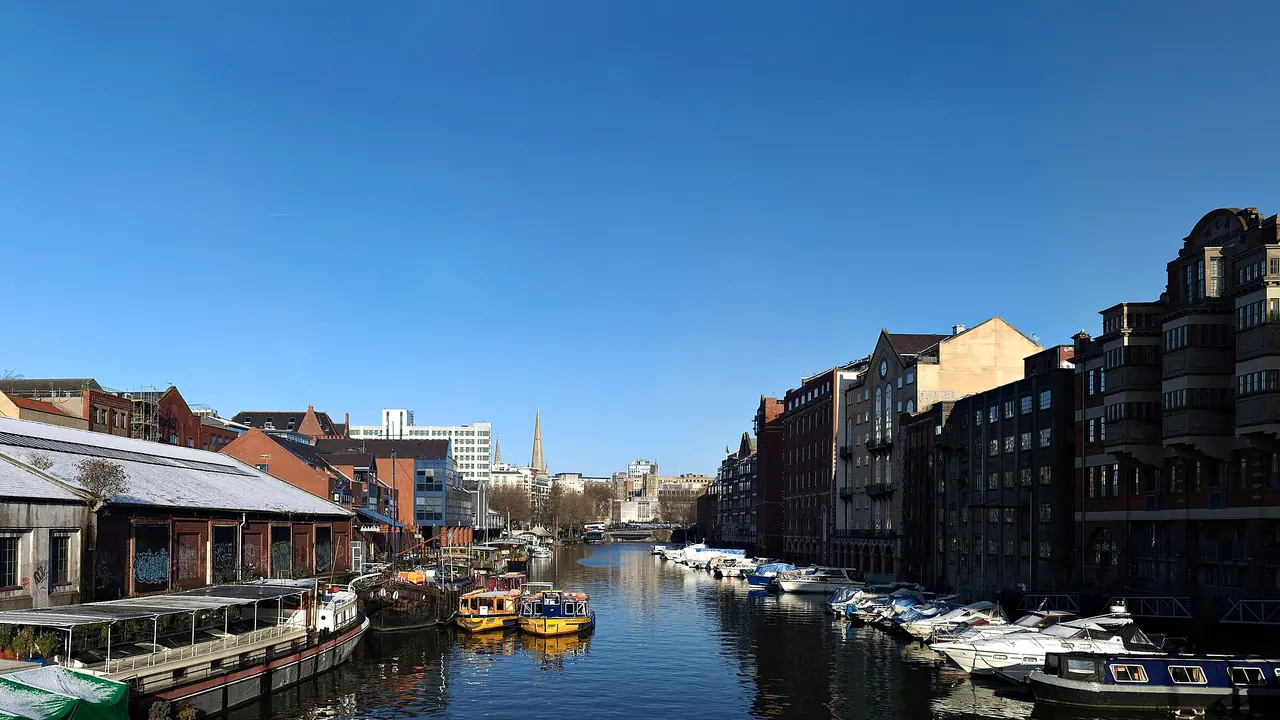
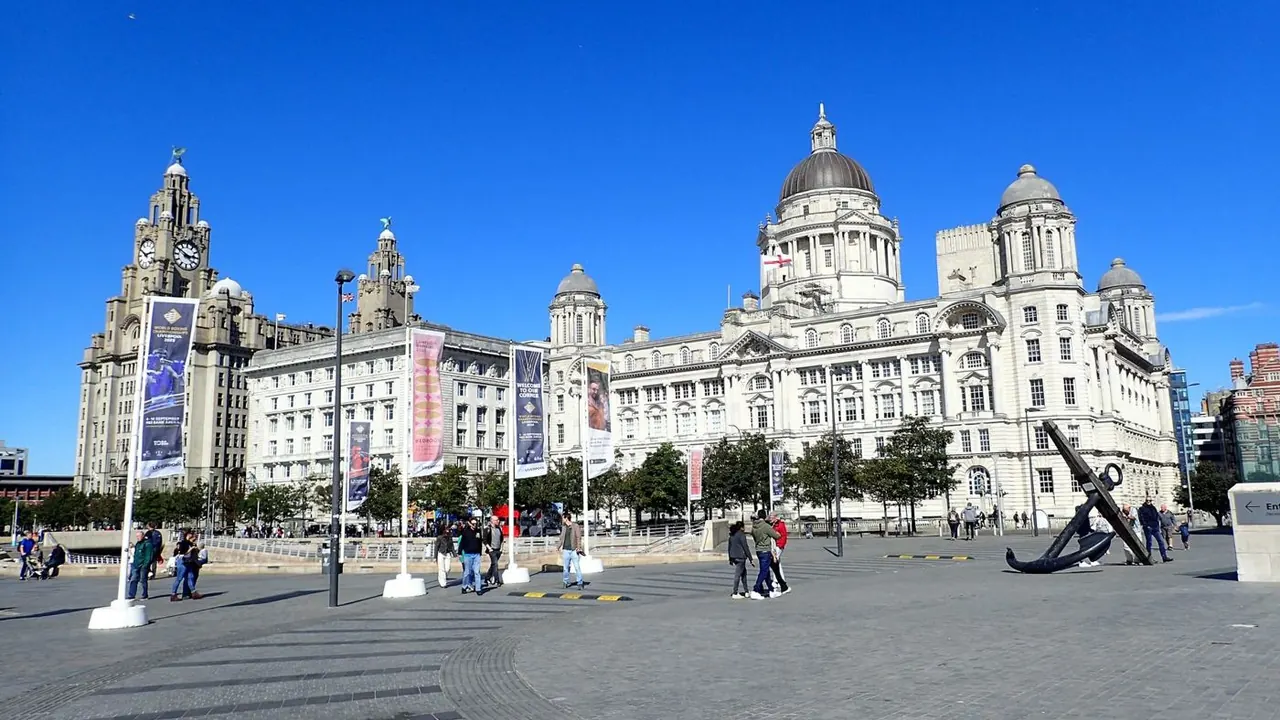
Photos: Bristol by NotFromUtrecht, CC BY-SA 3.0, cropped; Liverpool by Marathon, CC BY-SA 2.0, cropped.
Bristol or Liverpool?
Our verdict in twelve categories, each scored against the same fixed benchmark cities, and the climate month by month, so you can choose for your trip.
Choose Bristol for
- wellness
- day trips
- nature and the outdoors
Bristol suits the traveller who wants a base as much as a destination. Bath's Roman baths and thermal spa are a short train ride away, and Wells, Stonehenge and the Cotswold villages make easy days out. The Avon Gorge, Ashton Court and the Mendips put real countryside close at hand, and the food and cider scene rewards anyone who likes to graze through markets and taprooms.
Choose Liverpool for
- getting around
- prices
- culture and sights
Anyone planning a trip centred on the city itself should lean towards Liverpool. Its waterfront of the Three Graces and the Albert Dock, its free national museums and its music, from the Cavern cellar to the Philharmonic, give a fuller few days in town. The centre is flat and easy to walk, Merseyrail runs straight out to the coast, and money stretches further than it does in Bristol.
Scoreboard
Twelve categories on one fixed scale from 0 to 100. The shaded stretch is the gap between the two.
Your match
Pick a travel style or drag the sliders, and both match scores follow your weighting.
Too close to call, 1 point apart
Wins on wellness and day trips with your weighting.
Wins on getting around and prices with your weighting.
What matters to you?
Category by category
What the scores mean for a trip.
Beaches & swimming
Neither city is for swimming, but Liverpool's coast is the more rewarding one to visit. Merseyrail runs straight to Crosby, where Gormley's iron figures stand on the sands, and on to the pine-backed dunes at Formby. New Brighton and West Kirby's marine lake are just across the river.
Bristol looks out on the silty brown Severn estuary, which turns to mud at low tide. Weston-super-Mare has sand, but you have to time a swim around a very distant tide. The cold-water pool at Clevedon is the best local dip, and proper beaches mean a long drive into Devon or Wales.
Food & drink
Bristol eats better, mostly thanks to its independents. St Nicholas Market's covered stalls, the bakeries and roasters along Gloucester Road and North Street, and a few kitchens cooking with West Country produce give plenty of choice. Farmhouse cider and warehouse taprooms make drinking a real part of a visit.
Liverpool has the thing Bristol lacks, a dish of its own, and a bowl of scouse with pickled red cabbage is worth trying once. Beyond that, eating centres on Bold Street, the Baltic Triangle food halls and an old Chinatown. Its ornate Victorian gin-palace pubs are as much of a draw as any restaurant.
Culture & sights
Both cities grew rich as ports and both face up to their part in the slave trade, but Liverpool has more to see. The Three Graces and the listed warehouses of the Royal Albert Dock make a grand waterfront, holding the Maritime and International Slavery museums. William Brown Street adds the Walker's Pre-Raphaelites, and Hope Street joins two very different 20th-century cathedrals.
Bristol's highlights are fewer but distinctive. Brunel's SS Great Britain in its dry dock and his bridge over the Avon Gorge are the high points, Clifton's Georgian crescents and St Mary Redcliffe are the finest buildings, and Banksy's early street art gives it a modern side that Liverpool cannot match.
Nightlife
You will find a good night out in either city, but the two feel different. Bristol's comes from its sound-system history, the music behind trip hop and drum and bass. Its clubs are in railway arches near Temple Meads and on a moored boat, and Stokes Croft has scruffy, creative bars for the hours before.
Liverpool is more of a full-on party town. Concert Square and Seel Street fill with bar-hoppers and stag and hen groups at weekends. The Baltic Triangle offers a more electronic, underground alternative, and Lark Lane is the easygoing local option.
Nature & outdoors
Bristol has much more countryside close to the city. The limestone cliffs of the Avon Gorge attract climbers, Leigh Woods and the Ashton Court deer park are just across the river, and the railway path runs traffic-free towards Bath. Cheddar Gorge and the Mendips are under an hour away.
Liverpool is flat. Its outdoor pleasures are Sefton Park's palm house and lake, a breezy walk along the Mersey and the Formby dunes, where red squirrels survive in the pinewoods. The Wirral Way and the Dee estuary's wading birds suit gentle cycling, but real hills are a two-hour trip away.
Day trips
Bristol is the better base for day trips by some way. Bath is a quarter of an hour by train, Wells and Glastonbury are about an hour off, and Cardiff is just across the Severn. Stonehenge, Avebury, Salisbury and the southern Cotswolds give you a week of easy outings if you want them.
Liverpool's best trip is Chester, with its Roman walls and timbered Rows. Manchester, the model village at Port Sunlight and Southport's pier are also close. Conwy and Llandudno make a longer day, but after that the choice runs out much sooner than it does around Bristol.
Good for families
Children will be happy in either city. In Bristol the attractions are close together on the harbourside: the SS Great Britain, the hands-on We The Curious with its planetarium, and the aquarium, all linked by little ferries. The steep hills are hard work with a pushchair, though.
Liverpool's waterfront is flat and easy, and its free museums save money, with the World Museum's dinosaurs a sure hit. Its biggest family days are just outside town, at Chester Zoo and Knowsley Safari Park. The rowdy weekend nights in the centre are something to plan around.
Getting around
Liverpool is easier to get around. The docks, the Pier Head, the Ropewalks and both cathedrals are within about 2km of one another on mostly level ground. Merseyrail's underground loop carries you out to Crosby, Formby and the Wirral without any fuss.
Bristol's old city and harbourside are walkable too, and the yellow ferries are a pleasant way to cross the water. The climb to Clifton is steep, though, and beyond the centre you depend on buses that get stuck in traffic. Temple Meads, rather than any city network, is what makes trips out easy.
Shopping & style
The two are much alike: big chain stores in the centre and the more interesting shops on one long street. Bristol's Cabot Circus is indoors, and its character lies along Gloucester Road and in Clifton Village's Georgian arcades, with St Nicholas Market adding crafts and curios.
Liverpool ONE is an open-air district that runs down towards the docks. Bold Street does the vintage and records, and Beatles memorabilia or a football shirt is the obvious thing to take home.
Affordability
Liverpool is the cheaper of the two. Hotels cost noticeably less for most of the year, though they climb sharply on big match weekends and during the Grand National. The free museums cover most of what a visitor wants to see, and pub meals are good value.
Bristol is one of the more expensive British cities outside London, and weekend hotel rates rise steeply. Free museums and churches and a walkable centre help, but a budget stay is manageable there rather than cheap.
Live music & performing arts
Liverpool has more on stage, and music is part of its identity. Bands play most nights around Mathew Street and Seel Street, with the Cavern as the place of pilgrimage. The Royal Liverpool Philharmonic plays a full season in its art deco hall, and the Everyman and the Playhouse produce their own theatre.
Bristol's great asset is the Old Vic, the oldest continuously working theatre in the English-speaking world, still staging its own shows in its Georgian auditorium. The Tobacco Factory's Shakespeare, chamber concerts at St George's and gigs in small Stokes Croft venues round it out, but it has no orchestra to compare with the Phil.
Wellness & relaxation
Bristol is the better choice for a restful break, mainly because of Bath. Its rooftop thermal pool, fed by Britain's only natural hot springs, is a quarter of an hour away by train. In the city itself, the heated lido behind Clifton's terraces and the quiet of the Downs offer real calm.
Liverpool has no bathing culture and little beyond hotel and day spas. Its quiet moments come from a walk in Sefton Park or an unhurried ferry crossing, and the loud weekend centre works against rest.
When should you go?
Pick your month. The climate figures are measured averages, not a forecast.
Bristol in July
Liverpool in July
Daytime high, °C
Rainfall in the month, mm
Where the figures come from
Bristol's station stands 178 m above the city centre, so the centre is likely a little warmer than the figures say.
Bristol has no rain gauge within 25 km of the centre, so its rainfall comes from a gridded climate dataset read at the city rather than from a gauge further away.
Bristol's sunshine is measured 43 km from the centre, at Lyneham.
Liverpool's temperatures are measured 47 km from the centre, at Manchester Airport.
Liverpool has no rain gauge within 25 km of the centre, so its rainfall comes from a gridded climate dataset read at the city rather than from a gauge further away.
Temperature and rainfall are climate normals, averaged over the years shown. Bristol: 1991-2020 normals, Lulsgate Bottom (11.8 km from centre). Liverpool: 1991-2020 normals, Manchester Airport (47.4 km from centre).
The two cities share the same mild, changeable climate, and neither has a beach season worth planning around. Summer peaks at around 20°C in both, and the sea never gets warmer than about 18°C, which is a cold dip rather than a swim. Late spring through to early September is the best time for walking the streets and getting out into the country. Winter is never harsh, but the days are grey and short.
The differences are in the rain and the sun. Bristol is the wetter of the two, and from October to December each month brings about 95mm, against a peak of 85mm in Liverpool. It is also noticeably sunnier from April to August, which makes it slightly the better choice for an early summer trip built around the outdoors. Liverpool's drier spring is its best season.
Which traveller are you?
On a relaxing and wellness trip, Bristol is the clear choice. The heated Victorian lido in Clifton offers a quiet half day, and Bath's natural hot springs are a quarter of an hour away by train. Liverpool has little beyond hotel spas, and its centre is loud at weekends.
For a trip on a tight budget, Liverpool makes the money go further. Hotels cost noticeably less for most of the year, the big maritime, slavery and art collections are free, and the compact, flat centre means you rarely pay for transport.
On a culture and arts trip, Liverpool gives more. The Albert Dock museums, the Walker's Pre-Raphaelites and the two cathedrals fill the days, and the Royal Liverpool Philharmonic, the Everyman and the Cavern fill the evenings. Bristol's Brunel sights and Old Vic are fine but cover less ground.
Before you go
| Measure | Bristol | Liverpool |
|---|---|---|
| Official language | English | English |
| Currency | Pound Sterling (GBP) | Pound Sterling (GBP) |
| Sockets | G230 V, 50 Hz | G230 V, 50 Hz |
| Driving side | Left | Left |
| Time zone | UTC, UTC+1 in summer | UTC, UTC+1 in summer |
| Emergency number | 112 or 999 | 112 or 999 |
| Elevation | 11 m | 70 m |
| Main airport | Bristol Airport (BRS)11 km from centre117 non-stop destinations | Liverpool John Lennon Airport (LPL)12 km from centre75 non-stop destinations |
| Public holidays this year | 8 days | 8 days |
By the numbers
| Measure | Bristol | Liverpool |
|---|---|---|
| City population | 472,465 | 513,441 |
| People per km² | 4,311 | 4,592 |
| Museums within 10 km | 23 | 31 |
| UNESCO World Heritage sites within 50 km | 3 | 2 |
| Swim season, months above 21 °C | None | None |
Where else could you go?
Every comparison below shares a destination with this one, so you can follow Bristol or Liverpool somewhere new.
- Bathvs Bristol
- Cardiffvs Bristol
- Manchestervs Liverpool
- Oxfordvs Bristol
- Yorkvs Liverpool
- Londonvs Bristol