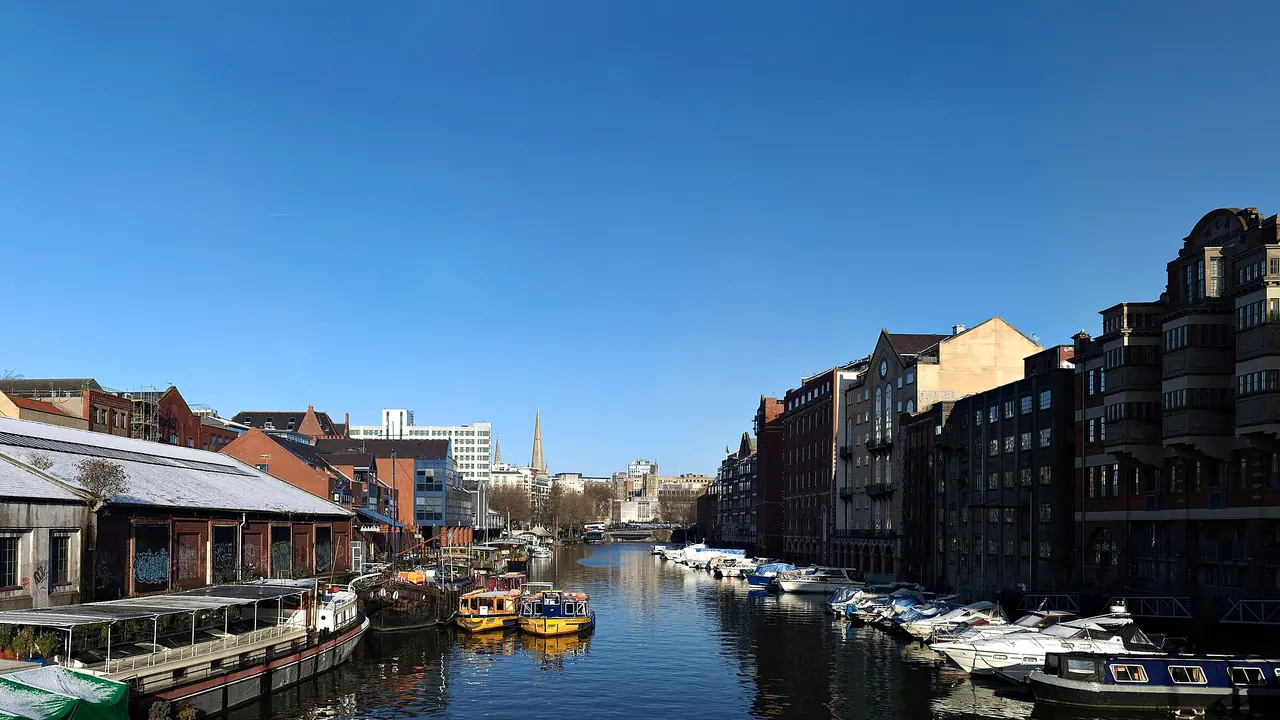
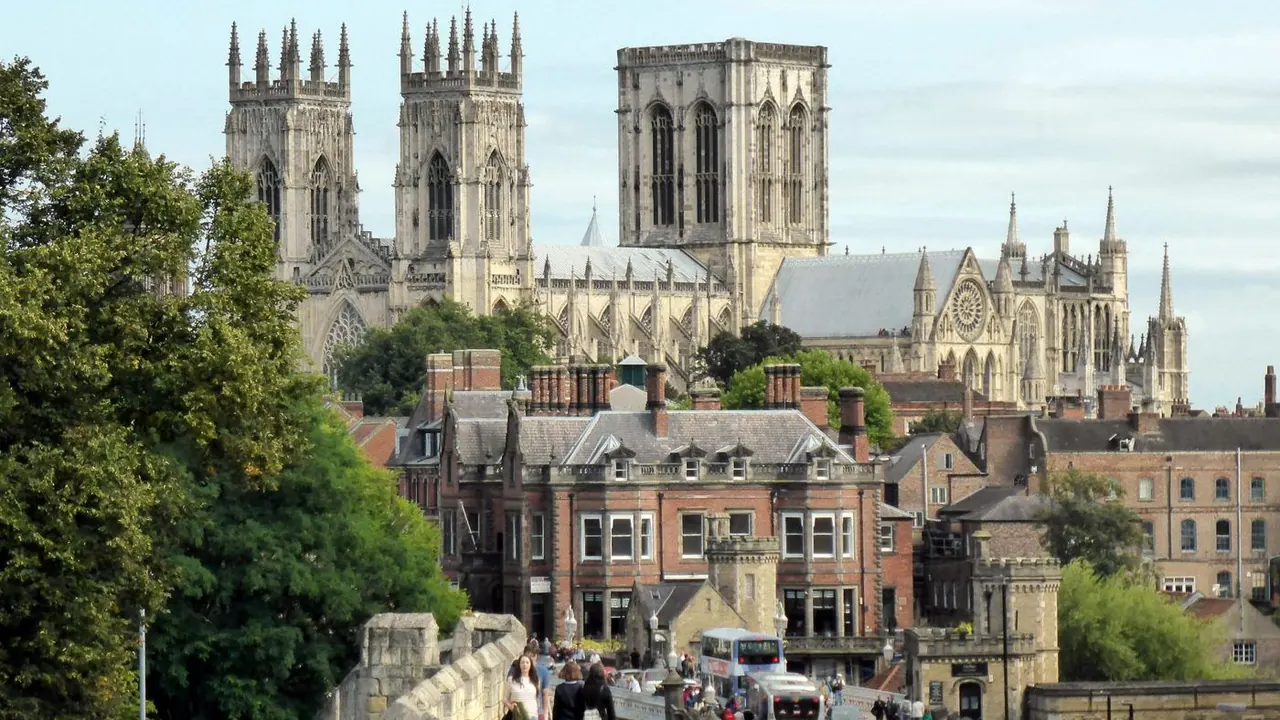
Photos: Bristol by NotFromUtrecht, CC BY-SA 3.0, cropped; York by PAUL FARMER, CC BY-SA 2.0, cropped.
Bristol or York?
Our verdict in twelve categories, each scored against the same fixed benchmark cities, and the climate month by month, so you can choose for your trip.
Choose Bristol for
- nightlife
- live music and the arts
- food and drink
Bristol suits travellers who want a city with an evening life of its own. Its clubs in old warehouses and railway arches, its small music venues and its independent food stalls and taprooms give it a younger, more creative pull. Bath's hot springs are a short train ride away for a slower day. It is the better pick for a longer stay that mixes nights out with trips into the West Country.
Choose York for
- getting around
- culture and sights
- day trips
For history packed into a small space you can walk, York is hard to beat. The Minster, the medieval walls and the Roman and Viking layers all sit within a flat centre that is largely closed to traffic, so a first-time visitor sees a great deal without a bus or a hill. Evenings are quieter and centred on the pub, which suits a gentle weekend better than a lively one.
Scoreboard
Twelve categories on one fixed scale from 0 to 100. The shaded stretch is the gap between the two.
Your match
Pick a travel style or drag the sliders, and both match scores follow your weighting.
Wins on nightlife and live music and the arts with your weighting.
Wins on getting around and culture and sights with your weighting.
What matters to you?
Category by category
What the scores mean for a trip.
Beaches & swimming
Neither city works for a beach vacation, but the shores are quite different. Bristol looks onto the silty Severn estuary, where low tide leaves mud. The best swimming is cold-water dips in tidal pools such as Clevedon's marine lake. Weston-super-Mare's sand is close, but the sea is often far out.
York has no water to swim in at all, but the train reaches Scarborough's two sandy bays in about an hour, with Filey and Whitby beyond. That makes York the base for a classic seaside day out on the North Sea, while Bristol is the one for a bracing swim in a sea pool.
Food & drink
Bristol is the stronger city to eat in, mostly because of its range. St Nicholas Market's stalls run from pies to Caribbean and Middle Eastern cooking, and container kitchens line the harbour. Gloucester Road, Stokes Croft and Bedminster add bakeries, coffee roasters and neighbourhood restaurants, with West Country cider and a large craft brewing scene for drinks.
York is more traditional and narrower: afternoon tea and fat rascals in historic tearooms, Sunday roasts, real ale in old pubs and pies at the Shambles Market. International cooking is thin, and the streets around the Minster lean towards tourist fare.
Culture & sights
York has the deeper heritage. The Minster is one of the great Gothic cathedrals of northern Europe, and two thousand years of Roman, Viking and medieval history sit inside walls you can walk on. The sights run from Jorvik's excavated Viking street to the Yorkshire Museum among abbey ruins and the vast National Railway Museum.
Bristol's story is narrower and more recent, built on its port and on Victorian engineering. Brunel's SS Great Britain and the Clifton Suspension Bridge are superb, and Georgian Clifton and St Mary Redcliffe are handsome. The street art in Stokes Croft adds a modern layer that York lacks, but overall there is less to see.
Nightlife
This is where the two cities differ most. Bristol's nights grow out of the sound-system culture behind trip hop, drum and bass and dubstep. There are clubs in warehouses and railway arches near Temple Meads, a club on a boat in the harbour, and scruffy late bars in Stokes Croft, with weekends running late all year.
A night out in York means the pub, and a crawl through the centuries-old inns of Stonegate and Micklegate is a pleasure in itself. Beyond that there are a few cocktail bars and small clubs, stag and hen parties at weekends and quiet weeknights. Anyone after serious clubbing takes the train to Leeds.
Nature & outdoors
Both offer good walking country, but in different places. Bristol's green space starts inside the city: the Downs above the limestone cliffs of the Avon Gorge, which draw climbers, the woods at Leigh Woods, the deer park at Ashton Court and the railway path to Bath for cyclists. The Mendips and Cheddar Gorge are not much further.
York itself is flat, with riverside paths and the open grassland of the Strays, but the country around it is wilder. There is the heather of the North York Moors, the sea cliffs at Robin Hood's Bay and the limestone scars of the Dales, though these need a car far more than Bristol's green spaces do.
Day trips
Both make excellent bases, so the choice comes down to which region appeals. From Bristol, Bath is a quarter of an hour by train and Cardiff under an hour. Wells, Glastonbury, the southern Cotswolds, Stonehenge and Avebury fill further days.
York looks north instead. Harrogate and Leeds are half an hour by train and Durham's cathedral and castle under an hour, while Castle Howard, Fountains Abbey, Rievaulx and the steam railway from Pickering are best reached by car or coach tour. Bristol's two best trips are the easier ones to make without a car.
Good for families
Families do equally well in both, but for different things. Bristol's harbourside groups together the SS Great Britain, the We The Curious science centre and the aquarium, linked by little ferries. The Downs and the deer at Ashton Court give children room to run, though the hills are hard work with a pushchair.
York's appeal is history children can touch: walking among real locomotives at the National Railway Museum, the Viking street at Jorvik, the Victorian street in the Castle Museum and the walls themselves. Its flat centre, largely closed to traffic, is easier with small children, but the theme park, zoo and seaside are an hour away.
Getting around
York is the easier city to get around. Nearly every sight lies inside or just outside the walls, the centre is flat and largely free of cars, and cycling is simple. The station is a major hub for day trips by rail.
Bristol's core around the old city, Queen Square and the harbour can be walked too, and yellow ferries cross the Floating Harbour. But reaching Clifton means a steep climb, there is no metro or tram, and beyond the centre you depend on buses that get stuck in traffic.
Shopping & style
Neither city is a shopping destination, and both owe their charm to independent shops. Bristol has the bigger mainstream centre at Cabot Circus and Broadmead. Its character lies in the long run of record shops, delis and vintage clothes on Gloucester Road and the boutiques of Park Street and Clifton Village.
In York the appeal is the setting: bookshops, jewellers and antiques dealers in the medieval lanes of Stonegate and Petergate, though the Shambles leans towards souvenirs. The Christmas markets of late autumn and December are a seasonal draw of their own.
Affordability
The two cost about the same. Both are expensive by British standards outside London, and in both, hotel rates climb sharply at weekends. The difference lies in what is free: most of Bristol's main museums and churches cost nothing, so a day of sightseeing on a budget is easy.
In York the Minster, Jorvik and the castle museums charge admission, but the National Railway Museum, the walls and the Museum Gardens are free. Staying midweek or outside the walls saves a good deal. Market stalls in Bristol and pub meals in York are the cheapest ways to eat.
Live music & performing arts
Bristol has the livelier stage and music scene. The Bristol Old Vic, the oldest continuously working theatre in the English-speaking world, produces its own work in a Georgian auditorium, and the Tobacco Factory stages fringe theatre and Shakespeare. Small venues in Stokes Croft and Old Market host bands, jazz and electronic acts most nights.
York's programme is steadier and smaller: drama and pantomime at the Theatre Royal, touring shows at the Grand Opera House, and the National Centre for Early Music in a medieval church. Its most distinctive offerings are free choral evensong at the Minster and the occasional Mystery Plays performed on wagons, but bigger tours go to Leeds.
Wellness & relaxation
Bristol is the better place to unwind, largely thanks to its neighbour. Bath's thermal spa, with a rooftop pool fed by Britain's only natural hot springs, is a quarter of an hour away by train. In the city itself, the heated Victorian lido behind Clifton's terraces makes for a quiet half day.
York has little beyond hotel spas and day spas, and its centre is packed on summer and December weekends. For proper bathing, go to Harrogate, half an hour away, where the Royal Baths keep a Victorian Turkish bath in Moorish style. In York itself, early walks on the walls and long afternoon teas set a gentler pace.
When should you go?
Pick your month. The climate figures are measured averages, not a forecast.
Bristol in July
York in July
Daytime high, °C
Rainfall in the month, mm
Where the figures come from
Bristol's station stands 178 m above the city centre, so the centre is likely a little warmer than the figures say.
Bristol has no rain gauge within 25 km of the centre, so its rainfall comes from a gridded climate dataset read at the city rather than from a gauge further away.
Bristol's sunshine is measured 43 km from the centre, at Lyneham.
York has no rain gauge within 25 km of the centre, so its rainfall comes from a gridded climate dataset read at the city rather than from a gauge further away.
York's sunshine is measured 48 km from the centre, at Leeming.
Temperature and rainfall are climate normals, averaged over the years shown. Bristol: 1991-2020 normals, Lulsgate Bottom (11.8 km from centre). York: 1991-2020 normals, Linton-On-Ouse (14.9 km from centre).
Both cities have a mild, cool British climate. July highs reach about 20°C in Bristol and 21°C in York, and winters are cold and grey enough to make long days walking the streets a chore. Late spring to early autumn is the best time for either. Neither works for a beach trip: the Severn estuary off Bristol warms to only 18°C in late summer, which is fine for a brisk dip in a tidal pool and little more.
The real difference is rain and sun. Bristol is the wetter city, especially from October to December, when monthly rainfall nears 97mm, but it also gets noticeably more sunshine in summer. York is drier all year, with late winter and early spring down to around 40mm a month, though its summers are a little greyer. For a crisp, dry winter break York has the edge. For sunny summer days, Bristol does.
Which traveller are you?
For a food and nightlife trip, Bristol is the clear choice. Its market stalls, harbourside kitchens, cider houses and taprooms lead on to a club scene rooted in trip hop and drum and bass, while York winds down early after the pub.
On a culture and arts trip, York gives you more to see. The Minster's medieval glass, the walls, Jorvik and the National Railway Museum outweigh Bristol's Brunel heritage, though Bristol has the better stages and live music if your evenings matter.
For a short city break, York is easier. Almost everything lies within a flat centre, mostly free of traffic, about fifteen minutes' walk from the station. Bristol's sights are spread over steep hills, with only buses beyond the core.
Before you go
| Measure | Bristol | York |
|---|---|---|
| Official language | English | English |
| Currency | Pound Sterling (GBP) | Pound Sterling (GBP) |
| Sockets | G230 V, 50 Hz | G230 V, 50 Hz |
| Driving side | Left | Left |
| Time zone | UTC, UTC+1 in summer | UTC, UTC+1 in summer |
| Emergency number | 112 or 999 | 112 or 999 |
| Elevation | 11 m | 25 m |
| Main airport | Bristol Airport (BRS)11 km from centre117 non-stop destinations | Leeds Bradford Airport (LBA)39 km from centre69 non-stop destinations |
| Public holidays this year | 8 days | 8 days |
By the numbers
| Measure | Bristol | York |
|---|---|---|
| City population | 472,465 | 208,400 |
| People per km² | 4,311 | 766 |
| Museums within 10 km | 23 | 24 |
| UNESCO World Heritage sites within 50 km | 3 | 2 |
| Swim season, months above 21 °C | None | - |
Where else could you go?
Every comparison below shares a destination with this one, so you can follow Bristol or York somewhere new.