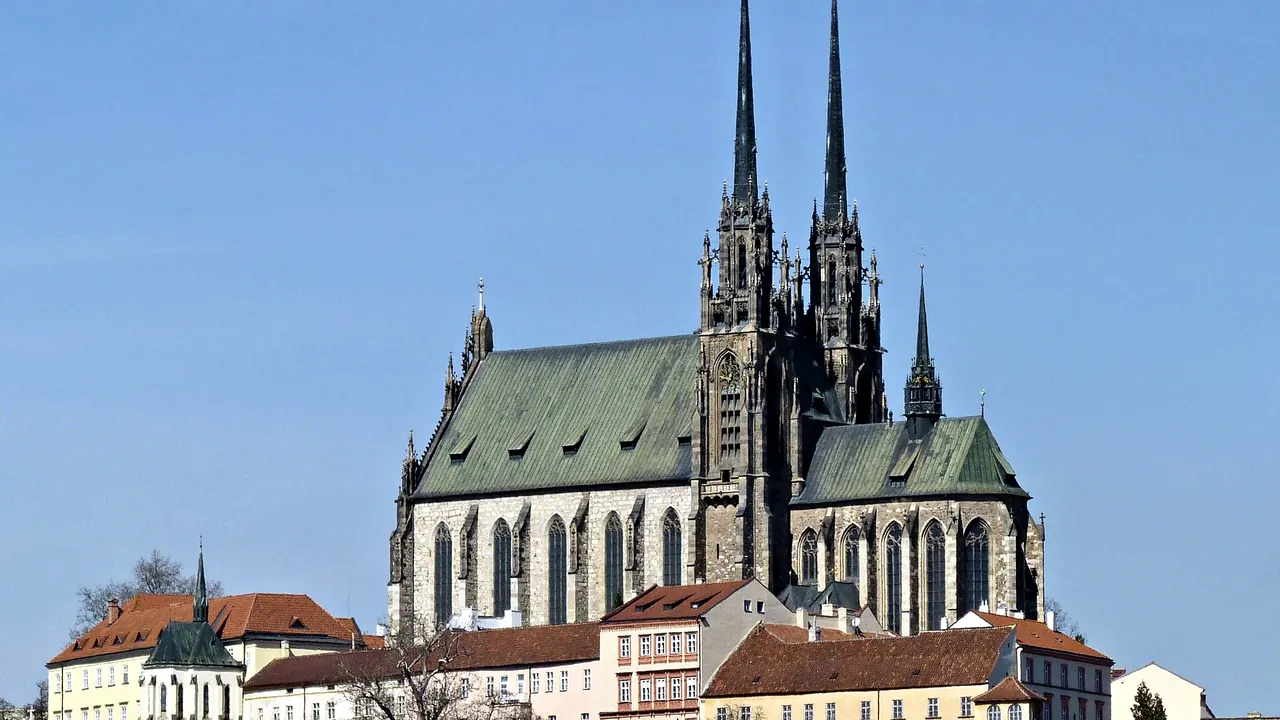
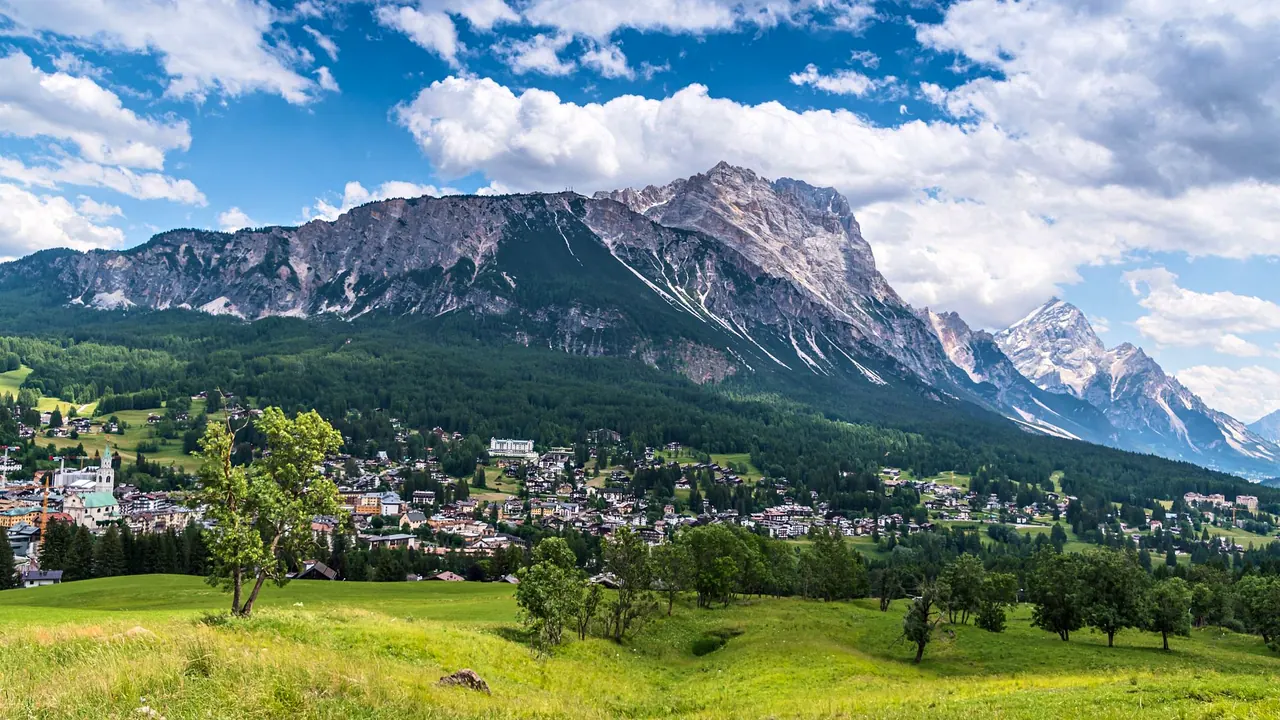
Photos: Brno by Michal Klajban, CC BY-SA 3.0, cropped; Cortina d'Ampezzo by Andreas Neubauer, Pexels License.
Brno or Cortina d'Ampezzo?
Our verdict in twelve categories, each scored against the same fixed benchmark cities, and the climate month by month, so you can choose for your trip.
Choose Brno for
- prices
- live music and the arts
- culture and sights
Brno suits travellers who want a city with a region around it, on a modest budget. Villa Tugendhat and the functionalist districts, Janacek at the opera, and long evenings in cocktail bars and Moravian wine cellars fill the days in town. A run of UNESCO chateaux and old towns, with Vienna and Bratislava as well, makes easy day trips by train, all without a car.
Choose Cortina d'Ampezzo for
- nature and the outdoors
- wellness
- shopping
Pick Cortina when the mountains are the whole point. The Dolomites rise straight out of the valley, and the lifts start in town, so you can ski the Dolomiti Superski in winter or hike from hut to hut and climb via ferrata in summer. In return you pay resort prices, spend quiet evenings over long dinners and probably need a hire car to get around.
Scoreboard
Twelve categories on one fixed scale from 0 to 100. The shaded stretch is the gap between the two.
Your match
Pick a travel style or drag the sliders, and both match scores follow your weighting.
Wins on prices and live music and the arts with your weighting.
Wins on nature and the outdoors and wellness with your weighting.
What matters to you?
Category by category
What the scores mean for a trip.
Beaches & swimming
Neither city is for a beach trip. Brno has slightly more to offer: the Brno Reservoir, reached by tram and boat, has grassy banks for a hot afternoon, and the Nove Mlyny lakes are an hour south. Cortina's alpine lakes, Ghedina and Pianozes, are snowmelt-cold even in midsummer, so swimming there mostly means a hotel pool.
Food & drink
The two are about equal for food, but they eat and drink quite differently. In Brno it is Czech pub cooking such as svickova and roast pork with dumplings, washed down with Starobrno lager. The city is better known for drinks than food: specialty coffee, cocktail bars and Moravian whites and Frankovka by the glass.
Cortina's Ampezzan cooking has a Venetian accent: casunziei with poppy seeds, polenta with game, barley soup. Its best meals are often on rifugio terraces among the peaks rather than in town. It has the more polished kitchens of the two, but almost nothing cheap or international.
Culture & sights
Brno has much more for sightseers. It has Mies van der Rohe's Villa Tugendhat and a whole city of interwar functionalist buildings. The Gothic cathedral faces Spilberk Castle across the old town, and below the streets are the Capuchin Crypt and the St James ossuary. The Mendel abbey is where genetics began. Together they fill two or three days.
Cortina's centre is pretty, with its basilica bell tower, painted houses and the 1956 Olympic ice stadium, and the Rimoldi art collection fills a rainy afternoon. Its most striking history, the First World War tunnels on Lagazuoi and the Cinque Torri, is up in the mountains rather than in town.
Nightlife
Brno is the better city for an evening out. During term, students fill the bars around Jakubske namesti until late, and the hidden cocktail bars, cellars and wine bars make for long nights of drinking, though there is little proper clubbing. Cortina's evenings are après-ski, the stroll along the Corso Italia and long dinners. Only the peak winter weeks keep a few smart bars and a club open late. Both go quiet in summer, Brno because the students leave and Cortina because people are up early for the hills.
Nature & outdoors
Cortina is the clear winner. The Dolomite peaks surround the town, lifts run straight up the Tofane and Cristallo, and the Tre Cime and Lago di Misurina are under an hour away. Winter brings the huge Dolomiti Superski area, and summer brings hut-to-hut trails, some of the oldest via ferrata in the Alps, climbing and paragliding.
Brno's outdoors is gentler. The Moravian Karst, half an hour north, has the Punkva Caves boat ride and the Macocha Abyss. South of the city are the Palava limestone ridge, the Podyji valley and vineyard cycling routes, but no mountains.
Day trips
Brno has far more within a day's reach, and most of it is history rather than scenery. The Lednice-Valtice estate of chateaux, follies and parkland is about forty-five minutes away, and Kromeriz, the Jewish quarter at Trebic, the square at Telc and the pilgrimage church at Zelena Hora are all UNESCO sites within an hour or two. The Austerlitz battlefield and Slavkov chateau are closer still. Olomouc, the wine towns of Mikulov and Znojmo, and even Vienna and Bratislava make easy days by train.
From Cortina, most outings head up into the mountains rather than to other towns. The nearest towns are in South Tyrol: San Candido and Dobbiaco are under an hour away, and Brunico has its castle. Bolzano, where the Iceman is kept, is about two hours by road, and Venice is a long day by coach. They are pleasant towns, but not ones to plan a trip around.
Good for families
The two are equally good for children, but in different ways. Brno has more for rainy or slow days: the hands-on VIDA science centre, the hillside zoo, the mammoths in the Anthropos pavilion and the planetarium. The underground boat ride at Punkva is the outing children tend to remember.
Cortina works for active families, with ski schools, beginner slopes at Socrepes, skating at the Olympic stadium and gentle summer walks to huts and a rope park. Wet days can drag, though, and the costs add up quickly.
Getting around
Brno is far easier to get around. Its small centre is mostly pedestrianised, and a dense tram network reaches Villa Tugendhat, the zoo and the reservoir. The same ticket covers regional trains across South Moravia, so most day trips need no car.
Cortina's centre is walkable, and ski buses and lifts serve the slopes in winter. But the town has had no railway since 1964, so you arrive by coach from Venice or by road. Buses to the passes are limited, and many visitors hire a car.
Shopping & style
Cortina is the better choice for shopping, though it is all on one short street. The Corso Italia has luxury fashion, jewellers and upmarket mountain wear, and the multi-storey Cooperativa di Cortina, founded in 1893, sells local food and outdoor gear. There are also wood carving and filigree crafts. Brno has high-street chains on Ceska and Masarykova and a few independent shops, and the best things to take home are Moravian wine and produce from Zelny trh.
Affordability
Prices are worlds apart. Brno is inexpensive by European standards and cheaper than Prague. Hotels, weekday lunch menus, beer, wine and museum entries all cost little, and only big trade fairs push up room prices.
Cortina charges luxury-resort prices for hotels and restaurants in winter and August, and lift passes and ski hire come on top. Rifugio meals and the quieter weeks of early summer and late September help, but it is still an expensive place to stay.
Live music & performing arts
Brno has a real stage life, thanks to Janacek. His operas anchor the season at the Janacek Theatre. The Reduta, where the young Mozart played, and the ornate Mahen Theatre add drama, and the Brno Philharmonic plays all season. Opera, ballet and concerts suit visitors who do not speak Czech.
Cortina has no theatre and no regular music venue. Its live music is mostly summer chamber and classical festivals in churches and halls, sometimes out in the mountains, plus the odd concert at New Year.
Wellness & relaxation
Cortina is the more restful choice, although neither town has thermal springs. Its hotels have Alpine spas with saunas, hay baths and indoor pools for after a day on the slopes, and in June and September the valley is calm and clear. Brno's wellness is limited to public pools with saunas and a few day spas, so relaxing there means café afternoons and walks in Luzanky park.
When should you go?
Pick your month. The climate figures are measured averages, not a forecast.
Brno in July
Cortina d'Ampezzo in July
Daytime high, °C
Rainfall in the month, mm
Temperature and rainfall are climate normals, averaged over the years shown. Brno: 1991-2020 normals, Brno / Turany (8.4 km from centre). Cortina d'Ampezzo: 1991-2020 normals, Dobbiaco (22.5 km from centre).
Brno is the warmer of the two all summer. Days reach about 26°C in July and August, which is comfortable for walking the streets and for an afternoon at the reservoir. Summer brings most of Brno's rain, but the amounts are modest. May and September, at around 20°C, are the easiest months for sightseeing and trips into the wine country. From November to February the days are cold, short and grey, so a winter visit means museums, opera and pubs.
Cortina is a few degrees cooler than Brno in every month. Summer highs of about 22°C suit hiking, but June to August is the wettest part of its year, and July brings around 130mm, so a summer trip needs room for wet days. September is the better walking month, still mild and noticeably drier than high summer. With January highs near 0°C, winter is Cortina's ski season, while in Brno it is the dullest part of the year.
Which traveller are you?
On an outdoors trip, Cortina is the obvious choice. Lifts from town reach the Tofane and Cinque Torri, the Tre Cime are close by, and there is skiing, via ferrata and the Alta Via 1. Brno's caves and vineyard cycling are pleasant but much smaller in scale.
For a culture and arts trip, Brno gives you far more to do. You have modernist architecture led by Villa Tugendhat, Gothic and Habsburg landmarks, solid museums, Janacek opera and a philharmonic season. Cortina has a few small museums and summer concerts, and not much else.
On a tight budget, Brno is the sensible choice. Hotels, pub lunch menus, beer, wine, transport and museum tickets all cost little. Cortina is among the most expensive places to stay in Italy, and lift passes add to that, so budget travellers there often sleep in cheaper valleys nearby.
Before you go
| Measure | Brno | Cortina d'Ampezzo |
|---|---|---|
| Official language | Czech | Italian |
| Currency | Czech Koruna (CZK) | Euro (EUR) |
| Sockets | CE230 V, 50 Hz | CFL230 V, 50 Hz |
| Driving side | Right | Right |
| Time zone | UTC+1, UTC+2 in summer | UTC+1, UTC+2 in summer |
| Emergency number | 112 | 112 |
| Elevation | 237 m | 1,224 m |
| Main airport | Brno-Tuřany Airport (BRQ)8 km from centre40 non-stop destinations | Venice Marco Polo Airport (VCE)116 km from centre103 non-stop destinations |
| Public holidays this year | 13 days | 13 days |
By the numbers
| Measure | Brno | Cortina d'Ampezzo |
|---|---|---|
| City population | 402,739 | 5,546 |
| People per km² | 1,750 | 22 |
| Museums within 10 km | 25 | 3 |
| UNESCO World Heritage sites within 50 km | 2 | 1 |
Where else could you go?
Every comparison below shares a destination with this one, so you can follow Brno or Cortina d'Ampezzo somewhere new.
- Innsbruckvs Cortina d'Ampezzo
- Viennavs Brno
- Bratislavavs Brno
- Venicevs Cortina d'Ampezzo
- Veronavs Cortina d'Ampezzo
- Bledvs Cortina d'Ampezzo