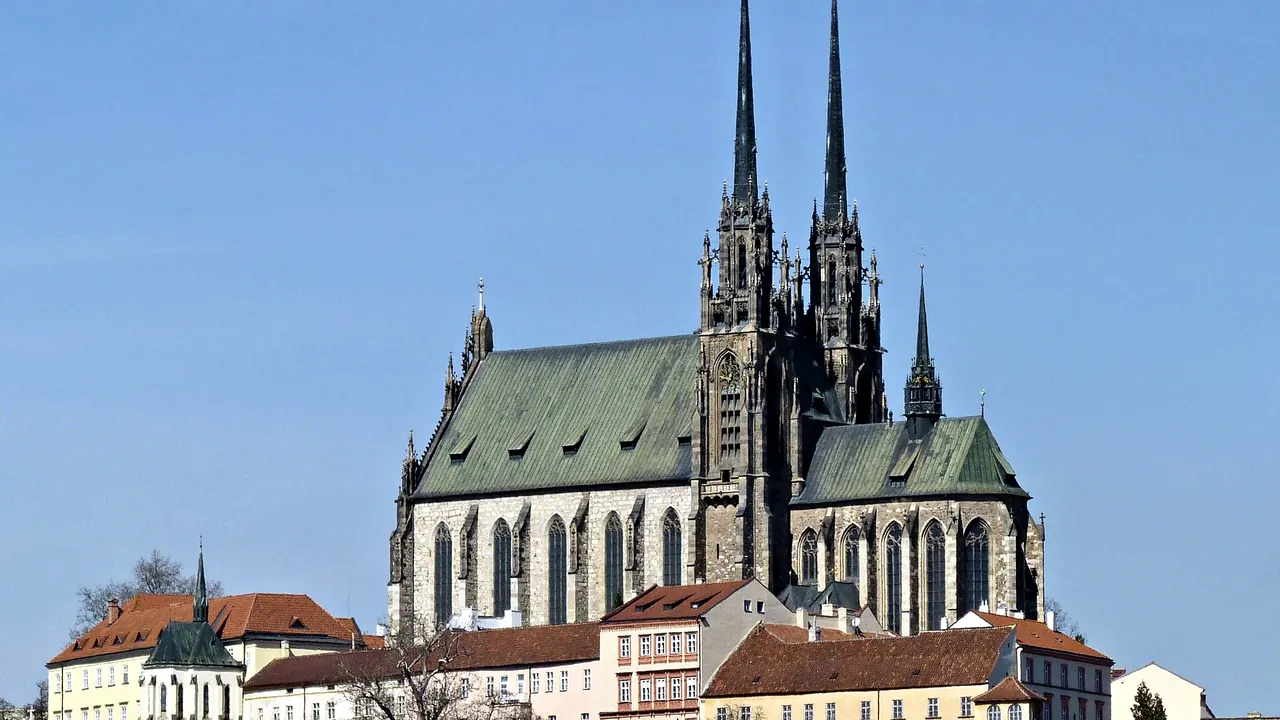
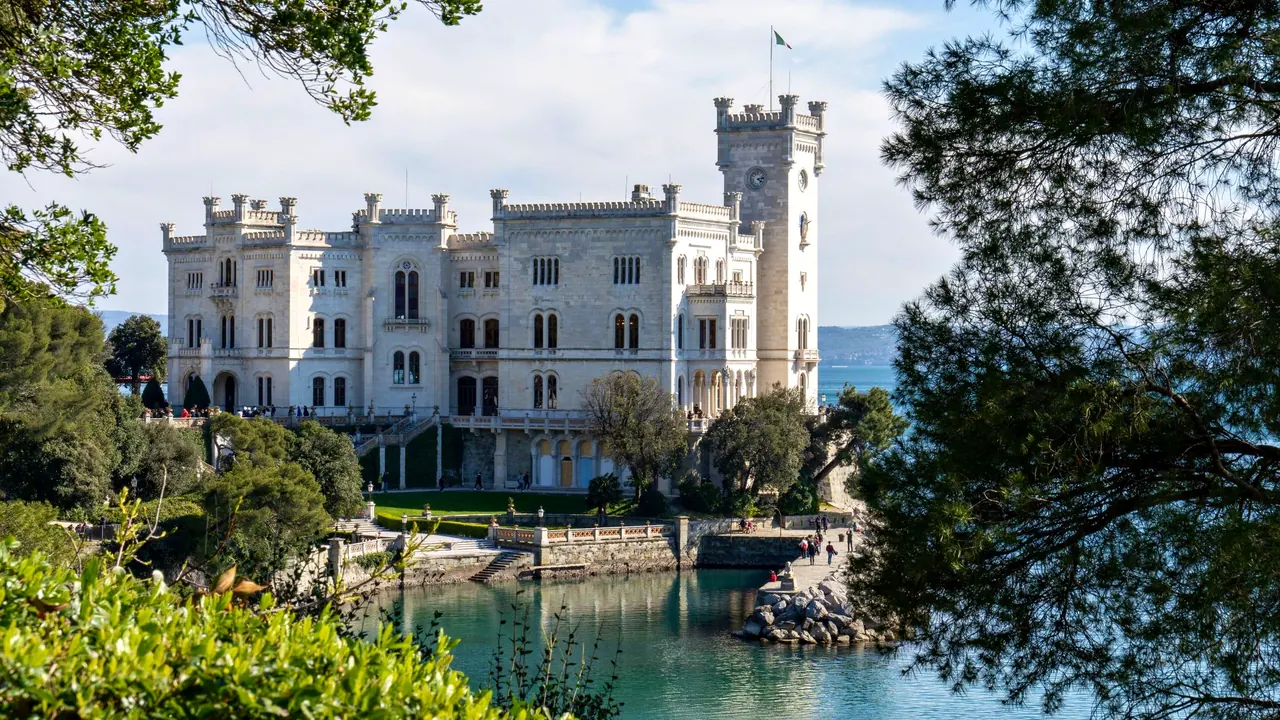
Photos: Brno by Michal Klajban, CC BY-SA 3.0, cropped; Trieste by Tibor Szabo, Pexels License.
Brno or Trieste?
Our verdict in twelve categories, each scored against the same fixed benchmark cities, and the climate month by month, so you can choose for your trip.
Choose Brno for
- prices
- nightlife
- getting around
Brno suits travellers who want an inexpensive, easy base and a lot of country within reach. Its own sights take two or three days, led by Villa Tugendhat and the interwar modernist buildings. Then one ticket covers the trams and the regional trains to the Lednice-Valtice estate, the Moravian wine towns and the karst caves. Evenings belong to small cocktail bars, cellars and Moravian wine during term time, so it rewards drinkers more than diners.
Choose Trieste for
- beaches
- food and drink
- nature and the outdoors
Trieste is the choice if you want the sea in your days and a grander old city around you. You can swim off the Barcola promenade, walk the Karst edge high above the gulf, and spend slow mornings in Habsburg coffee houses and lunchtimes at a buffet counter. The food has more character than Brno's, and the pace is slower. It costs more, the nights end earlier, and much of the town above the waterfront is steep.
Scoreboard
Twelve categories on one fixed scale from 0 to 100. The shaded stretch is the gap between the two.
Your match
Pick a travel style or drag the sliders, and both match scores follow your weighting.
Wins on prices and nightlife with your weighting.
Wins on beaches and food and drink with your weighting.
What matters to you?
Category by category
What the scores mean for a trip.
Beaches & swimming
Brno has no beach to speak of. The reservoir on the Svratka and the Nove Mlyny lakes are fine for a hot afternoon, but algae can spoil the water in heatwaves, and nobody would build a seaside trip around them.
Trieste is far better for swimming, though not in the way most people imagine. At Barcola you lie on concrete steps or pine-shaded lawns and climb down ladders into clear water, and the coves below Duino and Sistiana are pebble rather than sand. Strong swimmers will love it. Families wanting shallow sandy water will not.
Food & drink
Trieste eats better and more distinctively. Its buffets carve boiled pork and sausages from steaming pots, jota and marinated sardoni sit on the same menus as strudel, and Karst farmhouse osmize sell their own wine and cured meats. The coffee culture of the old Habsburg port has its own vocabulary.
Brno's plates are plainer Czech fare, svickova and goulash in beer halls. Its strength is in the glass: Starobrno lager, careful specialty coffee and Moravian whites by the glass from vineyards just south of the city. Neither city has much fine dining.
Culture & sights
Trieste has more to see, and it is grander. Piazza Unità opens onto the sea, the Borgo Teresiano runs along its canal, San Giusto has its mosaics and castle, and Miramare stands white on the coast. The Risiera di San Sabba and the great synagogue add weightier history.
Brno is narrower but has one thing Trieste does not: a world-class run of interwar modernism, with Villa Tugendhat at its heart. Its older layer, Spilberk fortress, the cathedral and the crypts with mummified monks, fills two or three days well.
Nightlife
Brno gives you more to do after dinner, as long as the students are in town. Bars around Jakubske namesti stay full late, and the city's cocktail bars hide behind unmarked doors and down cellar steps. In July and August it goes quiet.
Trieste does evenings in a gentler way, with a spritz on Piazza Unità or along the Canal Grande, then a late drink at the Barcola kiosks in summer. That is the season Brno empties. Neither city is a clubbing destination.
Nature & outdoors
Both cities sit beside limestone karst full of caves, but Trieste's outdoors starts right behind the houses. The Strada Napoleonica runs along the plateau edge above the gulf, Val Rosandra offers hiking and climbing, and the Miramare marine reserve adds snorkelling and kayaking. With sailing on the gulf and the Julian Alps within reach, it covers far more ground.
From Brno you have to travel a little first. The Moravian Karst is half an hour north, where a boat follows an underground river below the Macocha Abyss. To the south are the Palava ridge, the Dyje valley and long cycling routes through vineyards, but no mountains.
Day trips
Both are excellent bases, and the difference lies in where you go. From Brno, the region's UNESCO sites come thick and close: Lednice-Valtice, Telc, Trebic and Kromeriz. Austerlitz and Olomouc are near, and Vienna and Bratislava are both easy train rides.
From Trieste, the days cross borders: Aquileia's mosaics and Palmanova's star plan in Friuli, Piran and Ljubljana in Slovenia, and Venice about two hours away by train. Some of it, such as Istria, really needs a car, while Brno's network covers almost everything by rail and bus.
Good for families
Both cities are safe and calm with children, and neither has much built for them. Brno has more indoor options for wet days, including the VIDA science centre, the Anthropos mammoths and the planetarium, plus a hillside zoo. Its trams make getting about simple.
Trieste's best family days are outdoors: Miramare's gardens, the huge Grotta Gigante and summer afternoons at Barcola. However, swimming off rocks and long flights of steps suit older children better than toddlers.
Getting around
Brno is slightly easier. Its pedestrianised centre takes a quarter of an hour to cross, and a dense tram network reaches Villa Tugendhat, the zoo and the reservoir. The same ticket also covers regional trains across South Moravia.
Trieste's flat waterfront core is just as walkable, but the climb to San Giusto is real exercise, and beyond the centre you depend on buses. Its compensation is the passenger boats across the bay to Muggia.
Shopping & style
Neither city is worth visiting for its shops, though Trieste has a little more character. Antique and second-hand shops fill the old-town lanes, and the best things to take home are coffee from local roasters, Karst honey and presnitz.
Brno's centre is mostly chains along Ceska and Masarykova, with a few vintage and design shops. Its best souvenir is Moravian wine bought straight from a cellar.
Affordability
Brno is clearly the cheaper trip. Weekday lunch menus, beer and local wine cost very little, and only the cocktail bars, specialty coffee and trade-fair weeks push costs up.
Trieste is good value for northern Italy, and some of its best pleasures cost nothing: Barcola, the cathedral hill and Karst walks. Seafood dinners and the better hotels charge full Italian rates, though, and rooms get tight around the regatta.
Live music & performing arts
The two are about level, and in both cities opera is the easiest way in for visitors. Brno's stage life revolves around Janacek, whose operas anchor the repertoire at the large modernist theatre named after him. The Reduta, one of the oldest theatres in Central Europe, is where the young Mozart played, and the Philharmonic gives a regular orchestral season.
Trieste has the waterfront Teatro Verdi and a Habsburg fondness for operetta that is rare in Italy, along with summer concerts in the San Giusto castle courtyard. Beyond the theatres its live-music scene is thin.
Wellness & relaxation
Trieste is the more restful city, though neither has thermal springs. Its calm comes from long sittings in old coffee houses, a swim in the morning and the sunset walk along the Molo Audace.
Brno offers swimming complexes with saunas, a few day spas and quiet hours in Luzanky park. It is a calm city, but it has nothing like the gulf to slow you down.
When should you go?
Pick your month. The climate figures are measured averages, not a forecast.
Brno in July
Trieste in July
Daytime high, °C
Rainfall in the month, mm
Temperature and rainfall are climate normals, averaged over the years shown. Brno: 1991-2020 normals, Brno / Turany (8.4 km from centre). Trieste: 1991-2020 normals, Trieste (1.6 km from centre).
Brno has a proper continental year. January and December highs are around 2°C, so winter walking is cold, grey and short on light. Summer is warm without being heavy, with highs near 26°C in July and August. Rain is lightest in winter and heaviest in early summer, mostly as showers. Late spring and September are the easiest months for walking the city and for day trips into the vineyards.
Trieste is milder in winter, though the Bora can make those days raw, and it is hotter in summer, with highs around 29°C and the sunniest skies in July. The sea is warm enough for swimming from June to September and reaches about 25°C at its peak. Rain behaves the opposite way to Brno's: autumn is the wettest season, with up to 125mm in November. For Trieste, choose June for swimming or May and late September for walking.
Which traveller are you?
On a beach and sun trip, Trieste is the only real option. You can swim in clear Adriatic water from the Barcola platforms or the coves at Sistiana and Duino, while Brno has only a reservoir and lakes an hour away.
For a trip on a tight budget, Brno goes further. Pub lunch menus, cheap lager and local wine, cheap museum entry and a single transport ticket keep costs low. Trieste is fair for northern Italy but charges ordinary Italian prices for seafood and smarter rooms.
On an outdoors trip, Trieste puts the landscape on your doorstep. The Karst plateau, Val Rosandra and the cliff paths start at the edge of town, and the gulf is good for sailing and snorkelling. Brno's caves and vineyards mean travelling out first.
Before you go
| Measure | Brno | Trieste |
|---|---|---|
| Official language | Czech | Italian |
| Currency | Czech Koruna (CZK) | Euro (EUR) |
| Sockets | CE230 V, 50 Hz | CFL230 V, 50 Hz |
| Driving side | Right | Right |
| Time zone | UTC+1, UTC+2 in summer | UTC+1, UTC+2 in summer |
| Emergency number | 112 | 112 |
| Elevation | 237 m | 2 m |
| Main airport | Brno-Tuřany Airport (BRQ)8 km from centre40 non-stop destinations | Trieste Airport (TRS)31 km from centre32 non-stop destinations |
| Public holidays this year | 13 days | 13 days |
By the numbers
| Measure | Brno | Trieste |
|---|---|---|
| City population | 402,739 | 198,417 |
| People per km² | 1,750 | 2,332 |
| Museums within 10 km | 25 | 33 |
| UNESCO World Heritage sites within 50 km | 2 | 5 |
| Swim season, months above 21 °C | - | 4 months |
Where else could you go?
Every comparison below shares a destination with this one, so you can follow Brno or Trieste somewhere new.