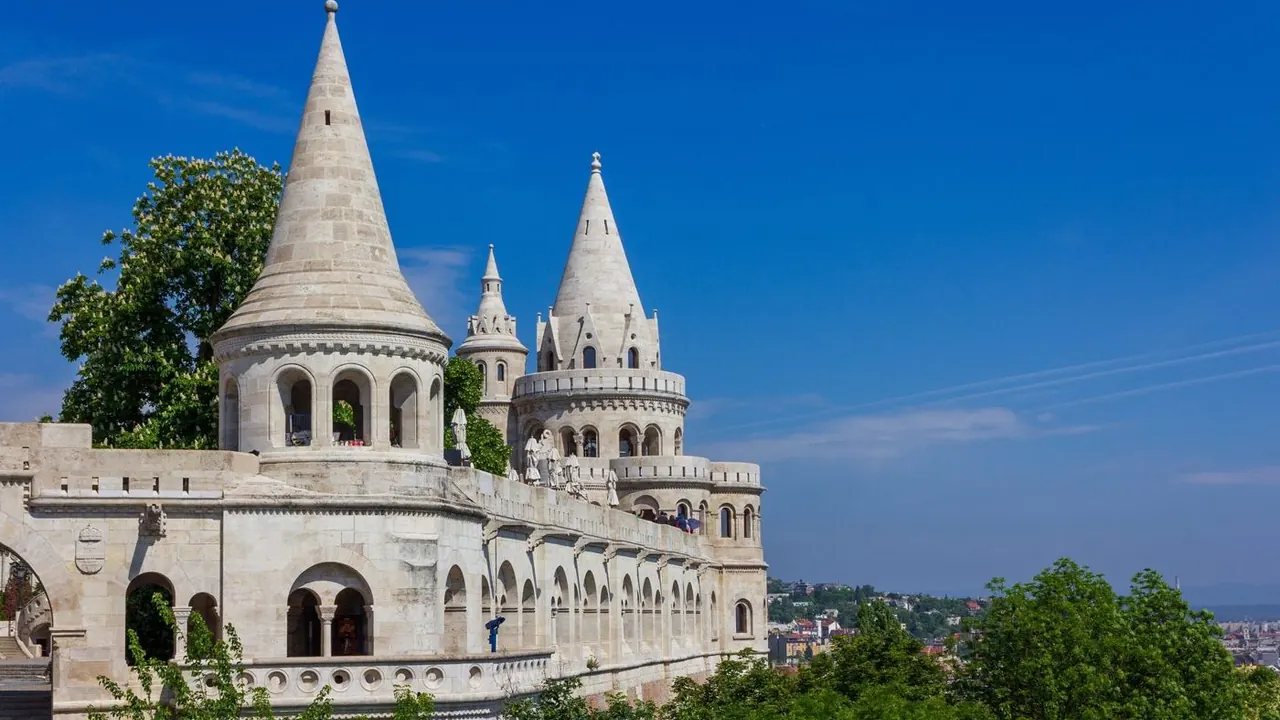
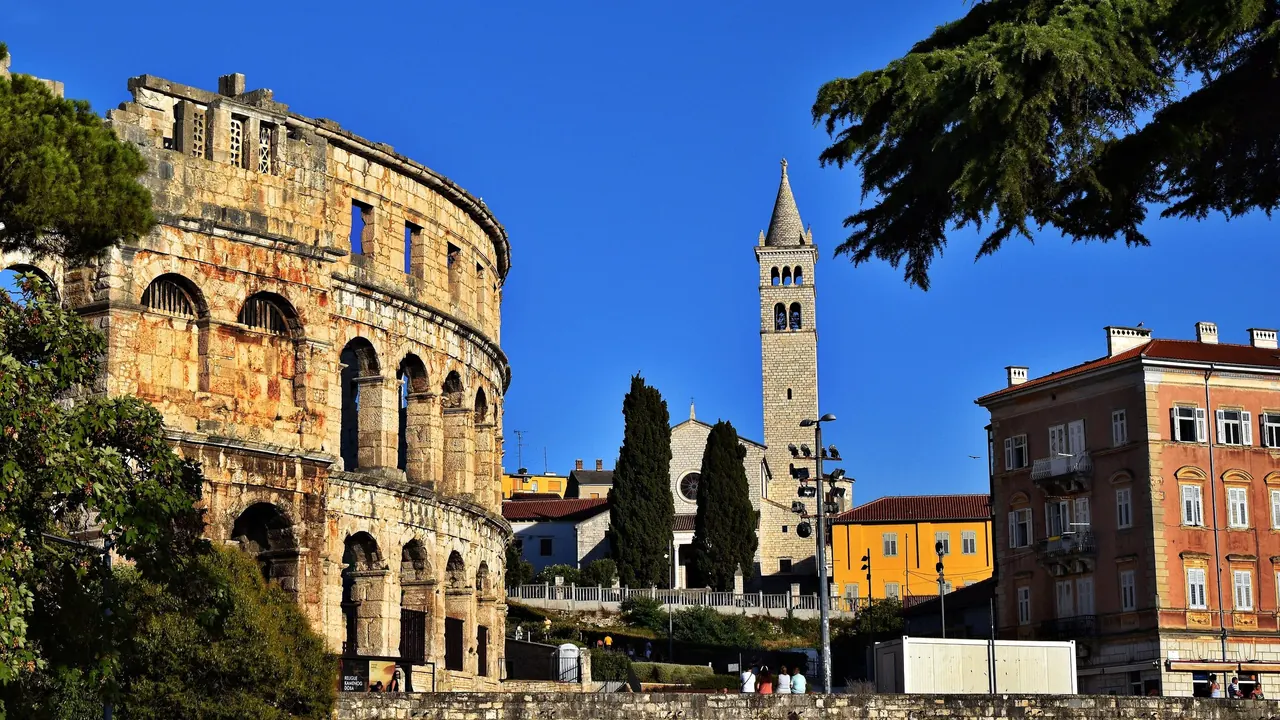
Photos: Budapest by Perituss, CC0; Pula by Miroslav.vajdic, CC BY-SA 4.0, cropped.
Budapest or Pula?
Our verdict in twelve categories, each scored against the same fixed benchmark cities, and the climate month by month, so you can choose for your trip.
Choose Budapest for
- wellness
- live music and the arts
- nightlife
Budapest is the better choice for a city trip at any time of year. You get the river front of palaces and Parliament, great concert halls and ruin bars, and above all the thermal baths, which make even a grey January afternoon worth looking forward to. It is cheaper day to day, easy to get around without a car, and has enough to fill several days without leaving town.
Choose Pula for
- beaches
- day trips
- nature and the outdoors
Pula suits a summer trip to the Adriatic: swimming in clear water off rocks and pebble coves, and evenings beside a Roman amphitheatre. Its sights take a day or two. After that, the stay is about the coast at Kamenjak and drives through Istria's hill towns and wine estates, ideally in a hire car.
Scoreboard
Twelve categories on one fixed scale from 0 to 100. The shaded stretch is the gap between the two.
Your match
Pick a travel style or drag the sliders, and both match scores follow your weighting.
Wins on wellness and live music and the arts with your weighting.
Wins on beaches and day trips with your weighting.
What matters to you?
Category by category
What the scores mean for a trip.
Beaches & swimming
Budapest has no sea, and nobody swims in the Danube. Summer swimming means the big lidos such as Palatinus on Margaret Island, or a train to shallow Lake Velence, with Balaton about two hours away.
This is where Pula is strongest. It has no sand, but the rock platforms and pebble coves around Verudela, Stoja and Medulin, and the wild inlets of Cape Kamenjak about 10km south, give clear Adriatic swimming all summer. Bring water shoes for the urchins.
Food & drink
Budapest offers more variety at the table. There is goulash, chicken paprikash and lángos, the Great Market Hall at Fővám tér, coffee houses serving Dobos cake, wine bars pouring Tokaji and Eger reds, and a serious modern restaurant scene, even if most of it stays within Central European cooking.
Pula's Istrian kitchen is the more regional: fuži with truffle, scampi buzara, Malvazija and Teran. The town itself has only a modest choice of restaurants, though, and the best meals usually mean a drive to an inland tavern or a harbour village.
Culture & sights
Budapest needs several days. There is the Parliament facing Castle Hill across the Danube, Andrássy Avenue, the old masters at the Museum of Fine Arts, the Dohány Street Synagogue, and a history in layers from Ottoman tombs to the communist statues of Memento Park.
Pula's sights are fewer but remarkable for their Roman remains. The Arena still stands complete above the harbour, the Temple of Augustus survives intact on the Forum, and the Arch of the Sergii leads into the old town. Two days cover it comfortably.
Nightlife
Budapest is a real city for going out. There are ruin bars in the courtyards of District VII, late clubs on Kazinczy and Király streets, and party boats on the Danube in summer. The downside is rowdy weekend crowds and stag groups in the centre.
Pula's nights are much gentler. In summer they mean drinks on terraces near the Forum, beach bars on Verudela and a handful of small clubs. For most of the year the town is quiet by late evening.
Nature & outdoors
Budapest has forest close to the centre. The oak and beech woods of the Buda Hills are reached by cogwheel railway and chairlift, thermal caves run beneath them, and the ridges and riverside cycle path of the Danube Bend are an hour north.
Pula has a little more variety because the sea is part of it. You can walk or cycle the car-free cliffs of Cape Kamenjak, kayak around its islets, windsurf in Premantura bay or dive on naval-era wrecks. The Učka range offers proper hiking about an hour and a half inland.
Day trips
From Budapest, the Danube Bend is the easy classic. Szentendre, Visegrád and Esztergom's basilica can all be reached by train or river, and Eger and Hollókő are about two hours out.
Pula has more within easy reach. Rovinj is about 45 minutes away, Poreč's Byzantine mosaics about an hour, and the hill towns of Motovun and Hum about an hour too. There are boats to the Brijuni islands, and Piran and Trieste make longer drives. Most of these are much easier with a car than by bus.
Good for families
Both cities work well with children, but in different ways. In Budapest the days are spent in town: the old zoo in City Park, the Children's Railway through the Buda Hills, the hands-on Palace of Wonders and the lidos with wave pools, all easy to reach by tram.
In Pula the days are spent by the water. The shallow bays at Medulin and Premantura suit small children, and there is an aquarium inside an old fort and the Arena's tunnels to explore. A dinosaur park and a water park are within an hour, although you will need a car to get there.
Getting around
Budapest is much easier to get around. Central Pest is flat and most of the sights are walkable. The riverside tram along the embankment past Parliament doubles as a sightseeing ride, and the boulevard trams run all night. The short metro is easy to learn and includes continental Europe's oldest underground line, with its little yellow carriages under Andrássy Avenue. Nobody needs a car.
Pula's old centre is compact, and you can walk between the Arena, the Forum and the harbour in a few minutes. City buses go out to Verudela. Beyond that, slow trains and infrequent regional buses mean you will really want a car or scooter for Kamenjak and inland Istria.
Shopping & style
Budapest is not a shopping destination, but it gives you more to look for. There is Herend and Zsolnay porcelain, small Hungarian design boutiques in Districts V and VII, weekend design markets in old courtyards, and Ecseri flea market for communist-era finds.
In Pula, the shopping is mostly about food to take home: Istrian olive oil, truffle products, wine, honey and pršut from the market hall or straight from producers. The main street has chain stores and souvenirs.
Affordability
Budapest is the lighter on the wallet. Public transport, wine and ordinary coffee houses cost little, and good mid-range rooms are easy to find within walking distance of the sights. Costs only build up around Váci utca and the grand cafés.
Pula is mid-priced, and reasonable in spring and autumn. In July and August, though, rooms cost about as much as on Western European coasts, and car hire and boat trips, which are hard to avoid here, add up quickly.
Live music & performing arts
Budapest has music most nights of the year. There is opera at the State Opera House on Andrássy Avenue, chamber and orchestral concerts in the Art Nouveau hall of the Liszt Academy, the national concert hall at Müpa, and operetta and folk dance too.
Pula has one great summer stage: the Arena itself, used for touring concerts and the film festival screenings under the stone arches. Outside summer there is little beyond Croatian-language drama at the Istrian National Theatre.
Wellness & relaxation
Budapest is built on hot springs, and its baths are its greatest draw for relaxing. You can sit in the outdoor pools of the Széchenyi in the snow, in the Art Nouveau hall of the Gellért, or under the sixteenth-century Ottoman domes of Rudas and Király, and follow it with a slow coffee house afternoon.
Pula has no tradition of this kind. Wellness there means a hotel spa on Verudela or in Medulin, though walks along the pine-shaded coastal paths and long coffees on the Forum are restful in their own way.
When should you go?
Pick your month. The climate figures are measured averages, not a forecast.
Budapest in July
Pula in July
Daytime high, °C
Rainfall in the month, mm
Where the figures come from
Pula's temperatures are measured 87 km from the centre, at Trieste.
Pula has no rain gauge within 25 km of the centre, so its rainfall comes from a gridded climate dataset read at the city rather than from a gauge further away.
Temperature and rainfall are climate normals, averaged over the years shown. Budapest: 1991-2020 (sunshine 1981-2010, rainfall 1981-2010) normals, Budapest Met Center (2.1 km from centre). Pula: 1991-2020 normals, Trieste (87 km from centre).
Budapest has a continental climate with real extremes. Winter days barely reach 4°C, and in July and August the streets warm to around 28°C under long hours of sun. The most comfortable months for walking are May, early June and September. Rain is moderate all year and heaviest in early summer, so no season is a washout, and the baths make the cold months more inviting than the temperatures suggest.
Pula is milder in winter, at about 9°C in January, and a little hotter in high summer. The sea is the deciding factor. It is warm enough for swimming from June to September and reaches 25°C in August. The rain arrives in autumn and peaks at 107mm in November, so late spring and early autumn are the best times for walking and cycling, and the summer months are for the beach.
Which traveller are you?
On a beach and sun trip, Pula is the clear choice. The clear water around Verudela and the wild coves of Cape Kamenjak give you months of swimming. Landlocked Budapest can only offer lidos, plus a shallow lake about an hour away by train.
For a relaxing and wellness trip, Budapest is in a different league. Its thermal baths, from the Széchenyi's steaming outdoor pools to the Ottoman domes of Rudas, are part of everyday life there. In Pula, relaxing means hotel spas and a slow pace.
On a food and nightlife trip, Budapest gives you far more to do after dark: paprika-red cooking, Tokaji and Eger wines, then ruin bars in District VII until late. Pula's Istrian cooking is good, but its evenings are quiet and mostly limited to summer.
Before you go
| Measure | Budapest | Pula |
|---|---|---|
| Official language | Hungarian | Croatian |
| Currency | Forint (HUF) | Euro (EUR) |
| Sockets | CF230 V, 50 Hz | CF230 V, 50 Hz |
| Driving side | Right | Right |
| Time zone | UTC+1, UTC+2 in summer | UTC+1, UTC+2 in summer |
| Emergency number | 112 | 112 |
| Elevation | 117 m | 5 m |
| Main airport | Budapest Liszt Ferenc International Airport (BUD)18 km from centre157 non-stop destinations | Pula Airport (PUY)7 km from centre34 non-stop destinations |
| Public holidays this year | 13 days | 14 days |
By the numbers
| Measure | Budapest | Pula |
|---|---|---|
| City population | 1,675,777 | 52,220 |
| People per km² | 3,191 | 971 |
| Museums within 10 km | 81 | 4 |
| UNESCO World Heritage sites within 50 km | 1 | 1 |
| Swim season, months above 21 °C | - | 4 months |
Where else could you go?
Every comparison below shares a destination with this one, so you can follow Budapest or Pula somewhere new.