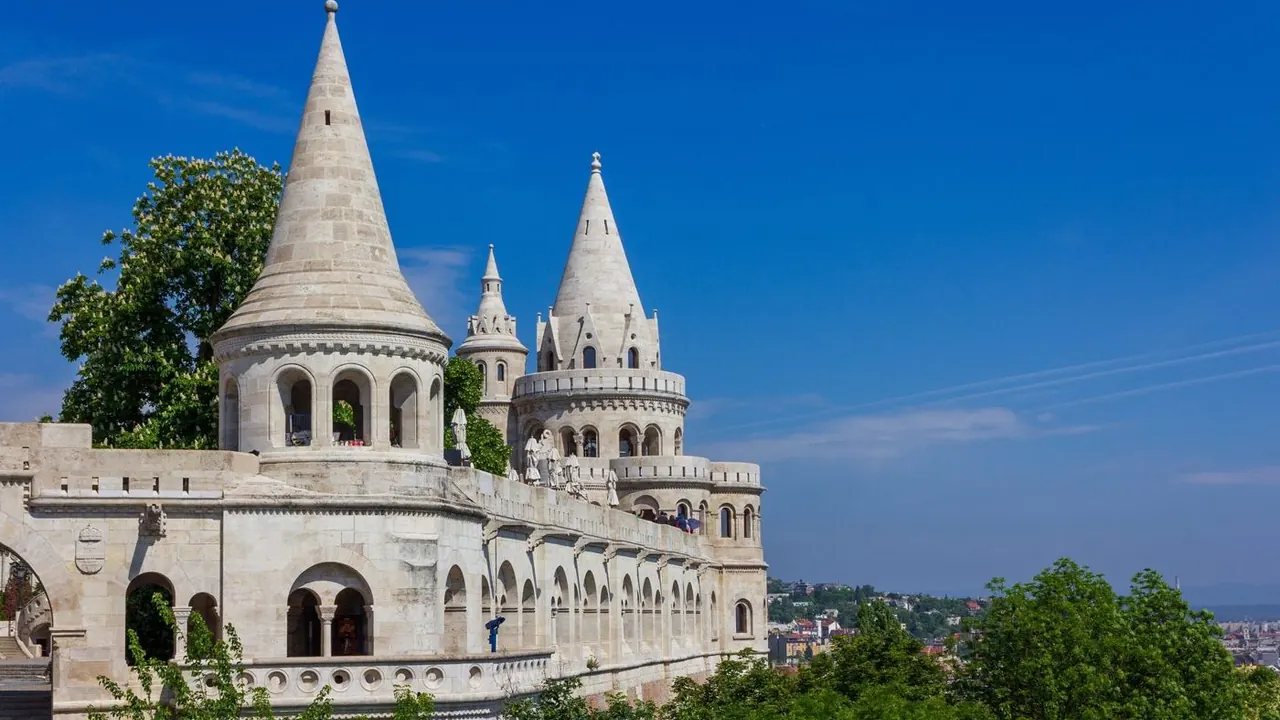
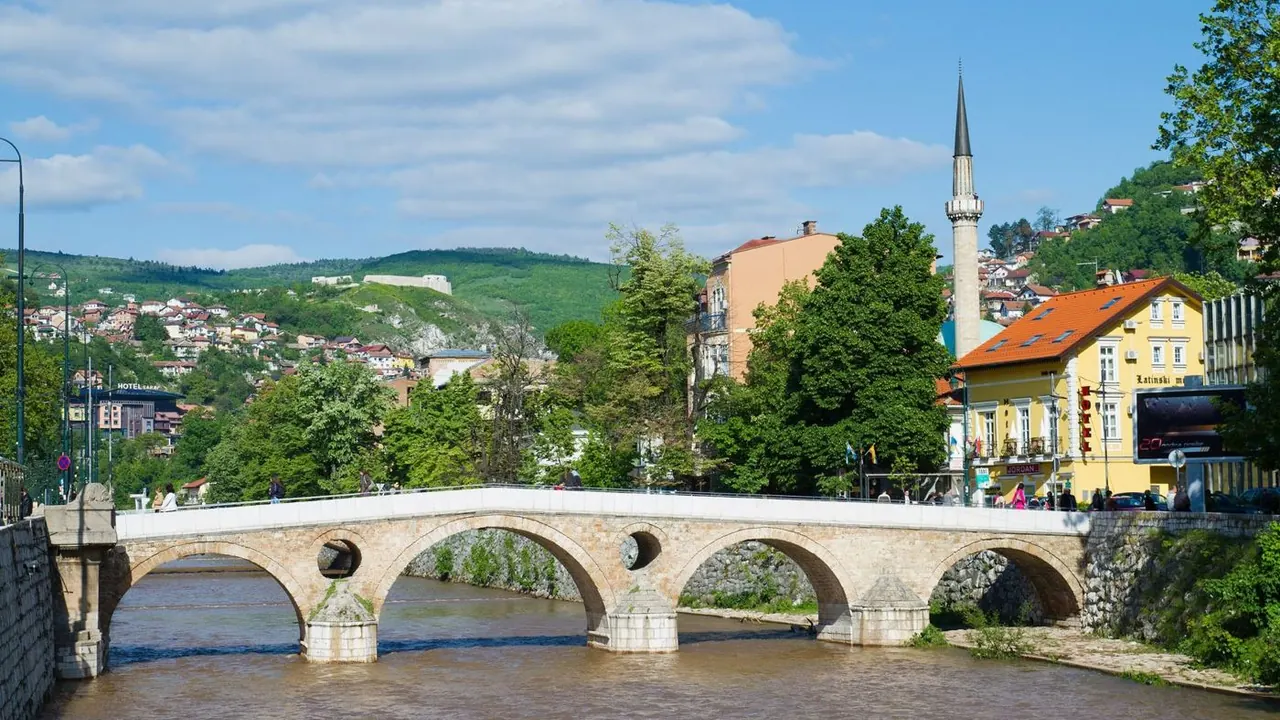
Photos: Budapest by Perituss, CC0; Sarajevo by Tumi-1983, CC0.
Budapest or Sarajevo?
Our verdict in twelve categories, each scored against the same fixed benchmark cities, and the climate month by month, so you can choose for your trip.
Choose Budapest for
- wellness
- live music and the arts
- nightlife
Budapest suits travellers who want a big capital with depth. By day there is the Danube panorama and a run of major museums, in the evening the opera or the Liszt Academy, and later the ruin bars of District VII. More than anything, it is the place for anyone who likes to slow down in hot water, because its Ottoman and Art Nouveau baths are part of everyday life. It is also the easier of the two with children, and the simpler to get around without a car.
Choose Sarajevo for
- nature and the outdoors
- prices
Sarajevo rewards a smaller, more intimate trip. Its history is close at hand, from the Ottoman bazaar to the Latin Bridge and the siege tunnel, and the mountains start at the edge of town. Walkers, skiers and anyone watching their spending get the better deal here. Nightlife, the stage and bathing are all much thinner than in Budapest, so come for the streets, the coffee and the hills.
Scoreboard
Twelve categories on one fixed scale from 0 to 100. The shaded stretch is the gap between the two.
Your match
Pick a travel style or drag the sliders, and both match scores follow your weighting.
Wins on wellness and live music and the arts with your weighting.
Wins on nature and the outdoors and prices with your weighting.
What matters to you?
Category by category
What the scores mean for a trip.
Beaches & swimming
Neither city has a coast, but Budapest makes far more of summer swimming. Its open-air lidos, with Palatinus on Margaret Island the classic, fill whole days with pools and lawns. The shallow, warm Lake Velence is under an hour away by train, and Balaton works as an overnight stay.
Sarajevo has cold mountain rivers, Jablanica lake and ordinary pools, and the Adriatic is about three hours away by road. Sea-lovers should add a few days on the Croatian or Montenegrin coast to either city, but especially to Sarajevo.
Food & drink
Both cities eat well within a narrow, traditional range, but the flavours are quite different. Budapest is all paprika and richness: goulash and paprikash, the stalls of the Great Market Hall, layered cakes in Austro-Hungarian coffee houses, and wines from Tokaj, Eger and Balaton. It also has a modern restaurant tier.
Sarajevo cooks Ottoman-Balkan food. That means ćevapi grills along Baščaršija, burek sold by weight, lamb slow-cooked under a metal lid, and Bosnian coffee from a copper džezva. It is simpler and more street-level, with beer and rakija in place of a serious wine culture.
Culture & sights
Budapest is the grander sightseeing city by some way. The UNESCO-listed river front, with Parliament facing the Castle District across the water, is joined by Andrássy Avenue, the Museum of Fine Arts and the Dohány Street Synagogue. Its layers run from Ottoman tombs to the statues of Memento Park, and seeing it properly takes several days.
Sarajevo has fewer sights, packed into a few streets, and that closeness is the point. The Gazi Husrev-beg Mosque, the cathedrals and the Old Synagogue stand within minutes of each other. The Latin Bridge, the Tunnel of Hope and the Sarajevo roses give it an emotional weight that a short visit can take in fully.
Nightlife
Budapest offers a proper night out. There are ruin bars in the tenement courtyards of District VII, late clubs on Kazinczy and Király streets, and party boats on the Danube in summer. The downside is weekend rowdiness from stag and student groups, though the wine bars of District V make for a calmer evening.
Sarajevo's evenings revolve around the café-bars of Ferhadija and the Old Town, plus a few cellar bars and small clubs. Nights tend to end over rakija rather than on a dancefloor. It is friendly and good for conversation, but there is little for anyone who wants to dance until late.
Nature & outdoors
Sarajevo is clearly ahead outdoors. A cable car climbs from the Old Town to the forests of Trebević and the old Olympic bobsleigh track. Jahorina and Bjelašnica, under an hour away, offer skiing in winter and open ridges for hiking and biking in summer. Lukomir above the Rakitnica canyon and rafting on the Neretva add real wildness, though trails are lightly marked.
Budapest's outdoors is gentler. There are walks in the Buda Hills reached by cogwheel railway or chairlift, caves under the city, and the forested Danube Bend about an hour north. It is all pleasant, but there are no mountains.
Day trips
Budapest has a slight edge, mostly because its outings are so easy by train. The Danube Bend strings together Szentendre, Visegrád and Esztergom, Gödöllő makes a half-day, and Eger, Hollókő and Pannonhalma are about two hours away.
Sarajevo's best trip is Mostar and its rebuilt bridge, reached on a scenic train through the Neretva gorge that passes Konjic and Jablanica on the way. Blagaj's dervish house and the fortress village of Počitelj go well with a Mostar visit. Travnik and the bridge at Višegrad mean slow, winding roads, so a car or a tour helps.
Good for families
Budapest is much the easier city with children. The City Park zoo with its Art Nouveau animal houses, the Children's Railway run by schoolchildren, the Palace of Wonders and the summer lidos with wave pools can fill several days. The trams take pushchairs without fuss.
Sarajevo welcomes children warmly, and the cable car, carriage rides to Vrelo Bosne and the small zoo make good outings. But its main sights are about war, the hillside districts are steep, and winter smog is hard on small lungs.
Getting around
Budapest makes a large city simple without a car. Pest is flat, the trams are excellent (line 2 along the embankment works as a sightseeing ride), and the short metro includes continental Europe's oldest line. Ferries and the funicular to the Castle District cover the river and Buda.
Sarajevo is easy to understand because it runs along one valley, and its Old Town is walkable. But the tram is really a single line. Away from it, buses and minibuses climb steep slopes, and the Tunnel of Hope and the ski mountains need a taxi or a tour.
Shopping & style
Budapest gives shoppers more to work with. There is Herend and Zsolnay porcelain, small Hungarian design boutiques in Districts V and VII, paprika and Tokaji at the Great Market Hall, and communist-era finds at Ecseri flea market.
Sarajevo does one thing well. Coppersmiths still hammer coffee sets on Kazandžiluk, and kilims, leather slippers and filigree jewellery fill the bazaar lanes. Outside Baščaršija there is little beyond malls and chains.
Affordability
Sarajevo is the cheaper city by a clear margin. Ćevapi, pastries, bazaar coffee, trams, taxis and museum entry all cost very little, and central guesthouses are well below Western European levels.
Budapest is still good value next to Western capitals, especially for transport and wine. Costs climb in the tourist core around Váci utca and in the grand historic cafés, and lunch menus in residential districts are the way to bring them down.
Live music & performing arts
For an evening of music, Budapest is in a different league. The State Opera House, the Art Nouveau hall of the Liszt Academy and Müpa mean classical music most nights, with operetta, folk ensembles and small jazz clubs as well.
Sarajevo's National Theatre stages opera, ballet and drama, and the Philharmonic plays regularly. Even so, its stage life comes alive mainly at festivals such as MESS and the November jazz festival. Its most distinctive sound is sevdah, heard in traditional restaurants and small clubs.
Wellness & relaxation
This is where the two cities are furthest apart. Budapest is one of the world's great bathing cities. The steaming outdoor pools of Széchenyi, the mosaics of the Gellért and the Ottoman domes of Rudas and Király make a soak part of the daily routine rather than a treat.
Sarajevo's answer is the spa at Ilidža, where the springs have been used since Roman times, with the shaded avenue of Vrelo Bosne nearby for a calm walk. Otherwise, relaxing here means lingering over a Bosnian coffee, since the old hammam no longer works as a bath.
When should you go?
Pick your month. The climate figures are measured averages, not a forecast.
Budapest in July
Sarajevo in July
Daytime high, °C
Rainfall in the month, mm
Temperature and rainfall are climate normals, averaged over the years shown. Budapest: 1991-2020 normals, Budapest Met Center (2.1 km from centre). Sarajevo: 1991-2020 normals, Sarajevo-Bejelave (2 km from centre).
The two cities have almost the same temperatures all year. July and August reach about 28°C in both, winter days hover around 4°C, and May, June and September are the comfortable months for walking. Rain is where they part. Budapest has dry winters and gets most of its rain as summer showers, and its long, sunny summers make June to August the season for the lidos and Lake Velence. Sarajevo is wetter in every month except July, when the two are level, with close to 90mm a month through autumn and early winter, and it gets noticeably less summer sun.
Budapest in winter is cold but fairly dry, and that is when the outdoor thermal pools are at their best, steaming with snow on the ground. In Sarajevo, late spring and late summer are best for city walks and mountain hiking. The cold months suit skiing on the Olympic mountains, but they also bring grey smog that settles in the valley.
Which traveller are you?
For a relaxing and wellness trip, Budapest is the obvious choice. You can spend afternoons moving between thermal pools, saunas and cold plunges at Széchenyi, Gellért or Rudas, then finish in a coffee house. Sarajevo has nothing like this beyond Ilidža's spa.
On an outdoors trip, Sarajevo is the better base. A cable car from the Old Town climbs Trebević, the Olympic mountains offer skiing in winter and hiking or biking in summer, and Lukomir and the Neretva rafting go well beyond Budapest's gentle hills.
On a trip on a tight budget, your money goes further in Sarajevo. Ćevapi and burek, cheap trams and taxis, low museum entry and modest central guesthouses keep costs well down. Budapest is cheaper than Western capitals but expensive around its tourist core.
Before you go
| Measure | Budapest | Sarajevo |
|---|---|---|
| Official language | Hungarian | Croatian, Serbian, Bosnian |
| Currency | Forint (HUF) | Convertible Mark (BAM) |
| Sockets | CF230 V, 50 Hz | CF230 V, 50 Hz |
| Driving side | Right | Right |
| Time zone | UTC+1, UTC+2 in summer | UTC+1, UTC+2 in summer |
| Emergency number | 112 | 112 |
| Elevation | 117 m | 518 m |
| Main airport | Budapest Liszt Ferenc International Airport (BUD)18 km from centre157 non-stop destinations | Sarajevo International Airport (SJJ)7 km from centre38 non-stop destinations |
| Public holidays this year | 13 days | 8 days |
By the numbers
| Measure | Budapest | Sarajevo |
|---|---|---|
| City population | 1,675,777 | 275,524 |
| People per km² | 3,191 | 1,947 |
| Museums within 10 km | 81 | 25 |
| UNESCO World Heritage sites within 50 km | 1 | 1 |
Where else could you go?
Every comparison below shares a destination with this one, so you can follow Budapest or Sarajevo somewhere new.