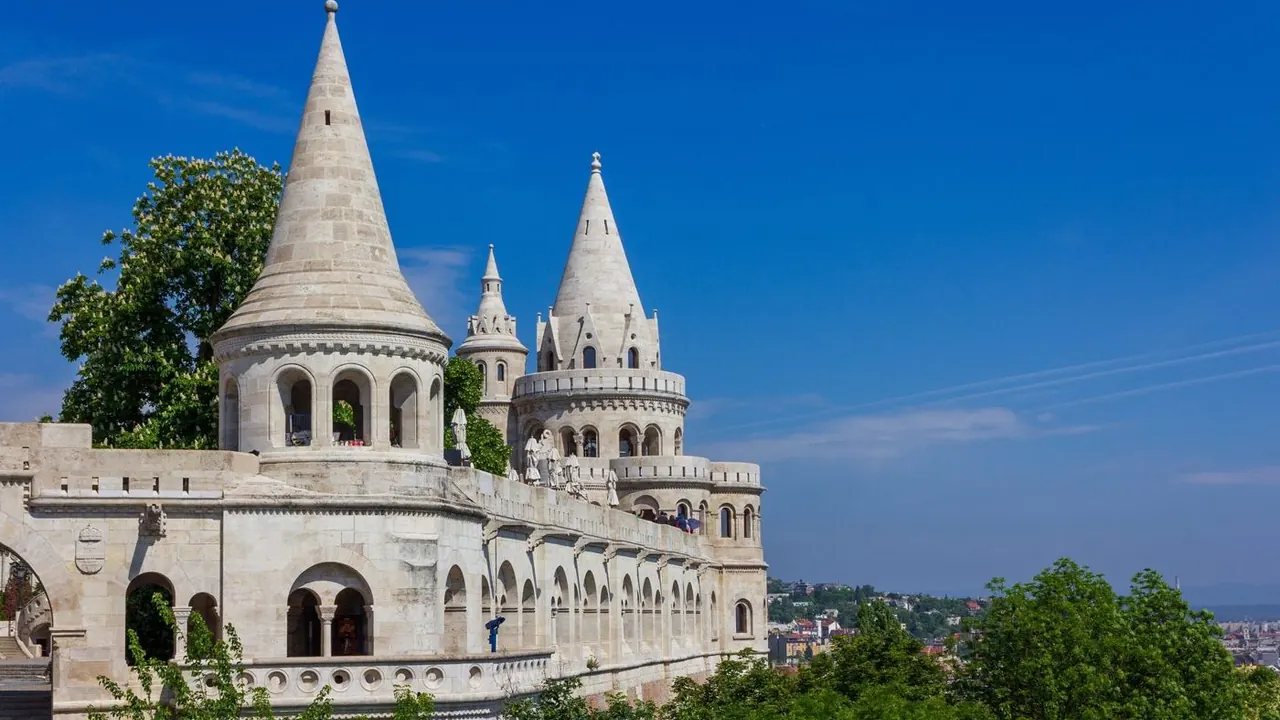
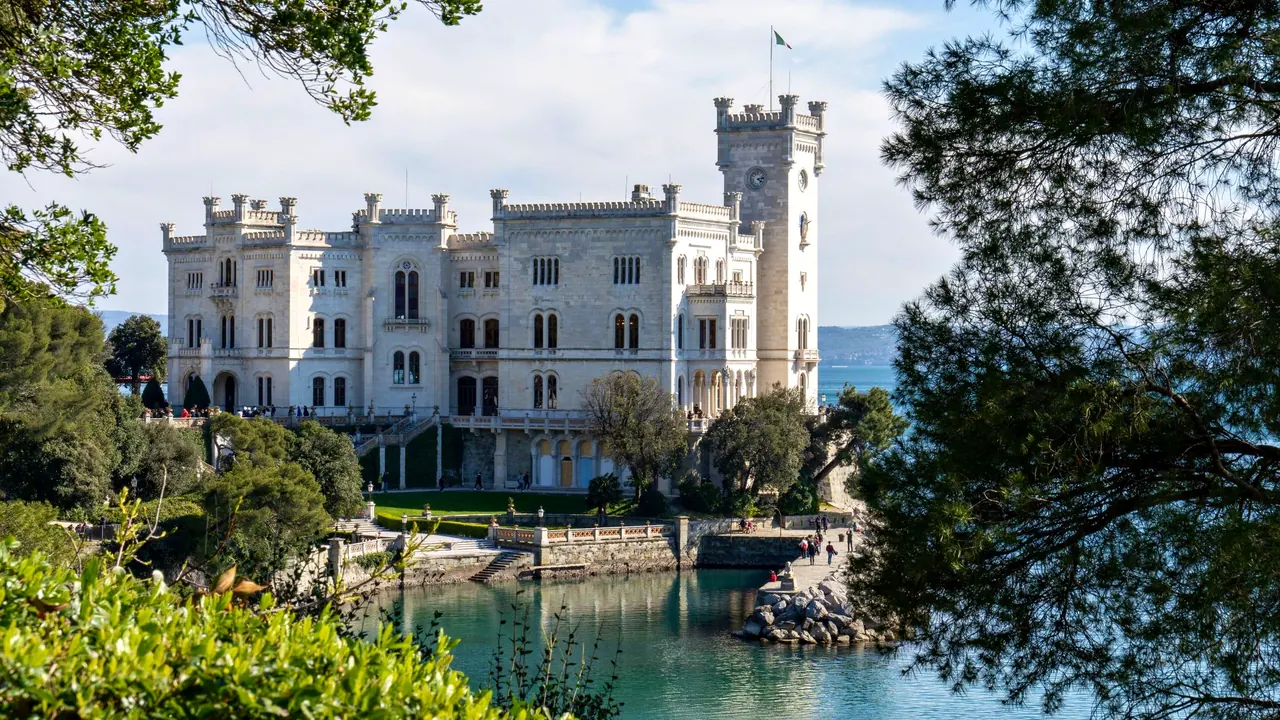
Photos: Budapest by Perituss, CC0; Trieste by Tibor Szabo, Pexels License.
Budapest or Trieste?
Our verdict in twelve categories, each scored against the same fixed benchmark cities, and the climate month by month, so you can choose for your trip.
Choose Budapest for
- wellness
- nightlife
- live music and the arts
Budapest is the city for a trip with more going on. It has the grander sights, much fuller evenings and a classical music scene with something on most nights. Above all it has the thermal baths: Ottoman domes and palace pools that make a whole afternoon of soaking part of an ordinary day. Travellers who want culture by day, a ruin bar or concert by night, and a city that is easy to get around on trams should pick it.
Choose Trieste for
- beaches
- nature and the outdoors
- day trips
Trieste suits a slower, more outdoor trip on the Adriatic. You can swim off the Barcola promenade all summer and walk the edge of the Karst plateau above the gulf. Slovenia, Friuli and Istria are all close enough for day trips. Choose it for sea air, coffee-house mornings and quiet evenings, and accept that nights out and shopping are limited.
Scoreboard
Twelve categories on one fixed scale from 0 to 100. The shaded stretch is the gap between the two.
Your match
Pick a travel style or drag the sliders, and both match scores follow your weighting.
Wins on wellness and nightlife with your weighting.
Wins on beaches and nature and the outdoors with your weighting.
What matters to you?
Category by category
What the scores mean for a trip.
Beaches & swimming
Trieste has real sea swimming and Budapest does not. In Trieste you lay out a towel on the stepped concrete and lawns at Barcola, swim from old bathing establishments with changing cabins, or go to the clear pebble coves under the cliffs at Sistiana. There is almost no sand, but swimming in the sea is part of daily life all summer.
In Budapest, summer swimming means the lidos, such as Palatinus on Margaret Island, or a train to warm, shallow Lake Velence. That is a pleasant day out, but no substitute for the Adriatic.
Food & drink
Both cities eat well, and both draw on Central Europe, but the flavours are different. Budapest is about paprika: goulash, chicken paprikash and lángos. The Great Market Hall shows off the ingredients, and the wine bars pour Tokaji and Eger reds. There is also a more ambitious restaurant tier.
Trieste mixes Italian, Austrian and Slavic cooking. Boiled pork is carved at old buffet counters, jota soup sits next to Adriatic sardoni, and the coffee comes with its own local names. Up on the Karst, farmhouse osmize sell their own Terrano and Vitovska wines. Both cities have a narrow range beyond their own cooking, and Trieste has little fine dining.
Culture & sights
Budapest has more to see and takes longer to see it. Parliament, the Royal Palace and the Fishermen's Bastion face each other across the Danube, and Andrássy Avenue runs out to Heroes' Square. The Museum of Fine Arts, the Dohány Street Synagogue, the Ottoman tombs and Memento Park fill several days.
Trieste's Habsburg seafront makes a fine setting. There is Piazza Unità facing the sea, the Canal Grande with San Spiridione, San Giusto's mosaics and Miramare Castle on the shore. But the list is shorter, and the city's literary past adds atmosphere more than sights.
Nightlife
The two are very different after dark. Budapest's old Jewish Quarter fills crumbling courtyards with ruin bars, and the bars and clubs on Kazinczy and Király streets stay loud well past 2am. In summer the party moves onto boats and garden bars by the Danube. Weekends can get rowdy with stag groups.
Trieste is built for a spritz on Piazza Unità or a late drink at the Barcola kiosks in summer. A few student wine bars are as lively as it gets, and winter weeknights are quiet by midnight.
Nature & outdoors
Trieste has more dramatic outdoors right on its doorstep. The Karst plateau rises behind the city, with the Strada Napoleonica high above the gulf and the gorge of Val Rosandra for hiking and climbing. You can snorkel and kayak in the Miramare marine reserve or sail on the gulf, and the Julian Alps are close enough for mountain days.
Budapest has the Buda Hills, oak and beech forest reached by cogwheel railway and chairlift, and good walking around the Danube Bend. It is pleasant, gentle country with no sea or mountains.
Day trips
From Trieste you can reach three countries easily. Aquileia's mosaic floor, star-shaped Palmanova and the Collio wine villages are in Friuli. Piran and Ljubljana are across the Slovenian border, and Venice is a long but realistic day by train.
Budapest's best outings are along the Danube Bend, to painterly Szentendre, Visegrád's citadel and Esztergom's basilica, all within easy reach by train. Eger and Hollókő are worth it too, but they are about two hours away, so the choice of easy day trips is narrower.
Good for families
Budapest gives children a bit more to do. There is the old zoo in City Park with its Art Nouveau animal houses, and the Children's Railway run by uniformed schoolchildren. Add the Palace of Wonders science centre and lidos with wave pools and slides.
Trieste is calm and safe, and older children love the huge Grotta Gigante cave and the grounds of Miramare. But swimming is off rocks, the upper town is steep and stepped, and toddlers get less out of it.
Getting around
Both centres are flat and easy to walk, but Budapest has the fuller network. One tram line runs along the Danube embankment past Parliament, two more circle the Grand Boulevard day and night, and the short metro is simple to learn. Its oldest line, continental Europe's first underground, still runs beneath Andrássy Avenue, and public ferries work the river.
Trieste has no metro, and the climb to San Giusto is a real staircase workout. Buses up to the Karst and out to Miramare, along with passenger boats across to Muggia, cover the rest. A car only helps for the Karst villages and trips over the borders.
Shopping & style
Neither city is a shopping destination, but Budapest has more depth. It has Herend and Zsolnay porcelain, small design boutiques in Districts V and VII, a short run of luxury labels on Andrássy Avenue and the Ecseri flea market for communist-era finds.
Trieste offers ordinary Italian clothing shops around Corso Italia and some antique shops in the old town lanes. The best things to take home are coffee, Karst wine and presnitz.
Affordability
Budapest is the cheaper of the two, especially for wine, public transport and coffee houses away from the grandest addresses. Lunch menus in residential districts keep costs down, though Váci utca and the streets around the Basilica charge more for less.
Trieste is fairly priced for northern Italy, and a buffet lunch or a coffee standing at the bar costs little. Seafood restaurants and better hotels charge normal Italian city prices, though. Rooms also get tight around the Barcolana regatta and in high summer.
Live music & performing arts
Budapest has music most nights. You can see opera at the State Opera House or the Erkel Theatre, hear concerts in the Liszt Academy's Art Nouveau hall and at Müpa, and add operetta, folk ensembles and church concerts on top. Getting tickets is easy.
Trieste has a serious opera and ballet season at the waterfront Teatro Verdi and an operetta tradition that is rare in Italy. There are summer concerts in the San Giusto castle courtyard. Outside those, live music is thin.
Wellness & relaxation
This is Budapest's strongest point. More than a hundred hot springs feed its baths: the neo-Baroque Széchenyi with its steaming outdoor pools, the mosaics of the Gellért, and light falling through the Ottoman domes of Rudas and Király onto the octagonal pools below.
Trieste has no thermal springs and only hotel spas. Its way to relax is a slow coffee-house morning or a sunset walk along the Molo Audace pier, and for real thermal baths you have to leave the city.
When should you go?
Pick your month. The climate figures are measured averages, not a forecast.
Budapest in July
Trieste in July
Daytime high, °C
Rainfall in the month, mm
Temperature and rainfall are climate normals, averaged over the years shown. Budapest: 1991-2020 (sunshine 1981-2010, rainfall 1981-2010) normals, Budapest Met Center (2.1 km from centre). Trieste: 1991-2020 normals, Trieste (1.6 km from centre).
Budapest has the sharper seasons. Summer highs reach about 28°C with long, sunny days. That suits the open-air lidos, though August afternoons can be tiring on the streets. June is also the wettest month, so early summer brings the most rain, while winter is fairly dry. Winter days stay around 4°C with little sunshine, which makes it a season for the steaming outdoor pools at the baths rather than long walks. May, June and September are the most comfortable months for exploring on foot.
Trieste is milder in winter, with days around 10°C and more sunshine than Budapest gets. January is its driest month, though the Bora can make winter days feel much colder. The sea is warm enough to swim in from June to September and reaches about 25°C in midsummer. Trieste's rain comes in autumn, building from September to a peak of about 125mm in November, so late spring and early summer give the best mix of sea and sightseeing. In winter, Trieste is the gentler place for a walk by the water, while Budapest is colder but has its hot baths.
Which traveller are you?
For a beach and sun trip, Trieste wins easily. You can swim straight into the Adriatic from Barcola's platforms, and there are pebble coves at Sistiana and Duino. Budapest is landlocked, so a swim there means a lido or a lake trip.
On a food and nightlife trip, Budapest is the better choice. The two cities eat equally well, but Budapest's evenings go much further. There are ruin bars and late clubs in District VII and wine bars in District V. Trieste's nights end after an aperitivo by the sea.
For a relaxing and wellness trip, Budapest has no real rival here. Széchenyi, Gellért, Rudas and Lukács turn soaking into a daily ritual. Trieste offers a calm pace and coffee houses, but its spas are limited to hotels.
Before you go
| Measure | Budapest | Trieste |
|---|---|---|
| Official language | Hungarian | Italian |
| Currency | Forint (HUF) | Euro (EUR) |
| Sockets | CF230 V, 50 Hz | CFL230 V, 50 Hz |
| Driving side | Right | Right |
| Time zone | UTC+1, UTC+2 in summer | UTC+1, UTC+2 in summer |
| Emergency number | 112 | 112 |
| Elevation | 117 m | 2 m |
| Main airport | Budapest Liszt Ferenc International Airport (BUD)18 km from centre157 non-stop destinations | Trieste Airport (TRS)31 km from centre32 non-stop destinations |
| Public holidays this year | 13 days | 13 days |
By the numbers
| Measure | Budapest | Trieste |
|---|---|---|
| City population | 1,675,777 | 198,417 |
| People per km² | 3,191 | 2,332 |
| Museums within 10 km | 81 | 33 |
| UNESCO World Heritage sites within 50 km | 1 | 5 |
| Swim season, months above 21 °C | - | 4 months |
Where else could you go?
Every comparison below shares a destination with this one, so you can follow Budapest or Trieste somewhere new.
- Rovinjvs Trieste
- Ljubljanavs Trieste
- Bledvs Trieste
- Venicevs Trieste
- Cortina d'Ampezzovs Trieste
- Bratislavavs Budapest