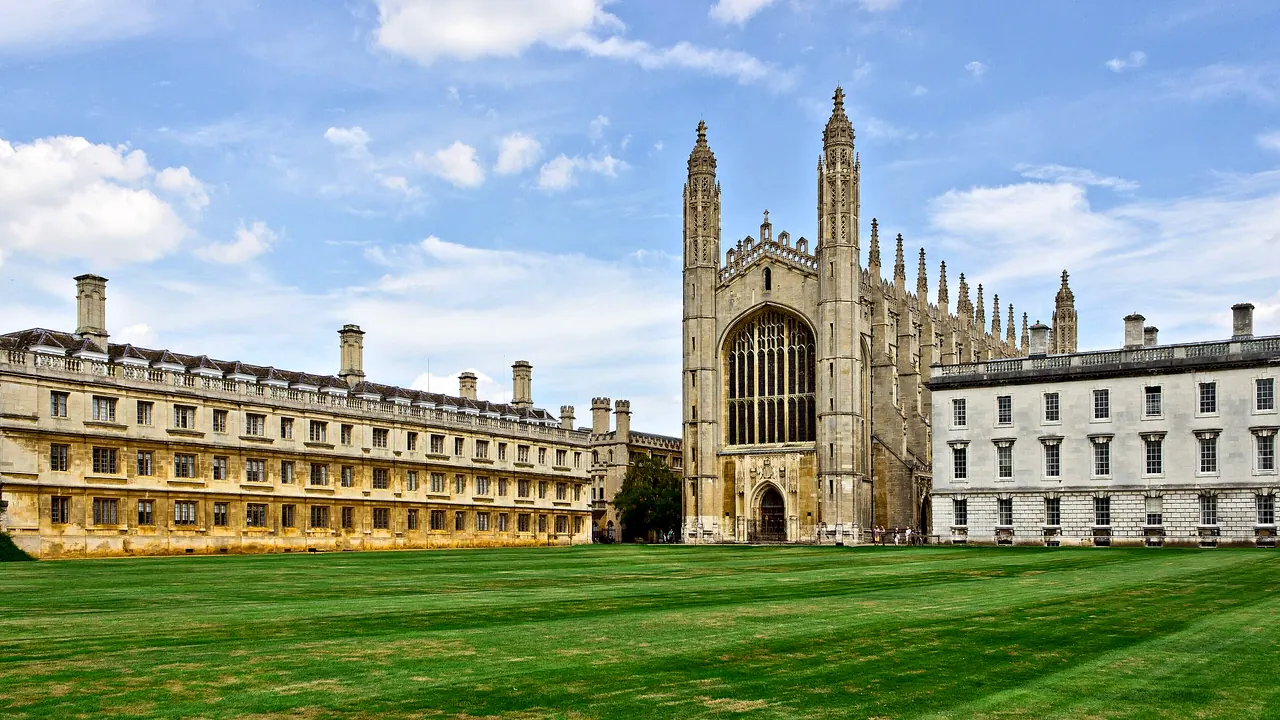
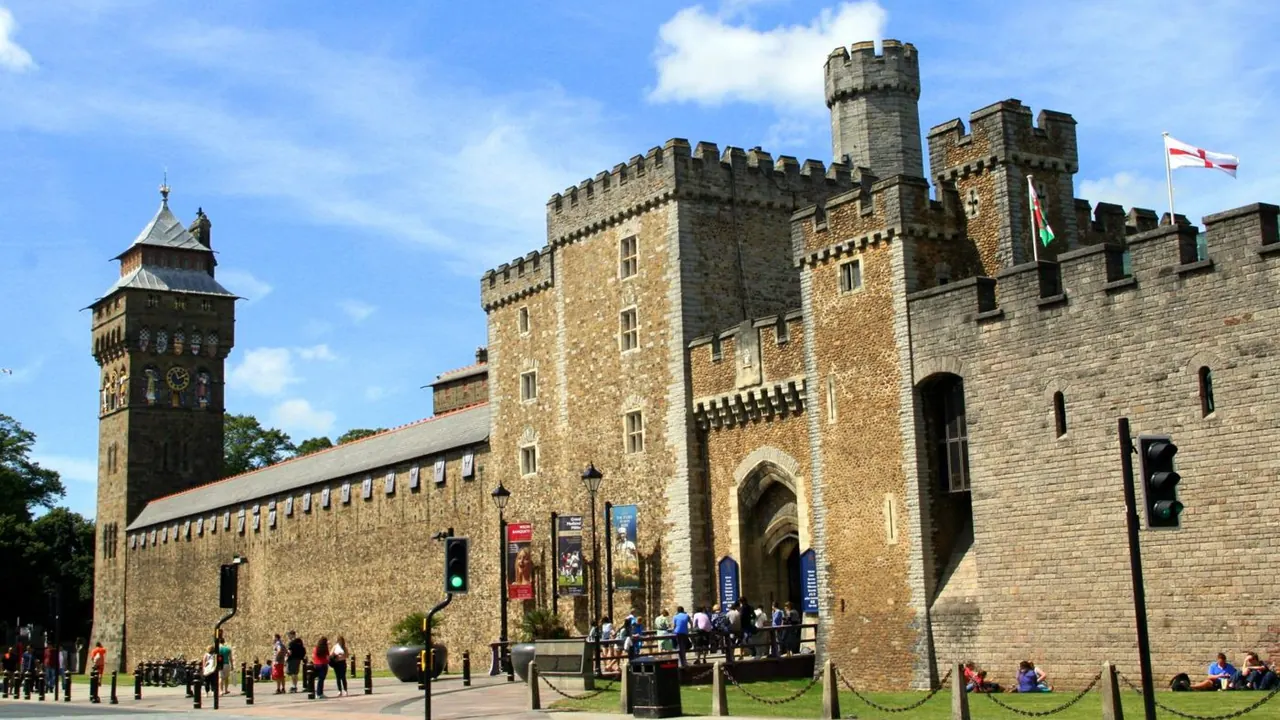
Photos: Cambridge by Dmitry Tonkonog, CC BY-SA 3.0, cropped; Cardiff by Tevfik Teker, CC BY 3.0, cropped.
Cambridge or Cardiff?
Our verdict in twelve categories, each scored against the same fixed benchmark cities, and the climate month by month, so you can choose for your trip.
Choose Cambridge for
- culture and sights
- wellness
- day trips
Cambridge suits the traveller who wants a concentrated dose of history and learning. Its colleges, chapels and university museums sit close together in a flat centre you can walk end to end. Evensong in a candlelit chapel, a punt along the Backs and an easy train to London or Ely make it a fine place for a short, unhurried trip with a lot of sightseeing. Expect to pay well for the room and to find the evenings quiet.
Choose Cardiff for
- nature and the outdoors
- beaches
- prices
Choose Cardiff if you want a capital with more going on and open country close by. It has livelier weekends, opera and grassroots gigs, Victorian arcades to browse, and the Brecon Beacons and the Gower within a drive. Castles and seaside bays are a short train ride away, and hotels cost noticeably less. You give up some architectural depth, and you should pack for rain.
Scoreboard
Twelve categories on one fixed scale from 0 to 100. The shaded stretch is the gap between the two.
Your match
Pick a travel style or drag the sliders, and both match scores follow your weighting.
Wins on culture and sights and wellness with your weighting.
Wins on nature and the outdoors and beaches with your weighting.
What matters to you?
Category by category
What the scores mean for a trip.
Beaches & swimming
Neither city is a beach destination, but Cardiff at least has sand within easy reach. Barry Island's bay, with its promenade and funfair, is about half an hour by train, Penarth has a pebble shore and a Victorian pier, and the Gower and Porthcawl's surf beaches are a longer drive west.
From Cambridge the Norfolk and Suffolk coast is roughly an hour and a half by car, so a seaside day takes real planning. Swimming there usually means fresh water instead, in the 1920s lido on Jesus Green or the river at Grantchester Meadows.
Food & drink
Food is a modest draw in both, and the difference is one of character. Cardiff has a regional thread you can actually taste: Welsh cakes off the griddle in the Victorian market, cawl, laverbread with cockles, and Welsh lamb and cheese. Its better bistros are in Pontcanna and Canton, and City Road has a long run of Middle Eastern and South Asian cooking.
Cambridge has no local cuisine to seek out. Its pleasures are the low-beamed pubs by the river and around the colleges, the daily market on Market Hill, riverside scones and the mixed kitchens of Mill Road. Either city is covered in a few meals.
Culture & sights
Cambridge has the deeper historic fabric. Its colleges along the Backs span eight centuries, with King's College Chapel's fan vaulting, Trinity's Great Court and the Wren Library at the core. Behind them stands a group of university museums led by the Fitzwilliam, unusually fine for a city of its size.
Cardiff's sights are worth two or three days too, but they are mostly Victorian. The highlights are the lavish Gothic Revival rooms inside the castle walls, the Impressionists at the National Museum and the rebuilt Welsh buildings at St Fagans, which have no real equivalent in Cambridge.
Nightlife
Cardiff is the place for a night out. St Mary Street fills with large groups on Saturdays, rugby international days turn the centre into one red crowd, and Womanby Street, facing the castle, has small alternative bars that stay open late.
Evenings in Cambridge are about old inns and riverside pub gardens, with a few livelier bars on Regent Street and Mill Road. Its clubs serve students and go quiet out of term, and locals who want a bigger night take the train to London.
Nature & outdoors
Cardiff is far better placed for the outdoors. The Taff Trail runs north from Bute Park towards the hills, and Pen y Fan, the highest peak in southern Britain, is a half-day hike about an hour's drive away. The Wales Coast Path follows the cliffs past Penarth, though wind and rain come with the territory.
Cambridge offers gentle, level country instead: punting through the Backs, water meadows on the way to Grantchester, and the birds and wild ponies of Wicken Fen. Cyclists will enjoy it, but anyone looking for hills or drama will not find them.
Day trips
Both are good bases, and Cambridge has the slight edge because London is under an hour by train. Ely Cathedral is fifteen minutes away, and Norwich, the Suffolk wool towns of Lavenham and Long Melford, Audley End and Bury St Edmunds' abbey ruins add plenty of variety.
Cardiff's trips are built around castles: Caerphilly by train, Castell Coch in the woods, and Chepstow paired with Tintern Abbey. Bath and Bristol across the Severn and the Big Pit mine at Blaenavon broaden the choice, though several of these are easier with a car.
Good for families
Both cities are small, flat and easy with children, but they keep them busy in different ways. Cambridge's best outing is the historic aircraft at Duxford, backed by punting and the whale skeleton at the free zoology museum. Cardiff counters with the hands-on Techniquest by the Bay, farm animals at St Fagans, rowing boats on Roath Park lake and Barry Island's sands and funfair for a seaside day. Neither has a zoo or theme park.
Getting around
Cambridge is the easier city on foot. Colleges, market, museums and river are packed into one compact, largely car-free centre, and a hired bike takes you out to Grantchester. Its one weakness is the station, which is about twenty-five minutes' walk from the middle.
In Cardiff the station is right in the centre, but Cardiff Bay is a half-hour walk away, so you will often need the shuttle train, a bus or the water taxi. Local trains to Penarth, Barry and Caerphilly are a real help for outings.
Shopping & style
Cardiff makes the better shopping stop, mainly because of its glass-roofed Victorian and Edwardian arcades, such as the Royal, Morgan and Castle. They are lined with independent record, vintage and book shops, and Welsh lovespoons, blankets and slate make distinctive souvenirs.
Cambridge works on a smaller scale. Its speciality is books, from old academic booksellers to second-hand dealers in the lanes, along with the daily market and a few independents on Green Street and Trinity Street.
Affordability
Cardiff is clearly the cheaper stay. Hotels are moderate on ordinary dates, though they climb sharply when the stadium hosts a match or concert, and short train fares keep day trips inexpensive.
Cambridge's limited hotel stock is in steady demand, so rooms are costly, especially in summer and at graduation time, and the famous colleges charge for entry. Free museums and free evensong soften the bill, and an out-of-term college room can be the best way to save.
Live music & performing arts
The two are broadly level, but they offer different evenings. Cambridge's distinctive sound is sacred choral music, sung by the choirs of King's, St John's and Trinity at evensong. Around that are the Arts Theatre, student comedy in the Footlights tradition and the long-running summer Folk Festival.
Cardiff has the larger stages. Welsh National Opera is based at the Wales Millennium Centre, the BBC National Orchestra of Wales is resident, small venues around Womanby Street book bands most nights, and the national stadium hosts major touring concerts.
Wellness & relaxation
Neither city has a spa or bathing tradition, but Cambridge is better at slow, restful hours. You can drift down the river in a punt, sit in a college garden or the Botanic Garden, or walk across the meadows to an orchard tea at Grantchester, as long as you avoid the summer crowds on King's Parade.
In Cardiff, relaxing mostly means a hotel spa, a Pontcanna café morning or a stroll along the Taff, and few visitors come to unwind.
When should you go?
Pick your month. The climate figures are measured averages, not a forecast.
Cambridge in July
Cardiff in July
Daytime high, °C
Rainfall in the month, mm
Where the figures come from
Cambridge's temperatures are measured 59 km from the centre, at Wattisham.
Cambridge has no rain gauge within 25 km of the centre, so its rainfall comes from a gridded climate dataset read at the city rather than from a gauge further away.
Temperature and rainfall are climate normals, averaged over the years shown. Cambridge: 1991-2020 normals, Wattisham (58.5 km from centre). Cardiff: 1991-2020 (sunshine 1981-2010, rainfall 1981-2010) normals, Cardiff-Wales Airport (14.9 km from centre).
Both cities are best from May to September, when afternoons are mild enough for walking all day and the evenings are long. Cambridge gets a little warmer in high summer, reaching about 22°C in July and August against Cardiff's 20°C. Neither gets properly hot, so heat never gets in the way of sightseeing. Winters are cool and grey in both, with short days, though neither is often bitterly cold.
The real difference is rain. Cambridge is one of the drier corners of Britain, and even its wettest month stays near 60mm, so an autumn or winter visit is quite workable. Cardiff is far wetter. The rain builds through autumn to about 103mm in November, which makes October to January the least rewarding time to go. Cardiff's sea peaks at around 18°C in August, fine for a paddle but rarely tempting for a long swim.
Which traveller are you?
On a culture and arts trip, Cambridge is the stronger pick. Eight centuries of colleges, King's College Chapel, the Fitzwilliam's collection and world-famous chapel choirs fill two or three rich days, all within a short walk of each other.
For an outdoors trip, Cardiff wins clearly. The Taff Trail starts in Bute Park, Pen y Fan and the Brecon Beacons moorland are about an hour away, and the coast path and Gower headlands give cliff walks that the flat Fens around Cambridge cannot match.
On a trip with a tight budget, Cardiff stretches the money further. Its hotels are moderately priced away from big stadium dates, its national museums are free and the train hops to castles are cheap. Cambridge's scarce rooms are priced for the wealthy south-east.
Before you go
| Measure | Cambridge | Cardiff |
|---|---|---|
| Official language | English | English |
| Currency | Pound Sterling (GBP) | Pound Sterling (GBP) |
| Sockets | G230 V, 50 Hz | G230 V, 50 Hz |
| Driving side | Left | Left |
| Time zone | UTC, UTC+1 in summer | UTC, UTC+1 in summer |
| Emergency number | 112 or 999 | 112 or 999 |
| Elevation | 6 m | 41 m |
| Main airport | London Stansted Airport (STN)37 km from centre197 non-stop destinations | Cardiff International Airport (CWL)15 km from centre30 non-stop destinations |
| Public holidays this year | 8 days | 8 days |
By the numbers
| Measure | Cambridge | Cardiff |
|---|---|---|
| City population | 123,867 | 383,536 |
| People per km² | 3,043 | 2,734 |
| Museums within 10 km | 17 | 9 |
| UNESCO World Heritage sites within 50 km | 0 | 1 |
| Swim season, months above 21 °C | - | None |
Where else could you go?
Every comparison below shares a destination with this one, so you can follow Cambridge or Cardiff somewhere new.
- Bristolvs Cardiff
- Bathvs Cardiff
- Londonvs Cambridge
- Oxfordvs Cambridge
- Oxfordvs Cardiff
- Brightonvs Cambridge