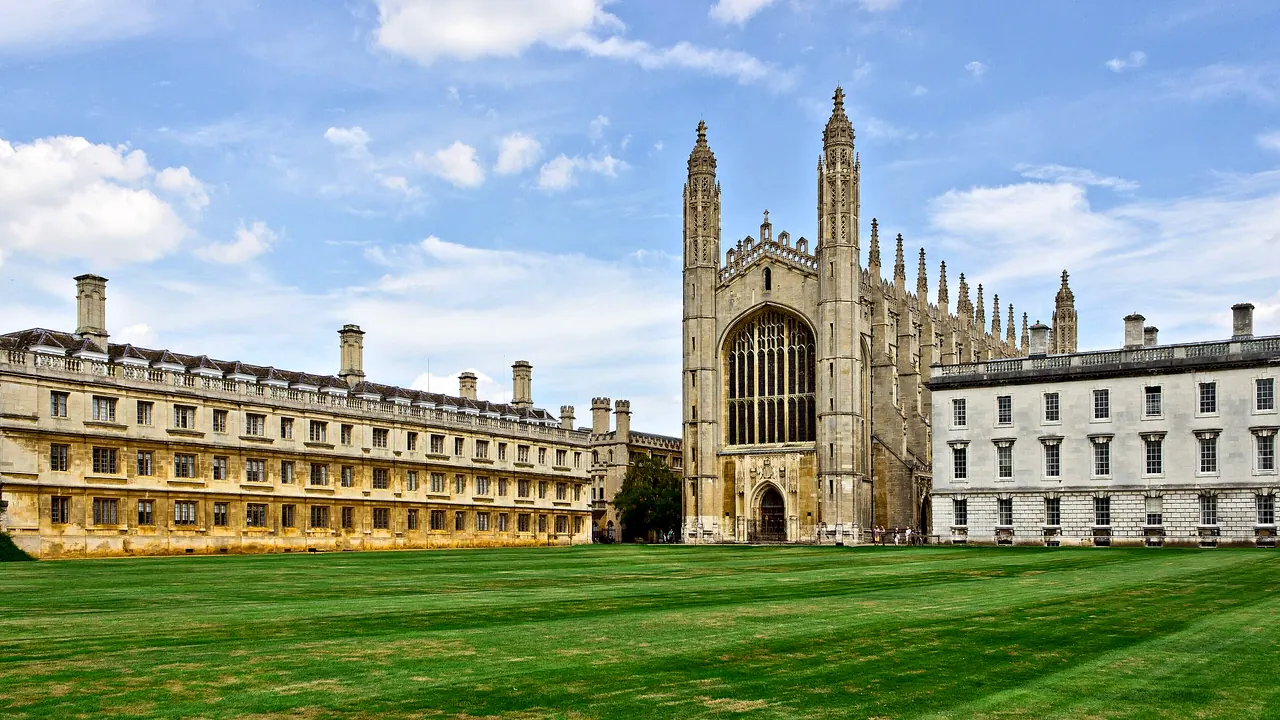
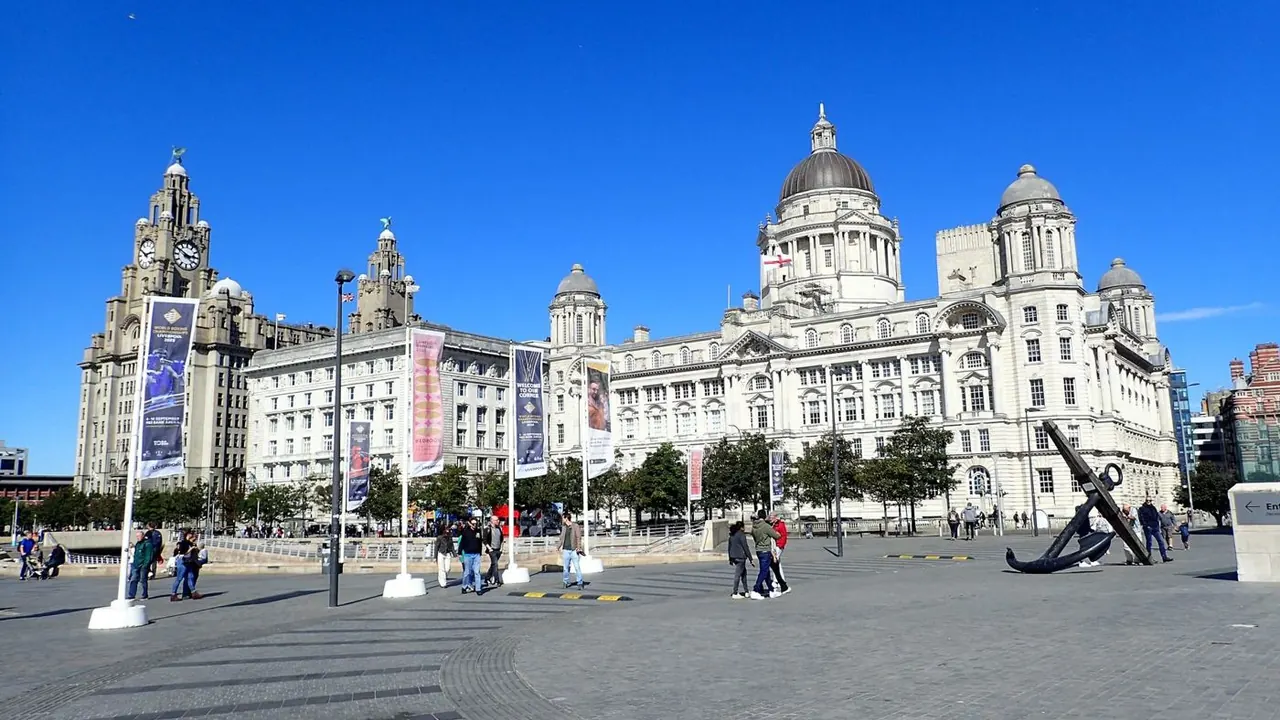
Photos: Cambridge by Dmitry Tonkonog, CC BY-SA 3.0, cropped; Liverpool by Marathon, CC BY-SA 2.0, cropped.
Cambridge or Liverpool?
Our verdict in twelve categories, each scored against the same fixed benchmark cities, and the climate month by month, so you can choose for your trip.
Choose Cambridge for
- wellness
- day trips
- culture and sights
Cambridge suits a traveller who wants history packed tightly into a small, walkable place: college courts and chapels along the Backs, a museum as grand as the Fitzwilliam, evensong by candlelight and an afternoon in a punt. It is the calmer of the two, and it makes the better base for outings, with London, Ely and the Suffolk wool towns all close. In return you pay more for your room and get quieter evenings.
Choose Liverpool for
- nightlife
- prices
- nature and the outdoors
Liverpool is the better pick if your evenings matter as much as your days. It has a real going-out culture, live bands in the pubs most nights, a respected orchestra and its own theatres, all set around a waterfront that tells the story of a great port. Money goes noticeably further, the big museums are free, and the train takes you out to the dunes at Formby and the iron figures at Crosby. It is louder and wetter than Cambridge, and not a place for a restful break.
Scoreboard
Twelve categories on one fixed scale from 0 to 100. The shaded stretch is the gap between the two.
Your match
Pick a travel style or drag the sliders, and both match scores follow your weighting.
Wins on wellness and day trips with your weighting.
Wins on nightlife and prices with your weighting.
What matters to you?
Category by category
What the scores mean for a trip.
Beaches & swimming
Neither city is for a beach vacation, but Liverpool at least has real sand within reach. Merseyrail runs out to Crosby's tidal flats and Antony Gormley's iron figures, and on to the dune-backed beach at Formby. New Brighton and West Kirby's marine lake lie across the river. The catch is the water: the tide goes out a very long way, and soft mud and currents make swimming a poor idea.
Cambridge has no coast at all. The nearest shore is about an hour and a half away by car, so swimming means the 1920s Jesus Green Lido or the Cam at Grantchester Meadows on a hot day.
Food & drink
Neither city is a reason to travel for food, and in both the old pub does a lot of the work. Cambridge offers ales and roasts in beamed rooms by the colleges, street food on the daily Market Hill market, scones in riverside tea rooms and a fair Asian and Mediterranean spread on Mill Road.
Liverpool has a little more to discover. Scouse, the stew that gave the city's people their nickname, is a genuine local dish, Chinatown is long established, and Bold Street and the Baltic Triangle's food halls give more variety among independents. Its Victorian gin palaces are also grander places to drink than most of what Cambridge has.
Culture & sights
Cambridge has the denser and older historic core. Eight centuries of colleges sit along the Backs, with King's College Chapel's fan vaulting, Trinity's Great Court and the Wren Library a few minutes' walk apart. The university museums, led by the Fitzwilliam, add far more than you would expect from a town this size. Bear in mind that several colleges charge for entry and close around exams.
Liverpool's sights are a different story, that of trade, empire and migration. The Three Graces and the Royal Albert Dock warehouses hold the maritime and slavery museums, the Walker has its Pre-Raphaelites, and the two 20th-century cathedrals face each other along Hope Street. It covers more ground and is more about the city's own past than about centuries of scholarship.
Nightlife
Here Liverpool is far ahead. Concert Square, Seel Street and Wood Street fill with bars and clubs at weekends, the Baltic Triangle's warehouses host late electronic nights, and Lark Lane has relaxed local bars. Many nights end well after 2am, and you will share the streets with stag and hen groups.
Cambridge evenings are mostly spent in the pub, often a riverside one with a garden in summer. Its clubs are small and student-focused and go quiet outside term. For a big night, people there take the train to London.
Nature & outdoors
Both sit on flat land, but Liverpool has more variety close by. Sefton Park's lake and palm house, the breezy Mersey promenade and the ferry crossing are all in town. Just beyond lie Formby's pinewoods, home to red squirrels and natterjack toads, and the Wirral Way out to the birds of the Dee estuary.
Cambridge's outdoors is gentler and smaller in scale: punting on the Cam, cattle-grazed water meadows on the way to Grantchester, and the old reserve at Wicken Fen with its dragonflies and wild ponies. It is easy country for level cycling, but it has neither coast nor dunes.
Day trips
Cambridge makes the stronger base. London is under an hour by train for a show or a museum, Ely Cathedral is a quarter of an hour away, and Norwich, Bury St Edmunds, Lavenham, Audley End and the National Trust estates at Wimpole and Anglesey Abbey are all within easy reach. You could fill a week without running out.
Liverpool has two excellent short trips in Chester's Roman walls and Rows and Manchester's museums, plus Port Sunlight and Southport closer in. After that the choice thins, and Conwy, Llandudno and the Lake District make long days.
Good for families
Both work well with children for a few days, but the outings are different. Cambridge is the quieter and greener of the two, with punting, the whale skeleton at the free Museum of Zoology, the Sedgwick's dinosaurs and, best of all, the historic aircraft at Duxford.
Liverpool leans towards animals and big free museums. Chester Zoo and Knowsley Safari Park are nearby, the World Museum has a planetarium, and the ferry is an easy treat. Its loud weekend centre is something to plan around.
Getting around
Both centres are easy on foot, but they move differently. Cambridge is the more compact and completely flat, and a hired bicycle reaches Grantchester and the outlying colleges. The station is a fair walk from the middle of town.
Liverpool spreads a little wider, with a climb up to Hope Street. Its Merseyrail lines and the ferry make the coast and the Wirral simple, which Cambridge's ordinary buses cannot match. Sefton Park and Anfield still need a bus or a taxi.
Shopping & style
Liverpool is the better shopping city. Liverpool ONE gathers the big chains and department stores in open-air streets by the docks, and Bold Street adds vintage clothes, records and independent boutiques. Football shirts and Beatles memorabilia are the usual souvenirs.
Cambridge is smaller and leans on books: academic booksellers and second-hand dealers in the lanes, the Market Hill stalls, and Mill Road's grocers and vintage shops. It is browsing to fit around sightseeing.
Affordability
Liverpool is clearly the cheaper stay. Rooms cost noticeably less for most of the year, except on match weekends, around big concerts and during the Grand National, and almost all its major museums are free.
Cambridge is expensive. Hotels are few and in steady demand, and eating out is priced like the wealthy south-east. The free Fitzwilliam and evensong help, but the famous colleges charge for entry. A college room out of term is the best way to save.
Live music & performing arts
Music is woven into Liverpool's identity. Bands play the pubs and small venues most nights, the Cavern draws pilgrims, and the Royal Liverpool Philharmonic plays a full season in its art deco hall. The Everyman and the Playhouse make their own theatre, and the Empire takes the big touring shows.
Cambridge's distinctive offering is choral. Evensong sung by the choirs of King's, St John's and Trinity is something Liverpool cannot match. Beyond that you have student comedy in the Footlights tradition, the Arts Theatre and the summer Folk Festival, but a thinner programme overall.
Wellness & relaxation
Neither has a spa culture, but Cambridge is far easier to unwind in. A slow punt along the Backs, the Botanic Garden, college gardens and the meadow walk to Grantchester all give real calm, as long as you avoid King's Parade at the height of summer.
Liverpool is built for going out rather than resting. Sefton Park, the ferry and the quiet free galleries offer some respite, but for a properly restful break you would do better to stay out on the Wirral or the coast.
When should you go?
Pick your month. The climate figures are measured averages, not a forecast.
Cambridge in July
Liverpool in July
Daytime high, °C
Rainfall in the month, mm
Where the figures come from
Cambridge's temperatures are measured 59 km from the centre, at Wattisham.
Cambridge has no rain gauge within 25 km of the centre, so its rainfall comes from a gridded climate dataset read at the city rather than from a gauge further away.
Liverpool's temperatures are measured 47 km from the centre, at Manchester Airport.
Liverpool has no rain gauge within 25 km of the centre, so its rainfall comes from a gridded climate dataset read at the city rather than from a gauge further away.
Temperature and rainfall are climate normals, averaged over the years shown. Cambridge: 1991-2020 normals, Wattisham (58.5 km from centre). Liverpool: 1991-2020 normals, Manchester Airport (47.4 km from centre).
The two follow much the same temperature curve. Winters are cold and grey, and both warm up to their best in July and August, with highs of about 22°C in Cambridge and a degree or so lower in Liverpool. May to September is the comfortable time for walking the streets in either city, and neither is ever too hot for it. The real difference is the rain. Cambridge is one of the drier parts of Britain and a little sunnier, with no month much wetter than any other. Liverpool gets steadily wetter through the second half of the year, peaking at around 85mm in October, so late spring and early summer are its kindest months.
Neither is a beach destination by climate. The Irish Sea off Liverpool reaches only about 17°C at its warmest in August, which suits a bracing walk on the sand rather than a swim. In Cambridge, a hot summer afternoon means the outdoor lido or the river at Grantchester.
Which traveller are you?
On a culture and arts trip, Cambridge has the deeper history to explore. Beyond the famous chapels, the smaller university collections reward a slow visit: Kettle's Yard, the Polar Museum, the Whipple's scientific instruments and the tiny Round Church, all an easy walk apart.
For a food and nightlife trip, Liverpool is the obvious pick. Evenings start early and run late, bands play the pubs most nights, and a bowl of scouse or a meal in Chinatown makes a more local supper than anything Cambridge offers.
On a trip on a tight budget, Liverpool makes your money go further. A hotel room costs far less than in Cambridge, where rooms are scarce and pricey. Pub meals are good value, and the compact centre means you rarely pay to get around.
Before you go
| Measure | Cambridge | Liverpool |
|---|---|---|
| Official language | English | English |
| Currency | Pound Sterling (GBP) | Pound Sterling (GBP) |
| Sockets | G230 V, 50 Hz | G230 V, 50 Hz |
| Driving side | Left | Left |
| Time zone | UTC, UTC+1 in summer | UTC, UTC+1 in summer |
| Emergency number | 112 or 999 | 112 or 999 |
| Elevation | 6 m | 70 m |
| Main airport | London Stansted Airport (STN)37 km from centre197 non-stop destinations | Liverpool John Lennon Airport (LPL)12 km from centre75 non-stop destinations |
| Public holidays this year | 8 days | 8 days |
By the numbers
| Measure | Cambridge | Liverpool |
|---|---|---|
| City population | 123,867 | 513,441 |
| People per km² | 3,043 | 4,592 |
| Museums within 10 km | 17 | 31 |
| UNESCO World Heritage sites within 50 km | 0 | 2 |
| Swim season, months above 21 °C | - | None |
Where else could you go?
Every comparison below shares a destination with this one, so you can follow Cambridge or Liverpool somewhere new.
- Manchestervs Liverpool
- Londonvs Cambridge
- Oxfordvs Cambridge
- Yorkvs Liverpool
- Brightonvs Cambridge
- Bathvs Cambridge