Canada
Toronto
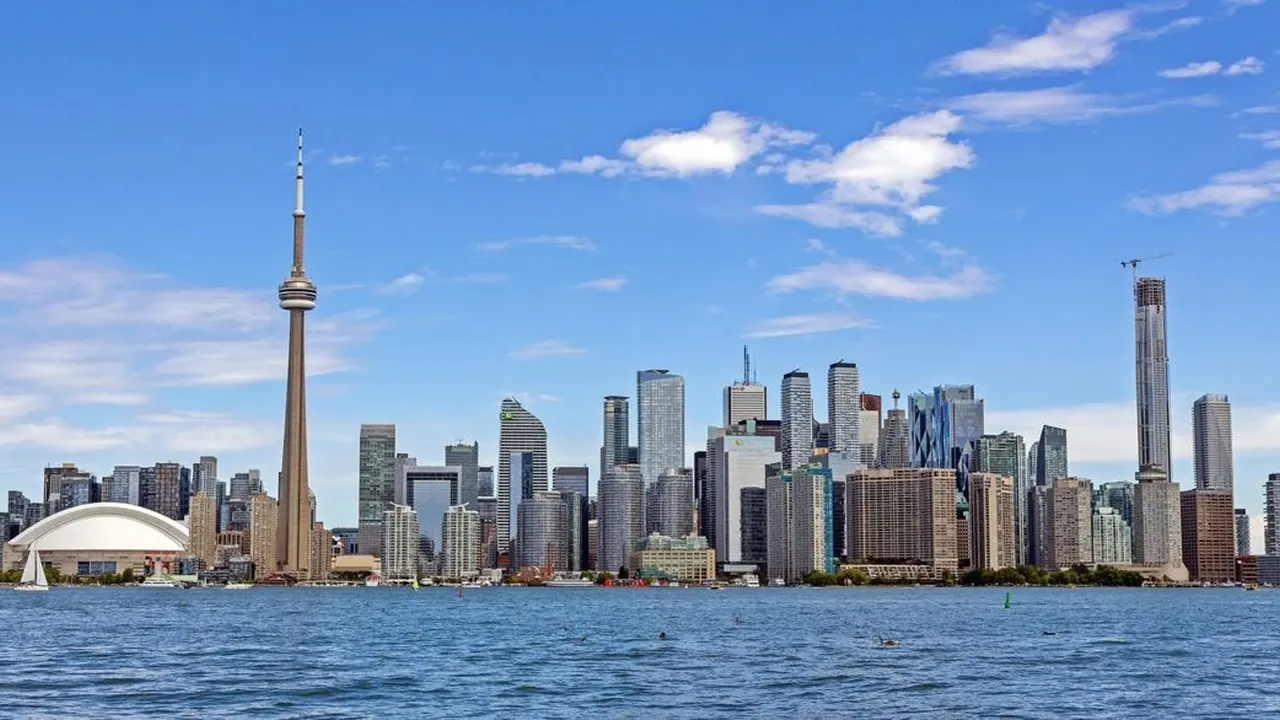
The CN Tower and skyline from the Toronto Islands
- Families74
- Live music & the arts72
- Food & drink70
Photo: Dillan Payne, CC BY-SA 4.0, cropped
Match
55
Every category weighted equally
- Beach & sun51
- Culture & arts58
- Food & nightlife59
- Family trip54
- Outdoors52
- Relax & unwind51
- Shopping & style59
- On a budget53
Toronto in twelve categories
Our verdict on each, scored 0 to 100 against the same fixed benchmark cities, so a score means the same thing on every page.
Beaches & swimming. Scores 34 out of 100.
Food & drink. Scores 70 out of 100.
Culture & sights. Scores 50 out of 100.
Nightlife. Scores 62 out of 100.
Nature & outdoors. Scores 52 out of 100.
Day trips. Scores 50 out of 100.
Good for families. Scores 74 out of 100.
Getting around. Scores 65 out of 100.
Shopping & style. Scores 66 out of 100.
Affordability. Scores 34 out of 100.
Live music & performing arts. Scores 72 out of 100.
Wellness & relaxation. Scores 33 out of 100.
Toronto category by category
Beaches & swimming
34Toronto has real beaches on Lake Ontario, which surprises many visitors. The best are on the Toronto Islands, a short ferry ride from downtown: Centre Island, Ward's Island and Hanlan's Point have sand, shallow water and views back to the skyline. In the east end, Woodbine Beach and the Beaches neighbourhood have a long sandy shore with a boardwalk.
The swimming season is short, from about July to early September. Even then the lake is unreliable. It can reach 20°C or more, but a change in wind can bring cold water up overnight, and swimming is sometimes advised against after heavy rain. Treat the beaches as a pleasant summer afternoon, not the reason for the trip.
Food & drink
70Food in Toronto is about the communities that make up the city. Spadina has a long-established Chinatown, Gerrard Street East has a Little India, and there are Portuguese bakeries along Dundas West, Greek tavernas on the Danforth and Korean restaurants on Bloor. Some of the best Cantonese, Hakka, Sri Lankan, Caribbean and Persian cooking is out in the suburbs, in Scarborough, Markham and North York, in strip-mall plazas worth the subway or bus ride.
St Lawrence Market is the classic market hall, and the peameal bacon sandwich is the city's one real local dish. Kensington Market has cheap international snacks. Downtown and along Ossington there is a serious tier of chef-driven restaurants, and Ontario wines from Niagara and Prince Edward County appear on many lists. Toronto has no cuisine of its own, but you can eat well from almost any tradition.
Culture & sights
50The Royal Ontario Museum is the main sight: a large collection of natural history and world cultures, behind a fortress of angled crystal stuck onto the old stone building. The Art Gallery of Ontario has a big holding of Canadian painting, including the Group of Seven, inside Frank Gehry's wooden and glass facade. The Bata Shoe Museum and the Aga Khan Museum are good smaller visits. The CN Tower is the landmark you will see in every photo of the city.
The historic fabric is thin. The Distillery District's Victorian industrial buildings, Casa Loma, the Old City Hall and the University of Toronto campus are pleasant, but most of the city is modern. Two or three days covers what most visitors want to see.
Nightlife
62Going out in Toronto happens strip by strip. Ossington Avenue and Dundas West have dense rows of cocktail and wine bars. Queen West and Parkdale are looser and more casual. King West has the polished clubs and lounges where people dress up, and Church Street is the heart of the gay village, which is busiest during Pride in June. College Street around Little Italy is a steady student and neighbourhood bar scene.
There is plenty of choice and the crowd is mixed, but the city winds down earlier than its size suggests, with last call at 2am and few places open beyond it. Summer patios make a big difference. In deep winter, evenings move indoors and become quieter.
Nature & outdoors
52Toronto's best natural feature is its network of ravines. These are wooded river valleys, along the Don and the Humber, that cut through the city, with trails where the traffic noise fades quickly. High Park has old oak savannah and a pond. The Toronto Islands are good for cycling, kayaking and paddleboarding with skyline views, and the Scarborough Bluffs are pale cliffs rising high above the lake. Rouge National Urban Park on the eastern edge has longer trails and farmland.
Within about an hour, the Niagara Escarpment and the Bruce Trail offer rocky hiking and waterfalls around Hamilton. The landscape is otherwise flat. Real wilderness, such as Algonquin Park's lakes and forests, is a weekend away rather than a day. Winters are cold and snowy, so outdoor plans depend on the season.
Day trips
50The obvious day out is Niagara, about an hour and a half by car or train. You can see the Falls, then visit Niagara-on-the-Lake, a well-kept 19th-century town with a theatre festival in summer and the wineries of the Niagara Peninsula around it. Most people do it as one long day.
After that the list gets short. Stratford, about two hours away, has its long-running Shakespeare festival from spring to autumn. The Mennonite country around St Jacobs and the lakeside towns along Lake Ontario are pleasant, but not reasons to travel. Prince Edward County is a better wine-and-village area, but it is too far for a comfortable day trip.
Good for families
74Toronto works well with children. The big aquarium at the foot of the CN Tower has a moving walkway through a shark tunnel, and the tower's glass floor is a guaranteed reaction. The Toronto Zoo in the east end is large and spread across forested valley, so plan a whole day. The Royal Ontario Museum's dinosaurs and mummies keep most ages busy. In summer, the ferry to Centre Island leads to Centreville, a small, old-fashioned amusement park with a petting farm, plus beaches and bike rentals.
Canada's Wonderland, a full theme park with big roller coasters, is about 40 minutes north by car. The city is safe and calm, with plenty of parks and playgrounds. Winters are cold, so indoor attractions matter more from November to March.
Getting around
65Downtown Toronto is easy to walk. It is laid out on a flat grid, and the main areas, from the waterfront through the Financial District to Kensington Market and Yorkville, are close together. In winter the PATH, a long underground network of passages beneath the core, lets you cross much of downtown without going outside. The UP Express train runs from Pearson airport to Union Station.
Public transport is simple but thin for a city this size. A few subway lines cover the main corridors, and the red streetcars along Queen, King and College reach many neighbourhoods, though slowly in traffic. Destinations in the suburbs, such as the zoo or the far-flung food plazas, take a long ride. Driving downtown is not worth the congestion or the parking.
Shopping & style
66Toronto's shopping is broad, but there is little you could only buy here. Bloor Street through Yorkville is the luxury stretch, with international fashion houses and upscale boutiques. The Eaton Centre is the large downtown mall under a long glass roof, and Yorkdale in the north holds most of the premium brands under one roof.
Independent shopping is more fun. Queen Street West and Ossington have Canadian designers, vintage and homeware. Kensington Market is a jumble of secondhand clothing, spices and odd small shops. The Distillery District has galleries and a Christmas market in December. For souvenirs, look for Indigenous art, Canadian outerwear and maple products, though none of these is special to Toronto.
Affordability
34Toronto is an expensive city to stay in. Downtown hotel rooms cost a lot, especially in summer and during the film festival in September. Eating out at sit-down restaurants climbs quickly once sales tax and the customary tip are added. Alcohol is pricey in bars.
The savings come from the immigrant food scene, where noodle shops, dumpling houses, roti spots and food courts in the suburban plazas feed you well for little. Public transport uses a flat fare, and many of the best experiences, such as walking the ravines, the Islands and the neighbourhood strips, cost nothing beyond the ferry.
Live music & performing arts
72Toronto has one of the largest English-language theatre scenes. Long-running and touring musicals fill the Royal Alexandra and the other big downtown houses, and smaller companies in the Distillery District and along Queen West stage serious drama. The Four Seasons Centre is home to the Canadian Opera Company and the National Ballet of Canada, and the Toronto Symphony plays at Roy Thomson Hall.
Live music runs deep. Massey Hall is one of the country's great old concert halls. Clubs along Queen West, College and Dundas West host indie, rock, jazz and Caribbean and African music most nights. In summer there are outdoor stages and festivals, and Stratford's Shakespeare season is within reach.
Wellness & relaxation
33Toronto is a city of hotel spas and day spas. The better ones are clustered around Yorkville and the Financial District. A few Korean-style bathhouses in the suburbs offer saunas and hot pools, but there is no real public bathing culture.
The Nordic spa experience, with outdoor hot pools, saunas and cold plunges among snowy trees, exists, but you have to drive to the countryside towns to find it. In the city, the closest you get to slowing down is a quiet walk through the ravines or an afternoon on Ward's Island. The everyday pace is practical and busy.
When should you go?
Pick a month to see what it is like. The climate figures are measured averages, not a forecast.
Toronto in July
Daytime high, °C
Rainfall in the month, mm
The whole year
Shaded against this city’s own year: the deepest cell is its best month for that figure and the palest its weakest.
Temperature and rainfall are climate normals, averaged over the years shown. Toronto: 1991-2020 normals, Toronto City (1.1 km from centre).
Before you go
| Measure | Toronto |
|---|---|
| Official language | French, English |
| Currency | Canadian Dollar (CAD) |
| Sockets | AB120 V, 60 Hz |
| Driving side | Right |
| Time zone | UTC-5, UTC-4 in summer |
| Emergency number | 911 |
| Elevation | 76 m |
| Main airport | Toronto Pearson International Airport (YYZ)20 km from centre191 non-stop destinations |
| Public holidays this year | 11 days |
By the numbers
| Measure | Toronto |
|---|---|
| City population | 2,794,356 |
| People per km² | 4,434 |
| Museums within 10 km | 32 |
| UNESCO World Heritage sites within 50 km | 0 |
| Swim season, months above 21 °C | 1 month |
Compare Toronto with
Every comparison with a written verdict behind it.