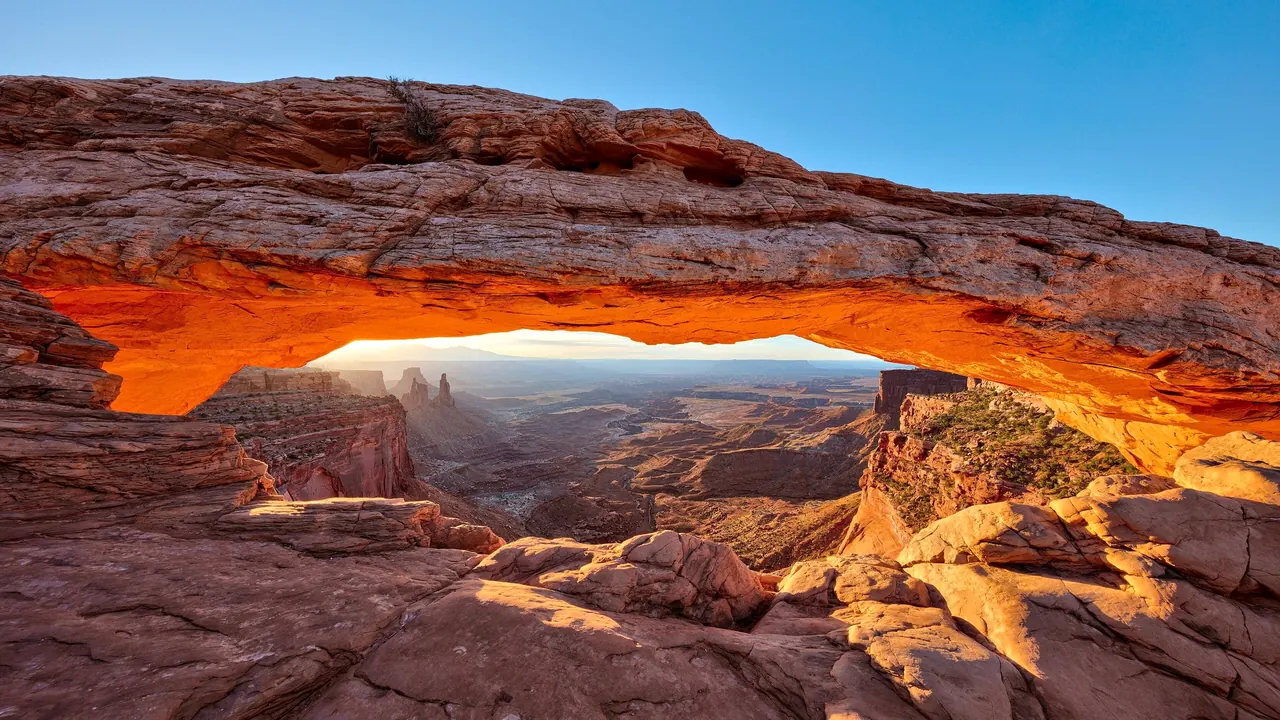
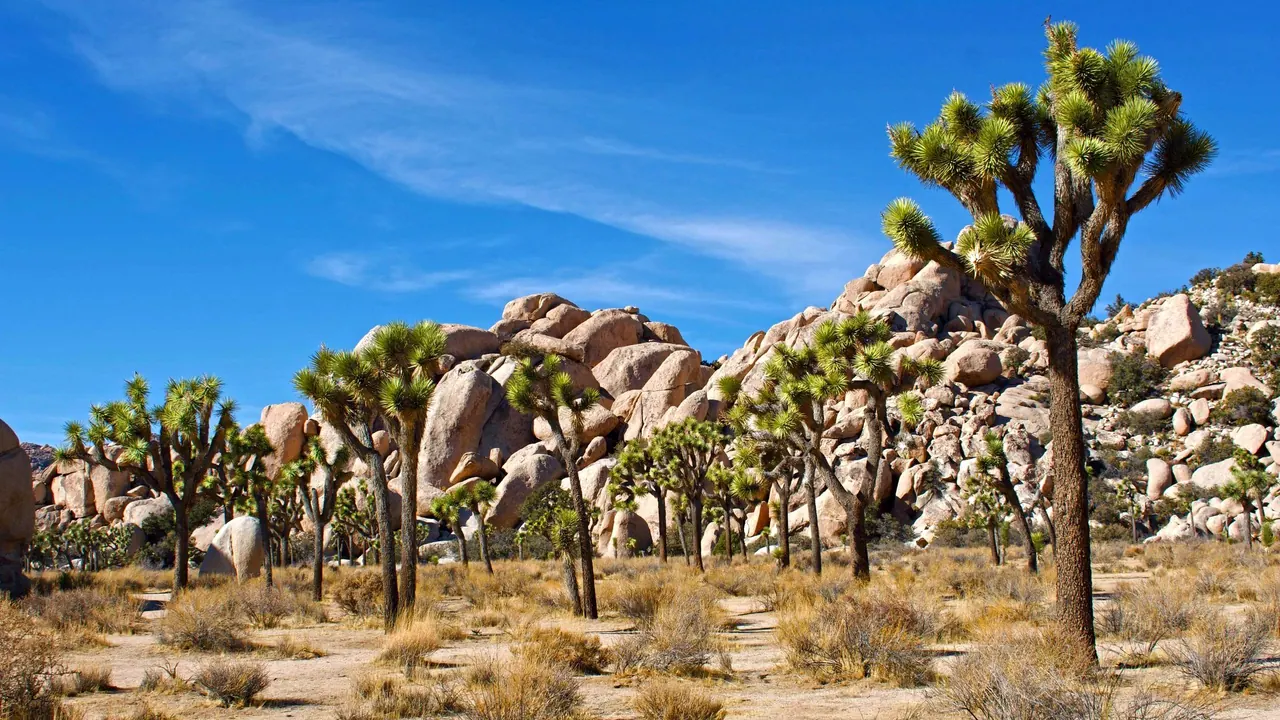
Photos: Canyonlands by Thomas Wolf, www.foto-tw.de, CC BY-SA 3.0, cropped; Joshua Tree by Mr. Location Scout, Pexels License.
Canyonlands or Joshua Tree?
Our verdict in twelve categories, each scored against the same fixed benchmark cities, and the climate month by month, so you can choose for your trip.
Choose Canyonlands for
- families
- nature and the outdoors
- beaches
Canyonlands is the stronger pick for travellers who want the landscape to fill every day. Arches sits on the edge of Moab, Island in the Sky and Dead Horse Point are within an hour, and between them there is slickrock biking, river rafting, canyoneering and long hikes into some of the wildest country in the American West. It also works better for families who like being outdoors, with short arch walks, dinosaur tracks and gentle float trips. What you give up is comfort and softness: evenings are early, the food is fuel, and there is little to do apart from the rock.
Choose Joshua Tree for
- wellness
- live music and the arts
- shopping
Joshua Tree suits a slower, more sociable desert stay. The park's boulder piles and Joshua tree forests are superb, particularly for climbers, but the reason it pulls ahead for many visitors is what happens around the hiking: sound baths and retreats, mineral pools at Desert Hot Springs, vintage shops in Yucca Valley, a famous roadhouse stage in Pioneertown and Palm Springs an hour away. Choose it if you want a stylish rental with a hot tub and a few easy days out as much as the trails themselves.
Scoreboard
Twelve categories on one fixed scale from 0 to 100. The shaded stretch is the gap between the two.
Your match
Pick a travel style or drag the sliders, and both match scores follow your weighting.
Wins on families and nature and the outdoors with your weighting.
Wins on wellness and live music and the arts with your weighting.
What matters to you?
Category by category
What the scores mean for a trip.
Beaches & swimming
Neither has a beach, and swimming in either comes down to a pool. Canyonlands has a little more on offer: a small reservoir in the hills above Moab and shallow eddies on calm stretches of the Colorado, although the rivers themselves are for rafting. In Joshua Tree, the motel or rental-house plunge pool really is the only option.
Food & drink
Both feed hikers and climbers rather than food lovers, and the difference is one of style. Moab has burgers, Tex-Mex, pizza, taprooms and early breakfasts, with Utah's liquor laws shaping the drinking. Along Highway 62 there are diners, Mexican kitchens, health-food cafés and Pioneertown barbecue.
In both places many visitors cook for themselves, at a campsite in canyon country or in a rental kitchen near Joshua Tree. Joshua Tree does have a way out: Palm Springs is an hour away when you want a proper restaurant.
Culture & sights
Both are thin on museums and built heritage, but their sights come from very different pasts. Canyonlands has ancient rock art: Fremont and Ancestral Puebloan panels at Newspaper Rock and along Potash Road, and the life-size painted figures of the Great Gallery, reached by a long drive and a hike.
Joshua Tree's culture is twentieth-century and eccentric. There is Noah Purifoy's scrap sculpture museum, the Integratron dome and the false-front film-set street of Pioneertown, with Keys Ranch and a few petroglyphs inside the park.
Nightlife
Evenings end early in both, and the main event after dark is the night sky. Moab's brewpubs fill with rafting guides and mountain bikers on spring weekends, but Utah's licensing rules keep things short. Joshua Tree has a few saloons and the Pioneertown roadhouse, which gives a weekend night slightly more to look forward to.
Nature & outdoors
Both are among the great American deserts, but Canyonlands has more scale and variety. Arches, the thousand-foot drops from Island in the Sky, the gooseneck at Dead Horse Point, the Needles spires and the remote Maze cover several landscapes. Rafting through Cataract Canyon, slickrock biking, the White Rim Road and the alpine meadows of the La Sals add activities Joshua Tree cannot match.
Joshua Tree's landscape is more compact: granite boulder piles, Joshua tree forests, cholla gardens and palm oases. It is world class for climbing and bouldering, and its certified dark sky is a real draw, but most other days come down to hiking.
Day trips
Joshua Tree has the more useful day out in Palm Springs, an hour downhill, with its mid-century modern houses and walkable downtown. Idyllwild, the Route 66 ghost stops and the strange shores of the Salton Sea add variety further out.
From Canyonlands, most outings lead to more scenery rather than towns. The best are Bluff's stone houses, the Edge of the Cedars pottery museum in Blanding, the Hovenweep towers and the Palisade orchards across the Colorado line.
Good for families
Canyonlands gives families more to fill the days. Short walks to Sand Dune Arch and the Windows, dinosaur tracks and a small dinosaur park near Moab, and half-day float trips suitable for younger children add variety, and motel pools and campgrounds make bases easy. Parents should watch the sheer, unfenced overlooks.
Joshua Tree suits older children who like scrambling on the boulders at Hidden Valley and Skull Rock, but there is little shade, and the nearest attraction made for children, the Living Desert zoo, is a long drive away. Both are risky in the summer heat.
Getting around
You need a car in both, and the driving is easy. Moab works as a compact hub, with Arches just outside town and a bike path to its entrance, but the Maze, Horseshoe Canyon and the White Rim need high-clearance vehicles or a guide. Joshua Tree's towns are strung along Highway 62 and are not built for walking. The paved roads through the park cover most of the famous spots, and you should download maps first because there is no signal in much of it.
Shopping & style
Joshua Tree has more interesting shopping. Yucca Valley's old town sells vintage Western wear and mid-century furniture, Joshua Tree village has galleries and crystal shops, and the design stores of Palm Springs are an hour away. Moab's Main Street mostly covers bike, climbing and camping gear, and the best things to take home are the Navajo rugs and silver jewellery in the trading posts around Bluff and Blanding.
Affordability
Neither is cheap in high season, and the costs build up in different places. In Moab, ordinary motels charge a lot when the town fills in spring and autumn, and guided rafting and jeep trips add up. Joshua Tree's desert rental houses are expensive on cool-season weekends, but food is modest in price. In both, camping and cooking for yourself bring costs down sharply, and canyon country's free dispersed camping on public land makes it especially good for this.
Live music & performing arts
Joshua Tree has more regular live music, mainly because of the Pioneertown roadhouse, which books indie, rock and country acts all year, along with the Joshua Tree Music Festival weekends in spring and autumn. Canyonlands has very little on most nights. Its one real draw is the Moab Music Festival in late summer and early autumn, with chamber concerts in sandstone grottoes reached by jet boat, which is worth planning around for classical music lovers.
Wellness & relaxation
Joshua Tree is built for slowing down. Retreats and sound baths cluster around the village, the Integratron dome is known for its acoustics, and Desert Hot Springs, half an hour away, has spa motels with pools fed by hot mineral water.
In Canyonlands, rest is what comes after the effort. There are a few day spas and massage studios in Moab, and some river lodges, but the restful part is the silence of a canyon rim at sunrise.
When should you go?
Pick your month. The climate figures are measured averages, not a forecast.
Canyonlands in July
Joshua Tree in July
Daytime high, °C
Rainfall in the month, mm
Where the figures come from
Canyonlands has no weather station within reach, so its figures come from a gridded climate model rather than a measured record, and read a broad area rather than one spot.
Joshua Tree has no rain gauge within 25 km of the centre, so its rainfall comes from a gridded climate dataset read at the destination rather than from a gauge further away.
Temperature and rainfall are climate normals, averaged over the years shown. Canyonlands: 2001-2020 normals, NASA POWER reanalysis grid, no weather station within 90 km. Joshua Tree: 1992-2020 (rainfall 1991-2020) normals, Twentynine Palms / Sunfair Heights (20.4 km from centre).
The two deserts have opposite winters. The figures for Canyonlands are taken around Moab, which sits higher and further north, so December and January are cold there, with daytime highs around 5°C. The good walking months are April and May, then September and October, when days are mild to warm. Around the park towns of Joshua Tree, winter stays pleasant, with highs around 16°C in December. Its best season runs from October to April, and March and April are especially comfortable for hiking and climbing.
Summer is hard going in both. Moab reaches about 36°C in July and Joshua Tree about 39°C in July and August, so any outdoor plan moves to dawn and dusk. Rain is light all year in both. Canyon country gets its slightly wetter spells from late summer into October, while Joshua Tree is almost completely dry from April to June. In both, the summer heat is something to plan around rather than a reason to go.
Which traveller are you?
On an outdoors trip, Canyonlands gives you more ways to fill the days: a river one morning, a bike the next, then a long walk into remote canyon country. Choose Joshua Tree only if climbing or bouldering is the main point of the trip.
For a relaxing and wellness trip, choose Joshua Tree. Slowing down is what the area is set up for, with practitioners, hot mineral water and private hot tubs all close by. Canyon country is quiet and restful, but its days are built around physical effort.
On a family trip with children, Canyonlands is the easier choice, especially with younger ones, because its short and gentle outings keep a mixed-age group busy for several days. Joshua Tree suits children old enough to scramble on rock, and works best as a short winter visit.
Before you go
| Measure | Canyonlands | Joshua Tree |
|---|---|---|
| Currency | US Dollar (USD) | US Dollar (USD) |
| Sockets | AB120 V, 60 Hz | AB120 V, 60 Hz |
| Driving side | Right | Right |
| Time zone | UTC-7, UTC-6 in summer | UTC-8, UTC-7 in summer |
| Emergency number | 911 | 911 |
| Main airport | Canyonlands Regional Airport (CNY)2 non-stop destinations | Palm Springs International Airport (PSP)29 non-stop destinations |
| Public holidays this year | 12 days | 13 days |
Where else could you go?
Every comparison below shares a destination with this one, so you can follow Canyonlands or Joshua Tree somewhere new.
- Archesvs Canyonlands
- Bryce Canyonvs Canyonlands
- Death Valleyvs Joshua Tree
- Zionvs Canyonlands
- Grand Canyonvs Canyonlands
- Sequoiavs Joshua Tree