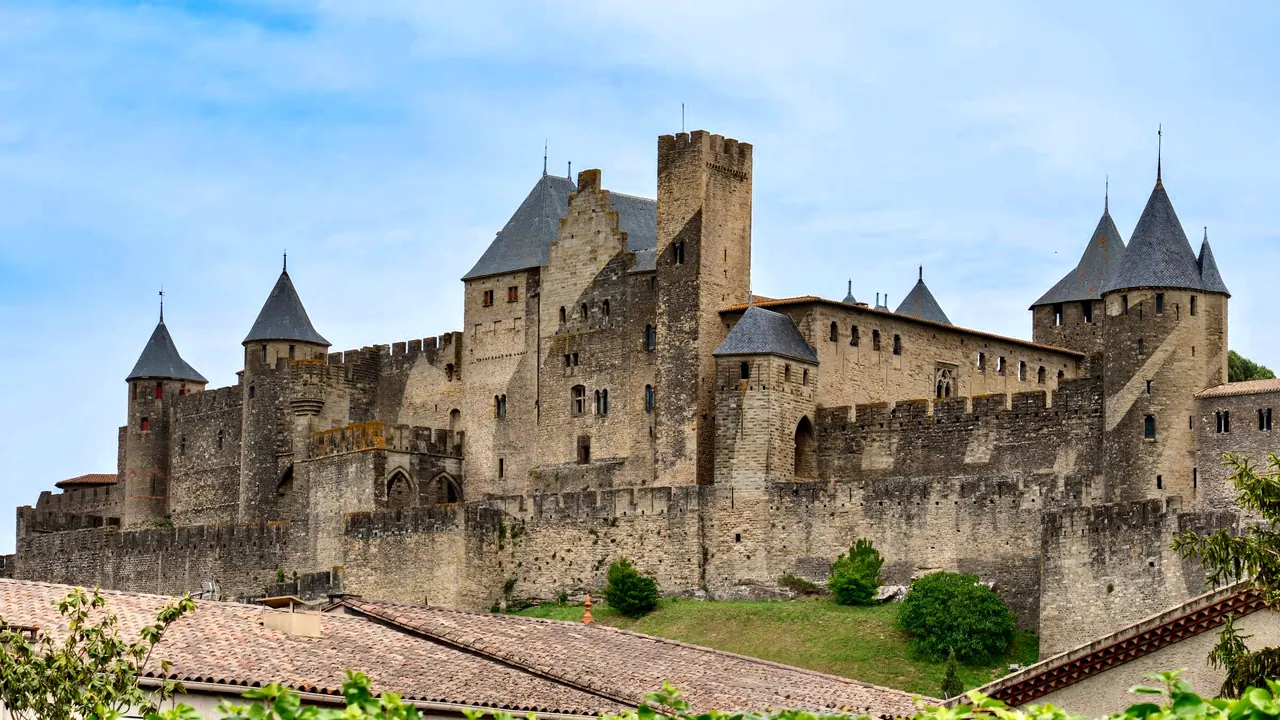
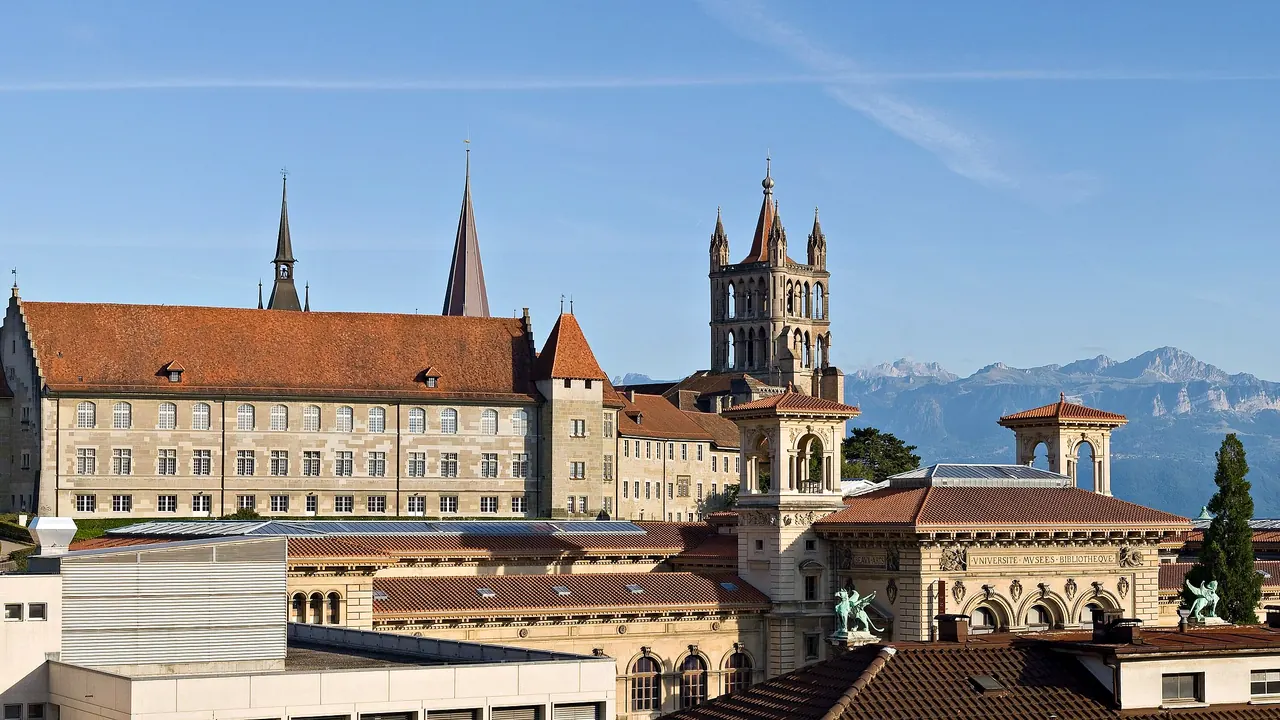
Photos: Carcassonne by Susanne Jutzeler, suju-foto, Pexels License; Lausanne by Christian Mehlführer, CC BY-SA 3.0, cropped.
Carcassonne or Lausanne?
Our verdict in twelve categories, each scored against the same fixed benchmark cities, and the climate month by month, so you can choose for your trip.
Choose Carcassonne for
- prices
- culture and sights
Carcassonne suits a slower, sunnier and cheaper trip built around one great monument. The walled Cité and the Cathar castles on the ridges to the south give it a medieval story that Lausanne cannot match, and the cost of rooms, wine and set lunches lets a week stretch much further. Plan on a hire car and on quiet evenings.
Choose Lausanne for
- live music and the arts
- getting around
- nature and the outdoors
Lausanne is the better choice for travellers who want landscape, a real stage and easy movement without a car. The Alps stand across the lake, the Lavaux terraces are a short ride away, trains reach Gruyères, Bern and Montreux, and the city has ballet, opera and a club district. Children get more to do as well. The price of all this is a very high bill.
Scoreboard
Twelve categories on one fixed scale from 0 to 100. The shaded stretch is the gap between the two.
Your match
Pick a travel style or drag the sliders, and both match scores follow your weighting.
Wins on prices and culture and sights with your weighting.
Wins on live music and the arts and getting around with your weighting.
What matters to you?
Category by category
What the scores mean for a trip.
Beaches & swimming
Neither city is on the sea, and swimming is a summer extra in both, but the water is quite different. From Carcassonne you drive a short way to the sandy, lifeguarded shores of the Lac de la Cavayère, or about an hour to the long Mediterranean sands at Gruissan and Narbonne-Plage.
Lausanne swims in its own front yard. You go into Lake Geneva from lawns, piers and pebbles at Vidy or the old Bellerive lido, which is easy on foot but has no real beach and a short season.
Food & drink
Lausanne has more range. Its Vaudois cooking runs from lake perch and papet to winter fondue, the Saturday market fills the old town, and it has a tier of celebrated fine dining that Carcassonne lacks. Budget meals are its weak spot.
Carcassonne rests on cassoulet and southern French bistro cooking, and the best of it is in the Bastide around Place Carnot rather than inside the Cité walls. Both towns pour excellent local wine, though: Lavaux Chasselas in Lausanne, and Corbières, Minervois and Limoux blanquette in Carcassonne.
Culture & sights
Carcassonne has the more striking single sight. La Cité, with its double ring of towered walls, the Château Comtal ramparts and the stained glass of Saint-Nazaire, is a monument people cross Europe to see, and the grid streets of the Bastide and the Canal du Midi add to it. Beyond that, its museums are slight.
Lausanne's strength is the reverse. Its Gothic cathedral, with the night watchman still calling the hours, anchors a compact old town, but the Olympic Museum, the Plateforme 10 cluster and the Collection de l'Art Brut give it the museum depth Carcassonne does not have.
Nightlife
Lausanne is the place for a night out. The Flon's converted warehouses hold clubs and late bars that a large student population keeps busy at weekends, and in summer the evening crowds move down to Ouchy.
Carcassonne's evenings are about a floodlit stroll on the walls and a drink on Place Carnot, and serious nightlife means a trip to Toulouse.
Nature & outdoors
Lausanne has much the grander setting. The French Alps rise across the lake, the Lavaux terraces make a famous vineyard walk, and the Vaud Alps and the Jura, with skiing, glacier trips and long ridge hikes, are within an hour, mostly by train.
Carcassonne's country is drier and lower. It has the Montagne Noire forests, garrigue and Cathar ridges in the Corbières, and summer rafting in the Aude gorges. The plane-shaded Canal du Midi towpath is the easy option, but nearly everything else needs a car and is best in spring or autumn.
Day trips
Carcassonne is a fine base for days out, but Lausanne is the better one. Around Carcassonne you have Peyrepertuse and Quéribus on their limestone ridges, the abbey at Lagrasse, Minerve above its gorges and Albi's brick cathedral, with Corbières wine estates in between. Apart from Toulouse and Narbonne, though, you have to drive yourself to all of them.
Lausanne offers more places and an easier way of reaching them. Trains and lake boats take you to Montreux, the Château de Chillon, Gruyères, Bern, Fribourg, Geneva and across the water to Évian without any planning, and Neuchâtel and Murten add more. Only a few outings, Annecy among them, really need a car.
Good for families
Lausanne has more to fill a family week. There is the hands-on Olympic Museum, the aquarium-vivarium, Sauvabelin's animal park and lookout tower, and paddle steamer trips on the lake. Eating out with children is very expensive, though.
Carcassonne's draw is a real castle with drawbridges, plus summer jousting and falconry. It carries a day or two, after which you add the lake, the kangaroo park and car outings. In both towns, steep streets are hard going with a pushchair.
Getting around
Lausanne is steep but well connected. The m2 metro climbs from the lakeshore to the upper town, buses and boats fill the gaps, and the Swiss rail network takes you almost anywhere in the region.
Carcassonne's flat Bastide and the walk over the Pont Vieux up to the Cité are easy on foot. The castles, villages and vineyards beyond are poorly served by public transport, so most visitors hire a car.
Shopping & style
Neither is a shopping destination, but Lausanne has more. Rue de Bourg has watchmakers, jewellers and chocolatiers, and the Flon has a few design shops.
Carcassonne offers souvenir swords in the Cité and a modest high street in the Bastide. Its best buys are edible: tinned cassoulet, blanquette and wine from the market on Place Carnot.
Affordability
This is where the two differ most. Carcassonne costs what a provincial southern French town costs. Only the hotels and restaurants inside the Cité, and the peak of July and August, push prices up, and car hire is the main extra.
Lausanne is expensive in every respect, from rooms to taxis to a glass of wine. A budget stay there means supermarket picnics, free lakeside promenades and saving restaurant meals for special occasions.
Live music & performing arts
Lausanne has a stage life all year that Carcassonne cannot approach. It has the Béjart Ballet, the Prix de Lausanne competition, contemporary theatre at Vidy, a full opera season and a respected chamber orchestra, and the Montreux Jazz Festival is a short train ride away in July.
Carcassonne comes alive mainly in July, when its festival puts concerts and theatre on the open-air stage inside the Cité walls. Bastille Day fireworks over the ramparts are its other big moment.
Wellness & relaxation
Lausanne is better set up for pampering. The grand lakeside hotels have full spas, and the thermal centres at Yverdon-les-Bains and Lavey-les-Bains are easy train trips.
Carcassonne's thermal villages in the upper Aude are small local places. Its restfulness comes instead from long lunches, the Canal du Midi towpath and quiet evenings on the walls outside high summer.
When should you go?
Pick your month. The climate figures are measured averages, not a forecast.
Carcassonne in July
Lausanne in July
Daytime high, °C
Rainfall in the month, mm
Where the figures come from
Carcassonne has no rain gauge within 25 km of the centre, so its rainfall comes from a gridded climate dataset read at the city rather than from a gauge further away.
Carcassonne's sunshine is measured 68 km from the centre, at Perpignan.
Lausanne's temperatures are measured 40 km from the centre, at Payerne.
Lausanne has no rain gauge within 25 km of the centre, so its rainfall comes from a gridded climate dataset read at the city rather than from a gauge further away.
Temperature and rainfall are climate normals, averaged over the years shown. Carcassonne: 1999-2020 (sunshine 1991-2020, rainfall 1991-2020) normals, Carcassonne (2.8 km from centre). Lausanne: 1991-2020 (sunshine 1961-1990) normals, Payerne (39.7 km from centre).
Carcassonne is the warmer and sunnier of the two in every month. July and August reach about 29°C and are its driest months, with only around 22mm of rain in July. That suits the lake and the coast, but the Cité's ramparts are hard work in the midday heat. For walking the walls and touring the castles, May, June and September are the best months. Rain returns in October and November, and winters are cool but mild and bright enough for sightseeing on foot.
Lausanne is cooler and much wetter, and summer is its rainiest stretch, with around 115mm in July spread between warm days of about 26°C. June to early September is the time for lake swimming and Alpine hiking. In December and January highs are only about 4°C and the city gets very little sun, with November and February only slightly milder, so winter here is for skiing in the mountains rather than strolling round the old town.
Which traveller are you?
On a trip on a tight budget, Carcassonne is the clear pick. Rooms in the Bastide, local Corbières wine and lunchtime set menus cost a fraction of what Lausanne charges. Switzerland's prices make even a simple lunch beside Lake Geneva expensive.
For an outdoors trip, Lausanne wins. The Lavaux vineyard paths, sailing on the lake, and Alpine hiking or skiing at Villars and Les Diablerets are all within an hour by train. Carcassonne's Corbières and Montagne Noire are good walking country, but you need a car to reach them.
On a food and nightlife trip, Lausanne is the stronger city. It has lake perch, Chasselas tasted in village caveaux and some celebrated top-end tables, and the Flon's clubs fill with students at weekends. Carcassonne offers cassoulet and wine terraces, but its evenings end early.
Before you go
| Measure | Carcassonne | Lausanne |
|---|---|---|
| Official language | French | French, German, Italian, Romansh |
| Currency | Euro (EUR) | Swiss Franc (CHF) |
| Sockets | CE230 V, 50 Hz | CJ230 V, 50 Hz |
| Driving side | Right | Right |
| Time zone | UTC+1, UTC+2 in summer | UTC+1, UTC+2 in summer |
| Emergency number | 112 | 112 |
| Elevation | 81 m | 495 m |
| Main airport | Carcassonne Salvaza Airport (CCF)4 km from centre10 non-stop destinations | Geneva International Airport (GVA)52 km from centre150 non-stop destinations |
| Public holidays this year | 11 days | 9 days |
By the numbers
| Measure | Carcassonne | Lausanne |
|---|---|---|
| City population | 46,080 | 144,873 |
| People per km² | 708 | 3,499 |
| Museums within 10 km | 6 | 31 |
| UNESCO World Heritage sites within 50 km | 2 | 3 |
Where else could you go?
Every comparison below shares a destination with this one, so you can follow Carcassonne or Lausanne somewhere new.
- Genevavs Lausanne
- Chamonixvs Lausanne
- Bernvs Lausanne
- Annecyvs Lausanne
- Toulousevs Carcassonne
- Interlakenvs Lausanne