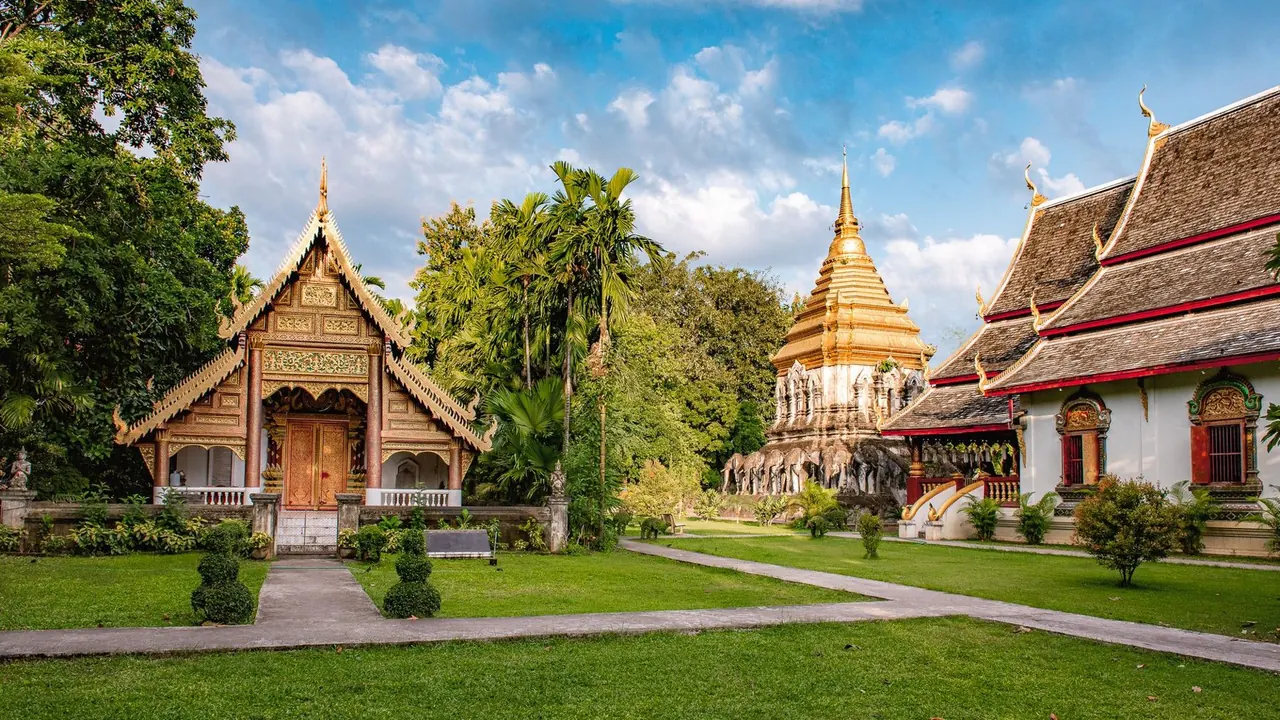
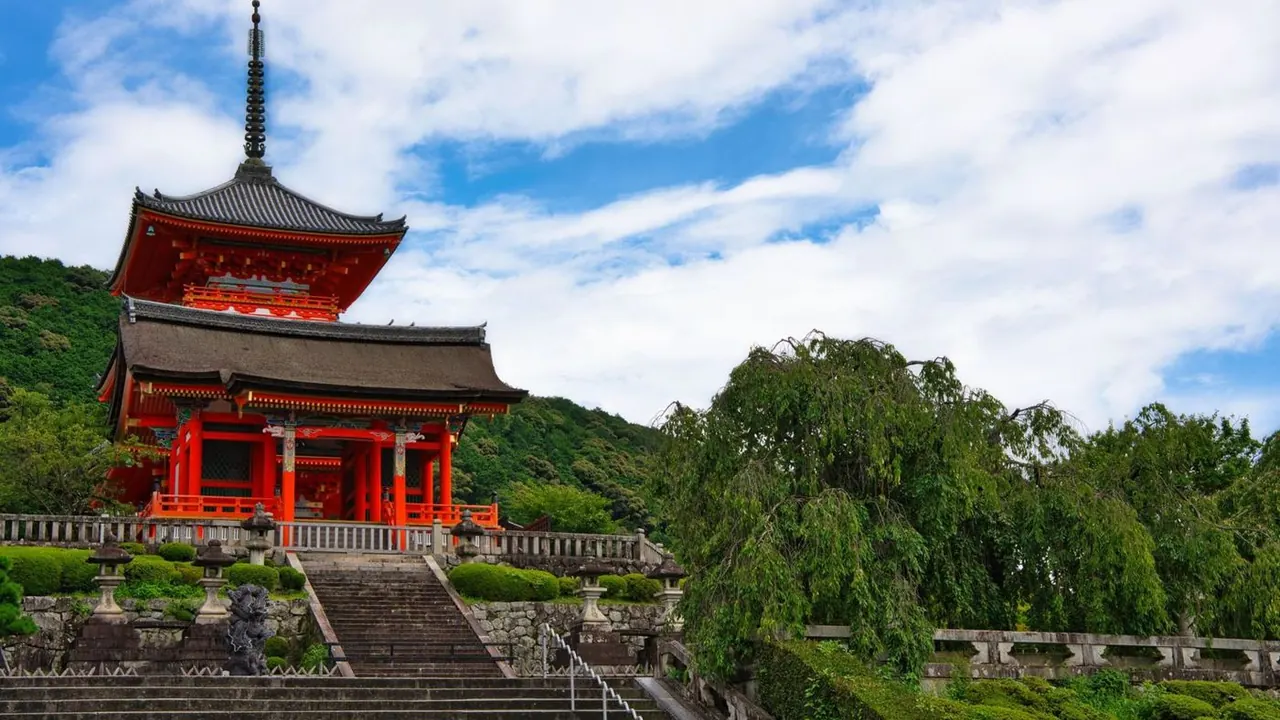
Photos: Chiang Mai by Gije Cho, Pexels License; Kyoto by Bert Mulder, Pexels License.
Chiang Mai or Kyoto?
Our verdict in twelve categories, each scored against the same fixed benchmark cities, and the climate month by month, so you can choose for your trip.
Choose Chiang Mai for
- prices
- wellness
- nightlife
Chiang Mai is the better choice for a long, unhurried and inexpensive stay. Daily massages, meditation at forest temples, cheap northern Thai food and real mountains on the edge of town make it ideal for travellers who want to slow down, spend little and get out into the hills. Evenings are livelier than Kyoto's, and the cool dry winter is when it is most pleasant.
Choose Kyoto for
- day trips
- getting around
- culture and sights
Kyoto is the stronger pick if the trip is about history and refinement. More than a thousand years as the imperial capital left temples, gardens and wooden lanes on a scale Chiang Mai cannot approach. Add kaiseki dining, kabuki and geisha dances, and fast trains to Nara, Osaka and Himeji, and it suits a busy, sight-filled trip. It costs a good deal more, and it is easier to get around with children.
Scoreboard
Twelve categories on one fixed scale from 0 to 100. The shaded stretch is the gap between the two.
Your match
Pick a travel style or drag the sliders, and both match scores follow your weighting.
Wins on prices and wellness with your weighting.
Wins on day trips and getting around with your weighting.
What matters to you?
Category by category
What the scores mean for a trip.
Beaches & swimming
Neither city is a beach destination, as both lie inland. In Chiang Mai, swimming means Huay Tung Tao reservoir, quarry lakes, waterfall pools and hotel pools, and anyone who wants the sea flies south to the islands.
Kyoto does a little better. In July and August, Lake Biwa's sandy shores such as Omi-Maiko are warm enough for a proper swim, and the white sand of the Sea of Japan coast around Amanohashidate makes a good overnight trip.
Food & drink
Both are excellent places to eat, but in different ways. Chiang Mai is about bold northern Thai flavours, eaten cheaply at markets and street stalls: khao soi, herby sai ua sausage and sticky rice. It also has a café culture built on coffee grown in the surrounding hills.
Kyoto goes deeper and finer. Kaiseki in old Gion houses, temple cuisine at Daitokuji and Tenryuji, tofu, pickles and tea sweets, and an unusual number of serious restaurants make it the better city for a memorable meal. Nishiki Market and the Fushimi sake breweries cover more casual eating.
Culture & sights
Kyoto is in a different league. Seventeen UNESCO-listed sites, from Kinkaku-ji and Ryoan-ji to Nijo Castle, are joined by Fushimi Inari's tunnels of gates, the machiya lanes of Higashiyama and Gion, and imperial villas. You could spend a week here and still leave plenty unseen.
Chiang Mai's heritage is smaller and gentler. The moated old city holds Lanna temples such as Wat Chedi Luang and Wat Phra Singh, with Doi Suthep above, and it rewards slow wandering over a few days. Its museums are modest.
Nightlife
Chiang Mai gives you more of an evening out. Nimmanhaemin has cocktail and craft beer bars full of students, the Tha Phae Gate area fills with backpacker bars and rooftop terraces, and Loi Kroh Road is the rowdier strip. Clubbing is limited all the same.
Kyoto is quieter and closes earlier. Going out mostly means small sake bars and izakaya along lantern-lit Pontocho and the Kiyamachi canal. For a big night, people take the train to Osaka.
Nature & outdoors
Both have green hills right at the edge of the city, but the landscapes suit different trips. Chiang Mai is wilder and higher. Doi Suthep-Pui National Park starts at the edge of town, and Doi Inthanon's cloud forest is within easy reach, along with rafting, ziplines and treks to hill villages.
Kyoto's nature is gentle and seasonal: the cedar path from Kurama to Kibune, the Arashiyama bamboo groves, cycling along the Kamo River, and cherry blossom and maple colour. It is the better choice for easy walks, while Chiang Mai is the place for adventure.
Day trips
Kyoto is one of the best day-trip bases anywhere. Nara's deer and great Buddha, Osaka, Uji's tea and Byodo-in, Himeji Castle and Kobe are all a short, fast train ride away, so you can decide on the morning.
Chiang Mai has fewer options. Lamphun and Lampang make worthwhile old-town outings, and the craft villages make easy half days. Chiang Rai and Pai are far enough away that they need an overnight stay.
Good for families
Kyoto is easier with children. It is safe and clean, and between the temples there are the Railway Museum's steam locomotives, the aquarium, ninja shows at the Edo-period film set and the deer at Nara. Osaka's theme park is close by.
Chiang Mai is warm and welcoming, and elephant sanctuaries, the Night Safari and ziplines thrill children for a few days. After that, broken pavements, heavy traffic and few dedicated attractions make it harder, and the hazy season is best avoided with small children.
Getting around
Kyoto is far easier to get around. The flat central grid is good for walking and cycling, and trains, the Randen tram and buses reach the temples around the edge of the basin, though buses are crowded in peak seasons.
Chiang Mai has no metro or tram. Beyond the walkable old city, you rely on red songthaew, tuk-tuks and ride-hailing, and a hired driver or a scooter for the hills.
Shopping & style
Both are cities for handmade things rather than designer labels, but Kyoto has more depth. Family shops run for generations sell Nishijin silk, Kiyomizu-ware ceramics, hand-forged knives and tea by weight. Kyoto also has department stores along Shijo and the flea markets at To-ji and Kitano Tenmangu.
Chiang Mai's craft shopping happens at evening markets: the Sunday Walking Street, Wualai Road's silversmiths and the Night Bazaar, with weaving at San Kamphaeng and painted umbrellas at Bo Sang. It is cheaper and more casual.
Affordability
Chiang Mai is much cheaper. Teak guesthouses, street food, transport, temples and daily massages all cost little, and only organised excursions and hill resorts add up.
Kyoto is mid-range. Noodle counters and trains are good value, but hotels and ryokan are expensive, especially in cherry blossom and autumn colour seasons, and a kaiseki dinner is a splurge.
Live music & performing arts
Kyoto has a real stage tradition. There are the spring dances of the geiko and maiko, kabuki at Minamiza, Japan's oldest kabuki theatre, regular Noh, and a symphony orchestra at the Kyoto Concert Hall. The calendar is seasonal, though, so some evenings offer little.
In Chiang Mai, performance is informal: jazz jam sessions near the north gate, bar bands in Nimmanhaemin, khantoke dinners with Lanna dance, and Muay Thai fight nights.
Wellness & relaxation
Chiang Mai is the better place to unwind. Thai massage is cheap and part of everyday life, and the city's long-established schools teach it. Wat Umong and Wat Suan Dok run meditation retreats, and there are hot springs at San Kamphaeng and quiet resorts in the Mae Rim valley.
Kyoto's calm takes more effort to find. It is there in century-old sento bathhouses, onsen at Kurama, a ryokan's wooden tub, zazen sessions and raked gravel gardens, but crowds mean it is best found early in the day or in winter.
When should you go?
Pick your month. The climate figures are measured averages, not a forecast.
Chiang Mai in July
Kyoto in July
Daytime high, °C
Rainfall in the month, mm
Where the figures come from
Kyoto's sunshine is measured 43 km from the centre, at Osaka.
Temperature and rainfall are climate normals, averaged over the years shown. Chiang Mai: 1991-2020 normals, Chiang Mai (0.6 km from centre). Kyoto: 1971-2000 (sunshine 1991-2020) normals, Kyoto (3.2 km from centre).
The two cities' best seasons overlap only in late autumn. In November, Chiang Mai is dry and Kyoto is mild, so both are good for walking. After that they part ways. Chiang Mai stays at its best through December and January, when it is dry, sunny and warm without being oppressive. Kyoto's other good season is spring. February in Chiang Mai stays dry but grows hotter, and from roughly February to April field burning fills the valley with haze. By April the heat reaches around 37°C, too hot for long walks. The rains run from May to October and are heaviest in August, at about 234mm, though it stays warm throughout.
Kyoto's winter is cold, with highs near 9°C, and mostly dry, though it gets far less sun than Chiang Mai in the same months. Spring and autumn are the times for walking the streets, with mild days in April, May, October and November. June, July and September are the wettest months, each with over 200mm of rain, and July and August are hot and sticky. If you head to the coast for a swim, the sea is warmest in August, at around 27°C.
Which traveller are you?
On a culture and arts trip, Kyoto is the clear choice. It has UNESCO-listed temples and gardens, a whole historic district of wooden townhouses, the Kyoto National Museum and a stage tradition that includes kabuki and Noh. Chiang Mai's temple walks fill only two or three days.
For a trip on a tight budget, Chiang Mai goes much further. Guesthouses in teak buildings, market meals, songthaew rides and temple visits all cost very little. In Kyoto, hotels, ryokan and dinners out quickly stretch a modest budget.
On a relaxing and wellness trip, Chiang Mai has the edge. Thai massage is part of daily life there, and you can take courses at long-established schools, join meditation retreats at forest temples and stay in quiet valley resorts. Kyoto's bathhouses and gardens are restful, but its crowds get in the way.
Before you go
| Measure | Chiang Mai | Kyoto |
|---|---|---|
| Official language | Thai | Japanese |
| Currency | Baht (THB) | Yen (JPY) |
| Sockets | ABCF220 V, 50 Hz | AB100 V, 50 and 60 Hz depending on the region |
| Driving side | Left | Left |
| Time zone | UTC+7 | UTC+9 |
| Emergency number | Police 191, ambulance 1669, fire 199 | Police 110, fire 119 |
| Elevation | 310 m | 51 m |
| Main airport | Chiang Mai International Airport (CNX)3 km from centre28 non-stop destinations | Kansai International Airport (KIX)81 km from centre62 non-stop destinations |
| Public holidays this year | - | 16 days |
By the numbers
| Measure | Chiang Mai | Kyoto |
|---|---|---|
| City population | 1,198,000 | 1,463,723 |
| People per km² | 2,958 | 1,768 |
| Museums within 10 km | 6 | 77 |
| UNESCO World Heritage sites within 50 km | 0 | 4 |
| Swim season, months above 21 °C | - | 5 months |
Where else could you go?
Every comparison below shares a destination with this one, so you can follow Chiang Mai or Kyoto somewhere new.