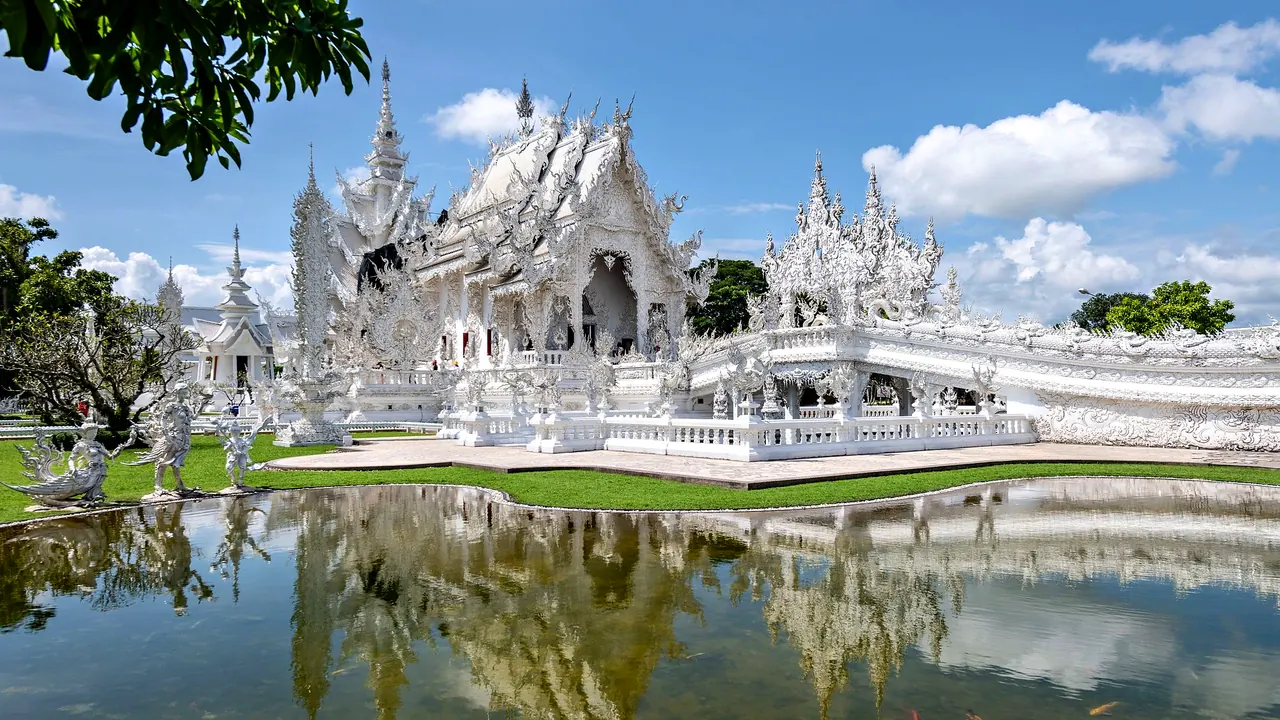
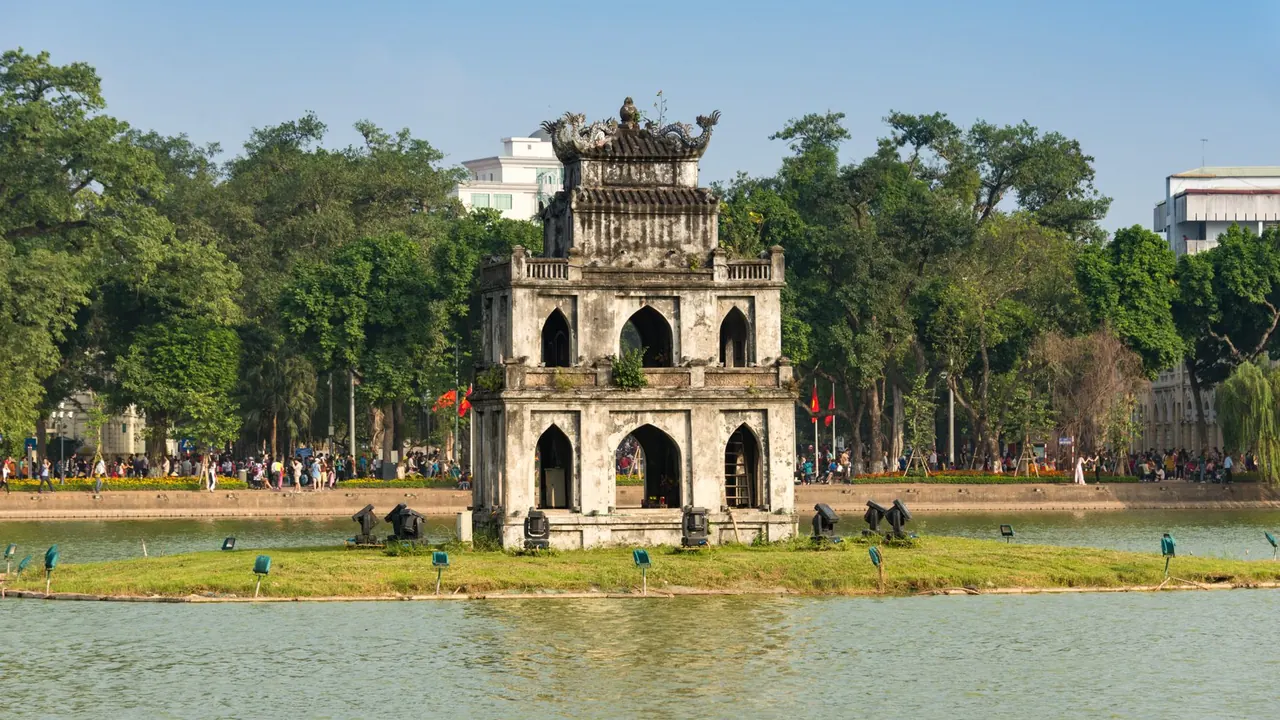
Photos: Chiang Rai by Kirandeep Singh Walia, Pexels License; Hanoi by xiquinhosilva, CC BY 2.0, cropped.
Chiang Rai or Hanoi?
Our verdict in twelve categories, each scored against the same fixed benchmark cities, and the climate month by month, so you can choose for your trip.
Choose Chiang Rai for
- nature and the outdoors
- wellness
- families
Chiang Rai suits travellers who want green country and a slow pace. Waterfalls, tea terraces, misty hill mornings and the Mekong at the Golden Triangle are all within reach, and the White Temple, Blue Temple and Black House give it a modern artistic streak of its own. Massage shops, hot springs and quiet evenings round it off. It works best as a few unhurried days within a wider northern Thailand trip, outside the smoky late-winter season.
Choose Hanoi for
- food and drink
- nightlife
- live music and the arts
Hanoi is the stronger pick for anyone who travels to eat and to be in the middle of city life. Its street kitchens, coffee rituals and early-evening beer corners outclass anything in Chiang Rai, and the Old Quarter, Temple of Literature, Imperial Citadel and water puppets give it far more history and more to do after dark. Expect noise, heavy traffic and tiring pavements in exchange.
Scoreboard
Twelve categories on one fixed scale from 0 to 100. The shaded stretch is the gap between the two.
Your match
Pick a travel style or drag the sliders, and both match scores follow your weighting.
Wins on nature and the outdoors and wellness with your weighting.
Wins on food and drink and nightlife with your weighting.
What matters to you?
Category by category
What the scores mean for a trip.
Beaches & swimming
Neither city is a beach destination, and both send you elsewhere for the sea. Chiang Rai's swimming is more natural, with cool forest pools under waterfalls and reservoirs in the hills. Hanoi offers big water parks on the edge of West Lake. Its coast at Ha Long Bay or Cat Ba is the more famous one, but it needs a separate stay.
Food & drink
Chiang Rai eats well within a narrow range: khao soi, nam ngiao, sai ua sausage and chilli dips with sticky rice, best tried at the night bazaar and walking-street markets. Its garden cafés roasting hill-grown coffee are a real pleasure, but international and refined cooking are scarce.
Hanoi is in another league. Single-dish stalls that have perfected pho, bun cha, banh cuon or cha ca over decades sit on every Old Quarter corner, Dong Xuan market shows the raw ingredients, and drip coffee and egg coffee are rituals in themselves. A food lover will run out of things to try in Chiang Rai well before Hanoi.
Culture & sights
Chiang Rai's highlights are modern and visual. The mirrored white fantasy of Wat Rong Khun, the sapphire Blue Temple and the dark teak halls of Baan Dam make striking stops, while Wat Phra Kaew and a few Lanna temples supply the older history.
Hanoi has deeper layers. You get the guild streets of the Old Quarter, the Temple of Literature, the Imperial Citadel of Thang Long, the colonial French Quarter and strong museums such as Ethnology and Hoa Lo prison. That adds up to a fuller three or four days of history, against Chiang Rai's two or three days of eye-catching art.
Nightlife
Neither city goes on much past midnight, but Hanoi has far more life before then. Pavement beer corners fill from late afternoon, the lanes around Ta Hien get loud and crowded, the streets by Hoan Kiem close to traffic for weekend promenades, and West Lake adds rooftops and craft beer. Chiang Rai's evenings come down to one short street of small bars near the clock tower and the beer tables at the night bazaar, which suits a quiet drink after dinner.
Nature & outdoors
Chiang Rai sits right in the scenery. The Kok River valley is ringed by forested hills, with waterfalls, tea terraces on Doi Mae Salong, hill-tribe trekking and cycling on rural roads all close at hand, and the cloud-sea views from Phu Chi Fa further out. The one caveat is the late-winter smoke, which spoils the views for weeks.
Hanoi is flat and dense, and its outdoor life comes down to the West Lake shoreline path and the dawn tai chi around Hoan Kiem. The great northern landscapes, Ha Long Bay and the mountains around Sapa, are long journeys best done with nights away.
Day trips
Hanoi has the better choice of outings. Ninh Binh pairs the old capital at Hoa Lu and the vast Bai Dinh pagoda with boat rides through limestone caves, the Perfume Pagoda is reached by rowing boat, and craft villages such as Bat Trang and Van Phuc, along with old Duong Lam, are close in.
Chiang Rai's loop north is pleasant but less weighty: the ruined chedis of Chiang Saen, the opium museum at the Golden Triangle, the border market at Mae Sai and the Yunnanese tea houses of Doi Mae Salong. They fill two or three days, but none is worth the journey on its own.
Good for families
Both cities welcome children warmly, and neither has much built for them, so the difference is in the setting. Chiang Rai is calmer, with open space and cycling at Singha Park and elephant sanctuaries, though reaching the sights means long stretches in vehicles. Hanoi has more on hand, including water puppets, the zoo and the village houses at the Ethnology museum, but its motorbike-filled streets and blocked pavements make outings with a pushchair hard work.
Getting around
Getting about is equally awkward in both, for opposite reasons. In Chiang Rai the small, flat centre is easy to walk, but the temples and hills lie outside it, so you rely on tuk-tuks, songthaews, a hired driver or your own scooter.
In Hanoi the main sights sit close together on foot, but walking means stepping round parked scooters and crossing through streams of motorbikes. Cheap ride-hailing and motorbike taxis take the strain, since the rail lines and buses are of little use to visitors.
Shopping & style
Hanoi offers more to browse. Old Quarter streets are still grouped by trade, Hang Gai is good for silk and made-to-measure clothes ready within a day or two, Dong Xuan is a huge covered market, and a weekend night market runs up from the lake. Chiang Rai's shopping is limited to its nightly bazaar and the Saturday walking street on Thanalai Road, where hill-tribe textiles and silver sit beside the town's best buys, Doi Mae Salong oolong and local coffee.
Affordability
Both are among the cheapest places you can travel, and money stretches a long way in either. Hanoi edges ahead day to day because ride-hailing makes city transport almost free and its sights are close together. In Chiang Rai the big expense is the driver, car or tour you need to reach the temples and hills outside town. In Hanoi the costs that add up are optional extras such as Ha Long Bay cruises and upscale dining.
Live music & performing arts
Hanoi gives you a couple of good evenings out. Water puppetry with live music plays daily by Hoan Kiem Lake, the colonial Opera House stages symphony, ballet and opera on an irregular programme, and ca tru sung poetry and a small jazz scene add variety. Chiang Rai has no stage season at all, only Lanna dance at the night bazaar, khantoke dinners and acoustic sets in bars.
Wellness & relaxation
Chiang Rai is the more restful place to stay. The town itself is unhurried, there are riverside and hillside spas, and the Pong Phrabat and Mae Kachan hot springs let you soak in simple pools, though the smoky season breaks the calm.
Hanoi offers inexpensive foot and body massage on almost every Old Quarter street, welcome after long days walking, but the noise rarely lets up. Calm there means staying near West Lake or getting out to the lakes at dawn.
When should you go?
Pick your month. The climate figures are measured averages, not a forecast.
Chiang Rai in July
Hanoi in July
Daytime high, °C
Rainfall in the month, mm
Where the figures come from
Hanoi's sunshine is measured 86 km from the centre, at Phu Lien.
Temperature and rainfall are climate normals, averaged over the years shown. Chiang Rai: 1991-2020 (sunshine 1961-1990) normals, Chiang Rai (1 km from centre). Hanoi: 1991-2020 normals, Ha Noi (4.4 km from centre).
Chiang Rai is at its best from November to February, when the rains have gone, skies are clear and highs sit around 28°C, warm by day with fresh mornings in the hills. March and April turn hot, reaching 35°C, and the burning season fills the valleys with haze. From May the rains arrive and build to a peak in August of around 390mm, so the summer months are wet and often grey.
Hanoi runs on a sharper seasonal swing. January and February are cool, with highs near 19°C, and very overcast, so sightseeing is comfortable but rarely sunny. June brings 35°C and sticky humidity, with heavy rain through July and August. The pleasant windows for walking the streets are October and November, plus March and April before the heat builds, which means the two cities overlap well in late autumn and early winter.
Which traveller are you?
For a food and nightlife trip, Hanoi wins clearly. Pho at breakfast, bun cha at lunch, egg coffee up narrow stairs and pavement beer in the Old Quarter fill whole days, while Chiang Rai's food runs thin within days and its evenings end early.
On an outdoors trip, Chiang Rai is the better base. Forested ranges, waterfalls such as Khun Korn, hill-tribe trekking routes and the Phu Chi Fa sunrise lie close by, whereas flat, built-up Hanoi needs a long journey before real scenery begins.
For a relaxing and wellness trip, choose Chiang Rai. The small town moves slowly, hot springs at Pong Phrabat and Mae Kachan are a short drive away, and hillside retreats offer yoga and meditation. Hanoi's massages are good, but horns and traffic rarely let up.
Before you go
| Measure | Chiang Rai | Hanoi |
|---|---|---|
| Official language | Thai | Vietnamese |
| Currency | Baht (THB) | Dong (VND) |
| Sockets | ABCF220 V, 50 Hz | ACFG220 V, 50 Hz |
| Driving side | Left | Right |
| Time zone | UTC+7 | UTC+7 |
| Emergency number | Police 191, ambulance 1669, fire 199 | Police 113, ambulance 115, fire 114 |
| Elevation | 390 m | 10 m |
| Main airport | Mae Fah Luang - Chiang Rai International Airport (CEI)8 km from centre4 non-stop destinations | Noi Bai International Airport (HAN)22 km from centre91 non-stop destinations |
By the numbers
| Measure | Chiang Rai | Hanoi |
|---|---|---|
| City population | 70,610 | 8,717,600 |
| People per km² | 1,159 | 2,595 |
| Museums within 10 km | 4 | 14 |
| UNESCO World Heritage sites within 50 km | 0 | 1 |
Where else could you go?
Every comparison below shares a destination with this one, so you can follow Chiang Rai or Hanoi somewhere new.
- Chiang Maivs Chiang Rai
- Luang Prabangvs Chiang Rai
- Luang Prabangvs Hanoi
- Huevs Hanoi
- Da Nangvs Hanoi
- Hoi Anvs Hanoi