Chile
Puerto Natales
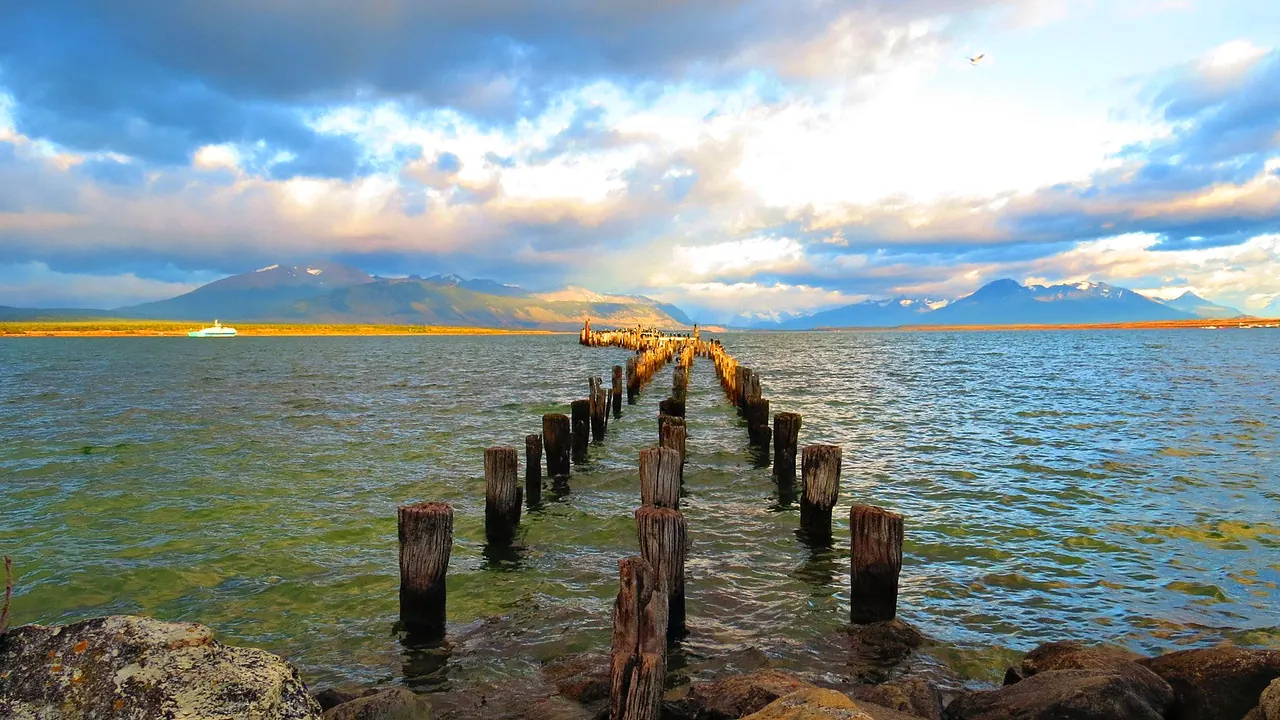
The old pier with the mountains beyond
- Nature & outdoors92
- Getting around35
- Food & drink30
Photo: Rosario Nieto Chadwick, CC BY 3.0, cropped
Match
24
Every category weighted equally
- Beach & sun25
- Culture & arts21
- Food & nightlife20
- Family trip29
- Outdoors33
- Relax & unwind27
- Shopping & style22
- On a budget25
Puerto Natales in twelve categories
Our verdict on each, scored 0 to 100 against the same fixed benchmark cities, so a score means the same thing on every page.
Beaches & swimming. Scores 3 out of 100.
Food & drink. Scores 30 out of 100.
Culture & sights. Scores 12 out of 100.
Nightlife. Scores 10 out of 100.
Nature & outdoors. Scores 92 out of 100.
Day trips. Scores 10 out of 100.
Good for families. Scores 30 out of 100.
Getting around. Scores 35 out of 100.
Shopping & style. Scores 15 out of 100.
Affordability. Scores 30 out of 100.
Live music & performing arts. Scores 4 out of 100.
Wellness & relaxation. Scores 22 out of 100.
Puerto Natales category by category
Beaches & swimming
3Puerto Natales sits on the shore of the Última Esperanza Sound, but this is a cold Patagonian fjord, not a place to swim. The water stays at around 8°C even in midsummer, the wind off the sound is strong and often fierce, and the shoreline is gravel and rock. Plan on walking along the waterfront, not on beach days. If swimming matters to you, the only realistic option is a hotel pool.
Food & drink
30Eating here means Patagonian lamb roasted slowly on an iron cross over an open fire, king crab and other cold-water seafood from the southern channels, and hearty stews made for people who have spent the day outdoors. A small brewing tradition gives the town its own craft beers, and Chilean wine is on every list. In the walkable centre there is a short run of restaurants and cafés catering to trekkers, some of them more ambitious than you would expect in a town this size.
The range is still narrow. There is little street food, no real market culture and not much international cooking. In the southern winter many places shorten their hours or close altogether.
Culture & sights
12The town is low-key to look at: streets of corrugated-iron and timber houses, many painted in bright colours against the grey sky. A small municipal museum covers the Aónikenk and Kawésqar peoples, the European settlers and the sheep-farming era. Just north of town stands the old Bories cold-storage plant, a national monument from the days when Patagonian wool and mutton were shipped to the world, and it is the most interesting piece of heritage nearby. An afternoon covers the lot, and nobody comes for the sights.
Nightlife
10Evenings here mean a pint of local craft beer, a long dinner and an early night before the morning bus to the park. A few pubs and bar-restaurants get sociable in summer, when trekkers swap trail stories over beer, but there are no clubs, and most of the town is quiet well before midnight. In winter even that thins out.
Nature & outdoors
92This is the gateway to Torres del Paine, one of the great mountain landscapes on earth. Granite towers, the horns of the Cuernos, turquoise lakes, glaciers spilling off the Southern Ice Field, and guanacos, condors and pumas on the steppe are all about two hours' drive away. The W and O treks are the classic routes, but day hikes, kayaking among icebergs and horse riding with estancia gauchos are all possible from town. Closer in, the Milodón Cave sits in the windswept hills, and Cerro Dorotea gives a stiff half-day climb with views over the sound.
Boats leave the town pier and cruise the fjords to the Balmaceda and Serrano glaciers in Bernardo O'Higgins National Park. The season runs from about October to April. Expect wind that can knock you off balance and weather that changes by the hour. Winter is cold and quiet, and access to the park is limited.
Day trips
10The big excursions from Puerto Natales are into the wilderness, not to other towns. The only nearby stops with human interest are the old Bories cold-storage plant just north of town and the Milodón Cave, where the remains of a giant ground sloth were found. Punta Arenas, with its mansions and its cemetery, is about three hours south, and El Calafate in Argentina takes even longer once you add the border crossing, so both work better as overnight stays than as day trips.
Good for families
30The town itself is small, safe and easy with children, and the life-size giant sloth at the Milodón Cave usually goes down well. Spotting guanacos, rheas and flamingos from the road to the park is a good outing for older children. Little else is made for them, though. The main attraction involves long drives, demanding trails and a wind that can be exhausting for small legs, so this suits active families with older children far better than those with toddlers.
Getting around
35The town centre is a compact, flat grid you can walk in minutes. Leaving it is harder. In season, coaches run from the town bus terminals to the main entrances of Torres del Paine, and inside the park a catamaran and a few shuttles link the trailheads. Seeing more than one corner of the park in a day means a tour or a hire car, and the long gravel roads need care in the wind. Outside the main season the buses become sparse.
Shopping & style
15Shopping here is practical: outdoor clothing and gear shops for trekkers who have forgotten something, and supermarkets for stocking up before the trail. A few craft shops sell sheep's wool knitwear, sheepskin and lapis lazuli jewellery, which make reasonable souvenirs. Beyond that there is little to browse.
Affordability
30Expect to spend more than you would elsewhere in Chile. Almost everything has to be trucked or flown to this corner of Patagonia, so groceries and restaurant meals cost more. Rooms are scarce and expensive in the short summer season. The real costs come with Torres del Paine: park entry, transfers, guided tours, glacier boats and nights in mountain refugios or campsites add up quickly. Budget hostels and self-catering help, and booking early helps more.
Live music & performing arts
4There is essentially no performing-arts scene. A bar may now and then host a guitarist or a folk band, and local festivals bring out traditional Chilean dance, but there is no theatre, concert hall or regular programme to plan a night around.
Wellness & relaxation
22There is no bathing or spa tradition here. Wellness comes down to the spas and hot tubs of the upscale lodges along the sound and near the park, where a sauna after a long day on the trail is the main luxury. The town is quiet and unhurried, and a slow evening watching the light change over the fjord has its own calm. But most people come here to exert themselves, not to unwind.
When should you go?
Pick a month to see what it is like. The climate figures are measured averages, not a forecast.
Puerto Natales in July
Daytime high, °C
Rainfall in the month, mm
The whole year
Shaded against this city’s own year: the deepest cell is its best month for that figure and the palest its weakest.
Where the figures come from
Puerto Natales has no weather station within reach, so its figures come from a gridded climate model rather than a measured record, and read a broad area rather than the city itself.
Temperature and rainfall are climate normals, averaged over the years shown. Puerto Natales: 1991-2020 normals, TerraClimate 4 km grid at the town, no weather station within 90 km.
Before you go
| Measure | Puerto Natales |
|---|---|
| Official language | Spanish |
| Currency | Chilean Peso (CLP) |
| Sockets | CL220 V, 50 Hz |
| Driving side | Right |
| Time zone | UTC-3 |
| Emergency number | Police 133/134, ambulance 131, fire 132 |
| Elevation | 3 m |
| Main airport | President Carlos Ibáñez International Airport (PUQ)181 km from centre7 non-stop destinations |
| Public holidays this year | 16 days |
By the numbers
| Measure | Puerto Natales |
|---|---|
| City population | 21,477 |
| Museums within 10 km | 0 |
| UNESCO World Heritage sites within 50 km | 0 |
Compare Puerto Natales with
Every comparison with a written verdict behind it.