China
Lhasa
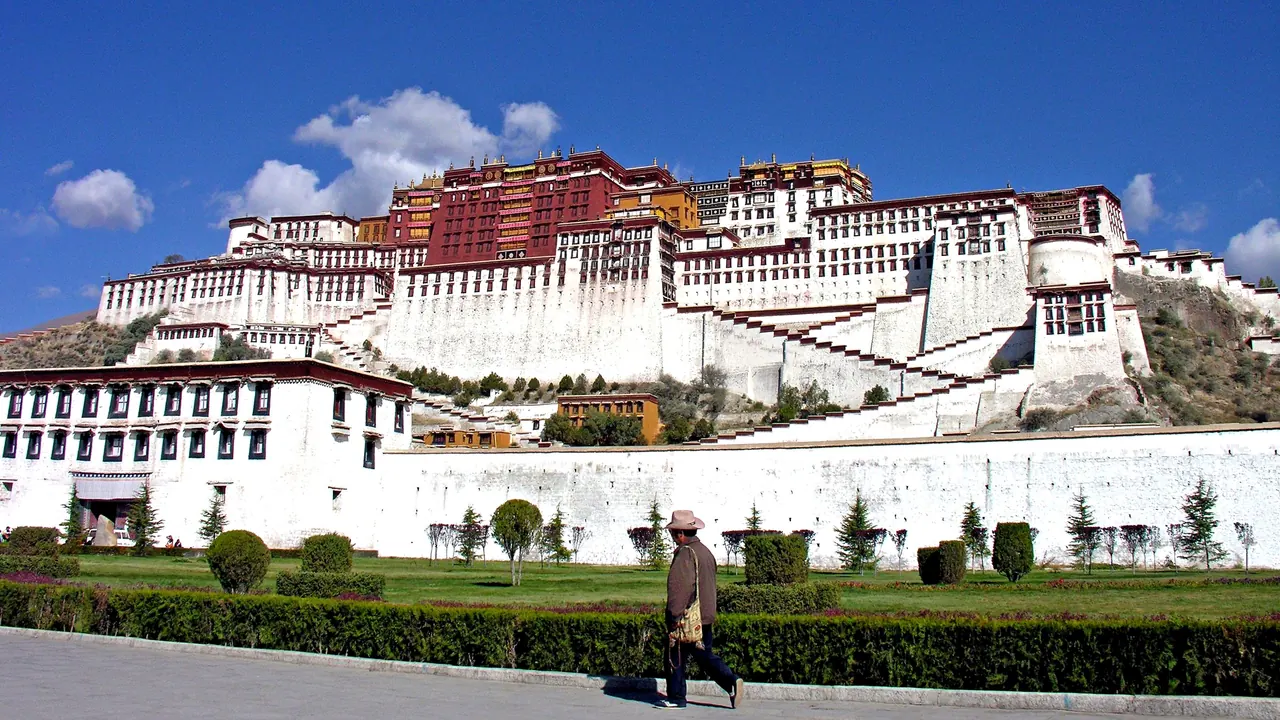
The Potala Palace
- Culture & sights80
- Nature & outdoors65
- Day trips55
Photo: Dennis G. Jarvis, CC BY-SA 2.0, cropped
Match
39
Every category weighted equally
- Beach & sun34
- Culture & arts46
- Food & nightlife38
- Family trip38
- Outdoors44
- Relax & unwind38
- Shopping & style40
- On a budget40
Lhasa in twelve categories
Our verdict on each, scored 0 to 100 against the same fixed benchmark cities, so a score means the same thing on every page.
Beaches & swimming. Scores 2 out of 100.
Food & drink. Scores 38 out of 100.
Culture & sights. Scores 80 out of 100.
Nightlife. Scores 18 out of 100.
Nature & outdoors. Scores 65 out of 100.
Day trips. Scores 55 out of 100.
Good for families. Scores 10 out of 100.
Getting around. Scores 50 out of 100.
Shopping & style. Scores 42 out of 100.
Affordability. Scores 52 out of 100.
Live music & performing arts. Scores 25 out of 100.
Wellness & relaxation. Scores 30 out of 100.
Lhasa category by category
Beaches & swimming
2Lhasa sits at about 3,650m on the Tibetan Plateau, far from any coast, and has no swimming culture at all. The Lhasa River is cold and fast, and the great lakes within reach, Yamdrok and Namtso, are icy, high and sacred, places to look at rather than bathe in. Anyone who wants to swim will need a hotel pool.
Food & drink
38Eating in Lhasa means Tibetan staples: momos filled with yak meat, thukpa noodle soup, tsampa made from roasted barley flour, yak yoghurt, and salty butter tea poured as a sign of welcome. The most memorable experience is the sweet tea house, a long room of benches where locals sit for hours over thermoses of milky tea and bowls of noodles. Around the Barkhor there are simple Tibetan kitchens, Nepali-style cafés serving travellers, and plenty of Sichuan and other Chinese restaurants in the newer parts of the city.
It is honest, warming food suited to the altitude, but the range is narrow, fresh vegetables are limited, and there is little fine dining. Curious eaters will enjoy a few days of it rather than come for it.
Culture & sights
80Few cities have a single building as overwhelming as the Potala Palace, the former winter home of the Dalai Lamas, its white and red walls climbing a rock above the city. Below it, the Jokhang Temple is the holiest site in Tibetan Buddhism, ringed by the Barkhor, the old quarter where pilgrims walk clockwise all day spinning prayer wheels and prostrating on the flagstones. Together with the Norbulingka summer palace they form a UNESCO World Heritage site.
On the edge of the city stand the vast monasteries of Drepung and Sera, whitewashed hillside towns of chapels and assembly halls; at Sera the monks hold lively debates in a courtyard most afternoons. The Tibet Museum adds context. The set is small enough to see in three or four days, and the living devotion around it is what stays with visitors.
Nightlife
18Lhasa is an early-to-bed city, and the altitude makes most visitors happy to keep it that way, since alcohol hits harder at this height. Evening life is mostly a stroll around the lit-up Barkhor, a meal and a beer in a traveller café. Locals go to nangma halls, part bar and part dance floor, where Tibetan pop and group dancing run late, and to karaoke rooms in the newer districts. There are a few small bars, but no club scene to speak of.
Nature & outdoors
65The landscape is the high plateau at its most stark: a broad valley of the Lhasa River ringed by bare brown mountains, intensely blue skies and thin, dry air. Gentle walks start in the city itself, such as the pilgrim circuits behind Drepung and Sera that climb to prayer-flag-strung ridges with wide views. Further out, the road over the Kamba La pass drops to Yamdrok Lake, a vivid turquoise lake with snow peaks behind it, and Namtso, even larger and higher, makes a long excursion or an overnight.
What holds it back is how you can use it. Acclimatising takes days, serious trekking needs a guide and planning, and winters are cold and windy. Late spring to early autumn is the best time, when the grass greens and the passes are open.
Day trips
55The day trips from Lhasa are monasteries, and some are extraordinary. Ganden, the great monastery founded by Tsongkhapa, spreads across a mountain bowl about an hour and a half east, with a pilgrim path circling the ridge. Drak Yerpa is a cluster of meditation caves in a cliff closer to the city, Tsurphu is the historic seat of the Karmapas up a quiet valley, and Samye, Tibet's first monastery, sits in sandy country to the south-east, a full day there and back.
The variety is limited: these are religious sites rather than towns, and the old towns of Gyantse and Shigatse are too far for a day. Most outings are made by hired car with a guide.
Good for families
10Lhasa is a hard place to bring young children. At about 3,650m altitude sickness is a real danger, and children can struggle to say how they feel. The main sights involve long climbs, such as the steep stairs of the Potala, and dim, smoky chapels where quiet is expected. There are no attractions made for children, and medical care is basic outside the main hospitals. Older, robust teenagers with an interest in Tibet can find it fascinating.
Getting around
50The heart of Lhasa is compact: the Barkhor, the Jokhang and the Potala are all within walking distance, and the old quarter is best explored on foot. The difficulty is the altitude, which makes even gentle walks and stairs exhausting for the first days. Taxis and city buses reach Drepung, Sera and the Norbulingka easily, and pedicabs work the old town. Anything beyond the city is done by hired car with a driver and guide, rather than by public transport.
Shopping & style
42The shopping worth doing is around the Barkhor, where stalls and small shops sell what pilgrims and visitors buy: prayer flags, prayer wheels, incense, butter lamps, turquoise and coral jewellery, Tibetan knives, yak-wool shawls and painted thangkas. Some workshops still make thangkas and carpets by hand, though plenty of the stock is mass-produced, so it pays to look closely. Beyond the old quarter, the newer city has ordinary Chinese malls and department stores with little a visitor needs.
Affordability
52Day-to-day costs in Lhasa are low: Tibetan meals, tea-house noodles, taxis and simple guesthouses are all inexpensive. What raises the bill is how a trip here is put together. Foreign visitors generally travel with a licensed guide, every excursion needs a hired car, and the headline sights charge substantial entry fees, so the overall cost of a stay ends up mid-range rather than cheap. Hotels also cost more in the summer high season.
Live music & performing arts
25Lhasa's most distinctive performance is Ache Lhamo, Tibetan opera with masks and bright costumes, staged most famously at the Norbulingka during the Shoton festival in late summer. Outside that season the offer is thin: nangma halls with Tibetan song and dance, large staged spectacles aimed at domestic tourists, and the chanting of monks at morning prayers, which is moving but not a performance. There is no regular theatre, classical or live-music scene.
Wellness & relaxation
30Lhasa has no bathing culture of its own, and the altitude, with its headaches and poor sleep in the first days, works against relaxation. What it does offer is a contemplative rhythm: walking the kora with pilgrims at dawn, sitting in a monastery courtyard, or passing an afternoon in a sweet tea house. Traditional Tibetan medicine is practised and taught in the city, and a few hotels run spas. The hot springs at Yangpachen, a couple of hours north-west, are the nearest place to soak.
When should you go?
Pick a month to see what it is like. The climate figures are measured averages, not a forecast.
Lhasa in July
Daytime high, °C
Rainfall in the month, mm
The whole year
Shaded against this city’s own year: the deepest cell is its best month for that figure and the palest its weakest.
Temperature and rainfall are climate normals, averaged over the years shown. Lhasa: 1991-2020 normals, Lhasa (2.4 km from centre).
Before you go
| Measure | Lhasa |
|---|---|
| Official language | Putonghua |
| Currency | Yuan Renminbi (CNY) |
| Sockets | ACI220 V, 50 Hz |
| Driving side | Right |
| Time zone | UTC+8 |
| Emergency number | Police 110, ambulance 120, fire 119 |
| Elevation | 3,650 m |
| Main airport | Lhasa Gonggar International Airport (LXA)45 km from centre49 non-stop destinations |
| Public holidays this year | 6 days |
By the numbers
| Measure | Lhasa |
|---|---|
| City population | 867,891 |
| Museums within 10 km | 5 |
| UNESCO World Heritage sites within 50 km | 1 |
Compare Lhasa with
Every comparison with a written verdict behind it.