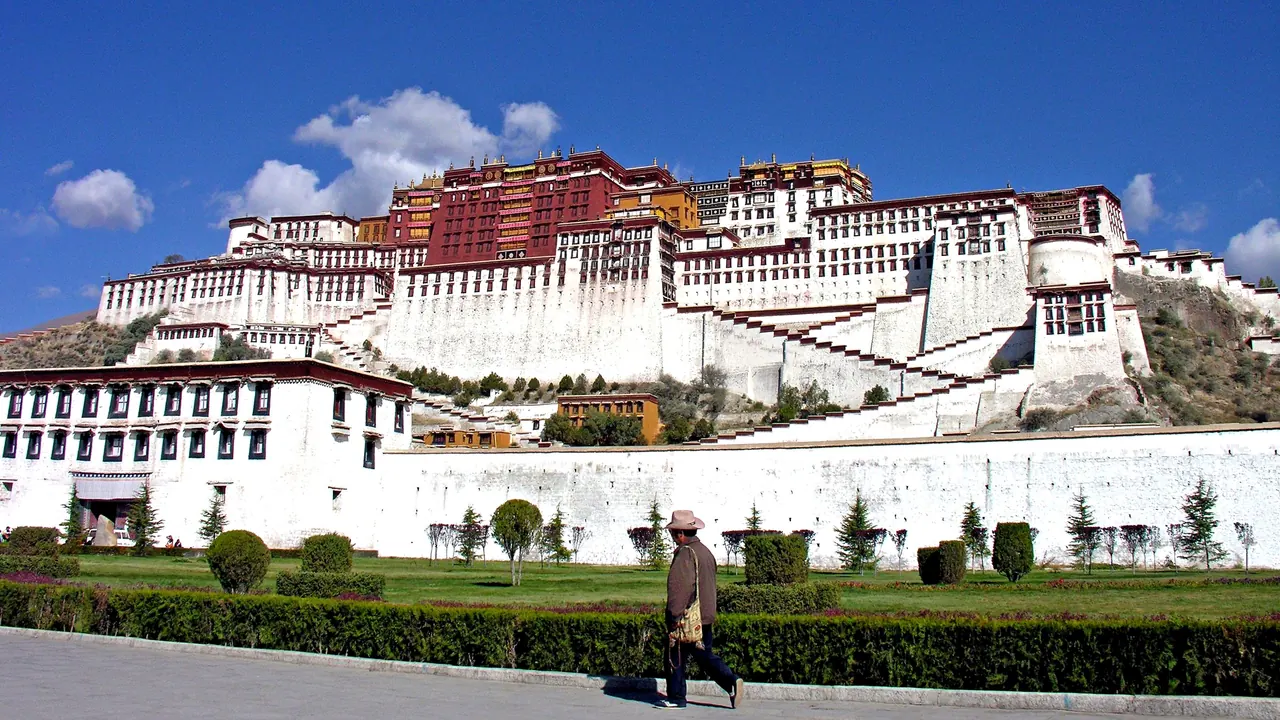
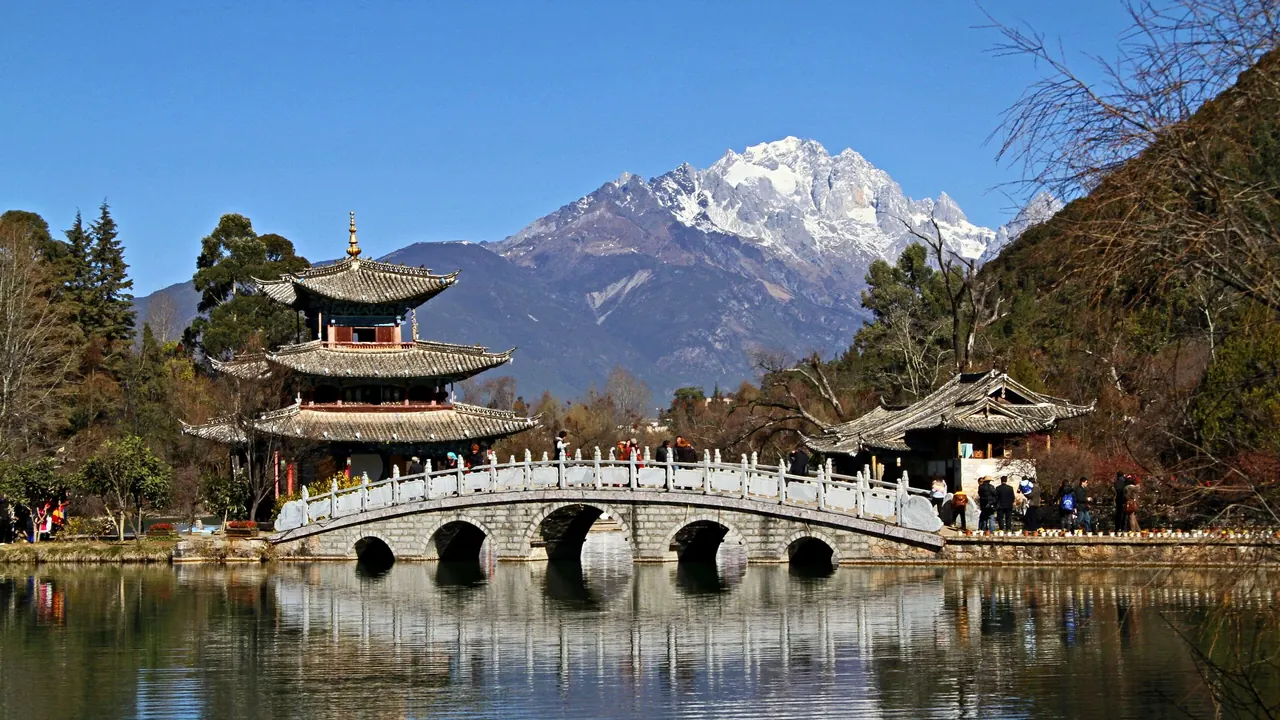
Photos: Lhasa by Dennis G. Jarvis, CC BY-SA 2.0, cropped; Lijiang by Miltos Gikas from Lutsa, Attiki, Greece, CC BY 2.0, cropped.
Lhasa or Lijiang?
Our verdict in twelve categories, each scored against the same fixed benchmark cities, and the climate month by month, so you can choose for your trip.
Choose Lhasa for
- culture and sights
- getting around
- shopping
Lhasa is for travellers who want to see one of the great religious cities of Asia. That means the Potala rising over the valley, the Jokhang, pilgrims circling the Barkhor from dawn, and the monastery towns of Drepung and Sera on the hillsides. It suits adults who will give the altitude a few days and travel with a guide, and who care more about living devotion than about evenings out or an easy pace.
Choose Lijiang for
- nightlife
- families
- prices
Lijiang is the better pick if you're drawn by mountain scenery, a gentler climate and a looser, more independent trip. Jade Dragon Snow Mountain and Tiger Leaping Gorge make it the stronger base for the outdoors, and Dali and Shangri-La are a short train ride away. It's cheaper to travel in day to day and far easier with children, even though its Old Town feels more staged than lived in.
Scoreboard
Twelve categories on one fixed scale from 0 to 100. The shaded stretch is the gap between the two.
Your match
Pick a travel style or drag the sliders, and both match scores follow your weighting.
Wins on culture and sights and getting around with your weighting.
Wins on nightlife and families with your weighting.
What matters to you?
Category by category
What the scores mean for a trip.
Beaches & swimming
Neither city is a place to swim. Both sit high on a plateau, days from any sea, and their lakes are too cold for bathing. The difference lies in what you look at. In Lhasa it's the sacred turquoise waters of Yamdrok and Namtso under snow peaks. In Lijiang it's the wetlands of Lashi Lake, where you can go boating and watch wintering birds.
Food & drink
The two eat about equally well, from very different kitchens. Lhasa is Tibetan high-altitude fare: yak momos, thukpa, tsampa and salty butter tea, with long sociable afternoons in the sweet tea houses. There are also Nepali-style cafés around the Barkhor.
Lijiang cooks Naxi and Yunnan dishes. Look for layered baba flatbread, black-goat hotpot, rice noodles and wild mushrooms in the summer rains, with good Pu'er tea everywhere. Its catch is the Old Town lanes, where menus repeat at tourist prices, so it pays to eat outside the walls.
Culture & sights
Lhasa is far ahead. The Potala, the Jokhang and the Norbulingka together make up a UNESCO site, and the great monasteries of Drepung and Sera are on the city's edge. What makes it unforgettable, though, is the pilgrims spinning prayer wheels and prostrating around the Barkhor all day.
Lijiang's appeal is gentler and more about atmosphere. You get the canals and grey-tiled houses of Dayan, the Mu Family Mansion, the Dongba script at Black Dragon Pool and the Ming-era murals of Baisha. Much of the Old Town was rebuilt after the 1996 earthquake and now consists of shops and inns, so it lacks the living devotion that carries a visit to Lhasa.
Nightlife
Lijiang is the livelier choice after dark. Its canal-side strip in the Old Town is famous across China for open-fronted bars with singers and drums that stay packed past midnight. It's loud and repetitive, and there are quieter courtyard bars further back or in Shuhe.
Lhasa goes to bed early, helped by an altitude that makes alcohol hit hard. An evening usually means a walk round the lit Barkhor and a beer in a traveller café. The nangma halls, where locals sing and dance, are the one real local night out.
Nature & outdoors
Lijiang has the more rewarding outdoors and it's easier to use. The glaciers of Jade Dragon Snow Mountain are reached by cable car, Blue Moon Valley has terraced pools, and Tiger Leaping Gorge offers a classic two-day high walk between two snow ranges. The mountain itself is crowded and tightly managed.
Lhasa's landscape is starker and grander: bare brown mountains, the turquoise sweep of Yamdrok beyond the Kamba La pass, and Namtso higher still. But the altitude means days of acclimatising, and anything beyond the pilgrim paths behind Drepung and Sera needs a guide.
Day trips
Lijiang gives you more range. Baisha and Shuhe are a short taxi ride away, and Shigu sits on the first bend of the Yangtze. Trains reach Dali, with its walled town and Erhai Lake villages, and Shangri-La's Songzanlin Monastery in under two hours.
From Lhasa almost every outing is to a monastery: Ganden on its mountain bowl, the cliff caves of Drak Yerpa, Tsurphu and distant Samye. Each one is remarkable, but they're all religious sites reached by hired car with a guide, and the old towns of Gyantse and Shigatse are too far to do in a day.
Good for families
Neither city is built for children, but Lijiang is much the more manageable. At about 2,400m it's far less punishing than Lhasa, and children enjoy following the streams through the car-free Old Town and the park at Black Dragon Pool. Families should skip the snow mountain trips and be ready to carry pushchairs over the stone paving.
Lhasa is hard with young children. Altitude sickness is a real risk at 3,650m, and the steep Potala stairs and dim, hushed chapels test small visitors. Medical care is basic outside the main hospitals, so it really only works for robust older teenagers.
Getting around
Lhasa is the easier city to get around. The Potala, the Jokhang and the Barkhor are all within walking distance of one another, and taxis and city buses reach Drepung, Sera and the Norbulingka without fuss. The real effort is the thin air, which makes stairs tiring for the first few days.
Lijiang's Old Town is car-free and walkable, if mazy, but its main sights are spread across the valley. There's no rail transit, buses are hard to use without Chinese, and you'll rely on taxis, a hired driver or ride-hailing apps that need a Chinese payment setup.
Shopping & style
Lhasa has the better browsing. The Barkhor's stalls sell what pilgrims actually use, such as prayer wheels, incense and butter lamps, alongside turquoise jewellery, yak-wool shawls and thangkas. A few workshops still paint thangkas and weave carpets by hand.
In Lijiang almost every Old Town house is a shop, but much of the stock repeats from lane to lane and is made elsewhere. Pu'er tea cakes and silver, bought after comparing a few shops, are the purchases worth making.
Affordability
Lijiang works out noticeably cheaper overall. Courtyard guesthouses, noodle breakfasts and taxis cost little, and the main extra expenses are the Old Town entry fee and the snow mountain cable cars. Eating a few streets back from the main lanes keeps costs down.
Lhasa's daily costs are just as low, but the way a trip has to be arranged lifts the total. A licensed guide, a hired car for every excursion and steep entry fees at the main sights make it a mid-range trip.
Live music & performing arts
Lijiang has a little more to hear, and it runs all year. Evening concerts of Naxi ancient music, a Taoist ritual repertoire kept alive by older musicians, are a real survival, and outdoor song-and-dance spectacles use the snow mountain as a backdrop.
Lhasa's great tradition, the masked Ache Lhamo opera, is tied mainly to the Shoton festival at the Norbulingka in late summer. Outside that season, nangma halls and staged shows are all there is.
Wellness & relaxation
Neither has a spa tradition. In both, rest comes from slowing down rather than from treatments, but the kind of calm differs. Lhasa offers walking the kora with pilgrims at dawn, Tibetan medicine and a soak at the Yangpachen hot springs. Its altitude, though, can spoil sleep at first.
Lijiang's version is lazier and lower: tea and books in a sunny courtyard inn, and morning walks in Shuhe or Baisha. Choose a base away from the noisy Old Town lanes.
When should you go?
Pick your month. The climate figures are measured averages, not a forecast.
Lhasa in July
Lijiang in July
Daytime high, °C
Rainfall in the month, mm
Temperature and rainfall are climate normals, averaged over the years shown. Lhasa: 1991-2020 normals, Lhasa (2.4 km from centre). Lijiang: 1991-2020 normals, Lijing (23.5 km from centre).
Lhasa is dry and bright almost all year, with more than 200 hours of sunshine in every month, but its winters are cold, with afternoons around 8°C in January. The most comfortable months for walking the Barkhor and climbing to the monasteries are May to early June and late September into October. These fall either side of the summer rains, which peak at 141mm in July. Neither city has any beach weather in any month.
Lijiang is milder through the winter, with January afternoons near 14°C, so the cool season is a pleasant time to wander its lanes. Its summer monsoon is much heavier, reaching about 245mm in July and hiding the snow mountain behind cloud. Spring from March to May and the weeks of October and November are the clearest there. In midsummer the two cities are about equally warm, but Lhasa stays much the drier.
Which traveller are you?
On a culture and arts trip, Lhasa is the stronger choice. The Potala, the Jokhang, pilgrims on the Barkhor and the afternoon debates at Sera monastery go deeper than Lijiang's rebuilt Old Town, its Dongba museum and the murals at Baisha.
For an outdoors trip, Lijiang wins clearly. You have the two-day high trail through Tiger Leaping Gorge, the glaciers of Jade Dragon Snow Mountain and cycling around Baisha. Lhasa's sacred lakes and treks first need days of acclimatising, a guide and careful planning.
On a trip on a tight budget, Lijiang goes further. Courtyard inns, flatbread breakfasts and taxis cost little, and you can organise most things yourself. In Lhasa, daily costs are low too, but the guide, the hired cars and the entry fees push the total to mid-range.
Before you go
| Measure | Lhasa | Lijiang |
|---|---|---|
| Official language | Putonghua | Putonghua |
| Currency | Yuan Renminbi (CNY) | Yuan Renminbi (CNY) |
| Sockets | ACI220 V, 50 Hz | ACI220 V, 50 Hz |
| Driving side | Right | Right |
| Time zone | UTC+8 | UTC+8 |
| Emergency number | Police 110, ambulance 120, fire 119 | Police 110, ambulance 120, fire 119 |
| Elevation | 3,650 m | 2,400 m |
| Main airport | Lhasa Gonggar International Airport (LXA)45 km from centre49 non-stop destinations | Lijiang Sanyi International Airport (LJG)22 km from centre60 non-stop destinations |
| Public holidays this year | 6 days | 6 days |
By the numbers
| Measure | Lhasa | Lijiang |
|---|---|---|
| City population | 867,891 | 1,253,878 |
| Museums within 10 km | 5 | 2 |
| UNESCO World Heritage sites within 50 km | 1 | 1 |
Where else could you go?
Every comparison below shares a destination with this one, so you can follow Lhasa or Lijiang somewhere new.
- Thimphuvs Lhasa
- Darjeelingvs Lhasa
- Chengduvs Lijiang
- Kathmanduvs Lhasa
- Chongqingvs Lijiang
- Luang Prabangvs Lijiang