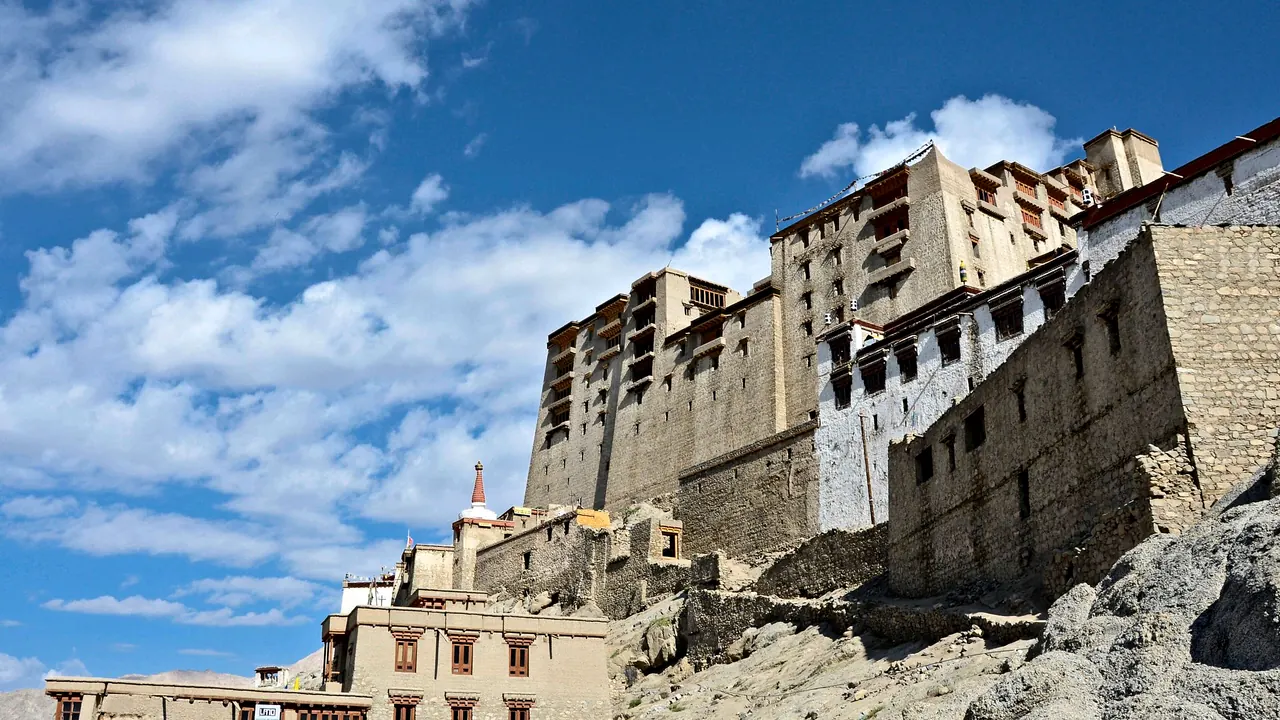
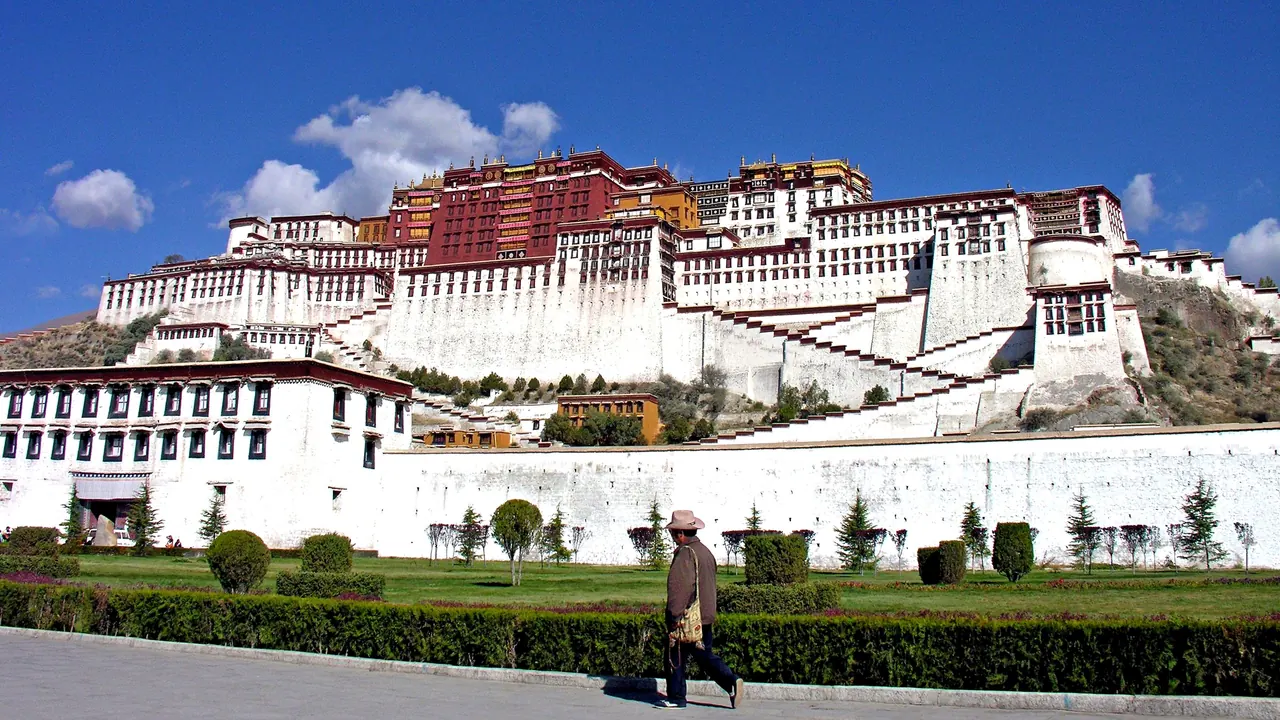
Photos: Leh by Rayan Naqash, CC BY-SA 3.0, cropped; Lhasa by Dennis G. Jarvis, CC BY-SA 2.0, cropped.
Leh or Lhasa?
Our verdict in twelve categories, each scored against the same fixed benchmark cities, and the climate month by month, so you can choose for your trip.
Choose Leh for
- prices
- nature and the outdoors
- day trips
Leh is the choice for travellers who come to the Himalaya for the mountains. The Markha valley trek, rafting on the Zanskar, the ride down from Khardung La and overnight trips to Pangong Tso and Nubra give it the stronger outdoor side. The painted temples of Alchi and the monasteries along the Indus make excellent days out. Guesthouses and homestays also keep it cheaper, as long as you budget for drivers.
Choose Lhasa for
- culture and sights
- getting around
- shopping
Lhasa suits a trip built around Tibetan Buddhism as a living faith. Nothing in Leh town compares with the Potala, the Jokhang and the pilgrims circling the Barkhor, and the debates at Sera are something you watch happen rather than read about. The compact centre is easier to manage on foot or by taxi. In return, expect a guided, more structured and more expensive trip.
Scoreboard
Twelve categories on one fixed scale from 0 to 100. The shaded stretch is the gap between the two.
Your match
Pick a travel style or drag the sliders, and both match scores follow your weighting.
Wins on prices and nature and the outdoors with your weighting.
Wins on culture and sights and getting around with your weighting.
What matters to you?
Category by category
What the scores mean for a trip.
Beaches & swimming
Neither city is a place to swim. The Indus at Leh is cold snowmelt, used for rafting rather than bathing. Near Lhasa, Yamdrok and Namtso are sacred lakes you look at, not swim in. If you need a swim in Lhasa, a hotel pool is the only realistic option.
Food & drink
Both cities cook the same Tibetan staples, momos, thukpa and salty butter tea, but Lhasa serves them in a setting you will remember. Its sweet tea houses, long rooms of benches where locals sit over milky tea and noodles, are an experience in themselves, and the Sichuan and other Chinese restaurants of the newer districts widen the choice.
Leh's own touches are Ladakhi skyu, apricots and sea buckthorn juice. Most visitors, though, eat in rooftop cafés serving trekkers pizza and Israeli dishes, which are comfortable rather than memorable, and much of the scene shuts outside summer.
Culture & sights
Here the gap is wide. Leh Palace was modelled on the Potala, and Lhasa has the original. It also has the Jokhang, the holiest temple in Tibetan Buddhism, the Norbulingka and the great hillside monasteries of Drepung and Sera, enough for three or four absorbing days.
Leh town has its own appeal: the mud-brick old town below the palace, Namgyal Tsemo on the ridge and the sunset from Shanti Stupa. Still, it is seen in a day or two, and its finest art lies out in the valley rather than in town.
Nightlife
Neither is a place for a night out, but Lhasa at least has some evening life. Locals go to nangma halls for Tibetan pop and group dancing that run late, and the newer districts have karaoke rooms and a few small bars. In Leh the evening ends with dinner and perhaps a beer on a rooftop, and the town is asleep early, ahead of dawn starts for the passes.
Nature & outdoors
From Leh, far more of the high Himalaya is within easy reach. Multi-day treks such as the Markha valley route through Hemis National Park start an hour or two away, the road climbs over Khardung La above 5,000m for the ride back down, and the Indus and Zanskar carry rafting through deep gorges. Winter adds the frozen-river Chadar trek and snow leopard tracking.
Lhasa's valley is just as stark, but there is less you can do in it. The highlights are turquoise Yamdrok Lake beyond the Kamba La pass, the larger and higher Namtso, and the pilgrim paths up to the ridges behind Drepung and Sera. Anything more ambitious than those needs a guide and careful planning.
Day trips
Leh has the closer, denser monastery circuit, and Alchi gives it the finest single outing. Shey, Thiksey and Hemis lie up the Indus within about an hour, with Stakna, Matho and the palace at Stok on the same side of the valley. A day west to Likir, Basgo's ruined citadel and the thousand-year-old painted temples of Alchi is one of the great art outings of the Himalaya.
Lhasa's sites are further apart: Ganden in its mountain bowl, the cliff caves of Drak Yerpa, Tsurphu up its quiet valley and a long day to Samye. Each is worthwhile, but they are usually done by hired car with a guide, and Gyantse and Shigatse are too far for a day.
Good for families
Both are poor choices with young children, for the same reason: at this altitude, sickness is a real risk and needs careful acclimatisation. The difference is what older teenagers get out of each. Active ones can trek and raft from Leh, while Lhasa rewards those with a real interest in Tibet and the stamina for the Potala's steep stairs.
Getting around
Leh's taxi-union cars, hired motorbikes and shared jeeps are a poor match for Lhasa's taxis, city buses and pedicabs. In Leh the walk from the Main Bazaar to the old town and Changspa is short but steep, and outside town every outing means a long mountain drive, with some passes closed in winter.
Lhasa's Barkhor, Jokhang and Potala lie close together, and ordinary transport reaches Drepung, Sera and the Norbulingka without fuss. Only trips beyond the city need a hired car with a driver.
Shopping & style
Much of the stock overlaps, turquoise and coral, thangkas and prayer flags, but the Barkhor makes Lhasa the better place to browse. Its stalls serve pilgrims as much as visitors, with prayer wheels, butter lamps and Tibetan knives, and some workshops still make thangkas and carpets by hand.
Leh's Main Bazaar adds pashmina from Kashmiri traders, apricots sold by Ladakhi women along the street and decent trekking gear, though more of what it sells repeats from shop to shop.
Affordability
Leh is the cheaper stay. Homestays, guesthouses and simple meals cost little. The main extras are the taxi union's fixed fares, a hired car for days out and permits for the outer valleys.
In Lhasa, everyday costs are also low, but the way foreign visitors have to travel raises the total to mid-range. That means a licensed guide, a hired car for each excursion and substantial entry fees at the major sights.
Live music & performing arts
Neither city has theatres or concert halls, so in both the performances come with the festivals. Lhasa offers a little more: Ache Lhamo opera at the Norbulingka during the Shoton festival, nangma halls with Tibetan song and dance through the year, and large staged shows for domestic tourists.
Leh's high point is masked cham dancing in monastery courtyards, above all at the Hemis festival in summer and around Losar. It is deeply moving if your dates line up, but outside those days there is little beyond occasional cultural evenings.
Wellness & relaxation
Neither city offers pampering, and in both the thin air disturbs sleep for the first nights. The difference is the kind of quiet each offers. Leh leans towards study, with meditation courses at Buddhist centres and consultations with amchi practitioners. Lhasa has the dawn kora with pilgrims, long afternoons in a sweet tea house and a real soak at the Yangpachen hot springs, a couple of hours away.
When should you go?
Pick your month. The climate figures are measured averages, not a forecast.
Leh in July
Lhasa in July
Daytime high, °C
Rainfall in the month, mm
Where the figures come from
Leh has no weather station within reach, so its figures come from a gridded climate model rather than a measured record, and read a broad area rather than the city itself.
Temperature and rainfall are climate normals, averaged over the years shown. Leh: 1991-2020 normals, TerraClimate 4 km grid at the town, no weather station within 90 km. Lhasa: 1991-2020 normals, Lhasa (2.4 km from centre).
Leh is a summer destination. Highs go from well below freezing in winter, around -3°C in January, to a comfortable 25°C in July. Because it sits in a rain shadow, every month is almost dry. June to September is the time for treks, passes and lake trips, and May and October are cooler but still workable. From November to March the town is bitterly cold for walking around, and some passes close.
Lhasa has the gentler winter, with highs around 8°C in January, dry air and long hours of sunshine all year. Its catch is summer, when most of the year's rain falls, about 141mm in July alone, and August is nearly as wet. The best months are May and late September into October, when days reach about 21°C and the skies are clear. So the two follow opposite rhythms, and Leh is at its best just when Lhasa is at its wettest.
Which traveller are you?
On an outdoors trip, Leh is the clear pick. Hemis National Park and the Markha valley trek start close to town, its rivers carry rafting through deep gorges, and Pangong Tso and Nubra make memorable overnight trips. Lhasa's lakes and treks take more guiding and planning.
For a culture and arts trip, choose Lhasa. The Potala, the Jokhang and the Norbulingka form a heritage group that Leh's palace cannot match. Sera's debating monks bring the monasteries to life, and Ache Lhamo opera adds a performance tradition of its own.
On a tight budget, Leh goes further. Homestays and noodle-soup meals cost little, even after taxi-union fares and permits are added. In Lhasa, the licensed guide, the hired car for every excursion and the entry fees push a stay into the mid-range.
Before you go
| Measure | Leh | Lhasa |
|---|---|---|
| Official language | Hindi, English | Putonghua |
| Currency | Indian Rupee (INR) | Yuan Renminbi (CNY) |
| Sockets | CM230 V, 50 Hz | ACI220 V, 50 Hz |
| Driving side | Left | Right |
| Time zone | UTC+5:30 | UTC+8 |
| Emergency number | 108 or 112 | Police 110, ambulance 120, fire 119 |
| Elevation | 3,500 m | 3,650 m |
| Main airport | Leh Kushok Bakula Rimpochee Airport (IXL)5 km from centre5 non-stop destinations | Lhasa Gonggar International Airport (LXA)45 km from centre49 non-stop destinations |
| Public holidays this year | - | 6 days |
By the numbers
| Measure | Leh | Lhasa |
|---|---|---|
| City population | 30,870 | 867,891 |
| Museums within 10 km | 2 | 5 |
| UNESCO World Heritage sites within 50 km | 0 | 1 |
Where else could you go?
Every comparison below shares a destination with this one, so you can follow Leh or Lhasa somewhere new.