China
Zhangjiajie
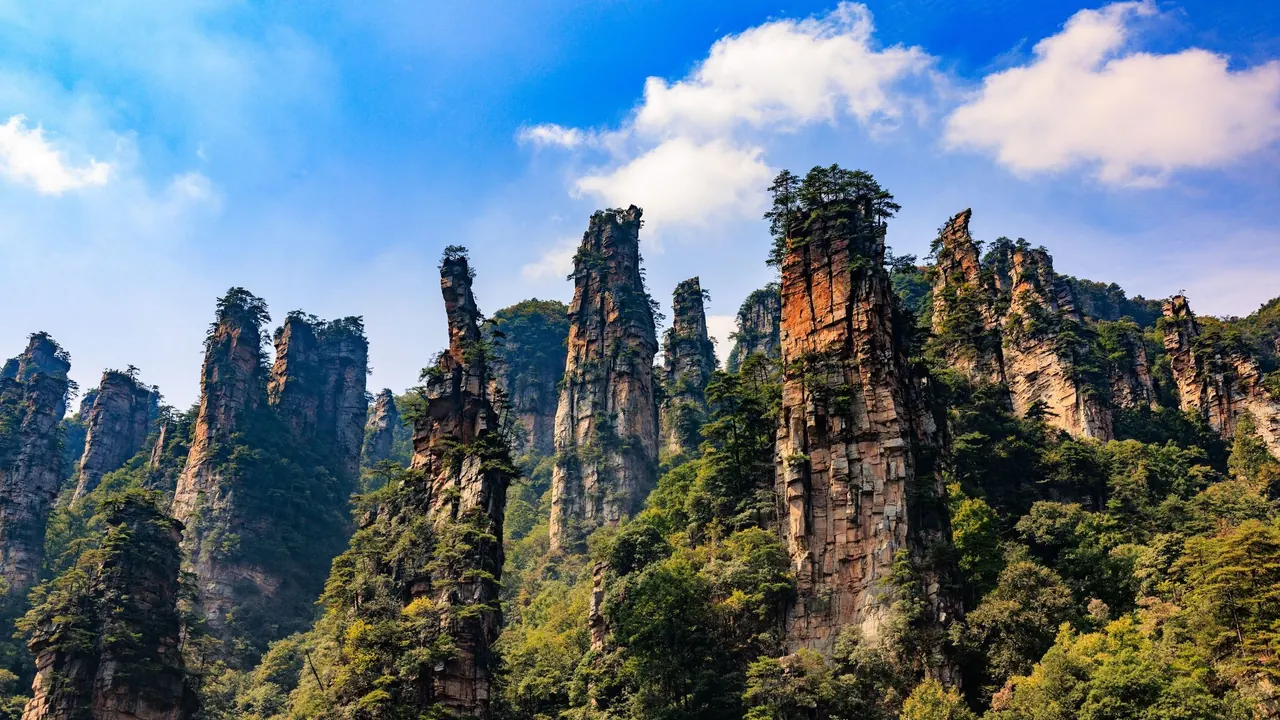
The sandstone pillars of the Zhangjiajie National Forest Park
- Nature & outdoors93
- Affordable cities76
- Day trips52
Photo: David Tran, Pexels License
Match
37
Every category weighted equally
- Beach & sun37
- Culture & arts35
- Food & nightlife31
- Family trip43
- Outdoors48
- Relax & unwind38
- Shopping & style32
- On a budget41
Zhangjiajie in twelve categories
Our verdict on each, scored 0 to 100 against the same fixed benchmark cities, so a score means the same thing on every page.
Beaches & swimming. Scores 4 out of 100.
Food & drink. Scores 40 out of 100.
Culture & sights. Scores 20 out of 100.
Nightlife. Scores 15 out of 100.
Nature & outdoors. Scores 93 out of 100.
Day trips. Scores 52 out of 100.
Good for families. Scores 42 out of 100.
Getting around. Scores 40 out of 100.
Shopping & style. Scores 17 out of 100.
Affordability. Scores 76 out of 100.
Live music & performing arts. Scores 20 out of 100.
Wellness & relaxation. Scores 24 out of 100.
Zhangjiajie category by category
Beaches & swimming
4Zhangjiajie is deep in the mountains of western Hunan, a long way from any coast, so it has no beaches. Baofeng Lake and the reservoirs among the peaks are for boat rides and looking at, not for swimming. Summer river rafting in the surrounding gorges is the closest thing to a day in the water. Anyone who wants to swim will have to use a hotel pool.
Food & drink
40Food here is the cooking of western Hunan, hot, sour and smoky, together with the mountain dishes of the Tujia and Miao peoples. The local dish to look for is sanxiaguo, the three-pot stew of tripe, pork or cured meat simmered at the table over a burner. Alongside it come chilli-pickled vegetables, wild mushrooms, mountain greens and rice noodles at breakfast. Smoked bacon and sausages cured over wood fires are everywhere, and so is a fierce local rice wine.
In the city, the evening food streets and the simple family restaurants near the centre are where locals eat, and both are worth a visitor's time. In Wulingyuan, near the park gates, menus tend to be generic and built for tour groups. Cooking from outside China is scarce and there is little fine dining. Anyone who cannot cope with chilli should learn to ask for dishes without it.
Culture & sights
20People come to Zhangjiajie for its mountains, not for anything in the city. The cultural sights in town are modest. Puguang Temple is a Ming-dynasty complex that stays quiet among the newer buildings. A Tujia folk-customs park shows the stilted wooden houses, crafts and rituals of the region's largest minority. A few streets of rebuilt traditional architecture fill out the list, and most of the city is modern and plain.
The richer layer of heritage is in the old towns and Tujia sites further out. In town, a visitor will see the main sights in half a day.
Nightlife
15Evenings are short here. Most visitors are up at dawn to beat the crowds into the parks, and the town follows that rhythm. In the city there are night-food streets, karaoke parlours and a small cluster of bars along the riverside and on the rebuilt old street. These are fine for a beer after dinner, but none of them is a reason to stay out late. Wulingyuan, the hotel town by the park gate, is quieter still once dinner is over.
Nature & outdoors
93This is the reason to come. The Wulingyuan scenic area is a UNESCO-listed forest of more than three thousand quartz-sandstone pillars, many of them over 200m tall, rising sheer out of subtropical forest and often wrapped in mist. Walkways, cable cars and a cliff-side lift lead to viewpoints over Yuanjiajie, Tianzi Mountain and the Golden Whip Stream valley, where wild macaques forage beside the path. Tianmen Mountain rises straight above the city. A long cable car climbs from the centre to cliff-edge paths, glass walkways and the great natural arch of Heaven's Gate.
Further out are the glass-bridged Grand Canyon, the Yellow Dragon karst cave, Baofeng Lake and whitewater rafting on the mountain rivers. Spring and autumn give the clearest light. Summer is hot and crowded, and in winter the peaks sometimes carry snow. The trails are paved and stepped rather than wild, and during Golden Week and on long weekends the viewpoints are packed. Walk early or take the quieter lower valleys.
Day trips
52The best day out is Fenghuang, a riverside old town of stilted wooden houses, stone city walls and lantern-lit lanes on the Tuo River, about an hour away by high-speed train. On the same line, Furong Town is a Tujia village built on a cliff over a waterfall, only a short ride from the city. Laosicheng, about two hours by road, is the overgrown stone capital of the old Tujia chieftains and a UNESCO World Heritage site.
Beyond these three, places worth the journey thin out. Most of what else lies within reach is more mountain scenery rather than towns. Fenghuang deserves an overnight stay if there is time, because the town is at its best after the day crowds leave.
Good for families
42Older children tend to love it here. The cable cars swing over cliffs, glass walkways hang over sheer drops, a lift runs up the outside of a rock face, macaques wait beside the paths, and the scenery looks like a film set. Most of the experience can be reached without hard hiking, and the region is safe.
There is very little made for children, though. The days are long, with a great deal of standing in queues, steep stone steps and dense crowds in the peak weeks. Small children and pushchairs struggle on the stairs, and summer adds heat and sudden rain. With younger children, plan shorter days built around the cable cars and lifts.
Getting around
40Zhangjiajie is spread out. The city centre is compact enough to walk, and the Tianmen Mountain cable car leaves from the middle of town. The main forest park, though, is around 30km away at Wulingyuan, and the Grand Canyon and other sights are scattered beyond it. Public buses link the city, the high-speed rail station and Wulingyuan. Taxis and ride-hailing are cheap, and many visitors hire a driver for the outlying sights.
Inside the park, free shuttle buses, cable cars and lifts connect the main areas, but routes are confusing, signs are mostly in Chinese and queues are long at peak times. Most people find it easiest to stay in Wulingyuan for the forest park and spend a separate night in the city for Tianmen.
Shopping & style
17Shopping is not a reason to come. The streets around the park gates and the rebuilt old quarter in town sell souvenirs, local teas, dried mushrooms, smoked bacon and other mountain produce. The most interesting thing to look for is xilankapu, the geometric woven brocade of the Tujia, along with some Miao silverwork. Fashion and department stores are those of any ordinary provincial Chinese city.
Affordability
76Day-to-day costs are low. Comfortable hotels in the city and in Wulingyuan cost a fraction of what they would in Western Europe, local meals are cheap, and buses and taxis add little to a trip. The real expense is the scenic areas themselves. The forest park pass, the Tianmen cable car, the glass bridges and the lifts are all ticketed separately, and they quickly become the largest item in the budget. Rooms near the park gates also cost noticeably more during Golden Week and the Chinese New Year travel season.
Live music & performing arts
20Evening entertainment here means large staged spectacles built for tourists. Big theatre productions in Wulingyuan and the city retell Tujia and Miao folklore through song, costume, stilt-house sets and wedding rituals. A grand open-air show performed in the valley beneath Tianmen Mountain uses the cliffs as its backdrop. These shows are polished and colourful, but there is no theatre, classical music or live-music scene of the city's own.
Wellness & relaxation
24Zhangjiajie is not a place to slow down. Days in the parks mean early starts, crowds and thousands of stone steps, and the city itself is busy and plain. The ways to recover are practical: foot-massage parlours are everywhere and are very welcome after a day on the trails, a few better hotels have spas, and there are hot-spring resorts in the countryside beyond town. The quietest moments come early in the morning in the lower valleys of the forest park, before the tour groups arrive.
When should you go?
Pick a month to see what it is like. The climate figures are measured averages, not a forecast.
Zhangjiajie in July
Daytime high, °C
Rainfall in the month, mm
The whole year
Shaded against this city’s own year: the deepest cell is its best month for that figure and the palest its weakest.
Where the figures come from
Zhangjiajie has no weather station within reach, so its figures come from a gridded climate model rather than a measured record, and read a broad area rather than the city itself.
Temperature and rainfall are climate normals, averaged over the years shown. Zhangjiajie: 2001-2020 normals, NASA POWER reanalysis grid, no weather station within 90 km.
Before you go
| Measure | Zhangjiajie |
|---|---|
| Official language | Putonghua |
| Currency | Yuan Renminbi (CNY) |
| Sockets | ACI220 V, 50 Hz |
| Driving side | Right |
| Time zone | UTC+8 |
| Emergency number | Police 110, ambulance 120, fire 119 |
| Elevation | 170 m |
| Main airport | Zhangjiajie Hehua International Airport (DYG)5 km from centre31 non-stop destinations |
| Public holidays this year | 6 days |
By the numbers
| Measure | Zhangjiajie |
|---|---|
| City population | 1,517,027 |
| People per km² | 159 |
| Museums within 10 km | 0 |
| UNESCO World Heritage sites within 50 km | 1 |
Compare Zhangjiajie with
Every comparison with a written verdict behind it.