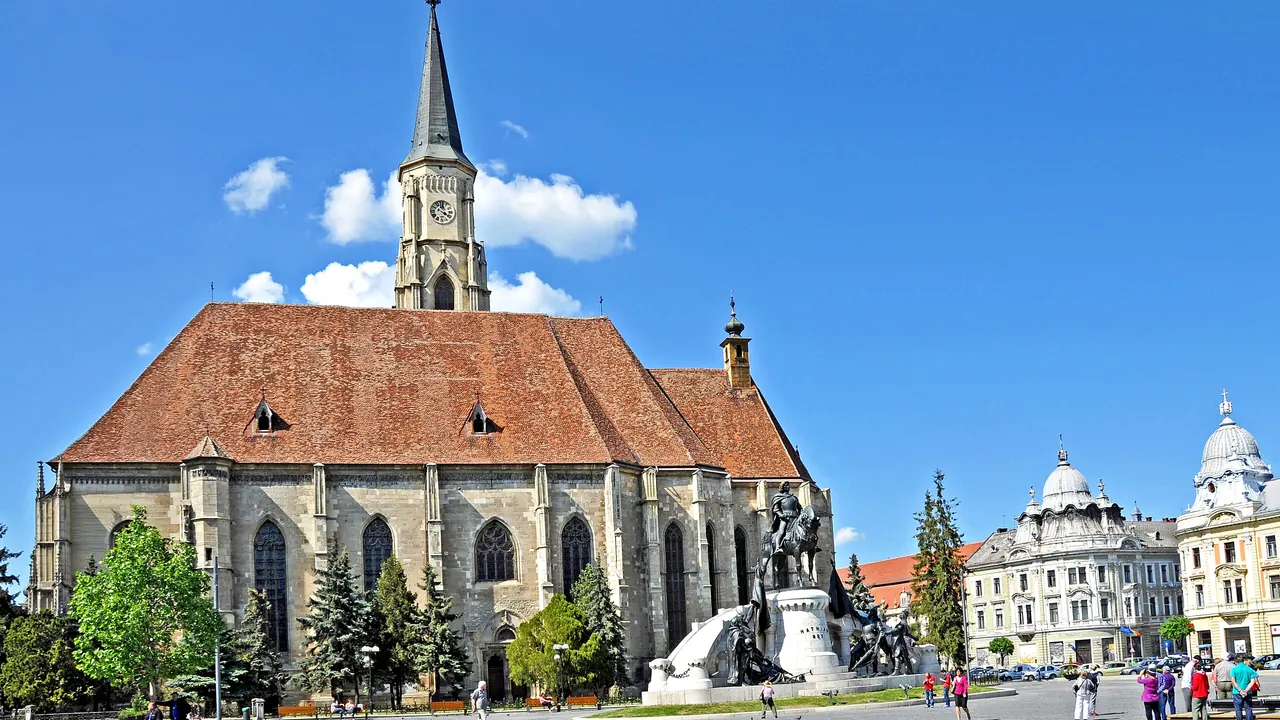
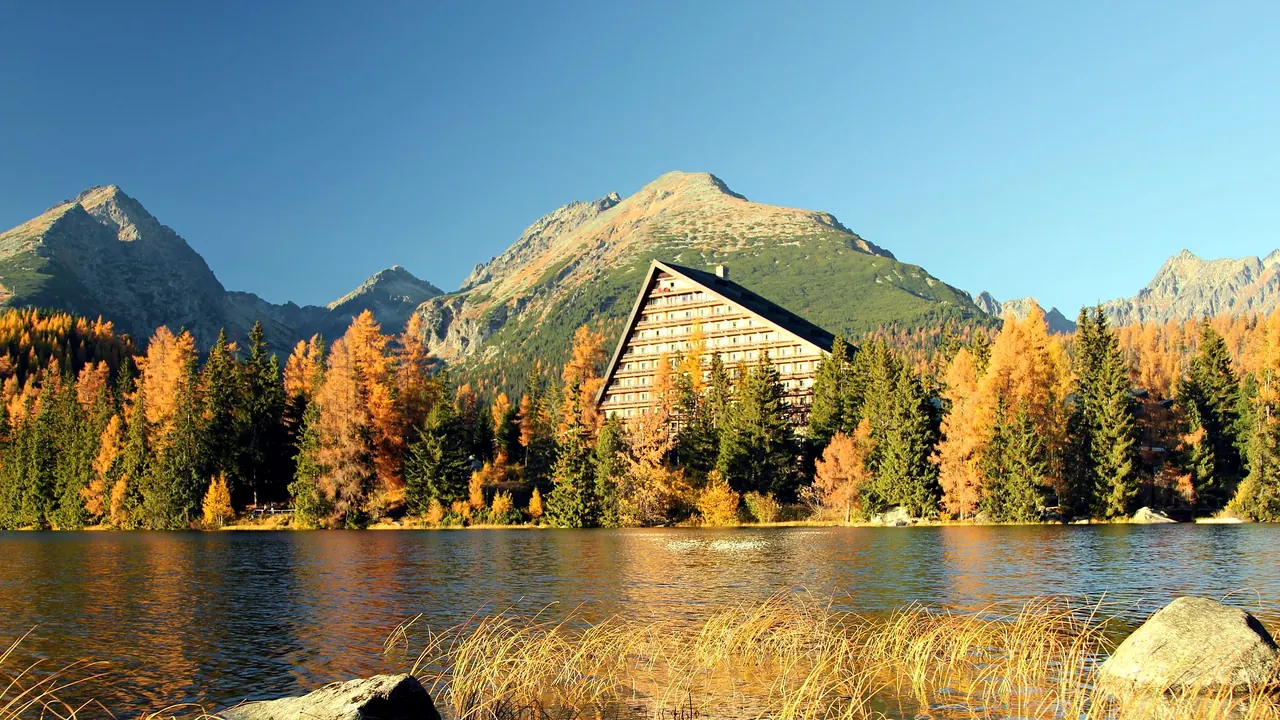
Photos: Cluj-Napoca by Dennis G. Jarvis, CC BY-SA 2.0, cropped; High Tatras by Marián Moravčík, Pexels License.
Cluj-Napoca or High Tatras?
Our verdict in twelve categories, each scored against the same fixed benchmark cities, and the climate month by month, so you can choose for your trip.
Choose Cluj-Napoca for
- live music and the arts
- nightlife
- culture and sights
Cluj-Napoca suits travellers who want a city. You get a handsome old centre, two opera houses and two theatres, café terraces full of students, and bars that stay busy until late during term. It is the better pick for a few days of museums, music and hearty Transylvanian food, with green hills nearby for the odd walk. It is also the cheaper of the two.
Choose High Tatras for
- wellness
- nature and the outdoors
- families
The High Tatras are for people who come to be outdoors. Granite peaks, glacial tarns and hut-to-hut trails start a short walk from the resort stations, and evenings are spent over dinner and an early night. Families, hikers, skiers and anyone after a slow, restful week in mountain air will be happier here. The Spiš towns below supply the history that the resorts themselves lack.
Scoreboard
Twelve categories on one fixed scale from 0 to 100. The shaded stretch is the gap between the two.
Your match
Pick a travel style or drag the sliders, and both match scores follow your weighting.
Wins on live music and the arts and nightlife with your weighting.
Wins on wellness and nature and the outdoors with your weighting.
What matters to you?
Category by category
What the scores mean for a trip.
Beaches & swimming
Neither place is anywhere near the sea, so swimming in either is a side activity. The difference is in kind. Around Cluj you swim in the salty outdoor lakes at Turda or in city lidos. In the Tatras the tarns are off limits, so swimmers head for the warm geothermal pools around Poprad or the water parks of the Liptov valley.
Food & drink
Cluj has the more interesting table. Romanian and Hungarian cooking meet here in dishes like varză à la Cluj, sour ciorbă and papanași. Students keep a strong specialty coffee scene going around Piața Muzeului, and the markets sell farm cheese and smoked meats, with Târnave whites to drink alongside.
In the Tatras the food is simpler mountain fare: bryndzové halušky, cabbage soup and grilled meats in timbered taverns. Its best moment is a bowl of soup at a hut after a climb. Beyond that the choice soon runs out.
Culture & sights
Cluj has far more to see. St Michael's Church and the Corvinus statue anchor a centre of baroque palaces, with the national art museum in the Bánffy Palace, stretches of medieval wall and the wooden churches of the open-air ethnographic museum. That fills a rewarding day or two.
In the Tatra resorts, sightseeing amounts to the timber and Art Nouveau villas and sanatoria of the old spa settlements, plus the national park museum in Tatranská Lomnica. The real heritage lies down in the Spiš towns.
Nightlife
After dark the two hardly compare. Cluj's huge student population fills the terraces and cellar bars around Piața Muzeului late into the night, and a few clubs play electronic music in old industrial courtyards. It is at its liveliest during term rather than in summer.
In the Tatras, hikers are in bed early. Apart from a few après-ski and hotel bars in winter, the evening ends with dinner and a glass of borovička.
Nature & outdoors
This is where the Tatras win clearly. An alpine range of granite peaks over 2,600m, more than a hundred tarns and the Tatranská magistrála trail begin right behind the resorts. Funiculars and the Lomnický štít cable car do the climbing, and chamois and marmots live up high. Slovak Paradise and Dunajec rafting in the Pieniny are within an hour.
Cluj offers gentler country: the Făget woods and Hoia forest on the edge of town, the limestone walls of Turda Gorge, and the caves and karst plateaus of the Apuseni Mountains for those with a car.
Day trips
The Tatras have the richer set of outings close at hand. The Spiš towns pack Kežmarok's wooden church, Levoča's Gothic altar and the huge ruin of Spiš Castle within an hour, and Košice and Zakopane are also within easy reach.
Cluj has its own strong outings in the Turda Salt Mine, the star-shaped citadel at Alba Iulia and Bánffy Castle at Bonțida. However, Sighișoara, Sibiu and Corvin Castle are far enough away to need an overnight stay.
Good for families
Children are better served in the Tatras. The funicular to Hrebienok leads to easy waterfall walks, the lake path at Štrbské Pleso takes pushchairs, and there are sledging and ski schools in winter and bobsled runs and water parks in summer.
Cluj is safe and easy with children but not designed for them. Central Park's rowing boats and the Botanical Garden fill a morning, and the underground lake and Ferris wheel in the Turda Salt Mine are the real treat.
Getting around
Both are easy to get around once you arrive, in different ways. Cluj is a flat city where most sights are within a twenty-minute walk of Piața Unirii, with buses and trolleybuses for the rest. The Tatra resorts are strung over about 30km and linked by a narrow-gauge electric railway, with funiculars and cable cars to the trailheads. Leaving either for the villages and smaller towns is much simpler with a hired car.
Shopping & style
Neither is a shopping destination, but Cluj at least gives you something to browse: a few independent design shops in the old centre, embroidered blouses and painted ceramics at folk-art fairs, and a Christmas market on Piața Unirii. In the Tatras it comes down to outdoor gear, smoked sheep's cheese and a bottle of local spirit.
Affordability
Cluj is the cheaper place to spend a week. Central rooms, lunch menus and opera seats all cost well below Western European levels, although rooms become scarce and expensive during the big summer festivals.
The Tatras are good value for an alpine vacation, far cheaper than the western Alps, but cable cars, ski passes and the large spa hotels at Štrbské Pleso add to the bill. Staying in Poprad or a smaller village keeps costs down.
Live music & performing arts
Cluj has a stage life few cities of its size can match. Romanian and Hungarian opera, ballet and theatre run in separate houses, the State Philharmonic gives a regular concert season, and huge electronic music festivals take place in summer. Music and dance work best for visitors, since most plays are not in English.
The Tatras have no theatre and no concert hall. The only performances are occasional folk ensembles and music with dinner in some taverns.
Wellness & relaxation
Cluj can be restful in a modest way. Away from the student streets the city keeps an unhurried pace, and an afternoon in the Botanical Garden or out on a rowing boat on the Central Park lake slows the day down. That is about the limit, though, and a week of real rest asks for more than the city has.
The Tatras offer the deeper kind of rest, and when you go matters more than which hotel you book. Come in late June or September rather than July and August, when the popular routes fill up, and the long views over Štrbské Pleso or from Hrebienok are far more peaceful. There is no historic bathhouse to linger in. Bathing here is modern and practical, a sauna after a day on the trails rather than a ritual.
When should you go?
Pick your month. The climate figures are measured averages, not a forecast.
Cluj-Napoca in July
High Tatras in July
Daytime high, °C
Rainfall in the month, mm
Where the figures come from
High Tatras's station stands 272 m below the city centre, so the centre is likely a little cooler than the figures say.
Temperature and rainfall are climate normals, averaged over the years shown. Cluj-Napoca: 1991-2020 normals, Cluj-Napoca (2.4 km from centre). High Tatras: 1991-2020 normals, Poprad / Tatry (8.4 km from centre).
Both places have cold, snowy winters, with daytime highs around 1°C in December and January. Neither has a beach season. Summer is warmer in Cluj, reaching 27°C in July and August, which is pleasant for terraces but can feel warm for long afternoons on the pavements. The Tatras peak nearer 23°C, ideal for hiking. Cluj also gets noticeably more sunshine through the summer months.
Rain peaks at a different time in each. Cluj's wettest month is June, at about 91mm, often in thundery bursts, while the Tatras are wettest in July, at about 101mm, and weather on the ridges changes quickly. For city walking in Cluj, May and September are the most comfortable. In the Tatras the high trails close from November to mid-June, so the hiking window runs from late June to early autumn. Winter belongs to the ski slopes.
Which traveller are you?
For a culture and arts trip, choose Cluj-Napoca. It has a Gothic church and baroque palaces on Piața Unirii, the open-air ethnographic museum, and opera, ballet and concerts in both Romanian and Hungarian houses most of the year. The Tatra resorts have almost nothing comparable.
On an outdoors trip, the High Tatras are the obvious choice. Funiculars and a cable car lift you into an alpine range of tarns, waterfalls and marked hut trails. Cluj's Făget woods and Turda Gorge make good half-days, but the scale is far smaller.
For a relaxing and wellness trip, the High Tatras work better. The resorts began as climatic spas and still keep hotel pools and saunas, with geothermal parks nearby, quiet evenings and forest walks. Cluj has no bathing tradition beyond hotel spas and the Turda salt lakes.
Before you go
| Measure | Cluj-Napoca | High Tatras |
|---|---|---|
| Official language | Romanian | Slovak |
| Currency | Romanian Leu (RON) | Euro (EUR) |
| Sockets | CF230 V, 50 Hz | CE230 V, 50 Hz |
| Driving side | Right | Right |
| Time zone | UTC+2, UTC+3 in summer | UTC+1, UTC+2 in summer |
| Emergency number | 112 | 112 |
| Elevation | 356 m | 966 m |
| Main airport | Avram Iancu Cluj International Airport (CLJ)7 km from centre53 non-stop destinations | Poprad-Tatry Airport (TAT)8 km from centre4 non-stop destinations |
| Public holidays this year | 17 days | 15 days |
By the numbers
| Measure | Cluj-Napoca | High Tatras |
|---|---|---|
| Population | 286,598 | 3,749 |
| People per km² | 1,640 | 10 |
| Museums within 10 km | 6 | 1 |
| UNESCO World Heritage sites within 50 km | 0 | 4 |
Where else could you go?
Every comparison below shares a destination with this one, so you can follow Cluj-Napoca or High Tatras somewhere new.
- Zakopanevs High Tatras
- Krakowvs High Tatras
- Sibiuvs Cluj-Napoca
- Brasovvs Cluj-Napoca
- Budapestvs High Tatras
- Bratislavavs High Tatras