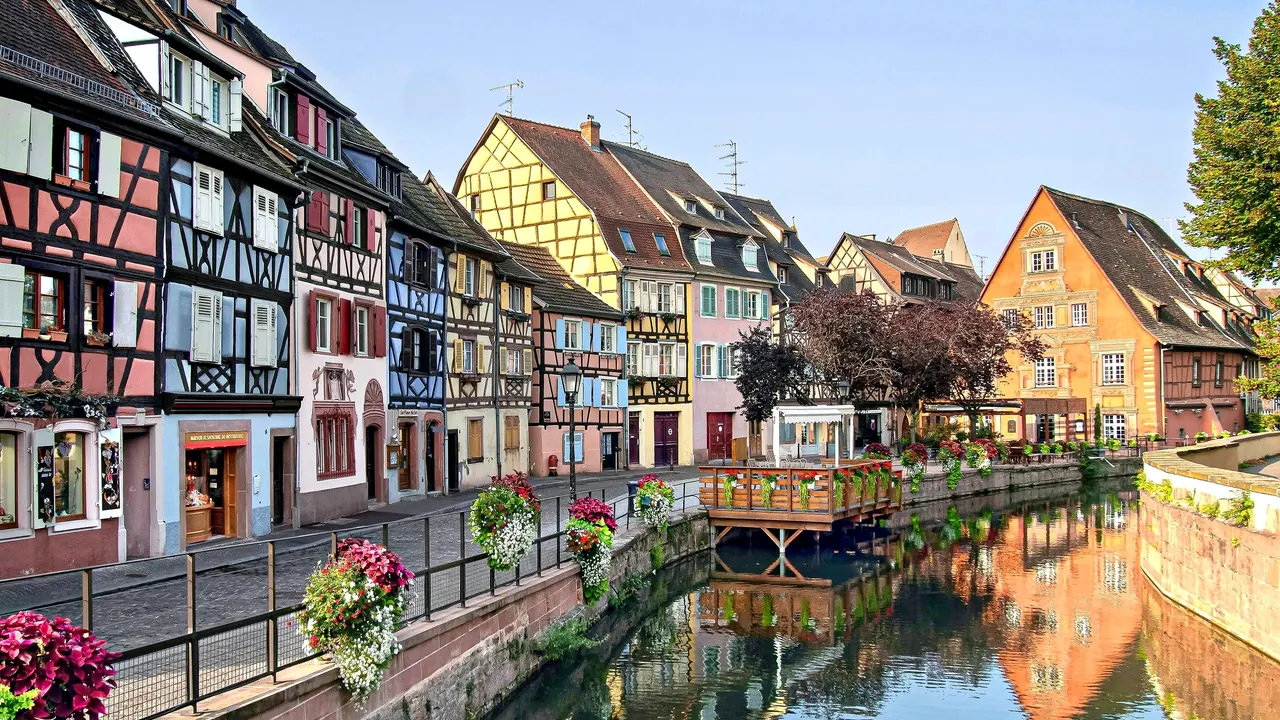
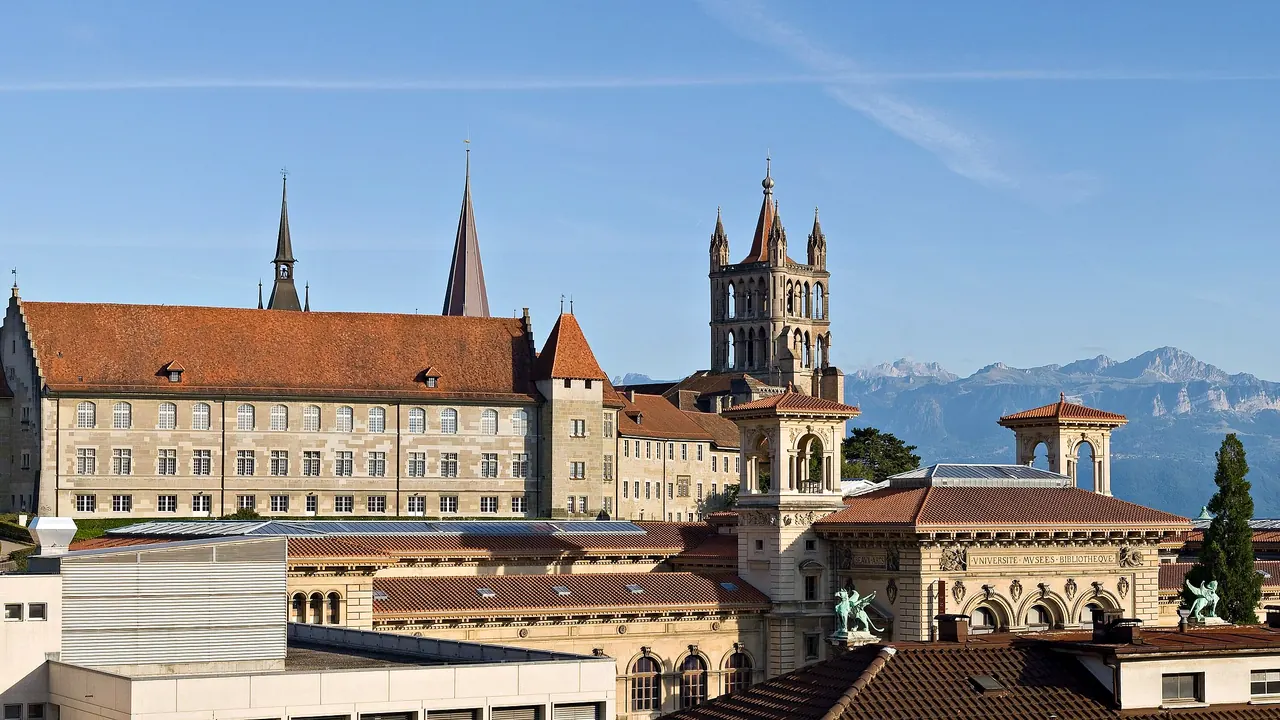
Photos: Colmar by Rolf Kranz, CC BY-SA 4.0, cropped; Lausanne by Christian Mehlführer, CC BY-SA 3.0, cropped.
Colmar or Lausanne?
Our verdict in twelve categories, each scored against the same fixed benchmark cities, and the climate month by month, so you can choose for your trip.
Choose Colmar for
- prices
- food and drink
- culture and sights
Colmar is the better choice for a slower, cheaper trip built around Alsace itself: a half-timbered old town that holds together as a whole, the Isenheim Altarpiece at the Unterlinden, long winstub dinners and cellar tastings in villages a few kilometres apart. It suits couples and wine lovers who are happy to have quiet evenings and who will hire a car or a bike to reach the vineyards and the Vosges.
Choose Lausanne for
- beaches
- live music and the arts
- nightlife
Lausanne makes more sense for travellers who want a lake and real mountains, an easy train network and a city with more going on after dark. The Lavaux terraces, the Alps across the water, a serious ballet and theatre scene and lakeside spas all count in its favour, but the bill will be far higher, so it rewards those who can afford Switzerland.
Scoreboard
Twelve categories on one fixed scale from 0 to 100. The shaded stretch is the gap between the two.
Your match
Pick a travel style or drag the sliders, and both match scores follow your weighting.
Wins on prices and food and drink with your weighting.
Wins on beaches and live music and the arts with your weighting.
What matters to you?
Category by category
What the scores mean for a trip.
Beaches & swimming
Neither city has a coast, but only Lausanne has anywhere real to swim. Lake Geneva warms up enough for a few summer weeks, and the lawns, piers and pebble shores at Vidy, Bellerive, Pully and Lutry, along with the old Bellerive lido, make easy afternoons.
Colmar's options are municipal pools or a small lake up in the Vosges valleys. Even in Lausanne it is lake bathing around a city stay rather than a beach vacation.
Food & drink
Colmar has the deeper regional table. Wood-panelled winstubs serve choucroute, baeckeoffe, tarte flambée and munster, the covered market by the Lauch is full of charcuterie and gingerbread, and Riesling, Gewurztraminer and Pinot Gris come from the slopes just outside town.
Lausanne's Vaudois cooking of lake perch, papet and fondue is good, but it is a narrower repertoire, with Lavaux Chasselas as the main highlight. It does have a stronger top tier of celebrated restaurants. In Colmar, steer clear of the tired menus on the most photographed streets.
Culture & sights
Colmar is the stronger sightseeing town. Its painted half-timbered houses, the Maison Pfister, the Koïfhus and Petite Venise read as one intact late-medieval townscape, and Grünewald's Isenheim Altarpiece at the Unterlinden is worth the journey by itself.
Lausanne has fewer historic streets and more modern museums. It has its Gothic cathedral with a night watchman, the Olympic Museum at Ouchy, the Plateforme 10 cluster by the station and the strange, memorable Collection de l'Art Brut. Both are covered in two or three days.
Nightlife
Lausanne is the place for a night out. The university and EPFL students fill the clubs and late bars in the old warehouses of the Flon at weekends, and the Ouchy waterfront fills up on summer evenings, though weeknights are quiet and drinks are costly.
In Colmar the evening is the dinner: a few wine bars and terraces around Petite Venise, then quiet streets and hardly any clubs. Anyone after more takes the train to Strasbourg.
Nature & outdoors
Lausanne has the bigger scenery. The French Alps rise straight out of the lake opposite, the UNESCO-listed Lavaux terraces run east of town, and within about an hour you can be hiking or skiing at Villars, Les Diablerets or Glacier 3000, or out on the Jura ridges.
Colmar's landscape is gentler but close at hand: vineyard paths between wine villages, the rounded, forested Vosges along the Route des Crêtes and flat cycling country on the plain. It is at its best in autumn, and a car helps a great deal.
Day trips
Both are first-rate bases, and the difference is in how you travel. Colmar's best outings are the wine villages a few kilometres apart, Eguisheim, Riquewihr and Kaysersberg, plus the castle of Haut-Koenigsbourg on its ridge, and all of them are easiest by car or bike. Strasbourg is about half an hour away by train and Basel under an hour. Freiburg and the Kaiserstuhl wine slopes are an easy drive across the Rhine, so in a day you can be in Germany or Switzerland.
Lausanne's trips run on the train and the lake boats, with no car needed. Vevey, Montreux and Chillon are along the shore, and Geneva, Bern and Fribourg are all within about an hour. Gruyères and Murten make classic Swiss days out, and boats cross the lake to Évian on the French side.
Good for families
Both work well with children, but in different ways. Colmar itself is small and flat, with boat rides through Petite Venise and storks on the roofs. Its big attractions are out of town and need a car: the macaques and eagle show at Kintzheim, the stork park at Hunawihr and Europa-Park across the Rhine.
Lausanne keeps more within the city, with the hands-on Olympic Museum, the aquarium-vivarium, the Sauvabelin animal park and lookout tower, and paddle steamers on the lake. Its steep streets are hard going with a pushchair, though, and family meals are expensive.
Getting around
Lausanne is easier to get around without a car. The m2 metro climbs the steep city from the lake to the upper town, buses and boats fill the gaps, and the Swiss rail network reaches almost every outing.
Colmar's flat centre is a pleasure on foot, and trains to Strasbourg and Mulhouse are quick. Beyond those lines, buses to the wine villages and the Vosges are thin, which is why most visitors hire a car or a bicycle.
Shopping & style
Neither is a shopping destination, but Lausanne has a slightly wider range. Rue de Bourg has Swiss watches, jewellery and chocolatiers, there are international names around Saint-François and chains in the Flon.
Colmar is about taking Alsace home: wine bought from producers, Soufflenheim pottery, kougelhopf moulds, printed table linen and food gifts from the covered market. Its Christmas markets are the high point of the year.
Affordability
Colmar costs much less. It is priced like a French provincial town, with reasonable set lunches and cheap or free tastings, and only hotel rooms in summer and at Christmas become a real expense. Staying in a nearby village helps with that.
Lausanne is expensive in the Swiss way, from rooms to a simple lunch. Budget travellers there live on supermarket picnics and free lakeside walks, and save a village caveau glass of Chasselas as a treat.
Live music & performing arts
Lausanne has much more on stage. The Béjart Ballet Lausanne and the Prix de Lausanne put dance first, the Théâtre de Vidy is known internationally for contemporary work, and the opera and chamber orchestra run full seasons. Montreux Jazz is a short train ride along the lake.
Colmar has a small Italian-style theatre and visits from the Opéra national du Rhin. Otherwise its offer depends on festival weeks, the classical festival in July and jazz in autumn, and serious performances mostly mean going to Strasbourg or Basel.
Wellness & relaxation
Lausanne is better set up for a spa stay. The grand lakeside hotels have large spas, the region has wellness retreats, and thermal springs at Yverdon-les-Bains and Lavey-les-Bains are within an hour by train.
Colmar offers calm rather than treatments: hotel spas, canal-side evenings once the day-trippers leave, and slow walks through the vines. That suits a restful few days, but there is no thermal water.
When should you go?
Pick your month. The climate figures are measured averages, not a forecast.
Colmar in July
Lausanne in July
Daytime high, °C
Rainfall in the month, mm
Where the figures come from
Lausanne's temperatures are measured 40 km from the centre, at Payerne.
Lausanne has no rain gauge within 25 km of the centre, so its rainfall comes from a gridded climate dataset read at the city rather than from a gauge further away.
Temperature and rainfall are climate normals, averaged over the years shown. Colmar: 1991-2020 normals, Ihringen (21.1 km from centre). Lausanne: 1991-2020 (sunshine 1961-1990) normals, Payerne (39.7 km from centre).
Both cities follow the same basic curve, with summer highs around 26°C in July and August and grey, cold winters, but they differ sharply in rain. Colmar sits in the rain shadow of the Vosges and stays fairly dry all year, with its wettest month, May, at 87mm. Lausanne is wet in every season and wettest in midsummer, at around 115mm in July, so expect showers even in good weeks. Sunshine is similar in both, peaking in July and dropping to very little in December.
For walking the streets, late spring and September are pleasant in both, and Colmar's early autumn has the vine harvest in its favour. Lake swimming in Lausanne only works from late June to early September. In winter Colmar is the better bet, being a little milder and much drier, while Lausanne's appeal shifts to the mountains above the fog.
Which traveller are you?
On a trip on a tight budget, Colmar is clearly kinder. Rooms are the only real strain, especially at Christmas, while set lunches, regional wine and often free village tastings keep daily costs moderate. Lausanne is expensive at every turn.
For an outdoors trip, Lausanne wins. The Lavaux vineyard walks, sailing and paddleboarding on the lake, and the Vaud Alps and Jura within an hour by train give far more variety than Colmar's gentler, forested Vosges and vineyard cycling routes.
On a relaxing and wellness trip, Lausanne offers more. Grand lakeside hotels have proper spas, and thermal water at Yverdon-les-Bains and Lavey-les-Bains is a short train ride away. Colmar is restful and quiet, but it has little beyond hotel spas.
Before you go
| Measure | Colmar | Lausanne |
|---|---|---|
| Official language | French | French, German, Italian, Romansh |
| Currency | Euro (EUR) | Swiss Franc (CHF) |
| Sockets | CE230 V, 50 Hz | CJ230 V, 50 Hz |
| Driving side | Right | Right |
| Time zone | UTC+1, UTC+2 in summer | UTC+1, UTC+2 in summer |
| Emergency number | 112 | 112 |
| Elevation | 185 m | 495 m |
| Main airport | EuroAirport Basel–Mulhouse–Freiburg (BSL)55 km from centre112 non-stop destinations | Geneva International Airport (GVA)52 km from centre150 non-stop destinations |
| Public holidays this year | 11 days | 9 days |
By the numbers
| Measure | Colmar | Lausanne |
|---|---|---|
| City population | 66,970 | 144,873 |
| People per km² | 1,006 | 3,499 |
| Museums within 10 km | 9 | 31 |
| UNESCO World Heritage sites within 50 km | 3 | 3 |
Where else could you go?
Every comparison below shares a destination with this one, so you can follow Colmar or Lausanne somewhere new.
- Genevavs Lausanne
- Baselvs Colmar
- Strasbourgvs Colmar
- Chamonixvs Lausanne
- Bernvs Lausanne
- Annecyvs Lausanne