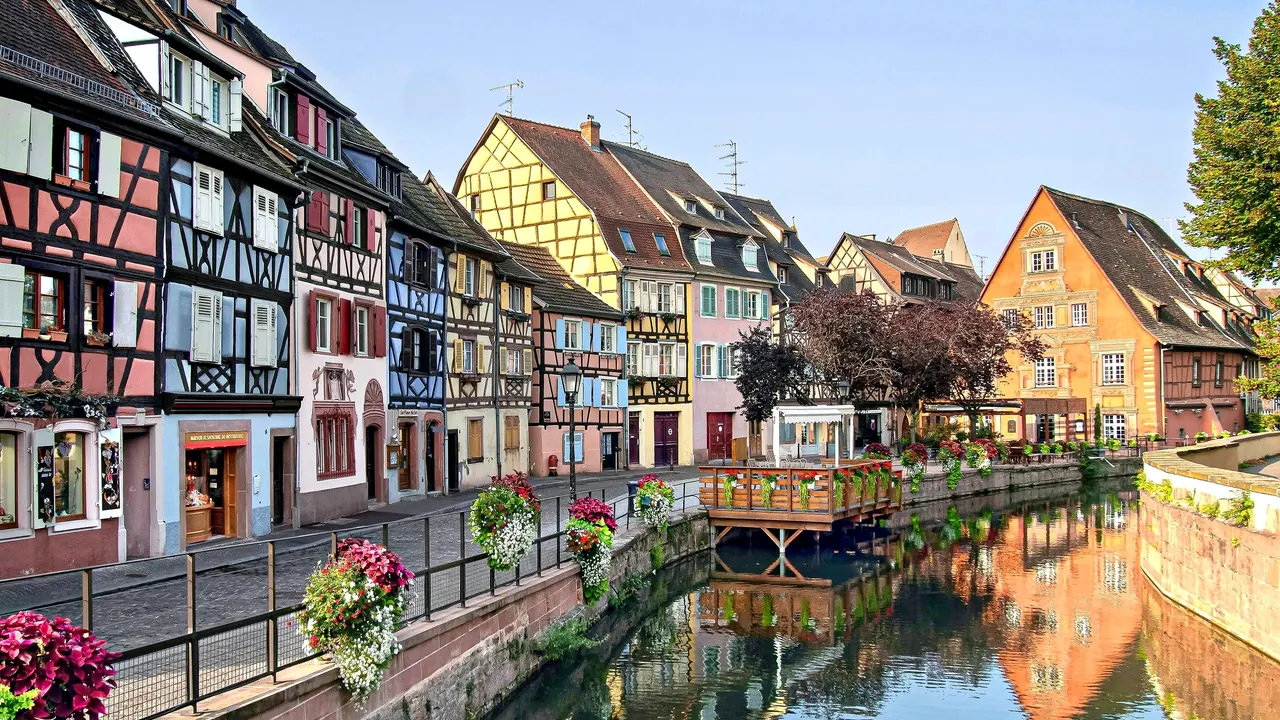
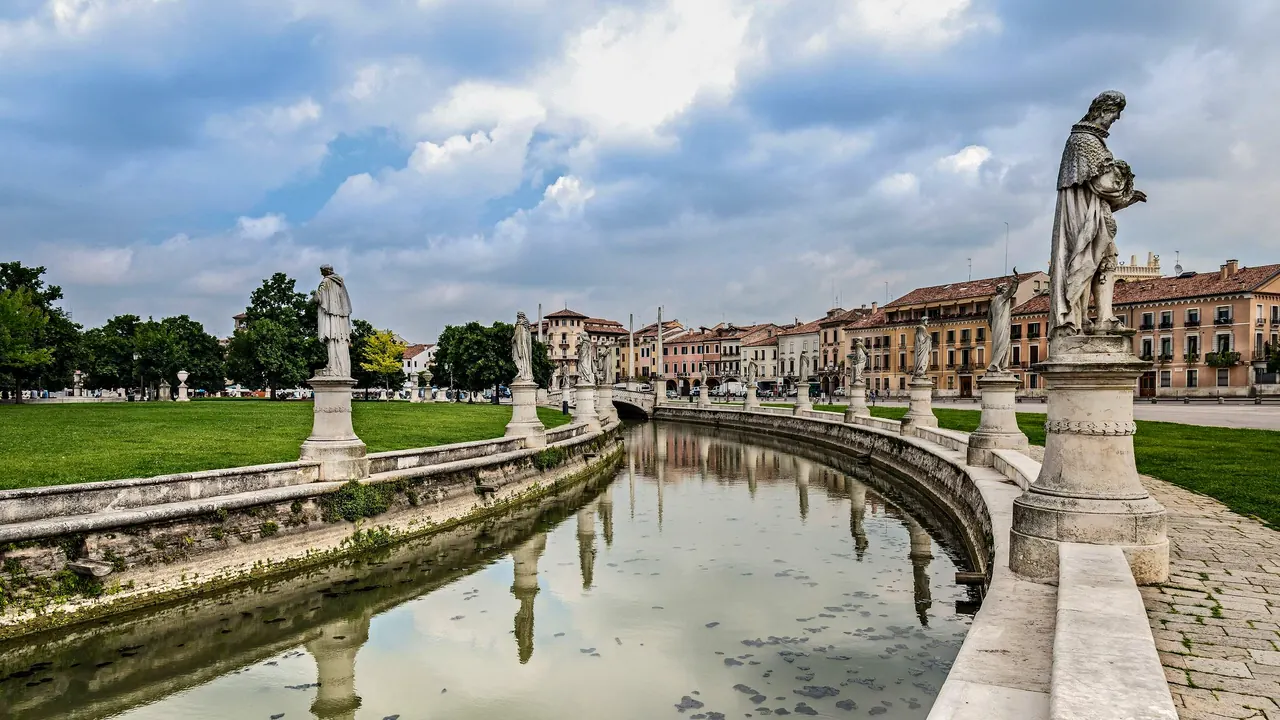
Photos: Colmar by Rolf Kranz, CC BY-SA 4.0, cropped; Padua by Didier Descouens, CC BY-SA 4.0, cropped.
Colmar or Padua?
Our verdict in twelve categories, each scored against the same fixed benchmark cities, and the climate month by month, so you can choose for your trip.
Choose Colmar for
- families
- nature and the outdoors
- food and drink
Colmar suits travellers who want countryside on the doorstep: walks and bike rides through the vineyards, wine tasted where it is made, the high ridges of the Vosges, and a painted half-timbered old town to come back to in the evening. It is also the easier pick with children, thanks to the stork parks, the macaque forest and Europa-Park within reach, as long as you are happy to drive.
Choose Padua for
- wellness
- nightlife
- beaches
Padua is the better base for a trip built around art and trains. Giotto's frescoes and Saint Anthony's basilica are in town, Venice, Verona and Bologna are close enough to reach without a car, and a thermal soak at Abano is a short ride away. Evenings are livelier too, with a spritz in the market squares among students and locals.
Scoreboard
Twelve categories on one fixed scale from 0 to 100. The shaded stretch is the gap between the two.
Your match
Pick a travel style or drag the sliders, and both match scores follow your weighting.
Wins on families and nature and the outdoors with your weighting.
Wins on wellness and nightlife with your weighting.
What matters to you?
Category by category
What the scores mean for a trip.
Beaches & swimming
Neither city is a beach destination, but Padua at least has the option. Colmar is hundreds of kilometres from any coast, so swimming means a municipal pool or a cold lake up in the Vosges.
From Padua the Adriatic is about an hour away at Sottomarina or the Venice Lido. The beaches there are flat rows of umbrellas rather than anything scenic, but the water is shallow, calm and warm in high summer.
Food & drink
The two are evenly matched at the table but cook in very different traditions. Colmar's food is the hearty Franco-German cooking of the winstub, with choucroute, baeckeoffe and munster cheese, all built around the great white wines of the slopes outside town, and there is a fine-dining tier along the wine route.
Padua's food is lighter Venetian home cooking, such as bigoli with duck sauce or risotto with peas, bought fresh from the twin markets under the Palazzo della Ragione. The evening spritz ritual and Caffè Pedrocchi give Padua the stronger drinking culture outside meals, while Colmar is the place to go for serious wine.
Culture & sights
Padua has the deeper collection. Giotto's Scrovegni Chapel changed European painting, and it sits alongside a UNESCO-listed group of fresco cycles, the pilgrimage Basilica of Saint Anthony with Donatello's bronzes, the world's oldest permanent anatomical theatre and a botanical garden from 1545.
Colmar's strength is how complete it is as a townscape. Its painted half-timbered streets, Petite Venise and the Maison des Têtes hold together as one late-medieval whole, and the Isenheim Altarpiece at the Unterlinden is worth the journey by itself. Both centres can be seen in a couple of days, but Padua gives you more works of the very first rank.
Nightlife
Padua has much more going on after dark. The university fills Piazza delle Erbe and Piazza dei Signori with crowds drinking spritz from early evening, and wine bars in the old ghetto stay busy late during term, though clubs are few.
Colmar's evening is a long dinner and a glass of Riesling by the canals, and the streets empty early. Anyone after a real night out ends up taking the train to Strasbourg.
Nature & outdoors
Colmar has the better landscape close at hand. Vine-covered slopes rise straight out of town, and above them the forested Vosges offer glacial lakes, high pastures and the ridge road past the Grand Ballon, with views across to the Black Forest. There is also modest skiing in winter.
Padua sits on a flat plain, so its outdoors means a trip out. The volcanic Euganean Hills about 15km away are good for gentle walks and road cycling, and the Brenta towpaths make level bike rides. Proper mountains are about an hour and a half's drive away.
Day trips
Both are excellent bases, but Padua has the edge because of where it sits on the rail network. Venice is under half an hour away, Vicenza a quarter of an hour, and Verona, Bologna and Ferrara are easy day trips, all without a car.
Colmar's day trips are mostly smaller in scale: the wine villages of Riquewihr, Eguisheim and Kaysersberg a few kilometres apart, Haut-Koenigsbourg on its ridge, and Strasbourg, Basel and Freiburg within an hour. The villages are much easier to reach by car or bike than by bus.
Good for families
Colmar works better with children. Within the town there are flat-bottomed boat rides, a little tourist train and storks on the rooftops, and there is a wide spread of attractions nearby: the Hunawihr stork and otter park, free-roaming macaques at Kintzheim, the train and car museums in Mulhouse, and Europa-Park.
Padua is flat, safe and welcoming to children, but its sights are mainly frescoes and churches. Beyond running around Prato della Valle, families end up driving to Gardaland or the Adriatic for the day.
Getting around
Both centres are easy on foot, and the real difference is what happens beyond them. From Padua's station, fast main-line trains go in every direction, a tram runs into the centre, and arcades give shelter from rain and sun. A car is only needed for the hills.
Colmar's trains reach Strasbourg, Mulhouse and Basel quickly, but the wine villages and the Vosges are poorly served by bus. Most visitors hire a car or a bicycle, and cycling between the vineyards is a pleasure in itself.
Shopping & style
Padua offers a bit more range. Its arcaded streets have Italian fashion and shoe shops, the university keeps good bookshops going, and Prato della Valle hosts a large monthly antiques market.
Colmar is mostly about regional things to take home: wine bought from the producer, Soufflenheim pottery, kougelhopf moulds and printed table linen. Its Christmas markets are the highlight of its shopping year.
Affordability
Padua is the cheaper of the two, mainly because its hotels are a reasonably priced base for a whole region and the walkable centre means transport costs little. A standing spritz and food from the market are inexpensive.
Colmar's meals and wine tastings are fair, but rooms are its weak point. The town is small, and beds near the old town get expensive and book out early in summer and during the Christmas market weeks. Staying in a nearby village helps.
Live music & performing arts
Colmar's stage life comes in bursts, while Padua's runs through the year. Colmar has a small Italian-style municipal theatre where the Opéra national du Rhin tours, but its real musical weeks are the classical festival in early July, the autumn jazz festival and the concerts of the summer wine fair. Outside those, serious opera or orchestral music means going to Strasbourg or Basel.
Padua has a steadier programme. Teatro Verdi stages drama and some opera, the city's chamber orchestra plays in the frescoed Sala dei Giganti and the Basilica of Saint Anthony, and students keep small live-music venues going. For grand opera, the Fenice in Venice and the summer Arena in Verona are both an easy train ride away.
Wellness & relaxation
This is one of the widest gaps between the two. Padua has Abano and Montegrotto about 12km away, where spa hotels let day visitors into thermal pools fed by water that rises from the ground at up to 87°C.
Colmar has no bathing tradition and only hotel spas. Its idea of rest is quiet evenings by the canals and slow walks through the vines.
When should you go?
Pick your month. The climate figures are measured averages, not a forecast.
Colmar in July
Padua in July
Daytime high, °C
Rainfall in the month, mm
Where the figures come from
Padua's temperatures are measured 35 km from the centre, at Treviso / Istrana.
Padua has no rain gauge within 25 km of the centre, so its rainfall comes from a gridded climate dataset read at the city rather than from a gauge further away.
Padua's sunshine is measured 36 km from the centre, at Treviso / S. Angelo.
Temperature and rainfall are climate normals, averaged over the years shown. Colmar: 1991-2020 normals, Ihringen (21.1 km from centre). Padua: 1991-2020 normals, Treviso / Istrana (35.4 km from centre).
Colmar is at its best from late spring to early autumn. Summer is warm without being heavy, peaking around 27°C in August, and the long sunny days from June to August are ideal for the vineyards and the Vosges. September and October bring the harvest and turning vines in mild weather. Winter is cold and grey with little sun, though it is also the driest time of year. May is usually the wettest month.
Padua is warmer all year and hotter at the peak, reaching about 31°C in July and August, which makes sightseeing on foot hard work by midday. Those months are also the sunniest, and the only time the nearby Adriatic is properly warm, at around 25°C. Spring and September are the most comfortable for walking. Autumn turns wet, with November the rainiest month at about 97mm, and winters are milder than Colmar's but often foggy.
Which traveller are you?
On a family trip with children, Colmar is the stronger choice. Boat rides through Petite Venise and storks on the rooftops keep the town itself fun, and the otter park, monkey forest, eagle show and Europa-Park fill the days beyond it.
For a relaxing and wellness trip, Padua wins clearly. Abano and Montegrotto, one of Europe's largest thermal districts, are a short ride from the centre, so an afternoon in hot mineral pools fits around the sightseeing. Colmar offers little more than hotel spas.
On an outdoors trip, Colmar puts you closer to real walking and cycling. Vineyard trails start within half an hour, and the Route des Crêtes and the glacial lakes of the Vosges lie just beyond. Padua's Euganean Hills are pleasant but much smaller.
Before you go
| Measure | Colmar | Padua |
|---|---|---|
| Official language | French | Italian |
| Currency | Euro (EUR) | Euro (EUR) |
| Sockets | CE230 V, 50 Hz | CFL230 V, 50 Hz |
| Driving side | Right | Right |
| Time zone | UTC+1, UTC+2 in summer | UTC+1, UTC+2 in summer |
| Emergency number | 112 | 112 |
| Elevation | 185 m | 12 m |
| Main airport | EuroAirport Basel–Mulhouse–Freiburg (BSL)55 km from centre112 non-stop destinations | Venice Marco Polo Airport (VCE)39 km from centre103 non-stop destinations |
| Public holidays this year | 11 days | 13 days |
By the numbers
| Measure | Colmar | Padua |
|---|---|---|
| City population | 66,970 | 206,496 |
| People per km² | 1,006 | 2,220 |
| Museums within 10 km | 9 | 29 |
| UNESCO World Heritage sites within 50 km | 3 | 5 |
| Swim season, months above 21 °C | - | 4 months |
Where else could you go?
Every comparison below shares a destination with this one, so you can follow Colmar or Padua somewhere new.