Photos: Colmar by Rolf Kranz, CC BY-SA 4.0, cropped; Venice by David Vives, Pexels License.
Colmar or Venice?
Our verdict in twelve categories, each scored against the same fixed benchmark cities, and the climate month by month, so you can choose for your trip.
Choose Colmar for
- prices
- nature and the outdoors
- families
Colmar suits travellers who want a small, easy town as a base for the countryside around it. The painted old town and the Unterlinden Museum fill a couple of days. After that the wine villages, the Vosges ridges and the Black Forest take over, and cellar doors, walking paths and child-friendly animal parks are all within a short drive. It is also gentler on the wallet, and it is calmer with young children.
Choose Venice for
- beaches
- live music and the arts
- culture and sights
Venice is the choice for a trip built around art, architecture and the experience of a city with no cars. Its palaces, churches and galleries go far deeper than anything in Alsace, and La Fenice and the Lido add evenings at the opera and afternoons on the sand. The price is higher costs, heavy crowds on the main routes and a great many stepped bridges.
Scoreboard
Twelve categories on one fixed scale from 0 to 100. The shaded stretch is the gap between the two.
Your match
Pick a travel style or drag the sliders, and both match scores follow your weighting.
Wins on prices and nature and the outdoors with your weighting.
Wins on beaches and live music and the arts with your weighting.
What matters to you?
Category by category
What the scores mean for a trip.
Beaches & swimming
Colmar has no coast at all, so swimming means a municipal pool or a cold lake up in the Vosges valleys.
Venice has a genuine sandy beach on the Lido, a short boat ride from San Marco. The water is shallow and warm in summer, and Pellestrina is quieter if you want more space. It is no seaside resort, but a hot afternoon by the sea is possible there and not in Colmar.
Food & drink
The two are evenly matched at the table but eat very differently. Colmar is about sitting down: long dinners in wood-panelled winstubs over choucroute and baeckeoffe, washed down with Riesling or Gewurztraminer poured within sight of the vineyards that grew it.
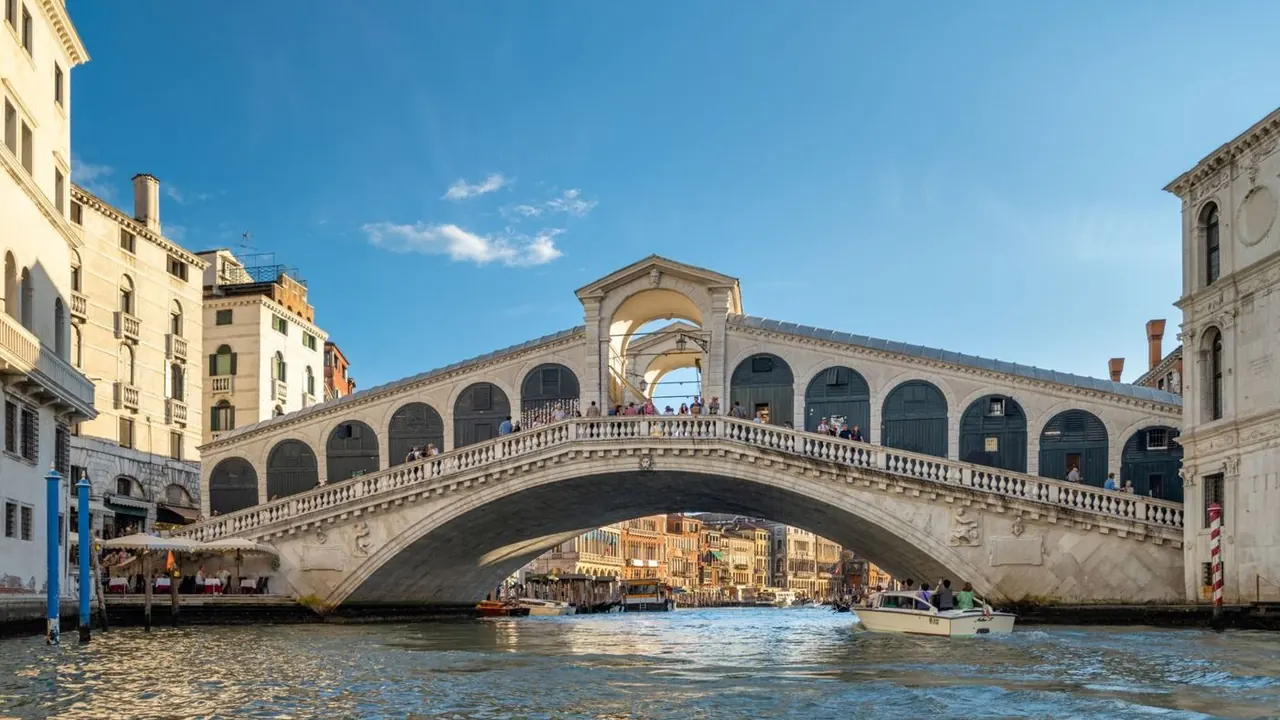
Venice is better grazed standing up, with cicchetti and a spritz at a bacaro counter near the Rialto, then lagoon seafood such as black cuttlefish risotto. Both cities have a lot of weak tourist menus on their busiest streets, and both offer little beyond their own regional cooking.
Culture & sights
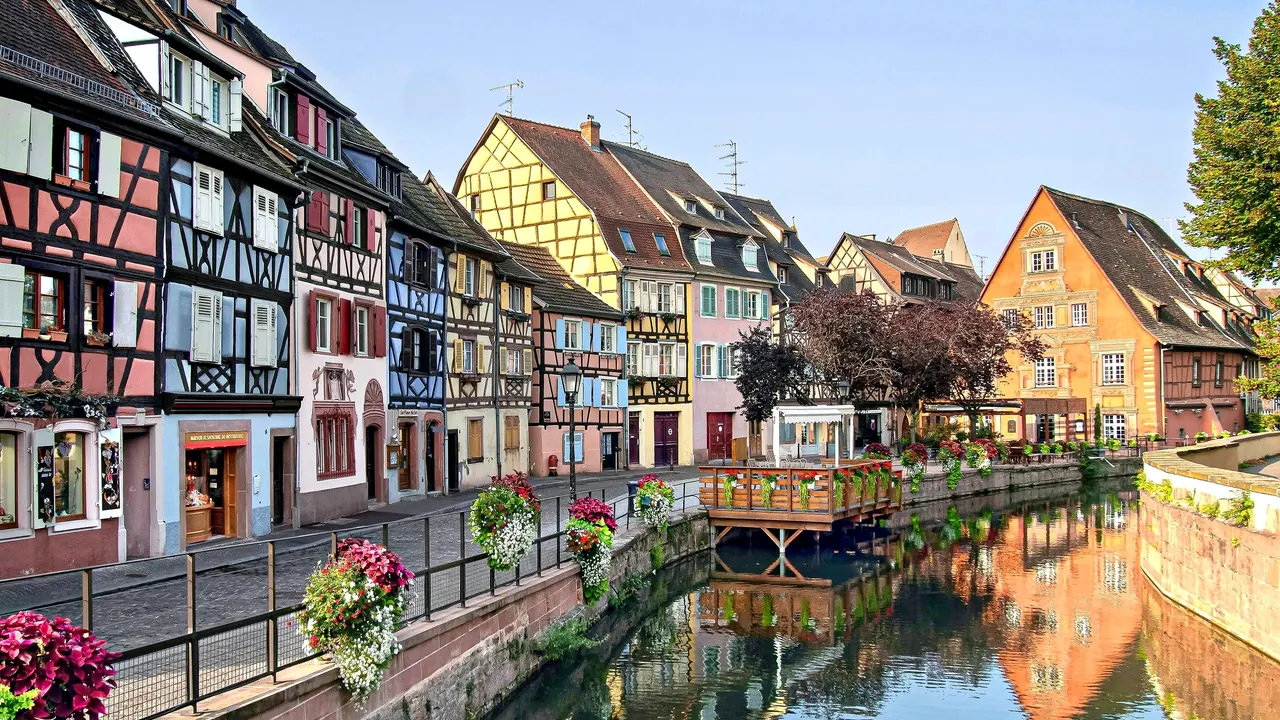
Colmar's old town of painted half-timbered houses and canals is beautifully intact, and Grünewald's altarpiece at the Unterlinden would justify the trip on its own. Still, the whole set fits into a weekend.
Venice is in another league. The city itself is the monument, from the mosaics of San Marco to the palazzi along the Grand Canal, and the art inside its churches, scuole and galleries could fill a week without running out.
Nightlife
Neither town is a place for late nights, but Venice has a little more going on after dark. Its aperitivo hour along the Fondamenta della Misericordia is a real social event, and students keep Campo Santa Margherita busy later on. Colmar's evenings rarely go beyond dinner and a last glass of wine on a terrace, and for clubs people take the train to Strasbourg.
Nature & outdoors
Colmar sits right where the vineyards rise into the Vosges. That gives you waymarked trails, summer pastures, glacial lakes and the high road past the Grand Ballon, plus easy cycling on the plain below and the Black Forest across the Rhine.
Venice's outdoors is the lagoon, with salt marshes, herons and flamingos around Torcello best seen from a kayak. It is a lovely setting but a flat and limited one, and any real hills or mountains need a long trip inland.
Day trips
Both make superb bases, and the difference is the kind of outing. From Colmar, most days out are short drives or bike rides between wine villages a few kilometres apart, such as Eguisheim with its rings of lanes, walled Riquewihr and Kaysersberg under its ruined castle. Strasbourg's cathedral is about half an hour away by train. Across the borders, Basel in Switzerland and Freiburg in Germany each make an easy city day.
From Venice, fast trains lead to a chain of great art cities, from Padua's Scrovegni Chapel to Verona and Palladio's Vicenza. Boats reach the glass furnaces of Murano and the coloured houses of Burano without going near the mainland.
Good for families
Colmar is much the easier place with children. The town is flat and compact, there are boat rides through Petite Venise and storks on the roofs, and nearby you find the otter park at Hunawihr, the free-roaming macaques at Kintzheim and Mulhouse's train museum. You will need a car for most of them.
Venice delights children at first sight, with boats for buses and no traffic. In practice, though, carrying a pushchair over bridge after bridge through summer crowds, with few parks to break the day, makes it better for short stays with older children.
Getting around
Both centres are best on foot, and Venice comes out slightly ahead because the vaporetto reaches the islands and the Lido with no car needed. Its bridges, steps and crowded boats make that convenience tiring, though.
Colmar is the opposite. The flat old town and the station are a few minutes apart, but the villages and mountains it is known for need a hire car or a bicycle.
Shopping & style
Venice offers more. It has centuries-old crafts made on site, such as Murano glass, Burano lace, papier-mâché masks and marbled paper, plus the big fashion names along the Mercerie. Look for real workshops, because imitations are everywhere.
Colmar's shopping is modest and regional: wine bought from the grower, Soufflenheim pottery, kougelhopf moulds and printed table linen. The Christmas markets are the highlight of its year.
Affordability
Colmar is noticeably cheaper overall. Set lunches, regional wine and village tastings are reasonable, and the cost of rooms is the main thing to plan for, especially in December.
Venice is one of the most expensive stays in Italy. Hotels in the historic centre, water transport and entry to churches all add up. Eating cicchetti at the counter and sleeping in Mestre are the main ways to keep costs down.
Live music & performing arts
Venice has a proper year-round stage. La Fenice runs full seasons of opera, ballet and symphony concerts, the Goldoni puts on drama, and Vivaldi is played in the churches where his music belongs.
Colmar has a small Italian-style theatre and lives by its festivals, with classical music in July and jazz in autumn. Outside those weeks, serious opera or orchestral music means a trip to Strasbourg or Basel.
Wellness & relaxation
Neither has a bathing culture of its own. Venice has the edge thanks to its palazzo and Lido hotel spas and the Roman-era thermal pools of Abano Terme, about an hour away. The hush of Castello or Giudecca at dawn helps too.
Colmar's restfulness is more rural: canal-side evenings once the day-trippers leave and slow walks through the vines. Its spa options are only hotel spas.
When should you go?
Pick your month. The climate figures are measured averages, not a forecast.
Colmar in July
Venice in July
Daytime high, °C
Rainfall in the month, mm
Temperature and rainfall are climate normals, averaged over the years shown. Colmar: 1991-2020 normals, Ihringen (21.1 km from centre). Venice: 1991-2020 (sunshine 1971-2000, rainfall 1981-2010) normals, Venezia / Tessera (6.7 km from centre).
Colmar has a continental pattern. Summers are warm, with highs around 26°C in July and August, and the long sunny days are good for walking and cycling through the vines. Late spring is the wettest stretch, with May bringing about 87mm. Winters are cold and grey, around 6°C and short of sun, and that suits the Christmas markets more than sightseeing. Late May to early October is the best window, and autumn is the high point because of the harvest.
Venice runs a few degrees warmer and sunnier through the year. July reaches about 29°C, which makes the crowded alleys sticky, but the Adriatic at the Lido is warm enough for swimming from June to September. Venice's wet season comes in autumn, peaking in October, so the most comfortable months for walking the city are late April to early June and September. Winter is cool but brighter than in Alsace.
Which traveller are you?
For a culture and arts trip, Venice is the clear pick. Titian in the Frari, Tintoretto at San Rocco, the Accademia and the Biennale, then La Fenice in the evening. Colmar's Isenheim Altarpiece is a masterpiece, but the town is covered in two days.
On a family trip with young children, Colmar is far easier. The streets are flat for pushchairs, and boat rides, storks and the monkey and eagle parks are all nearby, with Europa-Park within reach. In Venice, stepped bridges, summer crowds and a lack of playgrounds wear families down.
On an outdoors trip, Colmar wins easily. Vineyard paths start almost at the edge of town, and the Route des Crêtes and the glacial lakes of the Vosges are close by. Venice offers lagoon kayaking and birdwatching, but the land is flat and the mountains are hours away.
Before you go
| Measure | Colmar | Venice |
|---|---|---|
| Official language | French | Italian |
| Currency | Euro (EUR) | Euro (EUR) |
| Sockets | CE230 V, 50 Hz | CFL230 V, 50 Hz |
| Driving side | Right | Right |
| Time zone | UTC+1, UTC+2 in summer | UTC+1, UTC+2 in summer |
| Emergency number | 112 | 112 |
| Elevation | 185 m | 2 m |
| Main airport | EuroAirport Basel–Mulhouse–Freiburg (BSL)55 km from centre112 non-stop destinations | Venice Marco Polo Airport (VCE)7 km from centre103 non-stop destinations |
| Public holidays this year | 11 days | 13 days |
By the numbers
| Measure | Colmar | Venice |
|---|---|---|
| City population | 66,970 | 250,369 |
| People per km² | 1,006 | 602 |
| Museums within 10 km | 9 | 52 |
| UNESCO World Heritage sites within 50 km | 3 | 5 |
| Swim season, months above 21 °C | - | 4 months |
Where else could you go?
Every comparison below shares a destination with this one, so you can follow Colmar or Venice somewhere new.