Photos: Colmar by Rolf Kranz, CC BY-SA 4.0, cropped; Zermatt by Roy Egloff, CC BY-SA 4.0, cropped.
Colmar or Zermatt?
Our verdict in twelve categories, each scored against the same fixed benchmark cities, and the climate month by month, so you can choose for your trip.
Choose Colmar for
- day trips
- culture and sights
- prices
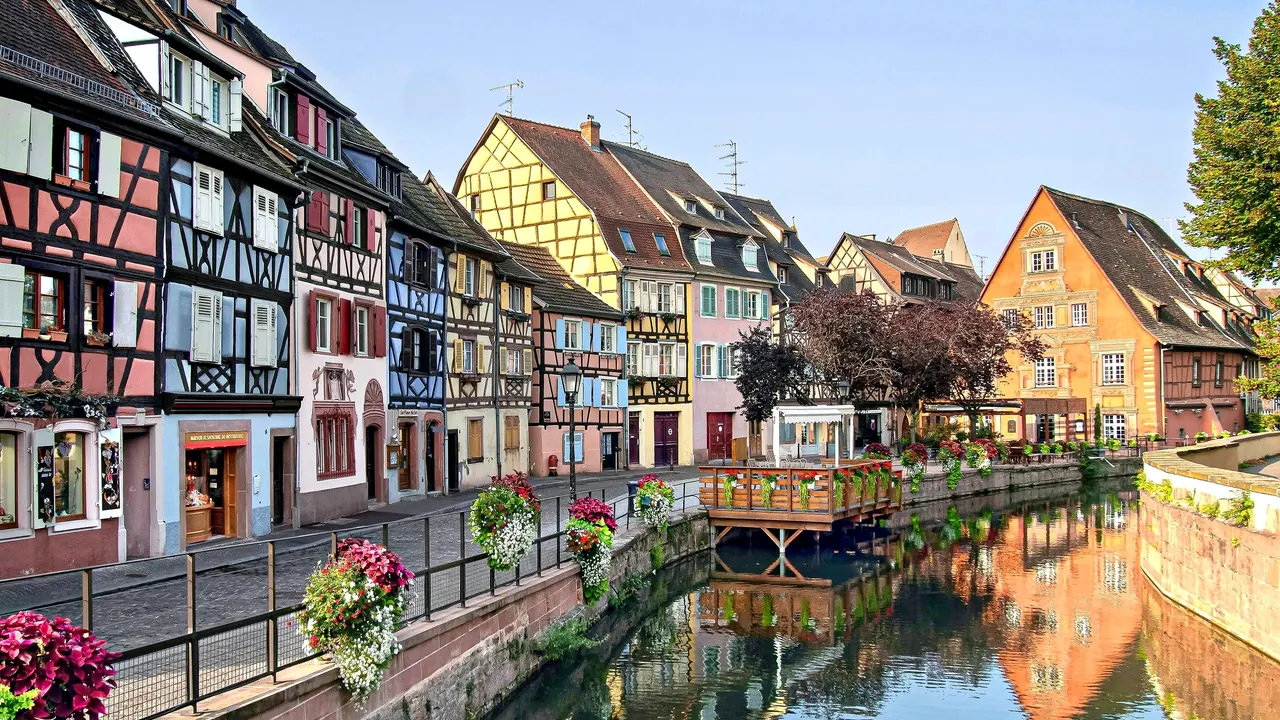
Colmar suits travellers who want a painted half-timbered old town, one of Europe's great altarpieces, long Alsace dinners with local Riesling and a different wine village every day. Strasbourg, Basel and Freiburg are all close enough for a day out. It is also far gentler on the wallet, which makes it the easier choice for a relaxed week of towns, vineyards and food.
Choose Zermatt for
- nature and the outdoors
- wellness
- getting around
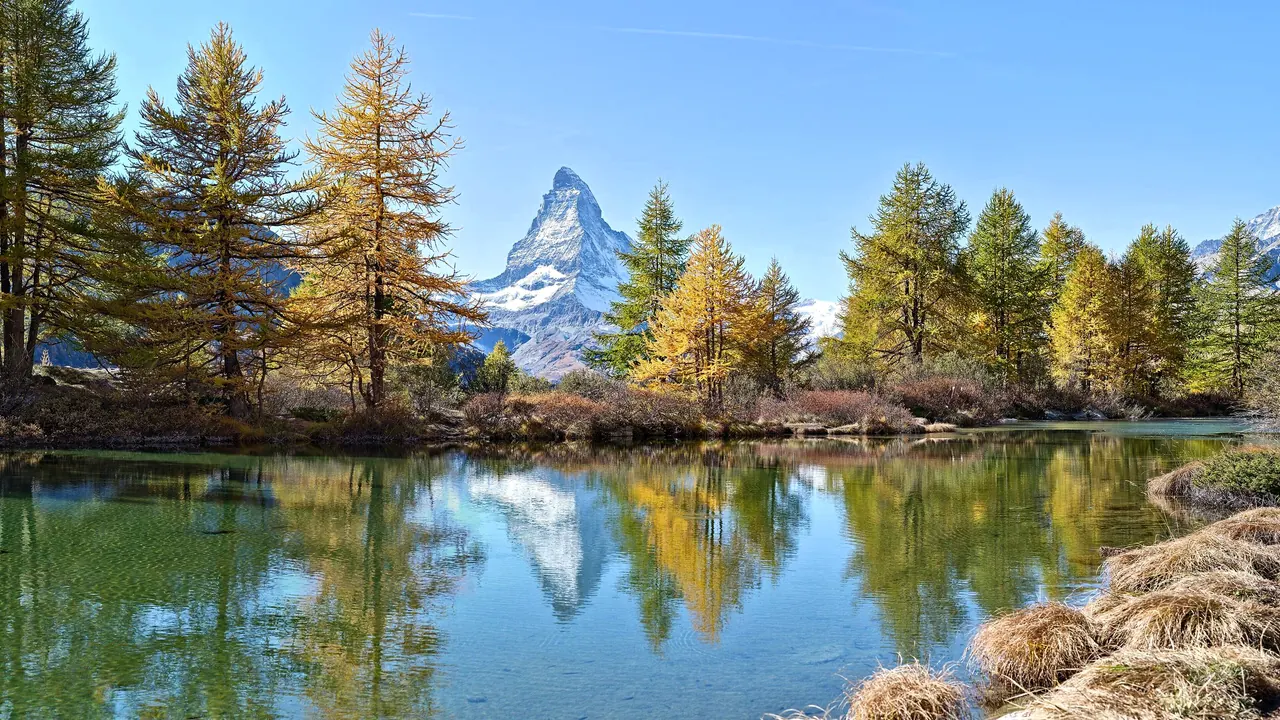
Pick Zermatt if the mountains are the whole point. The Matterhorn stands over a car-free village, and lifts and cog railways carry you up to glaciers and high trails. In winter the skiing runs across into Italy. Expect to pay heavily for all of it, and don't expect museums, varied restaurants or many towns within reach.
Scoreboard
Twelve categories on one fixed scale from 0 to 100. The shaded stretch is the gap between the two.
Your match
Pick a travel style or drag the sliders, and both match scores follow your weighting.
Wins on day trips and culture and sights with your weighting.
Wins on nature and the outdoors and wellness with your weighting.
What matters to you?
Category by category
What the scores mean for a trip.
Beaches & swimming
Neither town has anywhere to swim in the sea, and in this they are much alike. The difference is in summer comfort. Colmar's warm summers make its municipal pools and the small lakes up in the Vosges valleys pleasant for a swim. In Zermatt the mountain tarns stay icy all year, so swimming means an indoor hotel pool.
Food & drink
Colmar has much more to offer at the table. Wood-panelled winstubs serve choucroute, baeckeoffe and tarte flambée, munster cheese comes down from the valleys, and the covered market by the canal is good for picnics. Riesling and Gewurztraminer are poured everywhere, and cellar tastings are a short ride away.
Zermatt's best meals are lunches on the mountain, in chalets around Findeln and Furi with the Matterhorn in view. In the village the choice comes down to raclette, fondue, hotel dining rooms and a few expensive kitchens, and many places close between seasons.
Culture & sights
This is where Colmar leaves Zermatt far behind. Its old town survives as a whole, from the Maison Pfister and the Koïfhus to the canals of Petite Venise. The Unterlinden Museum alone, with Grünewald's altarpiece, justifies the journey, and two days covers the town comfortably.
In Zermatt, history means mountaineering: the underground Matterhorn Museum tells the story of the 1865 first ascent, there is a climbers' cemetery, and the dark larch barns of the Hinterdorf recall the old farming village. Together they fill a morning.
Nightlife
Zermatt has the livelier evenings, though mainly in winter. Après-ski bars on the runs into the village fill in the late afternoon, and a few bars and small clubs on the main street stay open past midnight on busy weekends. Summer nights end early.
Colmar's evenings are long dinners and a glass of wine on a terrace near Petite Venise, and the streets grow quiet early. For a real night out, take the train to Strasbourg.
Nature & outdoors
Both towns have mountains on the doorstep, but they are very different mountains, and anyone travelling mainly for the outdoors will find Zermatt far ahead. Around Colmar the country is gentle and green: walks through the vines from one wine village to the next, easy cycling on the flat plain, and higher up the forested Vosges with summer pastures, small glacial lakes and modest winter skiing. It is at its loveliest at harvest time, but beyond the vineyards you will want a car.
Zermatt is high-altitude terrain of rock, ice and permanent snow, with ibex and marmots on the slopes and the Haute Route finishing in the valley. The Alps that Colmar sees only as a line on the horizon on a clear day are all around you here. The biggest practical difference is access. Lifts and cog railways start at the edge of the village and reach above 3,000m within the hour, so you need no car, and the glacier keeps some skiing going even in summer.
Day trips
Colmar makes one of the best bases you could ask for. Strasbourg is half an hour away by train, and the wine villages of Eguisheim, Riquewihr and Kaysersberg are only a few kilometres apart. Basel and Freiburg are both about an hour across the borders.
Every outing from Zermatt starts with a long train ride down the valley. Sion, with its castle hills, is the most rewarding destination, and Brig is a pleasant stop. Most visitors simply spend their spare days back in the mountains.
Good for families
Colmar gives children more variety. In town there are boat rides through Petite Venise and storks on the rooftops. Within reach are the stork and otter park at Hunawihr, free-roaming macaques at Kintzheim, the Mulhouse train and car museums and Europa-Park across the Rhine, though a car is needed for most of them.
Zermatt's car-free streets make it calm and safe, and ski schools and nursery slopes on the Sunnegga side suit families who ski. Beyond that there is little built for children, rainy days are hard to fill, and the highest viewpoints can be too much for small children.
Getting around
Once you've arrived, Zermatt is the easier place to get about. With no cars, everything is on foot or by small electric taxi, and the cog railway, the funicular and the gondolas all leave from the edges of the village. Getting there and away is slower, since every trip involves the valley train.
Within Colmar you can walk everywhere, and trains to Strasbourg and Mulhouse are quick. Between the wine villages and up into the Vosges, buses are sparse, so you'll need a car or a bicycle.
Shopping & style
Colmar is the more satisfying town to browse, at least for regional goods. You can buy wine straight from the producers, Soufflenheim pottery, Alsatian table linen and gingerbread, with independent boutiques around Rue des Marchands and a good covered market. Zermatt's single main street sells luxury watches, souvenirs and genuinely good ski and climbing gear, and not much else.
Affordability
The gap here is huge. Colmar is moderately priced for Western Europe: set lunches and local wine are reasonable, village tastings are often free, and the main pressure is on hotel rooms in peak weeks.
Zermatt is among the most expensive places in the Alps. Rooms, terrace lunches and the lift tickets every visitor needs all cost well above the norm. Self-catering or sleeping down the valley in Täsch helps, but only a little.
Live music & performing arts
Both towns depend on festivals, but Colmar has more beyond them. Its Italian-style municipal theatre hosts plays and concerts, the Opéra national du Rhin tours here, and there is a classical festival in July and a jazz festival in autumn.
Zermatt has no theatre or concert hall. Zermatt Unplugged in spring and a chamber music festival in late summer are the highlights, and the rest of the year live music means a band in an après-ski bar.
Wellness & relaxation
Zermatt is better set up for pampering. It has an unusual number of fine hotel spas with pools, saunas and mountain views, some of them open to non-residents, and its car-free quiet is restful after a day outdoors. In peak weeks, though, the mood is active rather than slow.
Colmar has no spa culture to speak of. Relaxing there means a slow lunch, a walk through the vines and a quiet evening by the canals once the day visitors have gone.
When should you go?
Pick your month. The climate figures are measured averages, not a forecast.
Colmar in July
Zermatt in July
Daytime high, °C
Rainfall in the month, mm
Where the figures come from
Zermatt has no weather station within reach, so its figures come from a gridded climate model rather than a measured record, and read a broad area rather than the city itself.
Temperature and rainfall are climate normals, averaged over the years shown. Colmar: 1991-2020 normals, Ihringen (21.1 km from centre). Zermatt: 1991-2020 normals, TerraClimate 4 km grid at the town, no weather station within 90 km.
Colmar is at its best from May to September, when the Alsace plain warms to around 26°C in July and August and gets about 247 hours of sunshine a month. That is good weather for walking the old town and cycling the wine route, though May is the wettest month and summer brings showers. Autumn stays mild through October, the best time for the vineyards. Winters are grey and chilly at about 6°C, with little sun, so you'll spend more time indoors than out.
Zermatt is never warm. Even in July and August daytime highs reach only about 14°C, which is ideal for hiking from June to September but cold up at the viewpoints. From December to February it stays below freezing, which is ski season. November is the wettest month at about 130mm. Neither town is a beach destination in any month.
Which traveller are you?
On a culture and arts trip, choose Colmar. Its whole old town survives intact, and the Unterlinden Museum holds the Isenheim Altarpiece. There are also church treasures and a summer classical festival. Zermatt's heritage comes down to a mountaineering museum and a morning among old barns.
For an outdoors trip, Zermatt is in a different league. You can walk, climb or ski among four-thousand-metre peaks and glaciers straight from the village, with lifts doing the climbing. Colmar's vineyard paths and the rounded Vosges are pleasant but much gentler country.
On a tight budget, Colmar is the realistic option. Set lunches, free or cheap cellar tastings and rooms in nearby villages keep costs moderate. In Zermatt beds, meals and lift tickets are all steep, and only self-catering softens the bill.
Before you go
| Measure | Colmar | Zermatt |
|---|---|---|
| Official language | French | French, German, Italian, Romansh |
| Currency | Euro (EUR) | Swiss Franc (CHF) |
| Sockets | CE230 V, 50 Hz | CJ230 V, 50 Hz |
| Driving side | Right | Right |
| Time zone | UTC+1, UTC+2 in summer | UTC+1, UTC+2 in summer |
| Emergency number | 112 | 112 |
| Elevation | 185 m | 1,624 m |
| Main airport | EuroAirport Basel–Mulhouse–Freiburg (BSL)55 km from centre112 non-stop destinations | Geneva International Airport (GVA)128 km from centre150 non-stop destinations |
| Public holidays this year | 11 days | 9 days |
By the numbers
| Measure | Colmar | Zermatt |
|---|---|---|
| City population | 66,970 | 6,023 |
| People per km² | 1,006 | 25 |
| Museums within 10 km | 9 | 2 |
| UNESCO World Heritage sites within 50 km | 3 | 2 |
Where else could you go?
Every comparison below shares a destination with this one, so you can follow Colmar or Zermatt somewhere new.
- Freiburgvs Colmar
- Baselvs Colmar
- Strasbourgvs Colmar
- Chamonixvs Zermatt
- Interlakenvs Zermatt
- Luganovs Zermatt