Colombia
Bogota
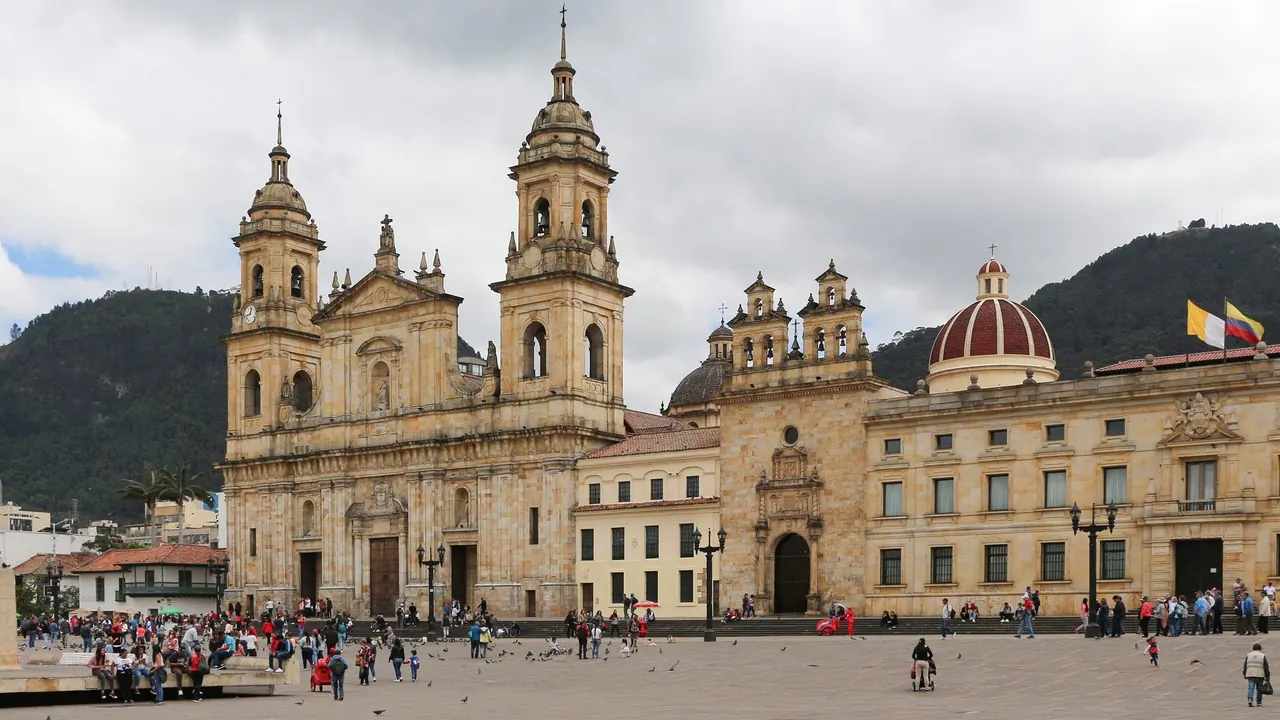
The cathedral on Plaza de Bolivar
- Affordable cities77
- Nightlife72
- Culture & sights68
Photo: Bernard Gagnon, CC BY-SA 4.0, cropped
Match
52
Every category weighted equally
- Beach & sun47
- Culture & arts57
- Food & nightlife57
- Family trip49
- Outdoors52
- Relax & unwind47
- Shopping & style54
- On a budget55
Bogota in twelve categories
Our verdict on each, scored 0 to 100 against the same fixed benchmark cities, so a score means the same thing on every page.
Beaches & swimming. Scores 5 out of 100.
Food & drink. Scores 66 out of 100.
Culture & sights. Scores 68 out of 100.
Nightlife. Scores 72 out of 100.
Nature & outdoors. Scores 64 out of 100.
Day trips. Scores 52 out of 100.
Good for families. Scores 45 out of 100.
Getting around. Scores 36 out of 100.
Shopping & style. Scores 52 out of 100.
Affordability. Scores 77 out of 100.
Live music & performing arts. Scores 64 out of 100.
Wellness & relaxation. Scores 28 out of 100.
Bogota category by category
Beaches & swimming
5Bogota has no beach life. The city sits on a high Andean plateau at about 2,600m, with cool air all year, and the Caribbean coast is reached by plane, not by road. The nearest warm water is in the lowland towns down the western slope, where weekend visitors from the city go for hotel pools and water parks after a long, winding drive. Anyone who wants sea swimming should plan a separate stay on the coast.
Food & drink
66Bogota's own cooking is highland comfort food: ajiaco, a chicken and potato soup with capers and cream, tamales wrapped in leaves, hot chocolate served with cheese to melt into it, and almojábanas and pandebono from the bakeries. Paloquemao market is the place to see the country's range of tropical fruit, flowers and produce, much of it unfamiliar to visitors, and the fruit stalls let you taste your way through it.
The ambitious side of the scene is in Chapinero, Zona G and Usaquén, where chefs cook modern menus built on Colombian ingredients from the Amazon to the Pacific coast. Coffee is taken seriously in specialty cafés across the north of the city, and craft beer is easy to find. Street food exists, with arepas and empanadas on corners, but it is a snack culture, not a reason to plan a trip.
Culture & sights
68The core of a cultural visit is La Candelaria, the colonial quarter of steep streets, tiled roofs and painted houses running up to the Plaza de Bolívar, where the cathedral, the Capitol and the Palace of Justice frame the square. Within a few blocks are the Museo del Oro, with tens of thousands of pre-Columbian gold pieces and one of the great archaeological collections of the Americas, and the Botero Museum, which pairs the artist's own work with his gift of European masters.
Beyond those, the National Museum occupies a former prison, the Iglesia de San Francisco has a gilded altar, and the street art along Calle 26 and in the old centre is some of the best in the region. Monserrate, with its sanctuary high above the city, gives the view that ties it all together. Outside the old centre the city is mostly modern brick and concrete.
Nightlife
72Going out in Bogota is a serious matter, and the city's rumba runs from Thursday to Saturday with real energy. Zona T and Zona Rosa in the north hold the polished bars and clubs, Chapinero has the alternative and LGBTQ scene including some very large clubs, and Parque de la 93 and Usaquén are calmer for drinks. Salsa bars, where locals dance with real skill, are the most characterful nights out, and there is a strong underground electronic scene.
The night starts late and runs into the small hours, though most venues close earlier than in the famously all-night cities. Getting home means a taxi or ride-hailing car rather than walking, and visitors are sensible to stick to the established districts.
Nature & outdoors
64The Eastern Hills form a green wall along the whole city, and the climb to Monserrate at over 3,100m is the classic morning walk. Beyond them lies the páramo, a high, misty Andean landscape of frailejón plants, bogs and glacial lakes found in only a few countries. Chingaza National Park and the Sumapaz páramo, the largest in the world, can be visited with a guide, and the cloud-forest reserve of Chicaque sits just off the plateau to the south-west.
The sandstone cliffs at Suesca are a well-known rock-climbing area about an hour and a half north. Bogota is also a cycling city: long climbs into the mountains draw road riders, and on Sundays many main roads close to traffic for the Ciclovía. Expect cool, changeable weather and rain in the wet seasons.
Day trips
52The standard day out is Zipaquirá, about an hour north, where a cathedral has been carved into the tunnels of a salt mine below a pleasant colonial town. Nemocón has a smaller, quieter salt mine nearby, and the lake at Guatavita, the sacred site behind the El Dorado legend, combines well with the rebuilt whitewashed town of the same name on its reservoir.
The small towns of the Sabana, such as Chía and Cajicá, make easy afternoon outings for lunch. The most beautiful colonial town in the region, Villa de Leyva, is around three hours away and really deserves an overnight stay. Beyond that, the list thins quickly, and the traffic leaving the city can stretch any trip.
Good for families
45Children are warmly welcomed in Colombian culture, and Bogota has more for them than its reputation suggests. Maloka is a large interactive science museum, Salitre Mágico and Mundo Aventura are city amusement parks, the botanical garden and the big Simón Bolívar park give space to run, and the Sunday Ciclovía turns main roads into car-free routes for bikes and scooters. Parque Jaime Duque north of the city adds a zoo and rides.
The hard part is the logistics. Distances are long, traffic is heavy, many pavements are uneven, and families need to keep an eye on belongings and stick to the safer northern districts. The altitude can tire small children for the first day or two.
Getting around
36Bogota is a long city stretched along the foot of the mountains, and the main visitor areas, La Candelaria in the centre and the northern districts of Chapinero, Zona T and Usaquén, are far apart. Each is walkable on its own, but moving between them means a trip of half an hour or more in some of the heaviest traffic in Latin America.
TransMilenio, a network of bus rapid transit lines, carries most of the city, but it is crowded at peak hours, hard to decode at first and a known spot for pickpockets. Most visitors use cheap taxis and ride-hailing apps instead. The city has an extensive network of bike lanes, which suits confident cyclists.
Shopping & style
52Bogota's most distinctive shopping is for emeralds, traded by dealers along Avenida Jiménez and in the jewellery shops around it, where buyers should know what they are doing. The Sunday flea market in Usaquén is the best place for crafts, with hammocks, woven bags, ceramics and jewellery from around the country, and the national crafts body runs good shops for quality pieces.
For the rest, the action is in the north: large modern malls around Zona T, Colombian designers in boutiques in Zona G and Chapinero, and well-priced leather goods. It is a solid offer, but not a place people visit to shop.
Affordability
77Bogota is an inexpensive city for most visitors. Comfortable hotels in the northern districts cost a fraction of what they would in Europe or North America, the set lunch menus that office workers eat are very cheap, and taxis and ride-hailing are affordable even across the city. The Museo del Oro and the Botero Museum are among the cheapest major museums anywhere, and some are free.
The costs rise in the polished restaurants and cocktail bars of Zona G, Zona T and Usaquén, where a good dinner with wine edges towards international levels, and imported goods are not cheap. Even so, a stay of high comfort costs little by Western standards.
Live music & performing arts
64Bogota is the stage capital of Colombia. The 19th-century Teatro Colón hosts opera, ballet and concerts in a gilded horseshoe auditorium, the Teatro Mayor in the north brings in international orchestras and dance companies, and the Filarmónica de Bogotá plays across the city. A long-running Ibero-American Theatre Festival, one of the largest of its kind, fills venues and streets during its seasons, and Rock al Parque is a huge free outdoor music festival.
Year round, there is live salsa in dance bars, small jazz and alternative-music venues in Chapinero, and an active independent theatre scene. Most of the spoken programme is in Spanish, but music and dance travel without translation.
Wellness & relaxation
28Bogota is not a place to slow down. Traffic, noise and the bustle of a city of millions set the pace, and there is no bathing tradition within the city, only hotel spas and day spas in the north. The nearest real soaking is in the thermal springs at Choachí, over the mountains to the east, and at Tabio on the plateau to the north-west, each about an hour away and popular with locals at weekends. The calmest corners for unwinding are Usaquén's quieter streets and the long Sunday mornings of the Ciclovía.
When should you go?
Pick a month to see what it is like. The climate figures are measured averages, not a forecast.
Bogota in July
Daytime high, °C
Rainfall in the month, mm
The whole year
Shaded against this city’s own year: the deepest cell is its best month for that figure and the palest its weakest.
Temperature and rainfall are climate normals, averaged over the years shown. Bogota: 1991-2020 normals, Bogota / Eldorado (14.1 km from centre).
Before you go
| Measure | Bogota |
|---|---|
| Official language | Spanish |
| Currency | Colombian Peso (COP) |
| Sockets | AB110 V, 60 Hz |
| Driving side | Right |
| Time zone | UTC-5 |
| Emergency number | 123 |
| Elevation | 2,582 m |
| Main airport | El Dorado International Airport (BOG)13 km from centre98 non-stop destinations |
| Public holidays this year | 19 days |
By the numbers
| Measure | Bogota |
|---|---|
| City population | 8,034,649 |
| People per km² | 5,092 |
| Museums within 10 km | 30 |
| UNESCO World Heritage sites within 50 km | 0 |
Compare Bogota with
Every comparison with a written verdict behind it.