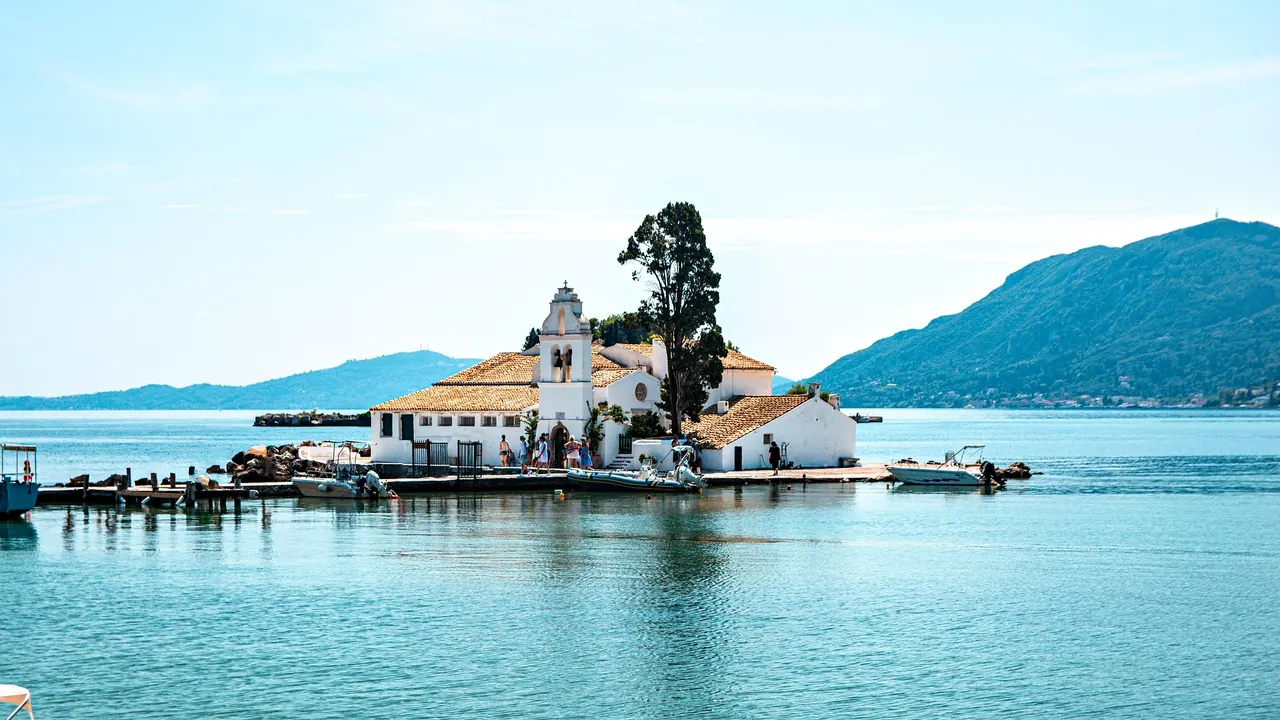
Photos: Corfu by Nico Hartnauer, Pexels License.
Corfu or Puglia?
Our verdict in twelve categories, each scored against the same fixed benchmark cities, and the climate month by month, so you can choose for your trip.
Choose Corfu for
- nightlife
- families
- prices
Corfu suits a beach vacation on one green island with a single base. You can pick sand on the west coast, clear coves around Paleokastritsa or calm pebble bays in the northeast, then add boat trips to Paxos and Antipaxos. Corfu Town's Venetian lanes give you the culture in one walkable place, and the mountain walks and olive-grove villages are close by, so the island is easy to take in without much planning.
Choose Puglia for
- day trips
- food and drink
- live music and the arts
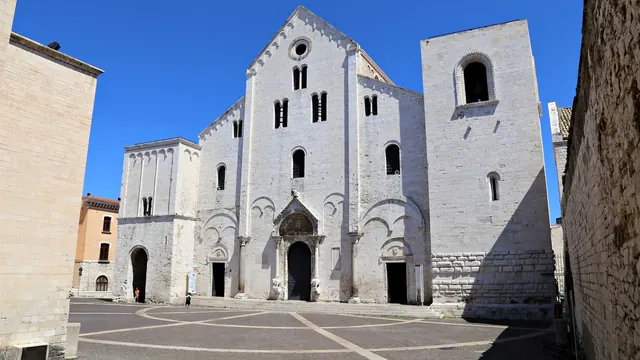
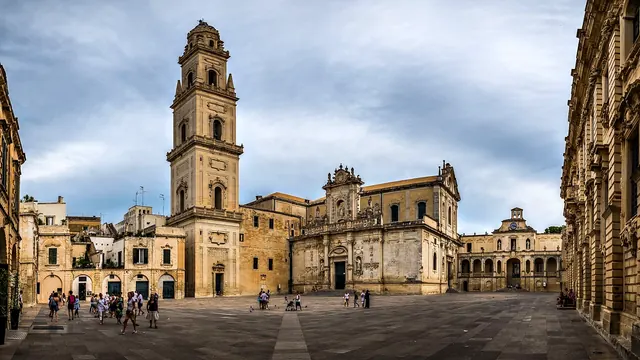
Puglia rewards a traveller who wants to move around, eat well and see a lot. It is a long stretch of southern Italy that you explore by car, from Lecce's baroque streets and the trulli of Alberobello to the whitewashed hill towns of the Valle d'Itria, with Matera an easy outing. Its beaches are as good as Corfu's, but the real advantages are the food and wine, a richer spread of towns and sights, and quiet masserie to slow down in.
Scoreboard
Twelve categories on one fixed scale from 0 to 100. The shaded stretch is the gap between the two.
Your match
Pick a travel style or drag the sliders, and both match scores follow your weighting.
Wins on nightlife and families with your weighting.
Wins on day trips and food and drink with your weighting.
What matters to you?
Category by category
What the scores mean for a trip.
Beaches & swimming
For beaches the two are level, but the coastlines feel different. Corfu has long sandy beaches on the west coast with sunsets and some surf, small cliff-backed coves of cold, very clear water at Paleokastritsa, shallow sand in the north and pebble bays facing Albania. A boat to Antipaxos adds some of the clearest water in the Ionian.
Puglia's best sand is on the Ionian side of the Salento, where long pale beaches shelve into turquoise shallows. The Adriatic side offers swimming from limestone rocks at Polignano and sea stacks at Torre dell'Orso. In August expect rows of paid lidos and Italian families rather than package resorts.
Food & drink
Puglia eats noticeably better. Corfu's Venetian-influenced dishes, such as pastitsada, sofrito and bourdeto, are worth seeking out, along with kumquat liqueur and the local ginger beer. But you have to look for them in the back lanes of Corfu Town or in inland villages, because resort menus are mostly aimed at package visitors.
In Puglia good food is everywhere and needs no effort: fresh burrata from the Murge, orecchiette, focaccia barese, octopus from the fishermen's stalls in Bari and meat grilled to order in Valle d'Itria butcher-grill houses, with rich Primitivo and Negroamaro to drink.
Culture & sights
Corfu's heritage is gathered in and around one town. Corfu Town's UNESCO-listed Venetian old town sits between its two fortresses, with the Liston, Agios Spyridon and two museums worth your time: Asian art in the Palace of St Michael and St George, and the archaic Gorgon pediment in the Archaeological Museum. The Achilleion and the cliff-top ruin of Angelokastro are easy additions.
Puglia has more to see, and more of it is unlike anywhere else: Lecce's baroque, the conical trulli of Alberobello, Frederick II's octagonal Castel del Monte and Otranto's cathedral floor mosaic. Its museums are modest, though, and the sights are spread across the region, so seeing them means driving from town to town.
Nightlife
The nightlife is similar in amount but different in style. Corfu's party scene is concentrated in Kavos, a resort for young foreign visitors where the bars run until dawn, while Corfu Town offers cocktails under the Liston. Puglia's summer peak is Gallipoli, full of young Italians and beach clubs, with Lecce's squares busy late into the evening.
Out of season Puglia keeps more going. Bari's old town and Umbertino district have bars all year, while on Corfu almost everything outside the main town closes in winter.
Nature & outdoors
Corfu fits its outdoors into one small, green island of olive groves, cypresses and spring wildflowers. The high ground is in the north, where Mount Pantokrator rises to about 900m above abandoned stone villages, and the Corfu Trail crosses the island from end to end. The sheltered east coast suits sailing and kayaking, and the Korission lagoon in the south draws birdwatchers.
Puglia offers about as much, spread over far more ground. Most of it is a gentle plateau of olive groves and dry-stone walls, better for cycling than climbing, while the wilder country lies in the Gargano in the far north, with beech forest in the Foresta Umbra, sea caves and diving off the Tremiti islands. In both, spring and autumn are the seasons for walking.
Day trips
Day trips are much better in Puglia, where touring the small towns is a large part of the vacation. From one base you can reach Ostuni, Locorotondo, Cisternino, Polignano and Monopoli in a short drive, as well as Trani's harbour or the cave town of Matera, and none of this depends on the season.
Corfu's outings go by boat and mostly run only in summer. The best are Paxos combined with Antipaxos, the Roman and Venetian ruins at Butrint across the strait in Albania, and Parga on the Greek mainland.
Good for families
Both are easy-going places for a family beach vacation, with shallow sandy water for small children. On Corfu that means the north coast or Issos. Many resorts there are built around pools and kids' clubs, there is a water park inland, and children can go on pirate-boat trips, as long as you avoid Kavos and Ipsos.
Puglia offers the Salento's Ionian sands, a villa or masseria with a pool, the safari park at Fasano and trulli that children love. Italian piazza life welcomes children late into the evening, but you will need a car.
Getting around
Getting around is slightly easier in Puglia. Its roads are generally good and uncrowded, and a main-line train along the Adriatic stops at Polignano and Monopoli, so you can do without a car on that stretch. The drawback is size: the Gargano is several hours from the southern tip.
Corfu is only about 60km long, but its roads twist through the hills, buses are infrequent and summer traffic around the town is heavy. Hiring a car or scooter is usual unless you stay in one resort.
Shopping & style
Neither is a shopping destination, and both are better for crafts and edible souvenirs than for fashion. On Corfu that means olive-wood bowls, kumquat liqueur and soaps from the old lanes of Corfu Town. Puglia has a little more, spread across several towns: Grottaglie's ceramic quarter, papier-mache from Lecce's studios and Valle d'Itria linen, with Italian chains on Bari's Via Sparano.
Affordability
The two cost about the same overall, and in both places what drives the budget is where you stay. On Corfu, tavernas and package resorts on the north and east coasts are fairly priced, while the villas around Kassiopi and summer rooms in Corfu Town are not.
In Puglia, eating out is the bargain and accommodation is the expense, especially restored masserie and stays in Ostuni or Polignano, plus paid lidos. Car hire adds to the cost in both, and June or September is cheaper in both.
Live music & performing arts
Puglia has more formal performance. Bari's Teatro Petruzzelli runs an opera and ballet season, Martina Franca stages rare operas in its ducal palace courtyard each summer, and the Salento's pizzica culminates in the huge Notte della Taranta concert at Melpignano.
Corfu's tradition is smaller but unusual for Greece: historic philharmonic bands playing on the Spianada and in village squares, Easter processions with brass bands, and kantades sung in tavernas.
Wellness & relaxation
Puglia is the better place to unwind. Its fortified farmhouses have been turned into quiet country stays with pools and often spas, and there are modest thermal options such as the sea-cave sulphur springs at Santa Cesarea Terme.
Corfu has no bathing tradition, only hotel spas and a few yoga retreats among the olives. Its restful side is a hill village or the quiet northeast coast, well away from the resort strips.
When should you go?
Pick your month. The climate figures are measured averages, not a forecast.
Corfu in July
Puglia in July
Daytime high, °C
Rainfall in the month, mm
Where the figures come from
Puglia's temperatures are measured 64 km from the centre, at Brindisi.
Puglia has no rain gauge within 25 km of the centre, so its rainfall comes from a gridded climate dataset read at the destination rather than from a gauge further away.
Temperature and rainfall are climate normals, averaged over the years shown. Corfu: 1991-2020 normals, Kerkyra Airport (0.9 km from centre). Puglia: 1991-2020 (sunshine 1981-2010) normals, Brindisi (64.4 km from centre).
Both are summer destinations with the same sea. The water is warm enough for swimming from June to late September and reaches about 26°C in August on both coasts. Corfu's summer is a little hotter and sunnier, with highs of about 32°C in July and August against Puglia's 30°C, so walking around Corfu Town or the hill villages in high summer is tiring. Late May, June and September are the most comfortable months in both for combining the beach with sightseeing.
The big difference is the rest of the year. Corfu's green landscape comes from wet winters, and rain arrives in earnest from late September. November is the wettest month with about 188mm, more than twice Puglia's 83mm. Puglia stays drier through October and winter, so its towns are more pleasant for an off-season trip. Corfu is better in spring, when it is lush and full of wildflowers.
Which traveller are you?
On a culture and arts trip, Puglia is the better choice. Lecce's baroque, the trulli, Castel del Monte and a run of seaside Romanesque cathedrals give you more to see than Corfu Town, and opera at Bari's Petruzzelli and pizzica festivals add live performance.
For a food and nightlife trip, choose Puglia for the eating: burrata, orecchiette, raw sea urchins on Bari's waterfront and good-value Primitivo. The evenings are as lively as Corfu's, with summer beach clubs in Gallipoli and drinks in Lecce's squares.
On a family trip with children, Corfu is the simpler option. You can settle in one north-coast resort with shallow sand, pools and kids' clubs, reach the water park and boat trips without a car, and keep the days short. Puglia's family beaches mean driving.
Before you go
| Measure | Corfu | Puglia |
|---|---|---|
| Official language | Greek | Italian |
| Currency | Euro (EUR) | Euro (EUR) |
| Sockets | CF230 V, 50 Hz | CFL230 V, 50 Hz |
| Driving side | Right | Right |
| Time zone | UTC+2, UTC+3 in summer | UTC+1, UTC+2 in summer |
| Emergency number | 112 | 112 |
| Main airport | Corfu Ioannis Kapodistrias International Airport (CFU)88 non-stop destinations | Bari Karol Wojtyła International Airport (BRI)104 non-stop destinations |
| Public holidays this year | 15 days | 13 days |
By the numbers
| Measure | Corfu | Puglia |
|---|---|---|
| Population | 100,854 | 3,866,174 |
| People per km² | 161 | 198 |
| Swim season, months above 21 °C | 5 months | 4 months |
Where else could you go?
Every comparison below shares a destination with this one, so you can follow Corfu or Puglia somewhere new.
- Zakynthosvs Corfu
- Amalfi Coastvs Puglia
- Hvarvs Puglia
- Caprivs Puglia
- Sicilyvs Puglia
- Amalfi Coastvs Corfu