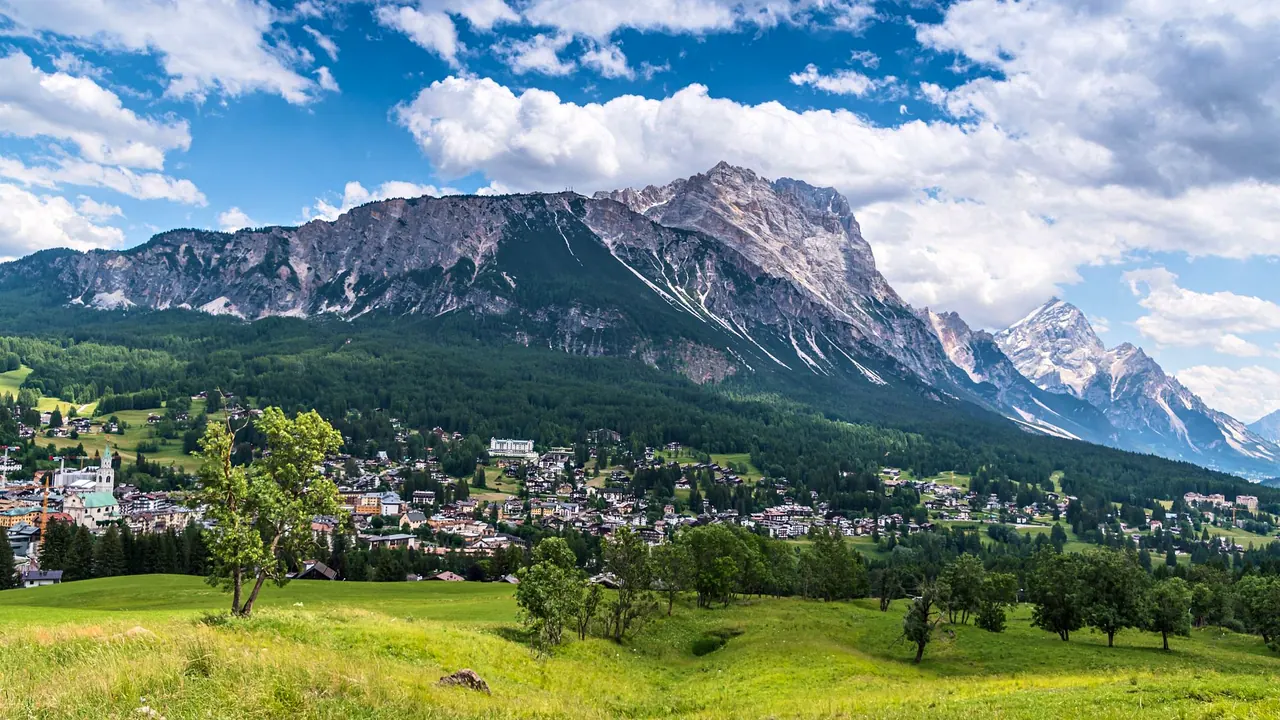
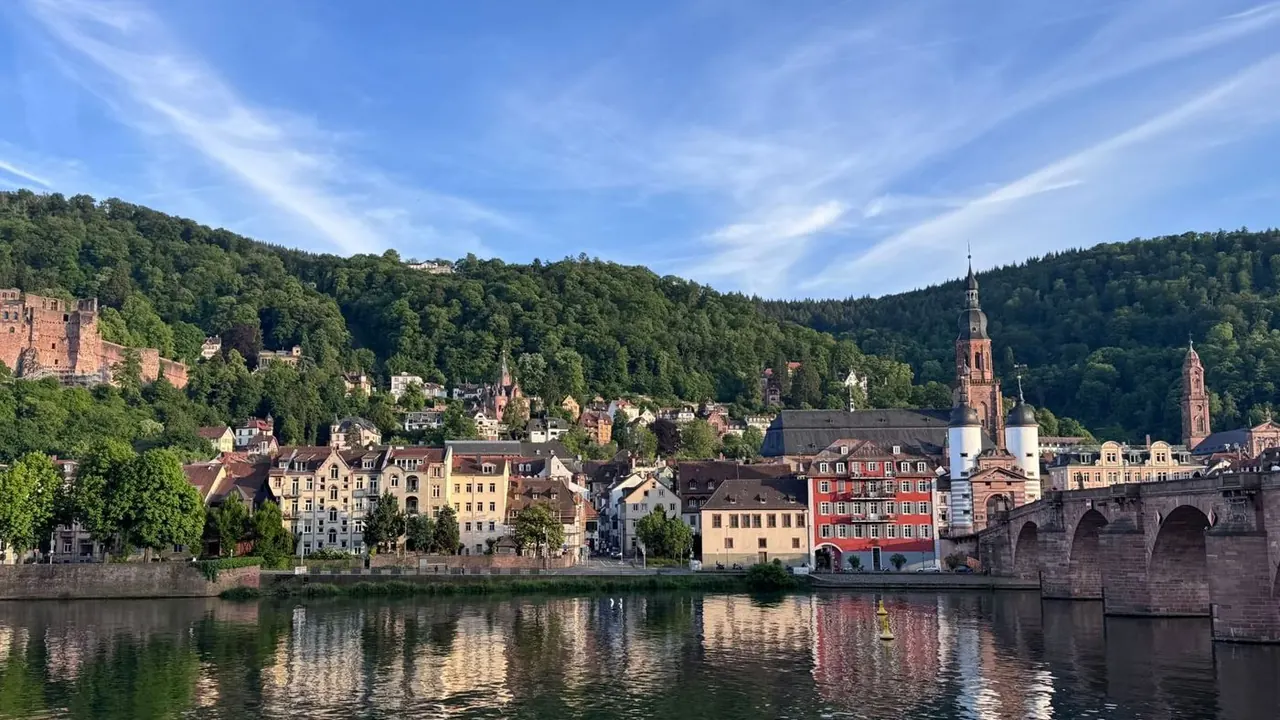
Photos: Cortina d'Ampezzo by Andreas Neubauer, Pexels License; Heidelberg by Kuanling Chen, Pexels License.
Cortina d'Ampezzo or Heidelberg?
Our verdict in twelve categories, each scored against the same fixed benchmark cities, and the climate month by month, so you can choose for your trip.
Choose Cortina d'Ampezzo for
- nature and the outdoors
- food and drink
- shopping
Cortina d'Ampezzo is the choice when the mountains are the point of the trip. The Dolomites rise straight from the town, with lifts onto the peaks, hut-to-hut trails, via ferrata and a huge ski area in winter. The town itself is a polished, expensive base for those days outside rather than a place to go sightseeing.
Choose Heidelberg for
- culture and sights
- live music and the arts
- day trips
Heidelberg suits a traveller who wants a town to explore on foot and a region to explore by train. The castle, the old university and the Altstadt fill a couple of days, and the theatre and concerts fill the evenings. Speyer, Worms and the Neckar castles are easy outings, and all of it costs far less than an Italian ski resort.
Scoreboard
Twelve categories on one fixed scale from 0 to 100. The shaded stretch is the gap between the two.
Your match
Pick a travel style or drag the sliders, and both match scores follow your weighting.
Wins on nature and the outdoors and food and drink with your weighting.
Wins on culture and sights and live music and the arts with your weighting.
What matters to you?
Category by category
What the scores mean for a trip.
Beaches & swimming
Neither town works for a swimming vacation, but what they offer differs. Cortina has cold alpine lakes fed by snowmelt, such as Ghedina and Pianozes, which are better for walking round than swimming in. Heidelberg has outdoor pools and the gravel-pit lakes of the Rhine plain, which are warmer and suit a lazy afternoon. The nearer sea is the Adriatic, more than two hours' drive from Cortina.
Food & drink
Both towns eat well for their size, in different ways. Cortina's best meals are Ampezzan mountain dishes such as casunziei and polenta with game, ideally eaten on a rifugio terrace among the peaks. The valley's dining rooms are polished but rarely cheap.
Heidelberg's strength is wine: Riesling and Pinot from the Bergstrasse and the Palatinate, drunk in village wine taverns with Flammkuchen or spring asparagus. Its large student population also keeps cheap kebabs and pizza plentiful, which Cortina barely offers, although the restaurants nearest the castle are uneven.
Culture & sights
Heidelberg has much more to see. The red sandstone castle ruin stands above a well-preserved baroque Altstadt and the Old Bridge. Germany's oldest university, with its graffiti-covered Student Prison, adds to a compact and rewarding day or two of sightseeing.
Cortina's centre is pretty, with its tall bell tower and painted houses, and the Rimoldi art collection fills a wet afternoon. Its most striking history, the First World War tunnels and trenches on Lagazuoi and the Cinque Torri, lies up in the mountains and takes a full day to reach.
Nightlife
Neither is a nightlife destination, but Heidelberg gives you more to do after dinner. In term time the Untere Strasse fills with small bars and old student taverns until late, and Mannheim and Frankfurt are a train ride away for bigger club nights.
Cortina's evenings are après-ski drinks, a stroll along the Corso Italia and a long dinner. Late bars open mainly in the peak winter weeks, and summer nights are quiet.
Nature & outdoors
This is where Cortina stands apart. The Dolomites surround the town and lifts rise straight onto the peaks, with the Tre Cime, Lago di Misurina and the Fanes-Sennes-Braies park all close. Winter brings skiing across the Dolomiti Superski area, and summer brings via ferrata, climbing and hut-to-hut trails.
Heidelberg's outdoors is green and gentle rather than dramatic: the Philosophers' Walk, forest trails over the Königstuhl at 568m, and the flat Neckar cycle path past castles. It makes lovely walking and cycling country, but it has no high peaks, lifts or rock walls to compare with the ring of mountains around Cortina.
Day trips
Heidelberg is much the better base for days out. Speyer's cathedral and the palace gardens at Schwetzingen are about half an hour away, and Worms, Lorsch and Maulbronn are easy outings. Mainz and Frankfurt are around an hour by train, and the Palatinate wine villages and Baden-Baden are also within reach.
From Cortina, most days out head into the mountains. South Tyrol has the best town outings, from San Candido to Bolzano and its Iceman, but the drives are longer, and Venice is a long day by coach.
Good for families
Heidelberg suits more families. The funicular to the Königstuhl and its fairy-tale park, a compact zoo and river boat trips are all close at hand. For rainy or restless days, the Technik Museum Speyer and a large theme park are within easy reach.
Cortina works well for families who ski or hike, with ski schools, beginner slopes at Socrepes, skating at the Olympic stadium and easy walks to mountain huts in summer. Beyond the outdoors there is little aimed at children, and bad weather leaves few options.
Getting around
Heidelberg is far simpler without a car. The Altstadt is walkable from end to end, and trams run in from the station. One fare system covers the trains, trams and buses of the whole Rhine-Neckar area, so day trips need little planning.
Cortina's centre is tiny and easy on foot, and ski buses reach the slopes in winter. But the town has had no railway since 1964, so arriving means a coach from Venice or a long drive. Buses up to the passes are limited, and most visitors who want to explore the wider Dolomites hire a car.
Shopping & style
Shopping is a short affair in both towns, but the character differs. Cortina's Corso Italia is a compact luxury strip of fashion, jewellers, furriers and upmarket ski wear, anchored by the old Cooperativa store, with local wood carving and filigree on the side. Heidelberg's long Hauptstrasse is mostly high-street chains and souvenirs such as beer steins and Studentenkuss chocolates. Bergstrasse wine is the best thing to take home, and Mannheim and Frankfurt are close by train for more.
Affordability
Cortina is one of Italy's priciest resorts, and in the winter peak and in August both rooms and restaurant meals cost what a luxury resort charges. Skiers then pay for lift passes and hire on top. The cheaper ways in are lunch at a rifugio, a visit in early summer or late September, or a bed in a quieter valley with a drive in each morning.
Heidelberg is far easier on the wallet, with costs typical of western Germany. Its main problem is a shortage of hotel rooms, so congresses, graduations and summer weekends push rates up. Many visitors sleep in Mannheim or a nearby town and arrive by train, and entry to the castle and most museums stays modest.
Live music & performing arts
Heidelberg has a full season. The municipal theatre stages opera, drama and dance, a philharmonic orchestra gives regular concerts, and the Heidelberger Frühling festival comes in spring. In summer the castle courtyard hosts open-air performances, and Mannheim's larger house is twenty minutes away.
Cortina has no theatre and no regular music venue. Its music comes from summer chamber and classical festivals, sometimes held outdoors among the mountains, and a few concerts around Christmas and New Year.
Wellness & relaxation
Neither town has thermal baths of its own, and both rely on hotel spas. Cortina's are Alpine in style, with saunas, hay baths and indoor pools after a day on the slopes, and its calm comes from clear mountain air and hut terraces in the quieter months.
Heidelberg's advantage is the thermal water nearby: the Kraichgau spa towns with warm saline pools are about half an hour away, and Baden-Baden is about an hour. In town, the slow pleasures are evenings on the Neckar meadows in Neuenheim and unhurried wine taverns.
When should you go?
Pick your month. The climate figures are measured averages, not a forecast.
Cortina d'Ampezzo in July
Heidelberg in July
Daytime high, °C
Rainfall in the month, mm
Temperature and rainfall are climate normals, averaged over the years shown. Cortina d'Ampezzo: 1991-2020 normals, Dobbiaco (22.5 km from centre). Heidelberg: 1991-2020 (sunshine 1971-2000) normals, Heidelberg (4.5 km from centre).
Cortina's summer runs from June to August, when days reach about 22°C and the high trails, huts and via ferrata are open to walkers. It is also the wettest stretch of the year, with about 130mm of rain in July, so early starts are wiser than long afternoons on the ridges. September is the gentler month after it, still mild and noticeably drier. Winter is cold and dry, with daytime highs near 0°C in January, which is what the ski season needs. Spring and late autumn fall awkwardly between the two seasons.
Heidelberg is milder and more even through the year. July and August reach about 26°C with plenty of sun, around 222 hours in July, so summer evenings on the Neckar meadows are long, and the town is comfortable for walking from April to October. Rain is spread fairly evenly through the months instead of piling up in summer. Winters are much less harsh than in the Ampezzo valley, but they are grey and short of sunshine.
Which traveller are you?
On an outdoors trip, Cortina is the stronger choice by a wide margin. The Dolomites ring the valley, lifts climb straight from town, and the Tre Cime, the Alta Via 1 and some of the oldest via ferrata routes are all close. Heidelberg's wooded hills are pleasant but gentle.
For a culture and arts trip, Heidelberg wins clearly. Its castle ruin, Germany's oldest university with the Student Prison, and a theatre staging opera, drama and dance, plus a philharmonic orchestra, offer far more than Cortina's three small museums and summer concerts.
On a trip on a tight budget, Heidelberg is far easier. Student cafés, bakeries and a single regional transport ticket keep costs down. Cortina charges luxury-resort prices for rooms and meals, and lift passes and equipment hire add more on top.
Before you go
| Measure | Cortina d'Ampezzo | Heidelberg |
|---|---|---|
| Official language | Italian | German |
| Currency | Euro (EUR) | Euro (EUR) |
| Sockets | CFL230 V, 50 Hz | CF230 V, 50 Hz |
| Driving side | Right | Right |
| Time zone | UTC+1, UTC+2 in summer | UTC+1, UTC+2 in summer |
| Emergency number | 112 | 112 |
| Elevation | 1,224 m | 114 m |
| Main airport | Venice Marco Polo Airport (VCE)116 km from centre103 non-stop destinations | Frankfurt Main Airport (FRA)69 km from centre281 non-stop destinations |
| Public holidays this year | 13 days | 12 days |
By the numbers
| Measure | Cortina d'Ampezzo | Heidelberg |
|---|---|---|
| City population | 5,546 | 156,092 |
| People per km² | 22 | 1,433 |
| Museums within 10 km | 3 | 17 |
| UNESCO World Heritage sites within 50 km | 1 | 4 |
Where else could you go?
Every comparison below shares a destination with this one, so you can follow Cortina d'Ampezzo or Heidelberg somewhere new.
- Frankfurtvs Heidelberg
- Stuttgartvs Heidelberg
- Baden-Badenvs Heidelberg
- Innsbruckvs Cortina d'Ampezzo
- Strasbourgvs Heidelberg
- Venicevs Cortina d'Ampezzo