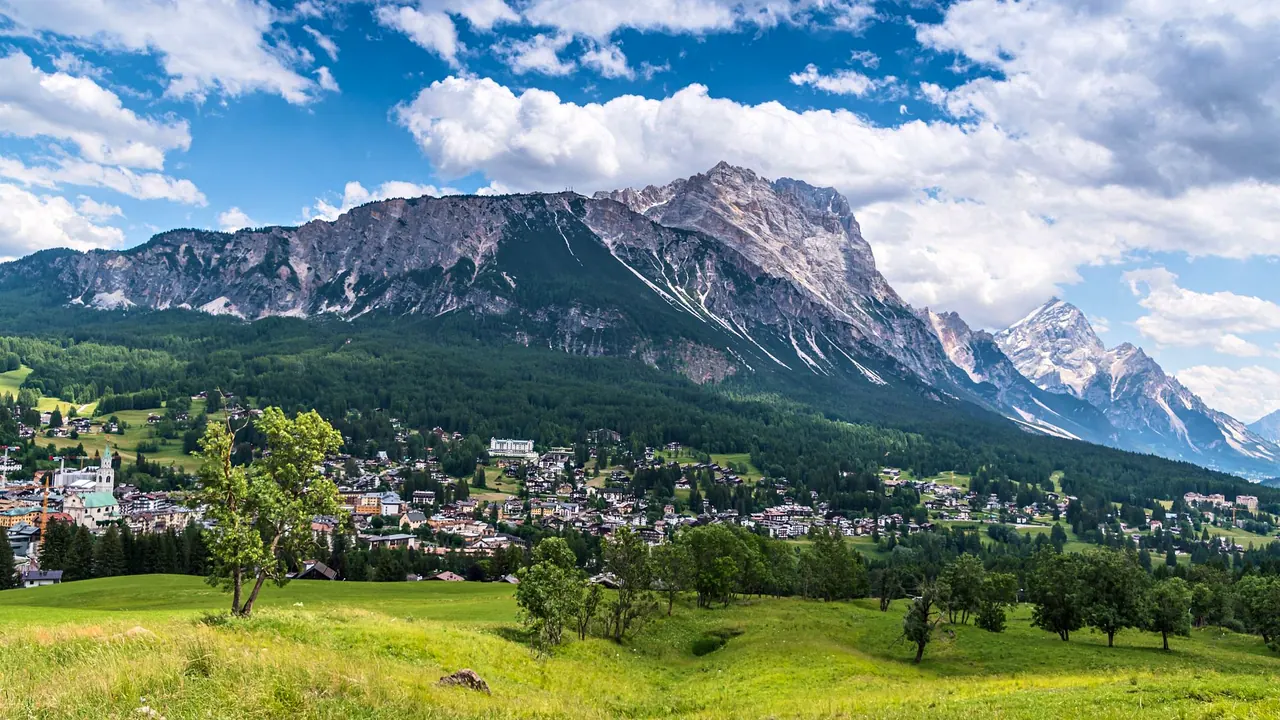
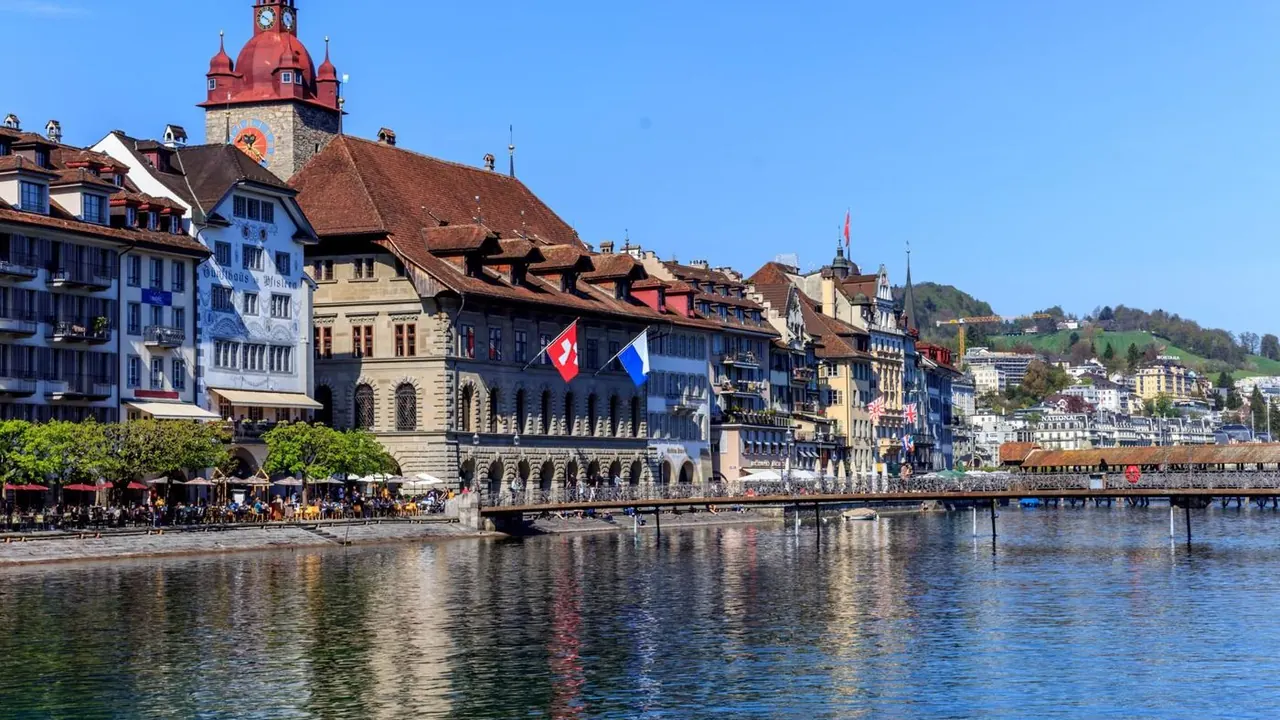
Photos: Cortina d'Ampezzo by Andreas Neubauer, Pexels License; Lucerne by ILOVESwitzerland, Pexels License.
Cortina d'Ampezzo or Lucerne?
Our verdict in twelve categories, each scored against the same fixed benchmark cities, and the climate month by month, so you can choose for your trip.
Choose Cortina d'Ampezzo for
- food and drink
- nature and the outdoors
- prices
Cortina d'Ampezzo is for travellers who want the mountains to be the whole point. The Dolomites rise straight out of the valley, the ski runs link into one of the largest circuits in the Alps, and summer brings hut-to-hut hiking and via ferrata. The food, especially on the terraces of the rifugi, has real character. In return, a car helps, evenings are quiet, and there is little to see or hear once you come down from the peaks.
Choose Lucerne for
- live music and the arts
- getting around
- culture and sights
Lucerne suits anyone who wants a mountain backdrop with a proper small city attached. Its medieval Old Town, the Chapel Bridge and the lakefront concert hall give it far more to see and hear. The lake is good for a summer swim, and trains and steamers take you up the peaks or to Bern, Basel and Zurich without a car. It is the easier and more varied trip, though no cheaper.
Scoreboard
Twelve categories on one fixed scale from 0 to 100. The shaded stretch is the gap between the two.
Your match
Pick a travel style or drag the sliders, and both match scores follow your weighting.
Wins on food and drink and nature and the outdoors with your weighting.
Wins on live music and the arts and getting around with your weighting.
What matters to you?
Category by category
What the scores mean for a trip.
Beaches & swimming
Neither is a beach destination, but Lucerne at least has a swimming season. In July and August locals swim from the Lido, the old wooden lake baths and the lawns at Ufschötti, and the lakeside villages you reach by boat have their own bathing spots.
Cortina's alpine lakes, Ghedina and Pianozes, are better for walking round. Snowmelt keeps them cold even in midsummer, so a swim usually means the hotel pool, and the Adriatic is more than two hours away by road.
Food & drink
Cortina eats better. Its Ampezzan cooking has a Venetian accent, with casunziei filled with beetroot and topped with poppy seeds, polenta with game, and barley soup. The best meals come on rifugio terraces high among the peaks, and the valley adds a few ambitious kitchens and wine bars pouring Veneto and South Tyrolean wines.
Lucerne's fondue, rösti, lake perch and Chügelipastete are reliable but rarely memorable, and many tables near the Chapel Bridge serve tour groups. Both places offer a narrow range at high prices. Cortina simply has more character on the plate.
Culture & sights
Lucerne has much more to see. A medieval Old Town of frescoed squares, the covered Chapel Bridge and its Water Tower, the climbable Musegg towers, the Lion Monument and the Rosengart Collection make a day or two of real sightseeing.
Cortina's centre is pleasant, with the basilica's tall bell tower and the 1956 Olympic ice stadium, and the Rimoldi art collection fills a wet afternoon. Its most powerful heritage, the First World War tunnels on Lagazuoi and the Cinque Torri, takes a full day in the mountains.
Nightlife
Evenings end early in both towns, and Lucerne has slightly more to offer once dinner is over. Cortina's nights go from après-ski drinks to a stroll on the Corso Italia and then a long dinner. Only in the peak winter weeks do a few smart bars and a club or two stay open late, and in summer the town goes quiet early.
Lucerne has riverside wine bars, a few cocktail bars and a small club scene in the Neustadt, with students keeping it going at weekends. Its big exception is Fasnacht, the carnival before Lent, when the whole town stays out in costume until dawn.
Nature & outdoors
Both have some of the finest mountain scenery in Europe, and the difference is in how you experience it. Cortina is surrounded by the pale rock towers of the Dolomites. Lifts run from town onto the Tofane and Cristallo, the Tre Cime and Lago di Misurina are under an hour away, and the terrain is serious: the Alta Via 1, historic via ferrata routes and a huge linked ski area.
Lucerne's scenery is lake and mountains together. Cogwheel trains climb Pilatus and Rigi, steamers link the shore villages, and Titlis has glacier snow all year. It is gentler and easier to reach without a car, but low cloud can hide the peaks for days.
Day trips
Lucerne is far better placed. Zurich, Bern and Basel are each under an hour away by train, and Zug and Einsiedeln are closer still. The lake makes an outing in itself, with boats to the Rütli meadow and the William Tell country around Altdorf.
From Cortina, most excursions head into the mountains. South Tyrol has San Candido, Brunico and Bolzano with its Iceman, but these are charming towns rather than major sights, and Venice is a long day by coach.
Good for families
Lucerne gives children more to do. The Swiss Museum of Transport fills a whole day, the Glacier Garden has its old mirror maze, the wildlife park at Goldau is close, and the steamers and cogwheel trains are adventures in themselves. The lakeside lawns are easy places to stop and play.
Cortina suits families who ski or hike, with ski schools, beginner slopes at Socrepes, public skating and a forest rope park. Beyond the outdoors there is little built for children, and with no indoor draw on Lucerne's scale, rainy days are harder.
Getting around
This is one of the sharpest differences between the two. In Lucerne the station, the boat piers and the Old Town sit side by side, and trains, steamers, cogwheel railways and cable cars all run on integrated Swiss tickets, so you never need a car.
Cortina's small centre is easy on foot, and ski buses serve the slopes in winter, but the town has had no railway since 1964. Getting there means a coach from Venice or a long drive, local buses up to the passes are limited, and most visitors hire a car to explore the wider Dolomites.
Shopping & style
Both have polished but narrow shopping aimed at wealthy visitors, and what they sell is different. Cortina's is one street, the Corso Italia, with luxury fashion, furriers, upmarket ski wear and the Cooperativa, founded in 1893, which sells everything from local food to outdoor gear.
Lucerne is mostly about Swiss watches, sold in large houses on Schwanenplatz, alongside army knives, chocolate and cuckoo clocks, with a riverside market on Saturdays. Go to Cortina for mountain fashion and to Lucerne for a watch.
Affordability
Both are among the most expensive places in their countries, and you cannot do either on a tight budget. In Cortina the cost comes from peak-season hotels, lift passes and restaurants in town. Rifugio meals, early summer, late September or a room in a cheaper valley nearby can bring it down.
In Lucerne even a simple meal is pricey, and the mountain railways take a large share of the budget. Swiss travel passes and supermarket picnics by the lake help a little.
Live music & performing arts
Lucerne is in another league. The Lucerne Festival brings the world's leading orchestras to Jean Nouvel's lakefront hall, which is famous for its acoustics and has its own programme all year. The Lucerne Symphony Orchestra plays there too, and the city theatre stages opera, drama and dance.
Cortina has no theatre season and no regular venue. Summer chamber music festivals play in churches and sometimes out in the mountains, and a few concerts fall around New Year, but on most evenings there is nothing on.
Wellness & relaxation
Neither has a tradition of thermal bathing, so both rely on hotel spas, and the setting does the rest. Cortina's spas are Alpine in style, with saunas, steam rooms and hay baths after a day on the slopes. The valley is calmest in June, September and the quieter winter weeks.
Lucerne's restful pleasures are mostly on the water: a slow steamer trip, the old wooden lake baths in summer, and Mario Botta's mineral bath on the Rigi for a soak with a mountain view. Its Old Town is crowded at midday when the tour groups arrive.
When should you go?
Pick your month. The climate figures are measured averages, not a forecast.
Cortina d'Ampezzo in July
Lucerne in July
Daytime high, °C
Rainfall in the month, mm
Where the figures come from
Lucerne has no rain gauge within 25 km of the centre, so its rainfall comes from a gridded climate dataset read at the city rather than from a gauge further away.
Lucerne's sunshine is measured 42 km from the centre, at Zurich Town / Ville..
Temperature and rainfall are climate normals, averaged over the years shown. Cortina d'Ampezzo: 1991-2020 normals, Dobbiaco (22.5 km from centre). Lucerne: 2005-2025 (sunshine 1991-2020, rainfall 1991-2020) normals, Emmen (4.2 km from centre).
Cortina has two clear seasons. Winter is cold and fairly dry, with daytime highs around 0°C in January, and the snow makes December to March the time for skiing. Summer is short and fresh, peaking at about 22°C in July and August. This is hiking season, but it is also the wettest part of the year, with around 130mm of rain in July. June is warm enough for the trails but already showery, so September, cooler and noticeably drier, is the better shoulder month. April, May, October and November fall between the two seasons.
Lucerne is a little milder all year and wetter in every month. July and August reach about 24°C with up to 225 hours of sunshine, and this is the only time the lake is pleasant for most swimmers. Winter is grey, chilly and short of sun, better for museums and concerts than for views. May to September gives you the best chance of clear days on Pilatus and Rigi.
Which traveller are you?
On a culture and arts trip, Lucerne is the clear choice. The Chapel Bridge, the Lion Monument, the Rosengart's Picasso and Klee and great orchestras in the lakefront hall can fill several days. Cortina offers three small museums and its wartime tunnels.
For a short city break, Lucerne works far better. The station, the piers and the Old Town sit together, the sights are a flat walk apart, and a steamer or cogwheel train gives you a mountain afternoon. Cortina needs a long transfer and rewards a longer stay.
For a skiing trip, pick Cortina. Its slopes connect into the Dolomiti Superski area, with the Sella Ronda and long runs like the Armentarola within reach, and ski schools for every age. Lucerne has skiing and sledging nearby, but only as an outing from the city.
Before you go
| Measure | Cortina d'Ampezzo | Lucerne |
|---|---|---|
| Official language | Italian | French, German, Italian, Romansh |
| Currency | Euro (EUR) | Swiss Franc (CHF) |
| Sockets | CFL230 V, 50 Hz | CJ230 V, 50 Hz |
| Driving side | Right | Right |
| Time zone | UTC+1, UTC+2 in summer | UTC+1, UTC+2 in summer |
| Emergency number | 112 | 112 |
| Elevation | 1,224 m | 436 m |
| Main airport | Venice Marco Polo Airport (VCE)116 km from centre103 non-stop destinations | Zürich Airport (ZRH)49 km from centre226 non-stop destinations |
| Public holidays this year | 13 days | 12 days |
By the numbers
| Measure | Cortina d'Ampezzo | Lucerne |
|---|---|---|
| City population | 5,546 | 86,234 |
| People per km² | 22 | 2,963 |
| Museums within 10 km | 3 | 14 |
| UNESCO World Heritage sites within 50 km | 1 | 1 |
Where else could you go?
Every comparison below shares a destination with this one, so you can follow Cortina d'Ampezzo or Lucerne somewhere new.
- Zurichvs Lucerne
- Interlakenvs Lucerne
- Bernvs Lucerne
- Baselvs Lucerne
- Innsbruckvs Cortina d'Ampezzo
- Venicevs Cortina d'Ampezzo