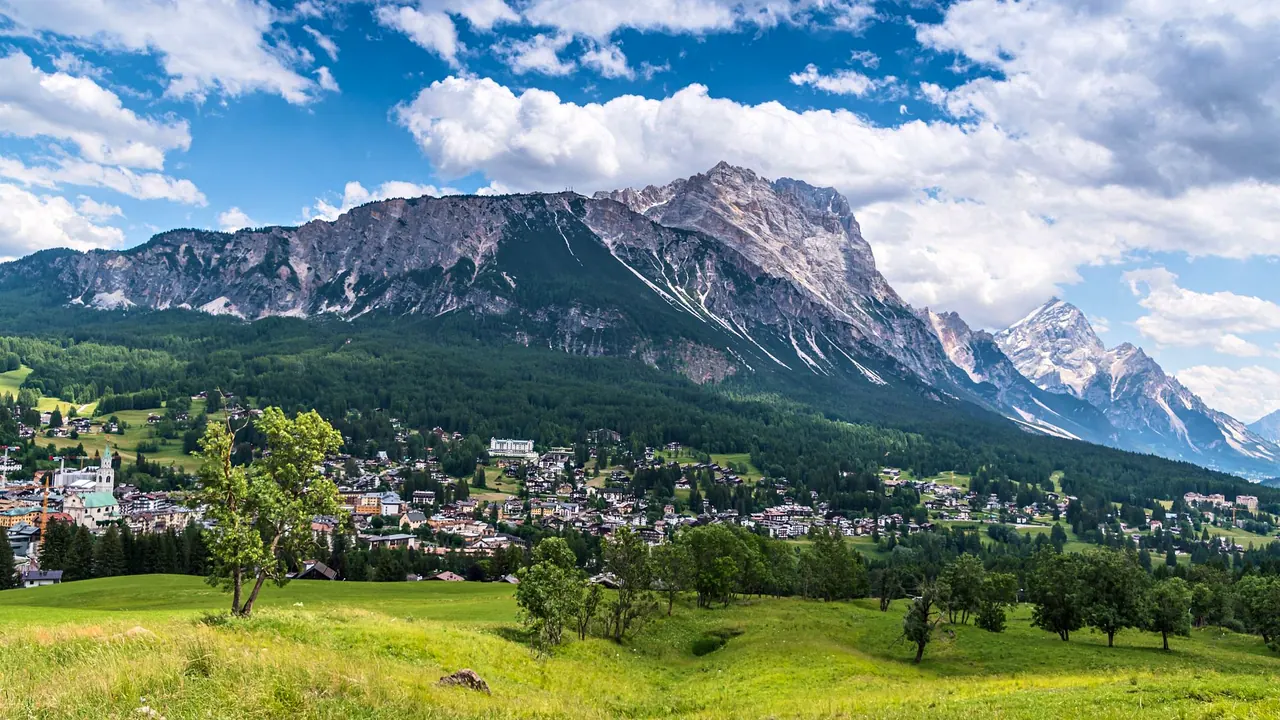
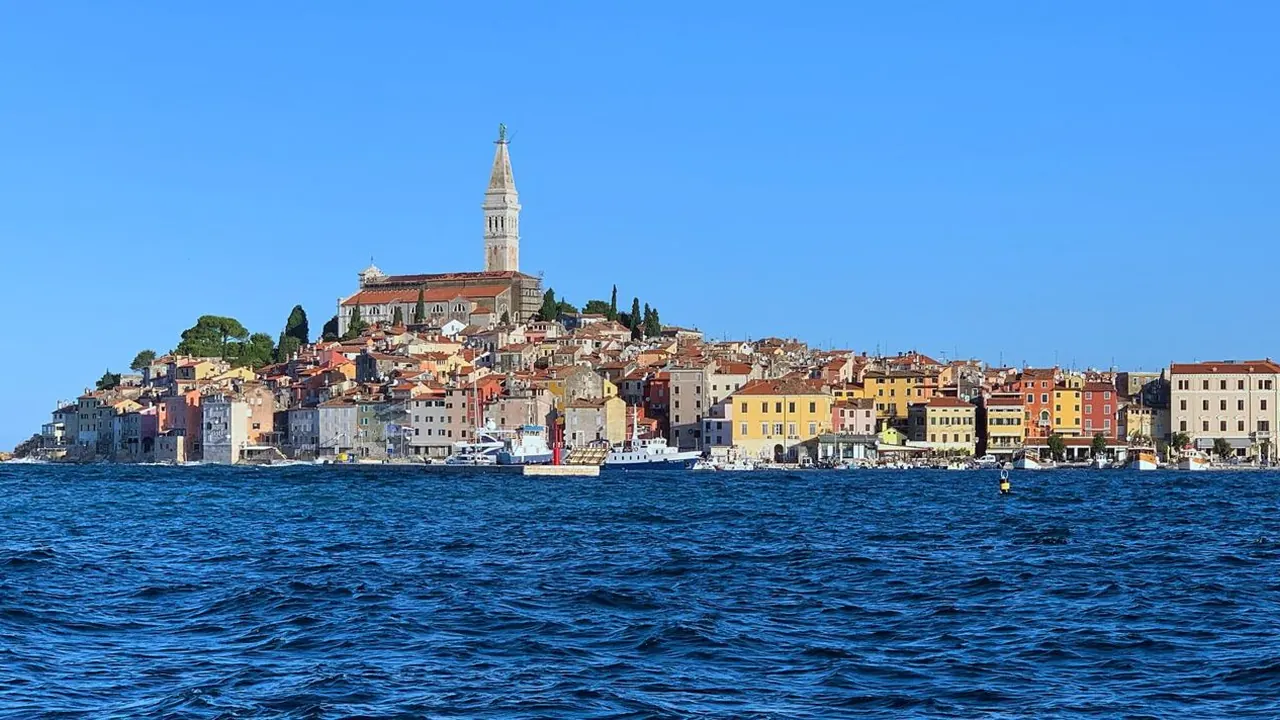
Photos: Cortina d'Ampezzo by Andreas Neubauer, Pexels License; Rovinj by Vyacheslav Bukharov, CC BY-SA 4.0, cropped.
Cortina d'Ampezzo or Rovinj?
Our verdict in twelve categories, each scored against the same fixed benchmark cities, and the climate month by month, so you can choose for your trip.
Choose Cortina d'Ampezzo for
- nature and the outdoors
- shopping
- wellness
Cortina d'Ampezzo is for travellers who put mountains above everything else. The Dolomites rise straight from the town and lifts carry you onto the peaks. In winter it connects to one of the largest ski areas in the Alps, and in summer it opens onto hut-to-hut hiking and via ferrata. In return you get quiet evenings, few sights and a steep bill.
Choose Rovinj for
- beaches
- prices
- day trips
Rovinj suits a slower summer by the sea. Expect swims off the rocks below the old town, long fish dinners and drives out to Roman Pula, the mosaics of Porec and the Istrian hill towns. It is the better base for variety and somewhat easier on the wallet. Anyone hoping for sandy beaches or dramatic scenery should look elsewhere.
Scoreboard
Twelve categories on one fixed scale from 0 to 100. The shaded stretch is the gap between the two.
Your match
Pick a travel style or drag the sliders, and both match scores follow your weighting.
Wins on nature and the outdoors and shopping with your weighting.
Wins on beaches and prices with your weighting.
What matters to you?
Category by category
What the scores mean for a trip.
Beaches & swimming
On this the two could hardly be further apart. Cortina sits in a high valley more than two hours from the coast. Its small alpine lakes, such as Ghedina, stay cold all summer, so swimming mostly means a hotel pool.
Rovinj lives by the water from June to September. The Golden Cape shore has kilometres of limestone ledges, pebble coves and bathing platforms. Taxi boats run to quieter coves on St Catherine and Red Island, and you can swim right below the old town walls. The catch is that it is all rock, so bring water shoes and don't expect sand.
Food & drink
Both eat well for small places, and the difference is mountain against sea. Cortina's Ampezzan cooking means casunziei with poppy seeds, polenta with game, and barley soup, and the best meals are often on a rifugio terrace among the peaks.
Rovinj relies on grilled fish, scampi buzara and Istrian truffle pasta, with Malvazija and Teran wine, and the country konobas are worth the drive. Neither town has much street food or cheap everyday eating.
Culture & sights
Rovinj has more to see, because the town itself is the sight. Its old town fills a former island of Venetian houses climbing to St Euphemia, whose bell tower gives a view over the roofs and islands. The Batana House tells the story of the local fishing boats.
Cortina's centre is pleasant, with its basilica, painted houses and the 1956 Olympic ice stadium, and the three small Regole museums fill a rainy afternoon. Its most striking history is the First World War tunnels on Lagazuoi and the Cinque Torri, but reaching them takes a day in the mountains.
Nightlife
Neither is a place for a big night out, but the evenings feel different. Cortina's revolve around après-ski drinks, the passeggiata on the Corso Italia and a smart crowd out late in the peak winter weeks. Rovinj's belong to summer: a drink on the rocks at sunset, waterfront cocktail bars and a couple of places to dance in high season, with both towns quiet early out of season.
Nature & outdoors
Cortina is in another league here. The Dolomites ring the Ampezzo valley, lifts climb from town onto the Tofane and Cristallo, and the Tre Cime and Lago di Misurina are under an hour away. Winter brings the Dolomiti Superski area, and summer the Alta Via 1, via ferrata, climbing and mountain biking.
Rovinj's outdoors is gentler. There are flat paths through the pines of the Golden Cape, sea kayaking and diving around the archipelago, and boat trips into the Lim Fjord. It is pleasant in spring and autumn but has no real high ground.
Day trips
Rovinj has the richer surroundings. Pula's Roman amphitheatre and the UNESCO-listed mosaics of the Euphrasian Basilica in Porec are each about forty minutes away. The hill towns of Motovun and Groznjan sit among the vineyards inland, and Trieste and Piran are also within reach.
Most outings from Cortina head into the mountains rather than to towns. South Tyrol's San Candido and Brunico are close, Bolzano and its Iceman are about two hours away, and Venice makes a long day by coach. These are charming places, but they lack the run of Roman, early Christian and medieval sites around Rovinj.
Good for families
Cortina keeps children busy on snow and trails. There are ski schools for all ages, beginner slopes at Socrepes and above the town, and public skating at the Olympic ice stadium. In summer there are easy lake walks and a forest rope park. Rainy days drag, though, and costs climb fast.
In Rovinj, the days revolve around taxi boats to the islands, gelato on the harbour and the pools and playgrounds of the big resort campsites. The flat paths of the Golden Cape suit pushchairs. The rocky shore and the steep, polished cobbles of the old town need care with small children. Neither town has much made just for children, though Rovinj has large waterparks a short drive up the coast.
Getting around
Rovinj is a little easier to manage. Its old town is closed to cars, a waterfront promenade leads into the Golden Cape and taxi boats run to the islands, so a stay in town needs no transport. Buses link it to Pula, Porec and Zagreb.
Cortina's centre is also small and walkable, and in winter ski buses and lifts serve the slopes. Getting there means a coach from Venice or a long drive, because there has been no railway since 1964, and buses up to the passes are limited. In both places, the wider region is really car country.
Shopping & style
Cortina has more to buy, even if it is all on one street. The Corso Italia is lined with luxury fashion, jewellers and upmarket mountain wear. The Cooperativa di Cortina, founded in 1893, sells everything from local food to outdoor gear.
Rovinj's shopping is about taking the region home: truffle products, olive oil, Malvazija and lavender, plus the galleries and studios along Grisia. There is no fashion shopping to speak of.
Affordability
Neither is cheap, but Cortina is in a different bracket. It is one of Italy's most expensive places to stay, with luxury-resort rates in winter and August and lift passes and equipment hire on top. Rifugio meals and the quieter months help, but many budget travellers stay in cheaper valleys nearby.
Rovinj charges sought-after resort prices in July and August, and fish sold by weight adds up. Even so, private apartments, campsites, bakeries and markets leave real room to save, especially in late spring and September.
Live music & performing arts
Neither town has a theatre or a regular concert life, so performance is a seasonal extra. Cortina's comes from summer chamber and classical festivals, sometimes held out in the mountains. Rovinj has concerts in St Euphemia, open-air music by the harbour and now and then the bitinada, its unaccompanied local singing, with Pula's Roman arena close by for big summer concerts.
Wellness & relaxation
Cortina's way of unwinding is Alpine. Hotel spas offer saunas, steam rooms, hay baths and indoor pools after a day on the slopes. In June and September you can add clear air and a long afternoon on a hut terrace.
Rovinj winds down by the water, with late swims off the rocks, long lunches and evening walks under the Golden Cape pines. Some resort spas there also let in outside guests. Neither town has thermal springs, and both lose their calm in the peak weeks: Cortina to traffic, and Rovinj to crowded old town lanes.
When should you go?
Pick your month. The climate figures are measured averages, not a forecast.
Cortina d'Ampezzo in July
Rovinj in July
Daytime high, °C
Rainfall in the month, mm
Where the figures come from
Rovinj's temperatures are measured 64 km from the centre, at Trieste.
Rovinj has no rain gauge within 25 km of the centre, so its rainfall comes from a gridded climate dataset read at the city rather than from a gauge further away.
Temperature and rainfall are climate normals, averaged over the years shown. Cortina d'Ampezzo: 1991-2020 normals, Dobbiaco (22.5 km from centre). Rovinj: 1991-2020 normals, Trieste (63.7 km from centre).
Cortina's year falls into two seasons. From June to September daytime highs reach about 22°C at most, which is comfortable for walking and hiking. Summer is also the wettest stretch, with about 130mm of rain in July. From December to February highs hover around freezing, which is weather for skiing rather than strolling. Spring and late autumn are cool and fall somewhere in between.
Rovinj runs the other way, with mild winters and hot summers. July and August reach 29°C and the sea warms to 26°C. July is also the sunniest month. June and September are still good for swimming and more comfortable for exploring. Rain builds through autumn to about 102mm in November. The two only both shine in summer, when Cortina offers cool mountain air and Rovinj the sea.
Which traveller are you?
For a beach and sun trip, Rovinj is the only real option. Its clear Adriatic water, rocky ledges in the Golden Cape park and coves on the islands make swimming a daily habit. Cortina's snowmelt lakes are for walking round, not lazing beside.
On an outdoors trip, Cortina wins easily. Lifts rise from town into the Dolomites, the Alta Via 1 and some of the oldest via ferrata routes start nearby, and winter brings the Dolomiti Superski area. Rovinj offers gentle cycling, kayaking and diving, but no mountains.
For a trip on a tight budget, Rovinj makes money go further. Private apartments, campsites, bakeries and markets keep costs down, especially outside high summer. Cortina charges luxury-resort prices for rooms, meals and lift passes, which pushes careful spenders into cheaper valleys nearby.
Before you go
| Measure | Cortina d'Ampezzo | Rovinj |
|---|---|---|
| Official language | Italian | Croatian |
| Currency | Euro (EUR) | Euro (EUR) |
| Sockets | CFL230 V, 50 Hz | CF230 V, 50 Hz |
| Driving side | Right | Right |
| Time zone | UTC+1, UTC+2 in summer | UTC+1, UTC+2 in summer |
| Emergency number | 112 | 112 |
| Elevation | 1,224 m | 0 m |
| Main airport | Venice Marco Polo Airport (VCE)116 km from centre103 non-stop destinations | Pula Airport (PUY)31 km from centre34 non-stop destinations |
| Public holidays this year | 13 days | 14 days |
By the numbers
| Measure | Cortina d'Ampezzo | Rovinj |
|---|---|---|
| City population | 5,546 | 12,968 |
| People per km² | 22 | - |
| Museums within 10 km | 3 | 1 |
| UNESCO World Heritage sites within 50 km | 1 | 1 |
| Swim season, months above 21 °C | - | 4 months |
Where else could you go?
Every comparison below shares a destination with this one, so you can follow Cortina d'Ampezzo or Rovinj somewhere new.
- Triestevs Rovinj
- Innsbruckvs Cortina d'Ampezzo
- Venicevs Rovinj
- Venicevs Cortina d'Ampezzo
- Ljubljanavs Rovinj
- Bledvs Rovinj