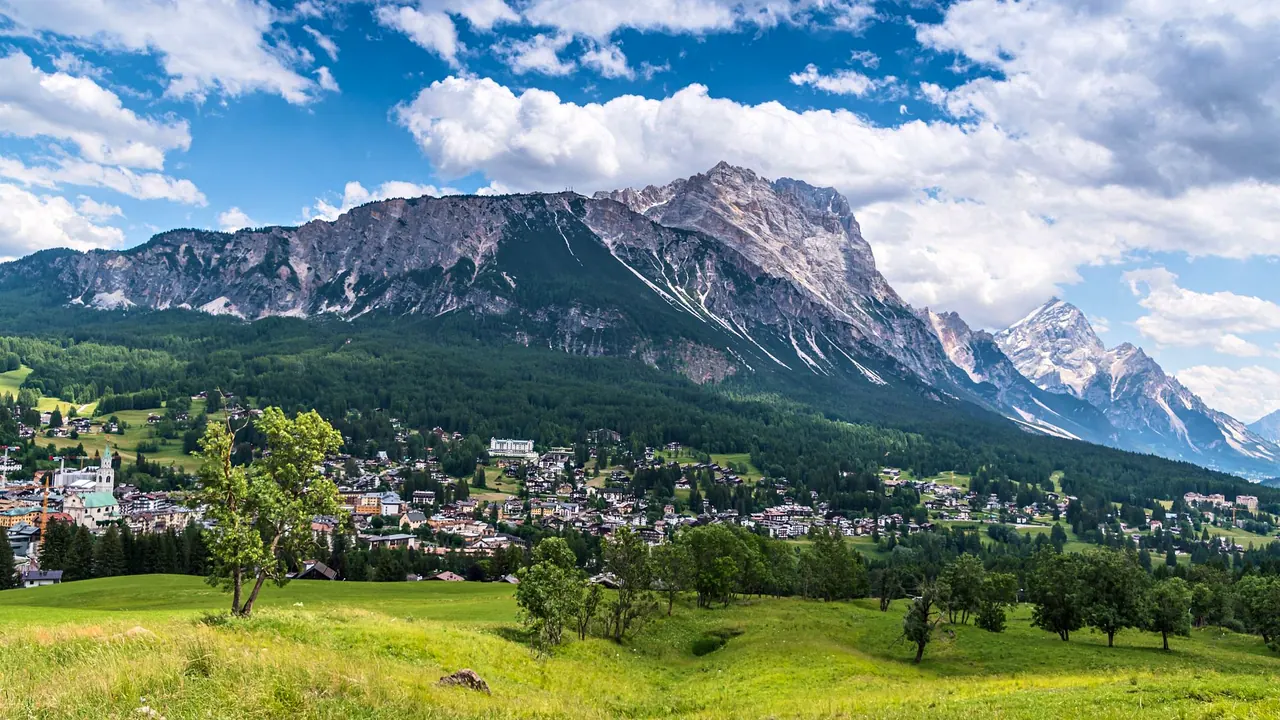
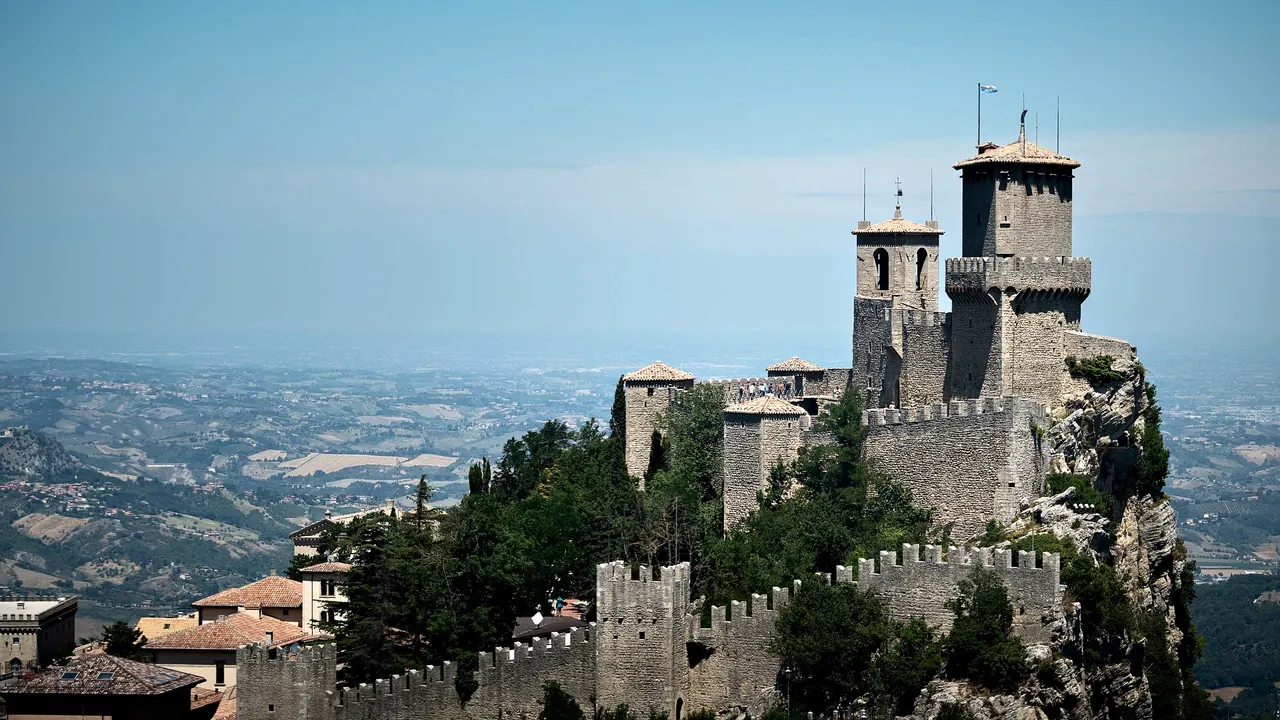
Photos: Cortina d'Ampezzo by Andreas Neubauer, Pexels License; San Marino by Tibor Szabo, Pexels License.
Cortina d'Ampezzo or San Marino?
Our verdict in twelve categories, each scored against the same fixed benchmark cities, and the climate month by month, so you can choose for your trip.
Choose Cortina d'Ampezzo for
- nature and the outdoors
- wellness
- shopping
Cortina d'Ampezzo is the choice when the mountains themselves are the trip. Skiers, hikers, climbers and anyone who wants lifts rising from town straight into the Dolomites will find little to match it, and the hotel spas, rifugi lunches and polished Corso Italia make it a comfortable base. The cost is high, and there is little to do indoors or after dark.
Choose San Marino for
- prices
- beaches
- day trips
San Marino suits a slower trip around a summit town, with the coast and the art cities of Romagna and the Marche below it. The medieval walls and towers fill a morning, the Rimini beaches are close, and Urbino, San Leo and Ravenna make good excursions. It is far easier on the budget, but the mountain is a viewpoint rather than a playground.
Scoreboard
Twelve categories on one fixed scale from 0 to 100. The shaded stretch is the gap between the two.
Your match
Pick a travel style or drag the sliders, and both match scores follow your weighting.
Too close to call, 1 point apart
Wins on nature and the outdoors and wellness with your weighting.
Wins on prices and beaches with your weighting.
What matters to you?
Category by category
What the scores mean for a trip.
Beaches & swimming
Neither town sits on the water, but San Marino has the sea close at hand. Rimini and Riccione are about half an hour down the mountain, with long sandy beaches, rows of umbrellas and warm, shallow water in high summer that makes an easy day out.
Cortina has nothing comparable. The Adriatic is more than two hours' drive away, and lakes such as Ghedina and Pianozes are for walking round rather than swimming in, so most swimming happens in a hotel pool.
Food & drink
Cortina eats better, largely because its kitchens cater to wealthy visitors. Ampezzan dishes such as beetroot casunziei and polenta with game are at their best on rifugio terraces among the peaks, and there are a few ambitious dining rooms in the valley.
San Marino's Romagna cooking of piadina, passatelli and strozzapreti is honest, but the summit terraces trade on the view, so the good meals are down in Borgo Maggiore or across the border. Both are narrow in range, and Cortina is the pricier of the two.
Culture & sights
San Marino is the place itself as a sight: a walled town on the crest of Monte Titano, its three towers on the cliff, and the Palazzo Pubblico telling the story of one of the oldest surviving republics. Half a day covers it, but it feels complete.
Cortina's centre is pleasant, with its bell tower and painted houses, and the Rimoldi art collection fills a wet afternoon. Its most powerful history, the First World War tunnels on Lagazuoi and the Cinque Torri, sits up in the mountains rather than in town.
Nightlife
Cortina has the livelier evenings of the two, though only by resort standards. Après-ski starts as the lifts close, the Corso Italia fills for the passeggiata, and in the peak winter weeks a few smart bars and a club stay open late. In summer the town is quiet by late evening.
San Marino's summit empties once the coaches leave, and what's left is dinner and a drink on a terrace above the lights of the coast. Anyone who wants to dance drives down to the Riviera clubs of Rimini and Riccione.
Nature & outdoors
This is where the two cities differ most. Cortina sits inside one of the great mountain landscapes, with the Tofane, Cristallo and Cinque Torri around the valley, the Tre Cime and Lago di Misurina under an hour away, and skiing, climbing, via ferrata and long-distance trekking straight from town.
San Marino offers gentler pleasures. Paths link the towers and circle the limestone ridge, there are wide views to the Adriatic, and the Marecchia valley and Montefeltro hills suit a drive or a quiet bike ride. It makes a lovely morning, but there are no high peaks or adventure sports.
Day trips
San Marino makes the better base for excursions. Rimini's Roman arch is below, the fortress at San Leo is half an hour away, and Renaissance Urbino and the Byzantine mosaics of Ravenna are each about an hour's drive, with Gradara and Bologna also in range. A car or the train from Rimini is needed for most of them.
From Cortina, most outings go up into the mountains rather than to towns. South Tyrol's San Candido, Brunico and Bolzano with its Iceman are the highlights, while Venice is a long day on the coach.
Good for families
Both suit families, in different ways. Cortina is for children who ski or hike, with ski schools, beginner slopes at Socrepes, public skating and gentle trails to huts. Rainy days are hard there, and nothing is built purely for children.
San Marino has towers, battlements and the cable car to thrill children on the mountain, then Fiabilandia, Italia in Miniatura, waterparks and shallow beaches on the coast below, though the steep steps make pushchairs hard work.
Getting around
Both have small centres you can walk, though Cortina's is flat and San Marino's climbs and drops by steps, with a cable car to Borgo Maggiore. Reaching them differs: Cortina has had no railway since 1964 and relies on coaches from Venice, while San Marino's bus from Rimini connects with Italian trains in under an hour. Beyond town, both really call for a car.
Shopping & style
Cortina offers more polished shopping, all on the Corso Italia, with luxury fashion, furriers, upmarket mountain wear and the old Cooperativa di Cortina, founded in 1893, stocking everything from local food to outdoor gear.
San Marino's streets lean to souvenirs, collectors' stamps and coins, and tax-advantaged perfume, watches and spirits, plus an outlet centre in the valley. It suits bargain hunting more than browsing.
Affordability
The gap here is wide. Cortina is among the most expensive places to stay in Italy, with resort prices for hotels and restaurants in the winter peak and in August, and lift passes and hire added on. Rifugio meals and the shoulder months soften it only a little.
San Marino costs about what provincial central Italy does. The summit carries a premium, but hotels a few kilometres away are moderate, the sights are cheap and lower taxes trim the price of fuel and spirits.
Live music & performing arts
Neither offers a theatre or concert season, so evenings out for the arts are rare in both. Cortina's moments come from summer chamber and classical festivals, sometimes played in mountain settings. San Marino's comes from the costumed musicians, crossbow contests and flag-throwers of its summer Medieval Days, with Bologna and Pesaro for anything more formal.
Wellness & relaxation
Cortina is the more restorative stay. Many of its hotels have Alpine-style spas with saunas, hay baths and indoor pools, and an afternoon on a hut terrace in June or September is restful in itself, though the peak weeks bring traffic.
San Marino has only a few hotel spas. Its calm comes in the evening, walking the walls after the day crowds leave, and the thermal spas lie elsewhere, down on the coast or in the Apennine valleys.
When should you go?
Pick your month. The climate figures are measured averages, not a forecast.
Cortina d'Ampezzo in July
San Marino in July
Daytime high, °C
Rainfall in the month, mm
Where the figures come from
San Marino's temperatures are measured 52 km from the centre, at Frontone.
San Marino has no rain gauge within 25 km of the centre, so its rainfall comes from a gridded climate dataset read at the city rather than from a gauge further away.
Temperature and rainfall are climate normals, averaged over the years shown. Cortina d'Ampezzo: 1991-2020 normals, Dobbiaco (22.5 km from centre). San Marino: 1991-2020 normals, Frontone (51.5 km from centre).
Cortina has two distinct seasons. From December to March the valley is snowbound, with January highs around freezing. That is right for skiing but too cold for lingering in the streets, though winter is also its driest time. Summer is mild, with highs near 22°C, which is pleasant for hiking, but it is also the wettest part of the year, with July bringing about 130mm of rain. June is only a little less wet than July and August. September is clearly drier and still mild at around 17°C, which often makes it the best month for walking in the mountains.
San Marino is far warmer. July reaches about 30°C on the summit, which is hot for the steep streets at midday but right for the beach. The Adriatic below is warmest in August, at near 26°C. Spring and late September are the most comfortable times for exploring on foot. Its rain follows the opposite pattern to Cortina's: summer is fairly dry, and the rain builds through autumn to its wettest in October and November. Winters are cool and grey but rarely freezing.
Which traveller are you?
On an outdoors trip, Cortina is the obvious pick. The Dolomites ring the town, with the Dolomiti Superski area in winter and the Alta Via 1, via ferrata and hut-to-hut hiking in summer. Monte Titano offers pleasant walks but nothing on that scale.
On a trip on a tight budget, San Marino is much kinder. Hotels and lower-village trattorias are priced like provincial central Italy, and the sights cost little. In Cortina, rooms, restaurants and lift passes all carry luxury-resort prices, and many thrifty visitors sleep in cheaper valleys.
For a beach and sun trip, San Marino wins. The sandy beaches of Rimini and Riccione are about half an hour below, with warm, shallow summer water. Cortina's alpine lakes are snowmelt-cold, and the coast is more than two hours away.
Before you go
| Measure | Cortina d'Ampezzo | San Marino |
|---|---|---|
| Official language | Italian | Italian |
| Currency | Euro (EUR) | Euro (EUR) |
| Sockets | CFL230 V, 50 Hz | CFL230 V, 50 Hz |
| Driving side | Right | Right |
| Time zone | UTC+1, UTC+2 in summer | UTC+1, UTC+2 in summer |
| Emergency number | 112 | 112 |
| Elevation | 1,224 m | 675 m |
| Main airport | Venice Marco Polo Airport (VCE)116 km from centre103 non-stop destinations | Bologna Guglielmo Marconi Airport (BLQ)114 km from centre98 non-stop destinations |
| Public holidays this year | 13 days | 18 days |
By the numbers
| Measure | Cortina d'Ampezzo | San Marino |
|---|---|---|
| City population | 5,546 | 4,040 |
| People per km² | 22 | 569 |
| Museums within 10 km | 3 | 19 |
| UNESCO World Heritage sites within 50 km | 1 | 2 |
| Swim season, months above 21 °C | - | 4 months |
Where else could you go?
Every comparison below shares a destination with this one, so you can follow Cortina d'Ampezzo or San Marino somewhere new.
- Assisivs San Marino
- Florencevs San Marino
- Innsbruckvs Cortina d'Ampezzo
- Bolognavs San Marino
- Sienavs San Marino
- Venicevs Cortina d'Ampezzo