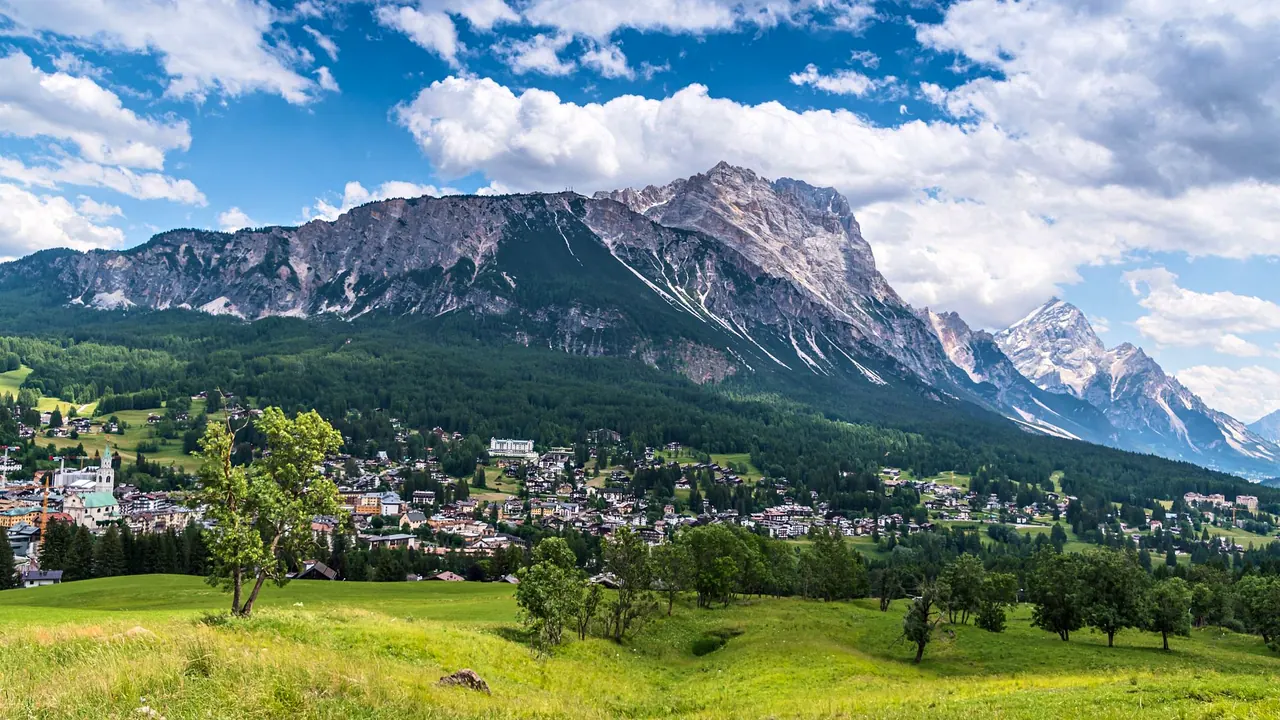
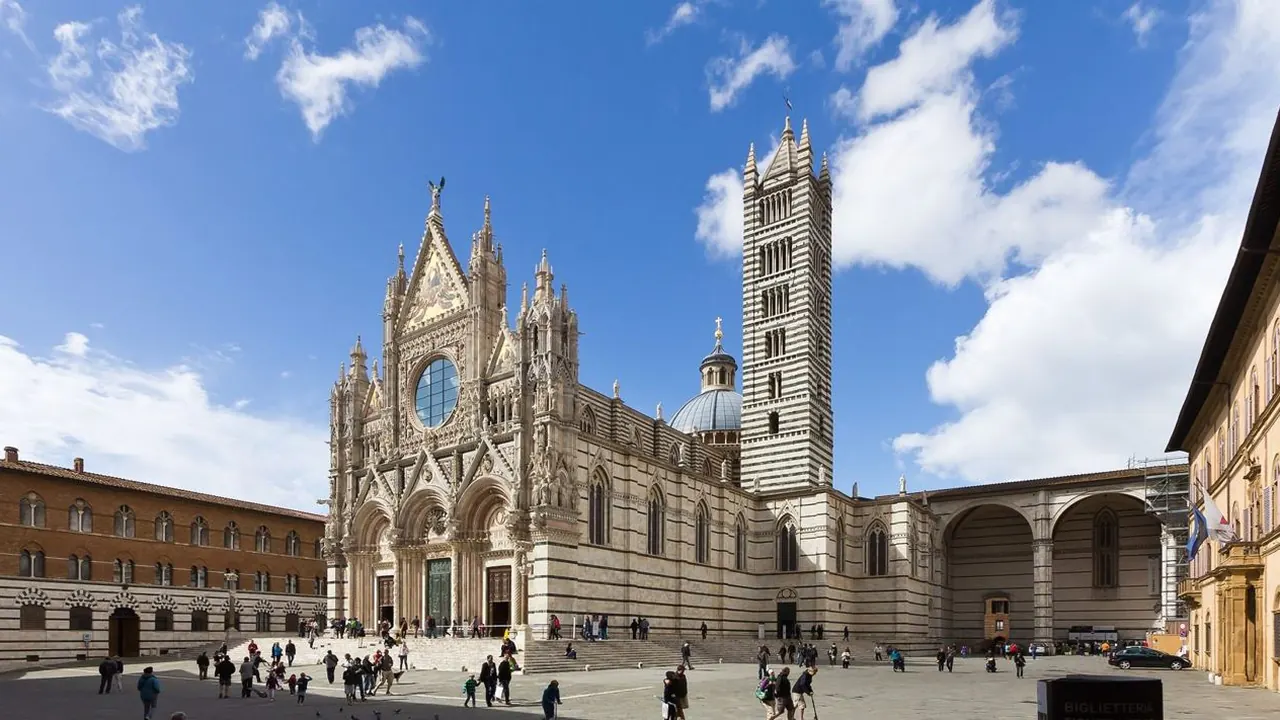
Photos: Cortina d'Ampezzo by Andreas Neubauer, Pexels License; Siena by Raimond Spekking, CC BY-SA 4.0, cropped.
Cortina d'Ampezzo or Siena?
Our verdict in twelve categories, each scored against the same fixed benchmark cities, and the climate month by month, so you can choose for your trip.
Choose Cortina d'Ampezzo for
- nature and the outdoors
- families
- shopping
Cortina d'Ampezzo is the choice for anyone whose vacation happens outdoors. The Dolomites rise straight from the town and lifts carry you onto the peaks. Winter brings one of the great ski networks, and summer opens up hut-to-hut trails and via ferrata. Families who ski or hike fit in easily. Expect to pay heavily, though, and to find little to do on evenings or wet days beyond a hotel spa and a long dinner.
Choose Siena for
- culture and sights
- day trips
- prices
Travellers who want art, history and Tuscan food in one walkable medieval town will be happier in Siena. Florence, San Gimignano, the Chianti villages and the Val d'Orcia are all within a short drive. Siena costs noticeably less than Cortina and eats better. It also has more concerts and theatre, although it is still a quiet place at night. Its countryside is gentle rather than dramatic, so anyone who wants real mountains should head north.
Scoreboard
Twelve categories on one fixed scale from 0 to 100. The shaded stretch is the gap between the two.
Your match
Pick a travel style or drag the sliders, and both match scores follow your weighting.
Wins on nature and the outdoors and families with your weighting.
Wins on culture and sights and day trips with your weighting.
What matters to you?
Category by category
What the scores mean for a trip.
Beaches & swimming
Neither town is a beach destination, and in both swimming mostly means a hotel pool. Siena has the edge because the Maremma coast around Castiglione della Pescaia makes a realistic day out in summer, or a few nights at the end of a Tuscan trip. Cortina's nearest sea, the Adriatic, is more than two hours away, and its alpine lakes such as Ghedina stay so cold that a swim is a dare rather than a pleasure.
Food & drink
Siena eats better. It has hand-rolled pici, cinta senese pork, the panforte and ricciarelli of its old bakeries, and Chianti, Brunello and Vino Nobile by the glass. That makes it a proper food town, at its best in the family osterie of the contrade.
Cortina's Ampezzan cooking is good in its own way, with beetroot casunziei, polenta with game and memorable lunches on rifugio terraces. The choice is narrower, though, and almost everything is expensive. Neither place offers much beyond its regional cooking.
Culture & sights
Here the gap is wide. Siena is a complete medieval city. The Palazzo Pubblico, the Duomo, the Museo dell'Opera and Santa Maria della Scala can fill two or three full days, and the seventeen contrade give each neighbourhood its own character.
Cortina offers a pleasant centre, the 1956 Olympic ice stadium and the Rimoldi art collection, which together fill a rainy afternoon. Its most powerful history is up on Lagazuoi and the Cinque Torri, in First World War tunnels and trenches that take a day in the mountains to reach.
Nightlife
Both towns are quiet at night, and neither suits anyone looking for clubs. Siena keeps a little more going, with students in a handful of pubs and wine bars, a glass on the Campo after dinner and the streets full until late on Palio nights. Cortina's evenings are après-ski drinks and a stroll along the Corso Italia, with a few smart late bars open only in the peak winter weeks.
Nature & outdoors
Cortina is in another league. The Dolomites ring the town and lifts climb from the streets to the peaks. The Tre Cime, Lago di Misurina and the Fanes-Sennes-Braies park are all close, with skiing in winter and via ferrata, climbing and the Alta Via 1 in summer.
Siena's landscape is softer. It has the clay hills of the Crete Senesi, the Val d'Orcia and the white gravel strade bianche that cyclists come for. It is lovely countryside for riding and gentle walking, but there are no high mountains.
Day trips
Siena is one of the best bases in Europe for day trips. Florence, San Gimignano, Volterra, the Chianti villages, Montalcino, Pienza and abbeys such as Sant'Antimo and San Galgano are all within easy reach, though a car helps for the hill towns.
From Cortina, most outings lead into the mountains. South Tyrolean towns such as Brunico, and Bolzano with its Iceman, make good days out. Venice is a long return trip by coach, though, and the towns nearby are pleasant rather than essential.
Good for families
Cortina is the better choice for active families. Ski schools, beginner slopes at Socrepes, public skating at the ice stadium and easy summer walks to huts and lakes give children plenty to do outdoors, though wet days and the costs can wear parents down.
Siena is safe and largely free of cars, and older children enjoy climbing the Torre del Mangia. Its steep, stepped lanes are hard work with a pushchair, though, and like Cortina it has no zoo or theme park. Many families stay at a farmhouse with a pool in the countryside instead.
Getting around
Siena is easier to reach and to get around. Its centre is largely car-free and walkable, if steep, escalators link the station to the upper town, and buses run to Florence. A car is still the best way to reach the hill towns.
Cortina's flat centre takes minutes to cross, and in winter ski buses serve the slopes. Beyond that it is harder. There has been no railway since 1964, so getting there means a coach or a long drive, and buses to the passes run on a limited service. Most visitors who want to see the wider Dolomites hire a car.
Shopping & style
Neither is a serious shopping destination, but they differ in kind, and Cortina has the edge for fashion. Its short Corso Italia is lined with luxury labels, jewellers and mountain wear, and is anchored by the Cooperativa, which dates from 1893 and sells everything from local food to outdoor gear.
Siena is more about local things to take home: majolica ceramics, contrada scarves, panforte and pecorino. There is also a large weekly market by the Fortezza Medicea.
Affordability
Siena is clearly the cheaper stay, though not a cheap one. Osteria lunches with house wine are good value, you can walk everywhere in the centre, and an agriturismo outside the walls cuts costs further.
Cortina is among the most expensive places to stay in Italy. Hotels and dinners cost luxury prices in the winter peak and in August, and lift passes come on top. Rifugio meals and dates in early summer or late September ease the bill, but many budget travellers sleep in cheaper valleys nearby.
Live music & performing arts
Siena has a real musical life for a small city. The Accademia Chigiana fills palaces and churches with summer concerts, Siena Jazz adds performances by its teachers and students, and two historic theatres stage drama and music through the winter. Opera means a trip to Florence.
Cortina has no theatre season or regular venue. A night out for music means its summer chamber music festivals or an occasional concert around Christmas and New Year.
Wellness & relaxation
Siena has the stronger case because of the warm water around it. Rapolano Terme is half an hour away. Further south, Bagno Vignoni, the free limestone pools of Bagni San Filippo and Petriolo's sulphur river make thermal bathing a real reason to stay, ideally at a rural spa hotel.
Cortina has no springs. Relaxing there means a hotel spa with a sauna and hay baths after a day outdoors, or an afternoon on a hut terrace in the clear mountain air of June or September.
When should you go?
Pick your month. The climate figures are measured averages, not a forecast.
Cortina d'Ampezzo in July
Siena in July
Daytime high, °C
Rainfall in the month, mm
Where the figures come from
Siena's temperatures are measured 45 km from the centre, at Arezzo.
Siena has no rain gauge within 25 km of the centre, so its rainfall comes from a gridded climate dataset read at the city rather than from a gauge further away.
Temperature and rainfall are climate normals, averaged over the years shown. Cortina d'Ampezzo: 1991-2020 normals, Dobbiaco (22.5 km from centre). Siena: 2006-2017 (rainfall 1991-2020) normals, Arezzo (45 km from centre).
Cortina has two main seasons. From December to March the valley is cold, with daytime highs around 0°C in January, and this is ski time. Summer runs from June to September, when highs reach about 22°C and walking at altitude is comfortable. These are also the wettest months, with around 130mm of rain in July. April, May, October and November fall between the seasons and are neither winter nor reliable hiking weather.
Siena works the other way round. July and August are hot and dry, with highs of 31°C that make the steep streets tiring by midday, and that is when Cortina's mountain air looks most appealing. April, May, September and early October are best for sightseeing and the countryside. Rain builds from October and peaks in November at about 127mm. Winter is cool, but daytime highs stay well above freezing, which makes it far milder than Cortina.
Which traveller are you?
On a culture and arts trip, Siena wins easily. The Campo, the Duomo, Lorenzetti's frescoes, Duccio's Maestà and the Sienese painters in the Pinacoteca fill several days, and Florence is close by. Cortina has a few small museums and its wartime trenches.
For an outdoors trip, Cortina is the place. Lifts climb from the town into the Dolomites, the Tre Cime and the Alta Via 1 are close, and in winter there is the Dolomiti Superski network. Around Siena the outdoors means cycling and gentle walks in rolling Tuscan hills.
On a family trip with children who like skiing or hiking, Cortina works better, with ski schools, beginner slopes, skating and easy walks to huts. Siena is safe and charming for older children, but its steep lanes and lack of activities make it better for half-day visits.
Before you go
| Measure | Cortina d'Ampezzo | Siena |
|---|---|---|
| Official language | Italian | Italian |
| Currency | Euro (EUR) | Euro (EUR) |
| Sockets | CFL230 V, 50 Hz | CFL230 V, 50 Hz |
| Driving side | Right | Right |
| Time zone | UTC+1, UTC+2 in summer | UTC+1, UTC+2 in summer |
| Emergency number | 112 | 112 |
| Elevation | 1,224 m | 322 m |
| Main airport | Venice Marco Polo Airport (VCE)116 km from centre103 non-stop destinations | Florence Airport, Peretola (FLR)55 km from centre46 non-stop destinations |
| Public holidays this year | 13 days | 13 days |
By the numbers
| Measure | Cortina d'Ampezzo | Siena |
|---|---|---|
| City population | 5,546 | 52,812 |
| People per km² | 22 | 446 |
| Museums within 10 km | 3 | 30 |
| UNESCO World Heritage sites within 50 km | 1 | 5 |
Where else could you go?
Every comparison below shares a destination with this one, so you can follow Cortina d'Ampezzo or Siena somewhere new.
- Florencevs Siena
- Pisavs Siena
- Luccavs Siena
- Innsbruckvs Cortina d'Ampezzo
- Venicevs Cortina d'Ampezzo
- Bolognavs Siena