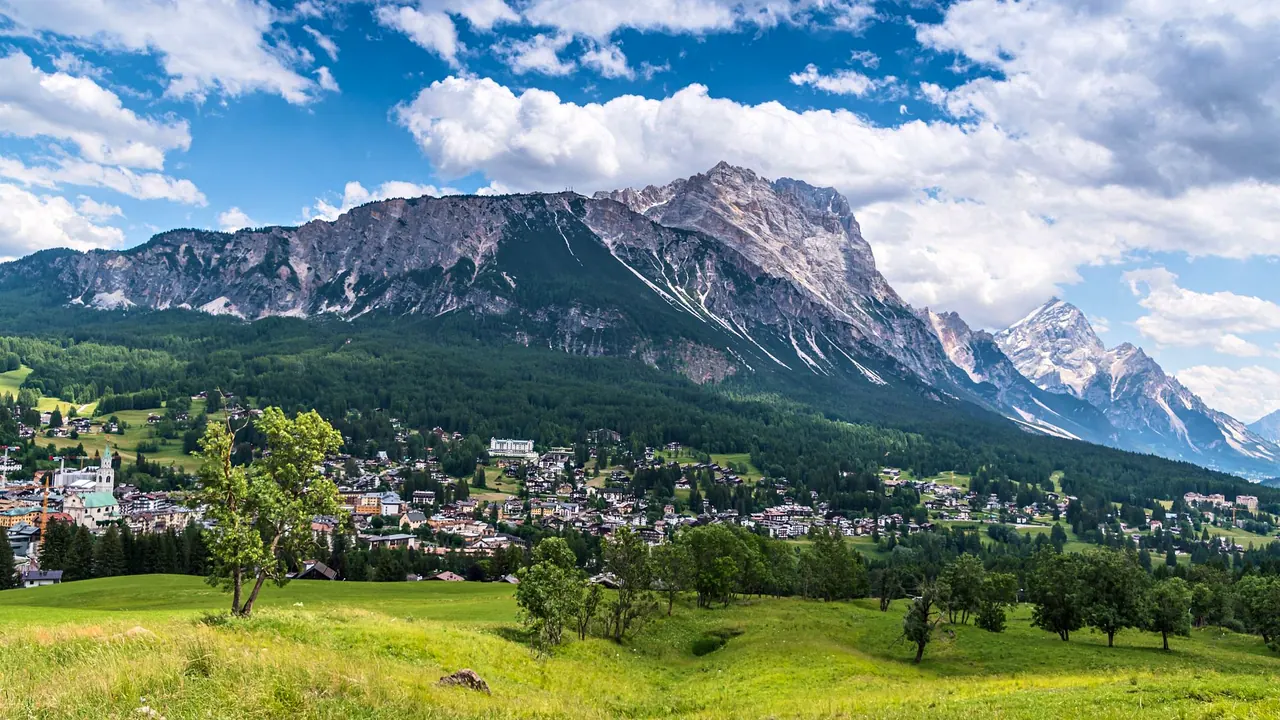
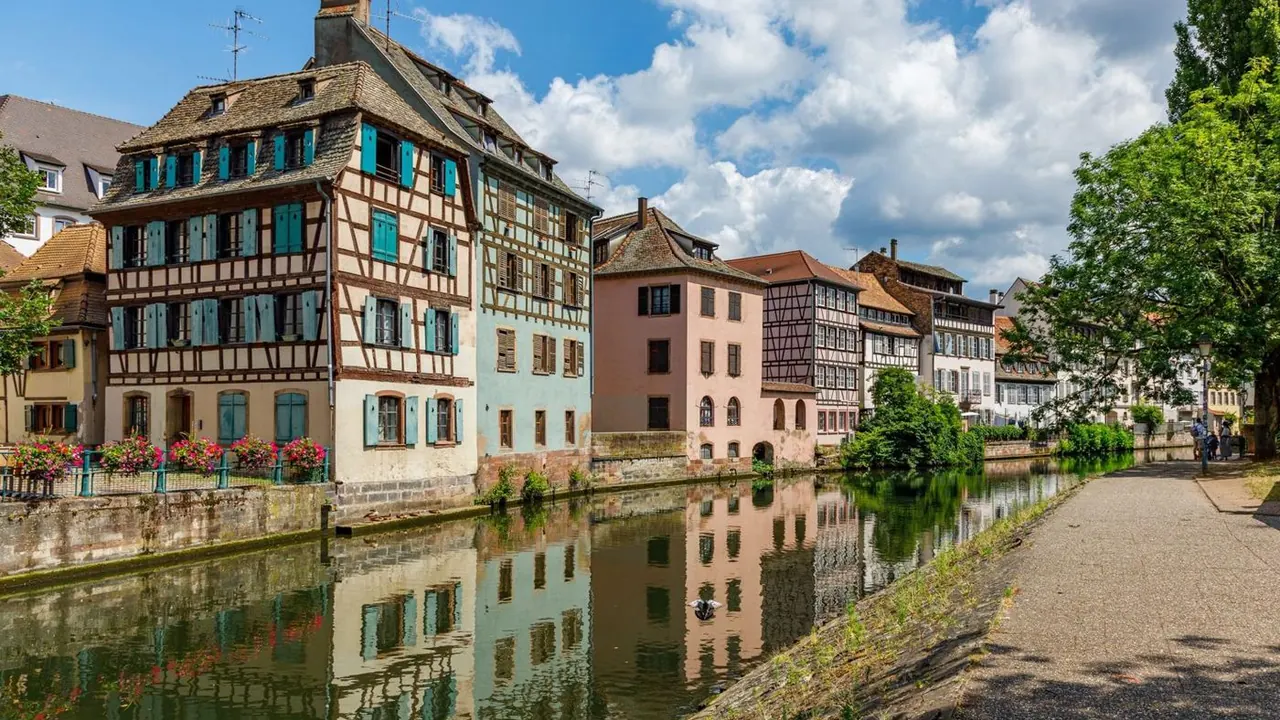
Photos: Cortina d'Ampezzo by Andreas Neubauer, Pexels License; Strasbourg by Edoardo Colombo, Pexels License.
Cortina d'Ampezzo or Strasbourg?
Our verdict in twelve categories, each scored against the same fixed benchmark cities, and the climate month by month, so you can choose for your trip.
Choose Cortina d'Ampezzo for
- nature and the outdoors
Cortina d'Ampezzo is the choice when the mountains are the reason for the trip. The Dolomites rise straight from the town, lifts carry you onto the peaks, and in winter you ski the Dolomiti Superski area, while in summer you walk hut to hut or climb the old via ferrata routes. It suits skiers, hikers and climbers who can afford one of Italy's most expensive resorts and don't mind quiet evenings and few sights.
Choose Strasbourg for
- culture and sights
- live music and the arts
- day trips
Travellers who want a city with plenty to see and do will be happier in Strasbourg. The cathedral, the canals of Petite France and the museums of the Palais Rohan fill several days. The winstub food and the opera and theatre seasons fill the evenings. Trams and trains make it easy to explore Colmar, the Alsace wine villages and the German side of the Rhine without a car. Strasbourg costs far less than Cortina and is easier to manage with children or for a few days away.
Scoreboard
Twelve categories on one fixed scale from 0 to 100. The shaded stretch is the gap between the two.
Your match
Pick a travel style or drag the sliders, and both match scores follow your weighting.
Wins on nature and the outdoors with your weighting.
Wins on culture and sights and live music and the arts with your weighting.
What matters to you?
Category by category
What the scores mean for a trip.
Beaches & swimming
Neither city has a beach, but what you swim in is different. Around Cortina, alpine lakes such as Ghedina and Pianozes are fed by snowmelt and are better for walking round than swimming in. A dip there takes nerve, and most visitors use a hotel pool.
Strasbourg's old gravel-pit lakes are proper places to swim on a hot day. The Baggersee is reachable by tram, and in high summer the lakes have lifeguards and grassy banks for lying out.
Food & drink
Strasbourg is the better place to eat. Alsatian cooking is generous and varied, from choucroute and baeckeoffe to tarte flambée and foie gras, served in wood-panelled winstubs with Riesling from vineyards just to the south. The covered market, the local cheese and the city's own beer add to it, though the restaurants around the cathedral are best avoided.
Cortina's best meals are memorable but the choice is small. You eat casunziei and polenta with game in a stube in town, or have lunch on the terrace of a rifugio high among the peaks. There is little variety beyond Ampezzan mountain cooking, and hardly anything is cheap.
Culture & sights
Strasbourg has far more to see. Its pink sandstone cathedral and astronomical clock, the timber-framed Grande Ile, Petite France and the German-built Neustadt fill a couple of days, and the Palais Rohan holds three museums under one roof.
Cortina's centre is pleasant, with the basilica's bell tower, painted houses and the 1956 Olympic ice stadium. Its small museums, the best being the Rimoldi collection of modern Italian art, are enough for a rainy afternoon. Its most striking history, the First World War trenches and tunnels on Lagazuoi, takes a day in the mountains to reach.
Nightlife
Strasbourg has the livelier evenings. Thanks to the university, student bars and beer cellars stay busy in Krutenau and around Place Saint-Étienne, and in summer the riverside terraces fill up, although there are few clubs and the city is rarely out late.
Cortina's evenings are built around après-ski drinks, a stroll along the Corso Italia and long dinners. A smart, late crowd appears only in the peak winter weeks. The rest of the year the town is quiet soon after dinner.
Nature & outdoors
Cortina is far ahead here. The pale Dolomite peaks of the Tofane, Cristallo and Cinque Torri surround the town, the Tre Cime and Lago di Misurina are under an hour away, and lifts go up from the valley. Winter brings the huge Dolomiti Superski area. Summer brings hut-to-hut trekking, via ferrata routes, climbing and paragliding.
Strasbourg's outdoors is gentler and you have to travel for it. The city has the Orangerie park, riverside forests with storks and beavers, and level cycle routes along the Rhine. Proper hiking starts about an hour away in the Vosges or the Black Forest, on forested hills rather than high rock.
Day trips
Strasbourg is much the better base for day trips. Colmar is half an hour away by train, the wine villages of Riquewihr, Eguisheim and Kaysersberg lie along the Alsace wine route, and across the border are Freiburg, Heidelberg and the art museums of Basel. Trains reach the cities easily, and for the villages a bike or a car makes the day easier.
From Cortina, most outings head into the mountains. The towns nearby are San Candido and Brunico in South Tyrol, with Bolzano and its Iceman about two hours away, and Venice is a long day by coach. Most of these trips are easier with a car, and the towns are pleasant but not essential.
Good for families
Strasbourg is the easier choice with children. The flat, mostly car-free centre and the trams make getting around simple. Children usually enjoy the boat trips, the storks and rowing boats in the Orangerie, and the hands-on Le Vaisseau science centre, and Europa-Park is about an hour away.
Cortina suits families who ski or hike. There are ski schools for all ages, beginner slopes at Socrepes, a rope park and easy walks to mountain huts. Beyond the outdoors there is little for children, so a wet day can be long.
Getting around
Strasbourg is much easier to get around. Its island centre is easy to walk, trams run out to the station, the European quarter and across the Rhine to Kehl, and the separated cycle lanes often make a bike the quickest option. You only need a car for the hills and the wine route.
Cortina's centre takes minutes to cross on foot, and in winter ski buses and lifts link the slopes. Getting further is harder. The town has had no railway since 1964, so you arrive by coach from Venice or by car. Buses to the passes and the Tre Cime run on a limited service, so many visitors hire a car.
Shopping & style
Strasbourg has more variety, with chain stores and a department store around Place Kléber and independent shops, delicatessens and bookshops in the lanes near the cathedral. Regional things to take home include Soufflenheim pottery, printed linens and Alsace wine, and the Christmas market turns December into a month of craft stalls.
Cortina is the opposite: one short street of luxury. The Corso Italia has jewellers, furriers and high-end mountain wear, the kind of fashion Strasbourg lacks, and its anchor is the Cooperativa, a department store founded in 1893.
Affordability
Strasbourg costs far less. It is priced like a French regional city. Winstub meals and wine by the pichet are fair value, trams and bike hire are cheap, and the cathedral and old town are free. Hotel rooms are the main cost and are dearest during the Christmas market and when the European Parliament sits.
Cortina is one of the most expensive places to stay in Italy. In peak winter and in August, hotels, restaurants, lift passes and equipment hire all cost luxury-resort prices. Rifugio meals, early summer and late September soften the bill a little.
Live music & performing arts
Strasbourg has a proper arts calendar. The Opéra national du Rhin plays on Place Broglie, the Philharmonic gives a full season, and the Théâtre National de Strasbourg is one of France's leading stages. The Musica festival makes autumn a good time for contemporary music.
Cortina has no theatre or concert season. Its live music comes from summer chamber and classical festivals, held in churches and sometimes out in the mountains, plus the odd concert at Christmas.
Wellness & relaxation
Strasbourg has more ways to relax. The tiled Bains municipaux offers a hammam and saunas in the city, and the thermal baths of Baden-Baden are under an hour away. Canal-side walks and slow lunches set the pace for most of the year, apart from December.
In Cortina, wellness means hotel spas with saunas, steam rooms and Alpine hay baths after a day on the slopes. Its real calm comes from the setting, a hut terrace in clear air in June or September, though the peak weeks bring traffic and crowds.
When should you go?
Pick your month. The climate figures are measured averages, not a forecast.
Cortina d'Ampezzo in July
Strasbourg in July
Daytime high, °C
Rainfall in the month, mm
Temperature and rainfall are climate normals, averaged over the years shown. Cortina d'Ampezzo: 1991-2020 normals, Dobbiaco (22.5 km from centre). Strasbourg: 1991-2020 normals, Strasbourg (9.1 km from centre).
Cortina's summer is short and mild. July and August reach about 22°C, which is good hiking weather but never hot, and by September highs drop back to 17°C. Summer is also the wettest time in the valley: June, July and August all bring heavy rain, and July is the wettest month at about 130mm. September is noticeably drier and still mild enough for long days on the trails, so it is the more settled month for walking. From December to February highs stay near freezing and the weather is dry and cold. That suits skiing far better than walking round the town.
Strasbourg is warmer, and its rain is spread more evenly through the year. July and August reach about 26°C with long, sunny days, warm enough for the gravel-pit lakes and the riverside terraces. May to September is the best time for walking the old town and cycling. Winter is grey and chilly, with only about 42 hours of sunshine in December, so a winter trip is about the city's indoor sights and evenings rather than the weather. For snow, go to Cortina in winter. For long, warm days, go to Strasbourg in summer.
Which traveller are you?
On an outdoors trip, Cortina is far ahead. The Dolomites ring the valley, lifts climb from the edge of town, and the Tre Cime and the Alta Via 1 are close by. Strasbourg's flat cycle routes and the gentler Vosges can't match it.
For a culture and arts trip, Strasbourg is the clear choice. It has a UNESCO-listed old town around the cathedral, the Palais Rohan museums, the Neustadt, and a full season of opera, orchestral concerts and theatre. Cortina has three small museums and summer concerts.
On a trip on a tight budget, choose Strasbourg. Winstub meals, wine by the pichet, cheap trams and free sights keep costs reasonable. Cortina charges luxury-resort prices for rooms, meals and lift passes, and many budget travellers end up staying in other valleys.
Before you go
| Measure | Cortina d'Ampezzo | Strasbourg |
|---|---|---|
| Official language | Italian | French |
| Currency | Euro (EUR) | Euro (EUR) |
| Sockets | CFL230 V, 50 Hz | CE230 V, 50 Hz |
| Driving side | Right | Right |
| Time zone | UTC+1, UTC+2 in summer | UTC+1, UTC+2 in summer |
| Emergency number | 112 | 112 |
| Elevation | 1,224 m | 132 m |
| Main airport | Venice Marco Polo Airport (VCE)116 km from centre103 non-stop destinations | Strasbourg Airport (SXB)10 km from centre43 non-stop destinations |
| Public holidays this year | 13 days | 11 days |
By the numbers
| Measure | Cortina d'Ampezzo | Strasbourg |
|---|---|---|
| City population | 5,546 | 293,771 |
| People per km² | 22 | 3,752 |
| Museums within 10 km | 3 | 21 |
| UNESCO World Heritage sites within 50 km | 1 | 3 |
Where else could you go?
Every comparison below shares a destination with this one, so you can follow Cortina d'Ampezzo or Strasbourg somewhere new.
- Baden-Badenvs Strasbourg
- Colmarvs Strasbourg
- Innsbruckvs Cortina d'Ampezzo
- Stuttgartvs Strasbourg
- Baselvs Strasbourg
- Heidelbergvs Strasbourg