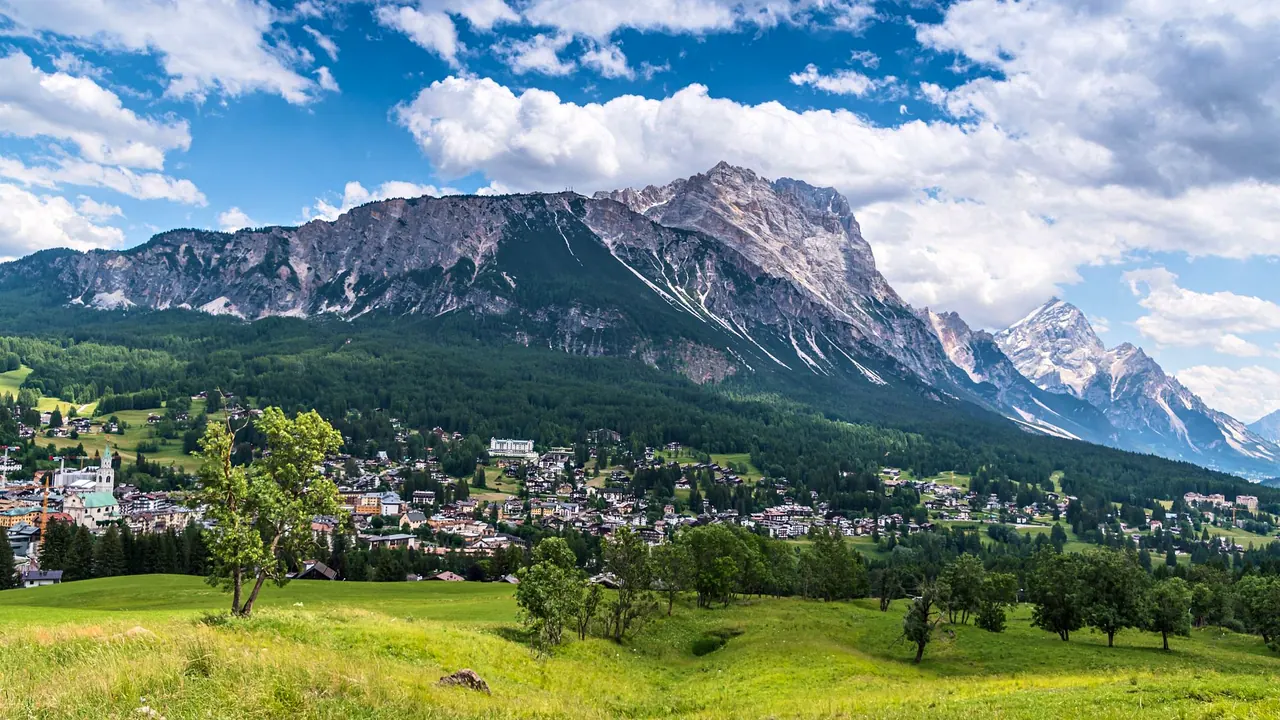
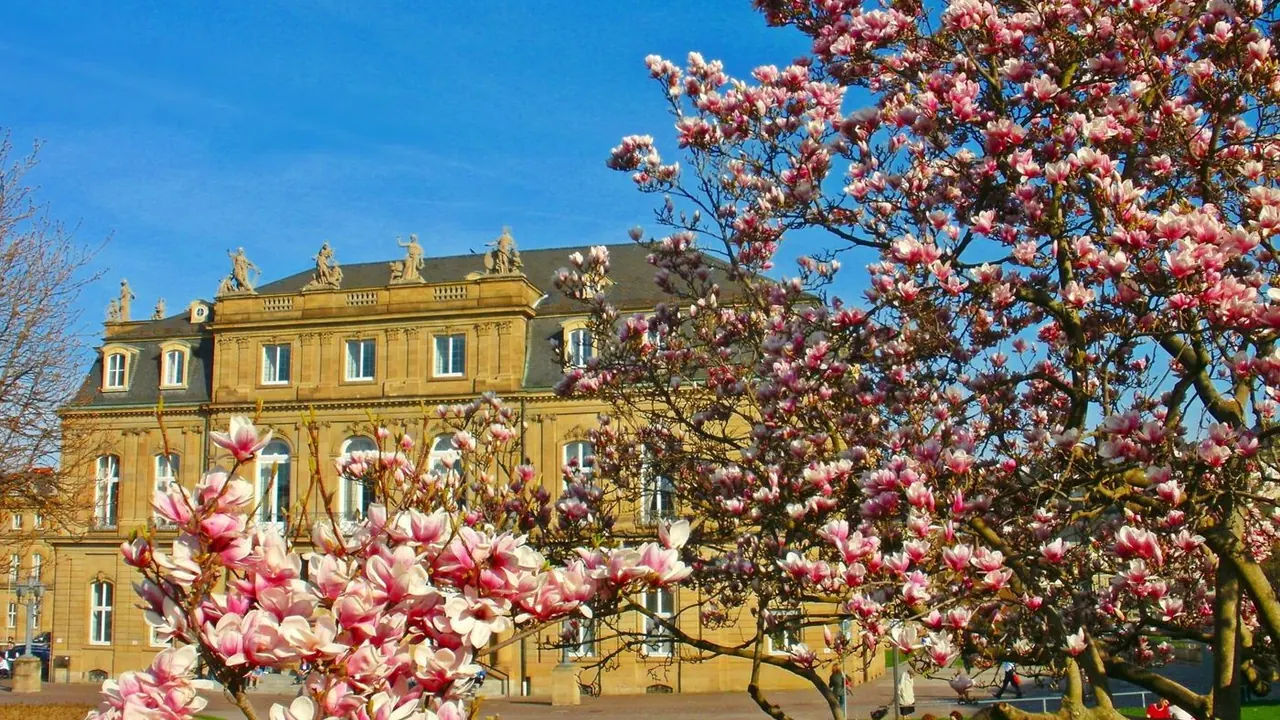
Photos: Cortina d'Ampezzo by Andreas Neubauer, Pexels License; Stuttgart by Baden de, CC BY 3.0, cropped.
Cortina d'Ampezzo or Stuttgart?
Our verdict in twelve categories, each scored against the same fixed benchmark cities, and the climate month by month, so you can choose for your trip.
Choose Cortina d'Ampezzo for
- nature and the outdoors
Cortina d'Ampezzo is for travellers who want the mountains themselves. The Dolomites rise straight from the edge of town, lifts carry you onto the peaks, and the days belong to skiing, hut-to-hut hiking and via ferrata. Choose it if the scenery matters more than anything else and you are ready to pay resort prices for quiet evenings.
Choose Stuttgart for
- live music and the arts
- culture and sights
- day trips
Stuttgart suits a broader trip with more to do once the light fades. It has world-class car museums, a ballet company respected across Europe, warm mineral baths and fast trains to Heidelberg, Tübingen and Ulm. It costs noticeably less and is easier to get around without a car. The countryside here means wooded hills and vineyards, not high peaks.
Scoreboard
Twelve categories on one fixed scale from 0 to 100. The shaded stretch is the gap between the two.
Your match
Pick a travel style or drag the sliders, and both match scores follow your weighting.
Wins on nature and the outdoors with your weighting.
Wins on live music and the arts and culture and sights with your weighting.
What matters to you?
Category by category
What the scores mean for a trip.
Beaches & swimming
Neither city is a beach destination. One sits in a high Alpine valley and the other deep inland, so you would plan either trip for something else. The differences are small. Cortina's snowmelt lakes such as Ghedina are for walking round, with only a cold dip for the brave. Stuttgart has outdoor pools, some fed by its mineral springs, and in July or August those are the easier place for a proper swim.
Food & drink
Stuttgart has more to eat and more variety. Swabian staples like Maultaschen and Käsespätzle are served in wine taverns across the Bohnenviertel. The Markthalle is good for browsing, there is a solid fine-dining scene, and vineyards inside the city limits mean the Trollinger is local.
Cortina's best meals are often eaten at altitude: casunziei with poppy seeds or polenta with game on a rifugio terrace facing the peaks. Down in the valley the choice is narrow and mostly expensive, with very little that is quick, cheap or from outside the mountain tradition.
Culture & sights
There is much more to see in Stuttgart. The Mercedes-Benz and Porsche museums are world-class, the Staatsgalerie has a strong run of European painting, and the Le Corbusier houses at the Weissenhof Estate carry UNESCO status. Around Schlossplatz there are palaces and the State Museum, enough for two or three busy days.
Cortina's sights fill an afternoon: the basilica and its bell tower, the 1956 Olympic ice stadium and the Rimoldi art collection. Its most moving history is outdoors, in the First World War tunnels on Lagazuoi and the Cinque Torri, and reaching them takes a day on the mountain.
Nightlife
Neither is a nightlife city, but Stuttgart gives you more choice after dark. You can try the bar strip on Theodor-Heuss-Strasse, basement clubs for electronic music or quieter wine bars in the Bohnenviertel. The Cannstatter Volksfest beer tents liven up the autumn.
In Cortina the evening means après-ski, a stroll along the Corso Italia and a long dinner. A few smart late bars open only in the peak winter weeks, and in summer the town is quiet by late evening.
Nature & outdoors
This is where Cortina pulls far ahead. The Tofane, Cristallo and Cinque Torri ring the valley, lifts leave from town, and Lago di Misurina, the Tre Cime and the Fanes-Sennes-Braies park are all close. You can ski the Dolomiti Superski area in winter and climb some of the oldest via ferrata in the Alps in summer.
Stuttgart's outdoors is gentler and still worthwhile. You get vineyard trails above the Neckar, deer in the Rotwildpark, and the Swabian Jura and northern Black Forest about an hour away. It is good country for walking and cycling in any season, but there are no high peaks.
Day trips
Stuttgart is much the better base for outings. Ludwigsburg's palace and Esslingen are a short S-Bahn ride away, and Tübingen and Heidelberg are within an hour. Maulbronn, Hohenzollern Castle, Ulm's spire and even Strasbourg are all reachable by train.
From Cortina most outings go into the mountains themselves. San Candido, Brunico and Bolzano's Iceman make pleasant South Tyrol days, but they need a car or patience with coaches, and Venice is a long day there and back.
Good for families
Stuttgart has more for children in any weather. Wilhelma's zoo and gardens fill a whole day, Killesberg park has a little railway and animal enclosures, and the rack railway and car museums are treats too. Hills with a pushchair are the main drawback.
Cortina works well for families who ski or hike, with ski schools, beginner slopes at Socrepes, public skating and gentle walks to huts. When it rains, though, there is little built for children, and costs climb quickly.
Getting around
Stuttgart is easier to get around. Its flat centre is walkable, and one ticket covers the Stadtbahn, S-Bahn, buses, a rack railway and a funicular up the steep sides of the basin. It reaches the museums, Wilhelma and the airport, so you do not need a car.
Cortina's centre takes minutes to cross on foot, but the town has had no railway since 1964. You arrive by coach or a long drive, buses to the passes run a limited service, and most visitors hire a car for the wider Dolomites.
Shopping & style
Stuttgart offers more range. Königstrasse covers the high-street names, Breuninger handles designer fashion, the Bohnenviertel has independent shops, and the Metzingen outlets are about half an hour away.
Cortina's shopping is a single polished street. The Corso Italia has jewellers, furriers and upmarket mountain wear, and the old Cooperativa store is good for local foods and outdoor gear. It is elegant but quickly exhausted.
Affordability
Stuttgart is the cheaper of the two by some margin. It is still above average for Western Europe, but weekend hotel rooms ease when there is no trade fair, tavern meals are generous and public transport is fairly priced.
Cortina is one of Italy's most expensive resorts. Peak-season rooms, valley restaurants, lift passes and ski hire all add up. The rifugi and the quieter weeks of June and late September are the main ways to soften the bill.
Live music & performing arts
Stuttgart wins easily for an evening out. The Staatsoper and the Stuttgart Ballet, famous since John Cranko's time, share the state theatre by the palace gardens. The Liederhalle carries a strong Bach tradition, and there are big musicals at Möhringen and a jazz scene through the week.
Cortina has no theatre season or regular venue. Its live music comes mainly from summer chamber and classical festivals, sometimes held in mountain settings, plus the odd concert at Christmas.
Wellness & relaxation
Stuttgart has a real public bathing culture, which Cortina lacks. At Mineralbad Cannstatt and Leuze you can soak in naturally carbonated warm spring water indoors and out, with saunas in the larger baths, and green vineyard walks are close by.
In Cortina, relaxing happens in hotel spas with hay baths and saunas after a day on the slopes, and in the calm of June or September on a hut terrace. That calm disappears in the peak weeks.
When should you go?
Pick your month. The climate figures are measured averages, not a forecast.
Cortina d'Ampezzo in July
Stuttgart in July
Daytime high, °C
Rainfall in the month, mm
Temperature and rainfall are climate normals, averaged over the years shown. Cortina d'Ampezzo: 1991-2020 normals, Dobbiaco (22.5 km from centre). Stuttgart: 1991-2020 normals, Stuttgart / Neckartal (2.8 km from centre).
Cortina has two distinct seasons. From December to March it is a snow resort, with daytime highs around 0°C in January, so it suits skiing far better than sightseeing. From June to September the valley turns into hiking country, peaking at about 22°C, which is pleasant for long days on the trails though rarely hot. June, July and August are also the wettest months, with July bringing around 130mm, so it pays to start hikes early. September is the best balance: still mild, and noticeably drier than the high summer months.
Stuttgart is warmer for most of the year. July and August reach about 26°C, good weather for its outdoor pools, beer gardens and vineyard walks, and summer is also when it gets the most sun. Spring and early autumn are comfortable for walking the streets. Winter is cold and grey, with very little sunshine from November to January, so that is the season for museums, theatres and the mineral baths rather than the hills.
Which traveller are you?
For an outdoors trip, Cortina is the clear choice. Lifts rise from the town onto Dolomite peaks, the Tre Cime and Alta Via 1 are close by, and winter brings the Dolomiti Superski area. Stuttgart's hills and the Swabian Jura are gentler.
On a culture and arts trip, Stuttgart is far richer. The Mercedes-Benz and Porsche museums, the Staatsgalerie and the Weissenhof Estate fill your days, and the Staatsoper and Stuttgart Ballet fill your evenings. Cortina has a few small museums and summer concerts.
On a tight budget, Stuttgart stretches your money much further. Rooms are cheaper at weekends, the taverns serve generous portions and a day ticket covers the whole network. Cortina charges luxury-resort prices, and budget visitors often stay in other valleys and drive in.
Before you go
| Measure | Cortina d'Ampezzo | Stuttgart |
|---|---|---|
| Official language | Italian | German |
| Currency | Euro (EUR) | Euro (EUR) |
| Sockets | CFL230 V, 50 Hz | CF230 V, 50 Hz |
| Driving side | Right | Right |
| Time zone | UTC+1, UTC+2 in summer | UTC+1, UTC+2 in summer |
| Emergency number | 112 | 112 |
| Elevation | 1,224 m | 245 m |
| Main airport | Venice Marco Polo Airport (VCE)116 km from centre103 non-stop destinations | Stuttgart Airport (STR)10 km from centre124 non-stop destinations |
| Public holidays this year | 13 days | 12 days |
By the numbers
| Measure | Cortina d'Ampezzo | Stuttgart |
|---|---|---|
| City population | 5,546 | 609,365 |
| People per km² | 22 | 2,938 |
| Museums within 10 km | 3 | 42 |
| UNESCO World Heritage sites within 50 km | 1 | 3 |
Where else could you go?
Every comparison below shares a destination with this one, so you can follow Cortina d'Ampezzo or Stuttgart somewhere new.
- Baden-Badenvs Stuttgart
- Heidelbergvs Stuttgart
- Innsbruckvs Cortina d'Ampezzo
- Strasbourgvs Stuttgart
- Venicevs Cortina d'Ampezzo
- Veronavs Cortina d'Ampezzo