Photos: Cortina d'Ampezzo by Andreas Neubauer, Pexels License; Trieste by Tibor Szabo, Pexels License.
Cortina d'Ampezzo or Trieste?
Our verdict in twelve categories, each scored against the same fixed benchmark cities, and the climate month by month, so you can choose for your trip.
Choose Cortina d'Ampezzo for
- nature and the outdoors
- wellness
- shopping
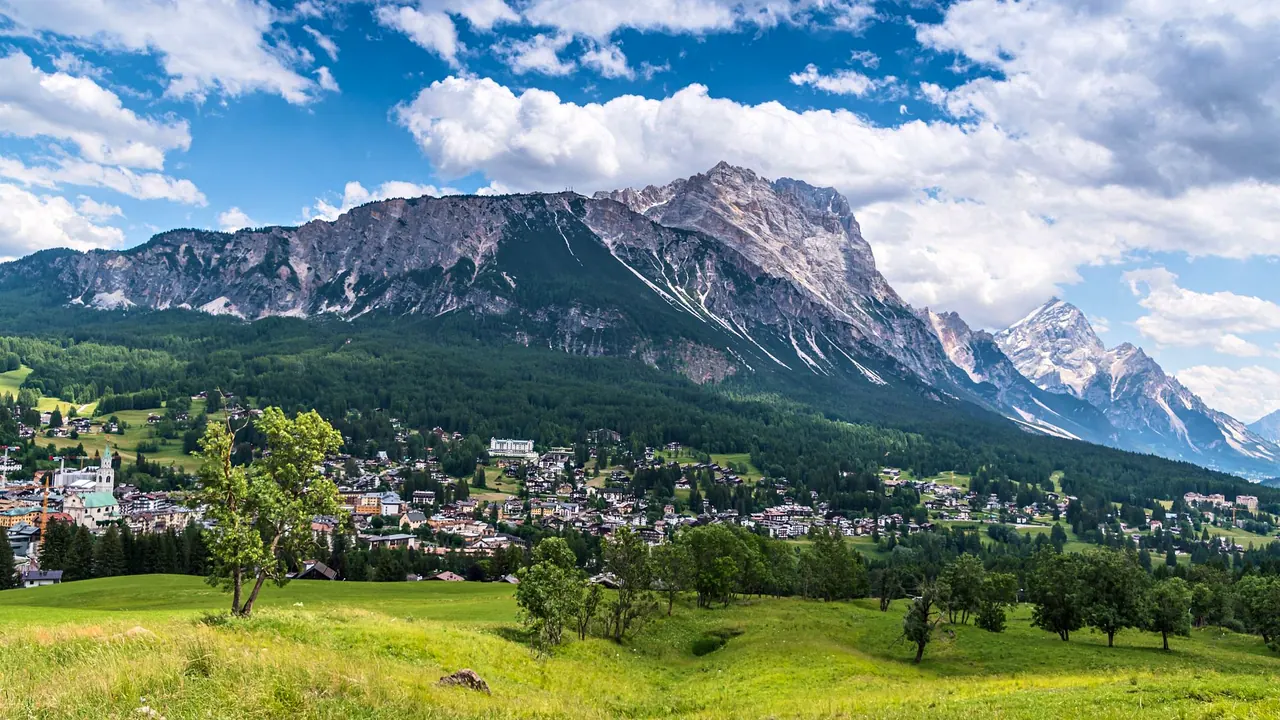
Cortina d'Ampezzo is for travellers who measure a trip by what they do outdoors. The pale Dolomite peaks begin where the town ends, and lifts climb straight onto them, with skiing across the Dolomiti Superski area in winter and hut-to-hut hiking and via ferrata in summer. Pick it if the mountains are the whole point and you can live with resort prices, quiet evenings and little to see indoors.
Choose Trieste for
- beaches
- culture and sights
- prices
Anyone after a city with a past, a sea to swim in and an easier bill will be happier in Trieste. Its Habsburg squares, opera house and coffee houses fill the days, swimming off the rocks at Barcola fills summer afternoons, and Friuli, Slovenia and Istria are close enough for day trips. The Karst adds cliff walks and caves, but for high peaks you would have to head out to the Julian Alps.
Scoreboard
Twelve categories on one fixed scale from 0 to 100. The shaded stretch is the gap between the two.
Your match
Pick a travel style or drag the sliders, and both match scores follow your weighting.
Wins on nature and the outdoors and wellness with your weighting.
Wins on beaches and culture and sights with your weighting.
What matters to you?
Category by category
What the scores mean for a trip.
Beaches & swimming
For swimming, only Trieste counts. Cortina sits high in the mountains, and its snowmelt lakes such as Ghedina and Pianozes are for walking round, not for lazy swims, so in practice swimming means a hotel pool.
Trieste has no sand, but the sea is part of everyday life from June to September. Locals swim off the stepped platforms and lawns at Barcola, and the pebble coves at Sistiana and Duino are prettier. Families who want soft, shallow beaches should still look elsewhere.
Food & drink
Trieste is the better place to eat, mostly because its food is so distinctive. Its buffets carve boiled pork with horseradish and sauerkraut, the old coffee houses have their own way of ordering coffee, and the osmize on the Karst sell farm wine and cured meats. Cortina eats well for its size, with casunziei, polenta with game and long lunches on rifugio terraces.
What separates them is range and cost. Neither city has much fine dining or international food. Trieste's cheap counters and Adriatic fish give a visitor more choice, while Cortina offers almost nothing cheap and almost no street food.
Culture & sights
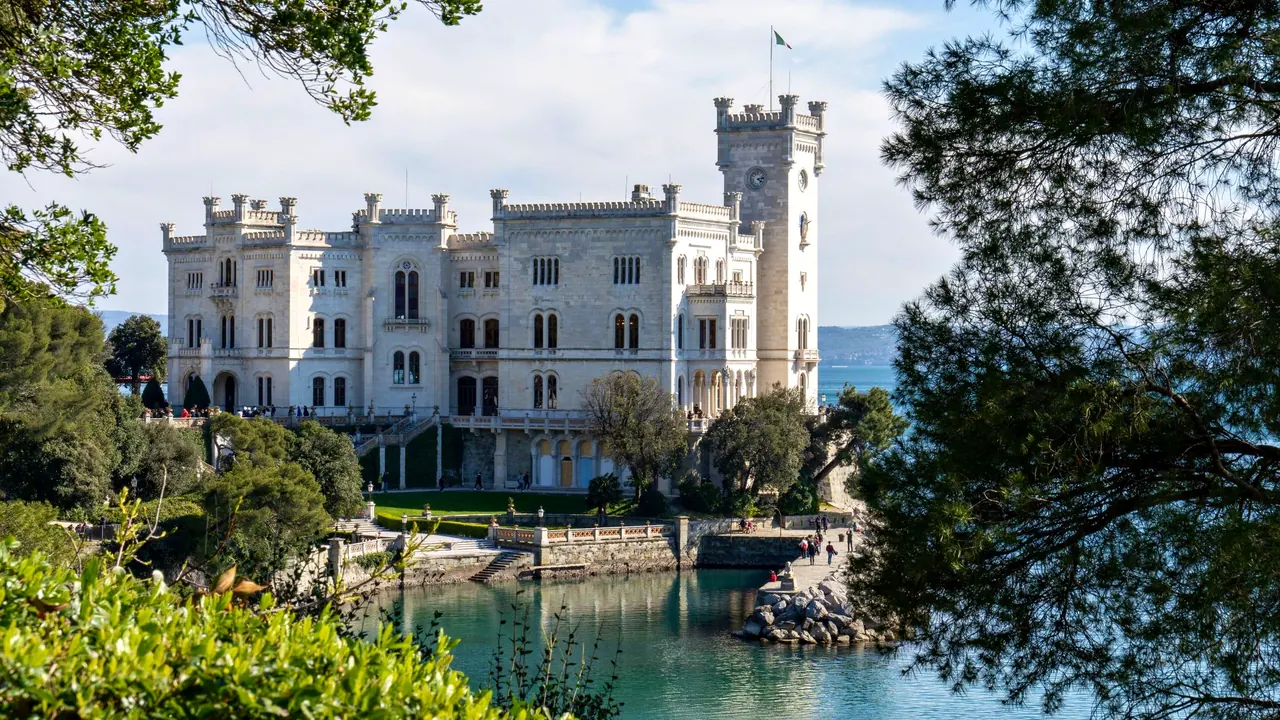
There is far more to see in Trieste. Its sea-facing Piazza Unità, the Borgo Teresiano on the Canal Grande, the cathedral and castle on San Giusto, a Roman theatre and Miramare Castle could fill several days on their own. The Risiera di San Sabba and the city's links to Joyce and Svevo add more depth.
Cortina's sights are a pleasant centre with its basilica and painted houses, the 1956 Olympic ice stadium and the Rimoldi art collection. Its most powerful history is up in the mountains, in the First World War tunnels on Lagazuoi and the Cinque Torri, which you reach on a hike rather than a city stroll.
Nightlife
Neither is a place for a big night out, but Trieste keeps going longer and all year. Its evenings are spritz and white wine around Piazza Unità and in Cavana, with student bars in a few streets and, in summer, kiosks along the Barcola seafront.
Cortina's evenings follow the ski season. There is après-ski, a passeggiata on the Corso Italia and long dinners, plus a few glamorous late bars in peak winter weeks. The rest of the year the town is quiet by late evening.
Nature & outdoors
Cortina has the landscape most people travel for. Lifts rise from town into a ring of Dolomite peaks, and the Tre Cime, Lago di Misurina and the Fanes-Sennes-Braies park are all close. Winter brings skiing across the Dolomiti Superski area, and summer brings long-distance trails, via ferrata, climbing and paragliding.
Trieste's outdoors is different and gentler. It has cliff walks on the Strada Napoleonica and the Rilke Path, the Val Rosandra gorge, the Grotta Gigante and Škocjan caves, and sailing and snorkelling in the gulf. For real mountains, you head out to the Julian Alps.
Day trips
Trieste is much the better base for day trips, with three countries within reach. Aquileia's mosaics, star-shaped Palmanova and Cividale are about an hour away, Piran and Ljubljana are across the Slovenian border, and Venice is about two hours by train.
From Cortina, most days out lead into the mountains. The towns nearby are attractive but not essential: San Candido and Brunico in South Tyrol, and Bolzano with the Iceman about two hours away. Venice is a long coach trip in each direction.
Good for families
Both suit families about equally well, and both are safe and calm, but they work for different children. Cortina is good for active families, with ski schools, beginner slopes at Socrepes, public skating, easy walks to huts and a rope park. Bad weather and the high costs are the weak points.
Trieste is the better choice for curious older children, with Miramare's castle and gardens, the huge Grotta Gigante, a small aquarium, a science centre and summer days at Barcola. Toddlers will struggle more, because the swimming is off rocks and the streets behind the seafront are steep.
Getting around
Trieste is the easier place to get around without a car. The main sights lie close together on flat ground by the sea, and a dense bus network runs out to Barcola, Miramare and the Karst, with boats across the bay to Muggia. The only hard part is the steep climb up San Giusto.
Cortina's small centre takes only minutes to walk across, and in winter ski buses link it to the lifts. Getting there and getting about the region is harder, though. There has been no railway since 1964, the buses to the passes are limited, and most visitors end up hiring a car.
Shopping & style
Shopping is a minor attraction in both, and each has a Corso Italia, but they sell very different things. Cortina's is a short luxury strip of fashion, jewellers, furriers and smart mountain wear, anchored by the Cooperativa, a big store dating from 1893.
Trieste has no luxury scene at all. It is better for browsing old-town antique shops and taking home coffee from local roasters, Karst wine and presnitz.
Affordability
There is a big gap in cost. Cortina is among the most expensive places to stay in Italy, with luxury prices for hotels and restaurants in winter and in August, and lift passes on top. Meals at the rifugi are the main saving, along with the quieter weeks in early summer and late September.
Trieste charges ordinary prices for a northern Italian city. A buffet lunch and a coffee at the bar cost little, buses are cheap, and swimming at Barcola or walking on the Karst is free.
Live music & performing arts
Trieste has a real stage life and Cortina largely does not. The Teatro Verdi runs a full opera and ballet season, the city keeps up a Habsburg fondness for operetta, and the Politeama Rossetti and a Slovenian-language theatre add drama.
Cortina has no theatre season. Its concerts come mostly with summer chamber music festivals in churches and halls, and occasionally out in the mountains.
Wellness & relaxation
Neither has thermal baths, and they are about equally restful, but in different ways. In Cortina, relaxation happens in hotel spas with saunas and Alpine hay baths, and on quiet hut terraces in June and September. The peak weeks there are anything but calm.
In Trieste, the calm comes from the city itself: long sittings in old coffee houses and sunset walks along the Molo Audace pier. It suits a slow, literary sort of rest more than spa treatments.
When should you go?
Pick your month. The climate figures are measured averages, not a forecast.
Cortina d'Ampezzo in July
Trieste in July
Daytime high, °C
Rainfall in the month, mm
Temperature and rainfall are climate normals, averaged over the years shown. Cortina d'Ampezzo: 1991-2020 normals, Dobbiaco (22.5 km from centre). Trieste: 1991-2020 normals, Trieste (1.6 km from centre).
The two places run on almost opposite calendars. Cortina has two seasons. In winter the valley is cold, with daytime highs barely above freezing in January, and the resort is given over to skiing. In summer it warms to about 22°C, which is ideal for hiking and climbing, but this is also the wettest stretch of its year, peaking at about 130mm in July. June and September are the gentlest months on the trails. Spring and late autumn fall between the two seasons and suit neither.
Trieste is mild in winter and properly hot in summer, reaching around 29°C in July and August. That is warm for walking up San Giusto, but it is also when the sea reaches about 25°C and the sun is out longest, so June to September is the swimming season. The rain comes in autumn, building to around 125mm in November, and the winters are cool but rarely cold, so outside the summer the city suits walking and sightseeing more than the beach.
Which traveller are you?
On an outdoors trip, Cortina is the obvious choice. The Tre Cime, the Alta Via 1, some of the oldest via ferrata routes in the Alps and a vast ski area all start within easy reach of town. Trieste's Karst walks and sailing are good, but on a smaller scale.
For a culture and arts trip, Trieste wins clearly. It has Piazza Unità, San Giusto's mosaics, Miramare Castle, a large synagogue and a real opera season at the Teatro Verdi. Cortina's three small museums and summer concerts would fill only a rainy afternoon or two.
On a trip with a tight budget, Trieste is much kinder. Buffet lunches, cheap buses, free swimming at Barcola and fair room rates keep costs down. Cortina is among Italy's priciest resorts, and lift passes add to the bill, so budget visitors often sleep in other valleys.
Before you go
| Measure | Cortina d'Ampezzo | Trieste |
|---|---|---|
| Official language | Italian | Italian |
| Currency | Euro (EUR) | Euro (EUR) |
| Sockets | CFL230 V, 50 Hz | CFL230 V, 50 Hz |
| Driving side | Right | Right |
| Time zone | UTC+1, UTC+2 in summer | UTC+1, UTC+2 in summer |
| Emergency number | 112 | 112 |
| Elevation | 1,224 m | 2 m |
| Main airport | Venice Marco Polo Airport (VCE)116 km from centre103 non-stop destinations | Trieste Airport (TRS)31 km from centre32 non-stop destinations |
| Public holidays this year | 13 days | 13 days |
By the numbers
| Measure | Cortina d'Ampezzo | Trieste |
|---|---|---|
| City population | 5,546 | 198,417 |
| People per km² | 22 | 2,332 |
| Museums within 10 km | 3 | 33 |
| UNESCO World Heritage sites within 50 km | 1 | 5 |
| Swim season, months above 21 °C | - | 4 months |
Where else could you go?
Every comparison below shares a destination with this one, so you can follow Cortina d'Ampezzo or Trieste somewhere new.
- Rovinjvs Trieste
- Ljubljanavs Trieste
- Bledvs Trieste
- Innsbruckvs Cortina d'Ampezzo
- Venicevs Trieste
- Venicevs Cortina d'Ampezzo