Costa Brava or Costa del Sol?
Our verdict in twelve categories, each scored against the same fixed benchmark cities, and the climate month by month, so you can choose for your trip.
Choose Costa Brava for
- food and drink
- nature and the outdoors
- beaches
Costa Brava suits travellers who want the coast itself to be the attraction: small coves under pine cliffs, the shoreline path between fishing villages, snorkelling around the Medes Islands and some of Spain's most rewarding regional cooking. It also suits anyone curious about Dalí and medieval Girona. It works best with a hire car and a slower pace, and it pays to choose a base in a village rather than a big resort.
Choose Costa del Sol for
- shopping
- getting around
- nightlife
For a trip with more going on and less driving, Costa del Sol is the easier choice. Málaga gives you a real city with museums, tapas and nightlife all year, the commuter train links the main resorts, and Granada, Seville and Córdoba are close enough for day trips. Its sunnier, milder climate also makes it the better pick outside high summer.
Scoreboard
Twelve categories on one fixed scale from 0 to 100. The shaded stretch is the gap between the two.
Your match
Pick a travel style or drag the sliders, and both match scores follow your weighting.
Wins on food and drink and nature and the outdoors with your weighting.
Wins on shopping and getting around with your weighting.
What matters to you?
Category by category
What the scores mean for a trip.
Beaches & swimming
These are two equally strong beach coasts, but they offer different kinds of beach. The Costa Brava is a coast of coves: small inlets of clear green water under pine-covered cliffs around Begur and Calella de Palafrugell, with long open sand at the Bay of Roses and the Pals dunes for anyone who wants space. The tramontana wind can churn up the northern beaches for days.
Costa del Sol is one long, almost continuous strip of wide, coarse grey-gold sand lined with sunbeds and beach grills. It is easy to use but packed around Torremolinos and Fuengirola in summer. For clearer water, go to the coves below the cliffs at Maro and Nerja.
Food & drink
If you travel to eat, the Costa Brava has the edge. Empordà cooking pairs seafood with meat in mar i muntanya dishes, and the red prawns of Palamós and the anchovies of L'Escala are known across Spain. Girona's countryside has long been a destination for serious fine dining.
Costa del Sol's food is simpler and centred on the sea: sardine espetos grilled over beach fires, fried fish and Málaga's sweet wines. The best eating is in Málaga's old taverns and the fishing districts of Pedregalejo and El Palo. On both coasts, food in the big resorts is aimed at tourists and not worth the money.
Culture & sights
The Costa Brava's sights are spread across the whole province, and seeing them is a matter of driving from one to the next. The Dalí triangle links Figueres, Portlligat and Púbol, Girona's medieval quarter lies inland, and on the coast there are the Greek and Roman ruins at Empúries and the walled old town of Tossa. Seeing it properly takes a car and several days.
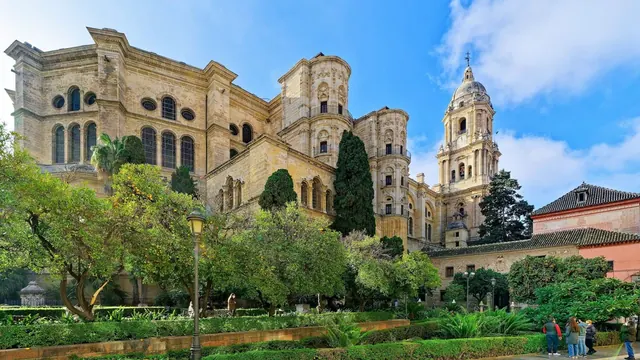
On Costa del Sol nearly all of it sits in Málaga, close enough together to cover on foot. The Alcazaba and Roman theatre are a short walk from the Picasso Museum, the Carmen Thyssen collection and the Pompidou branch on the port. Apart from Marbella's old town and the Nerja cave, the resorts have little heritage of their own.
Nightlife
Costa del Sol offers far more choice after dark. You can pick between yachts and beach clubs at Puerto Banús, the long-established gay scene in Torremolinos, cheap bar strips in Fuengirola, and Málaga's late tapas rounds, which carry on all year.
On the Costa Brava, nightlife mostly means Lloret de Mar's party clubs and the late bars of Platja d'Aro. In the nicer villages, evenings end with dinner and a drink in the square, and outside summer most of the coast closes early.
Nature & outdoors
On the Costa Brava the best scenery is the coastline itself. The Camí de Ronda follows red cliffs and pine woods between the villages, Cap de Creus is a bare, wind-carved headland, and the Medes Islands give some of Spain's best snorkelling and diving. Inland there are the Aiguamolls wetlands and the Garrotxa's volcanoes, and the coast is easy to explore by kayak.
On Costa del Sol the landscape lies behind a built-up shore. Its highlights are the Río Chíllar gorge walk above Nerja, the Caminito del Rey and the rock formations of El Torcal. Summer heat makes these hard going, so they are better in spring and autumn.
Day trips
Both coasts are good bases for day trips, but Costa del Sol has the bigger names within reach. From Málaga, the fast train reaches Córdoba's Mezquita and Seville, Granada's Alhambra is an easy drive, and Ronda and Gibraltar are reachable from the western resorts.
The Costa Brava's main day trip is Barcelona, quick by fast train from Girona. Its other outings are on a smaller scale: Collioure across the French border, the medieval bridge at Besalú, the Empordà wine villages and Montserrat.
Good for families
On the Costa Brava a family vacation usually means a campsite or resort behind a shallow bay at Roses, L'Estartit or Pals, with days spent paddling and building sandcastles. The outings are low-key: glass-bottom boats to the Medes Islands and the cliff-top gardens at Blanes and Lloret. The prettiest coves are down long flights of steps, which is hard work with small children.
Costa del Sol has more ready-made attractions, mostly close together between Torremolinos and Fuengirola: a zoo, an aquarium, a marine park, water parks and the Calamorro cable car. Hotels there are built around pools, and Málaga's car-free centre is easy with a pushchair.
Getting around
Costa del Sol is easier without a car. A commuter train runs from Málaga through the airport to Torremolinos and Fuengirola, and Málaga's centre is flat and walkable. Beyond that, slow coastal buses and a car take over.
On the Costa Brava, a car is close to essential. The fast trains stop inland at Girona and Figueres, none of the beach towns has a station, buses are sparse, and the roads down to the coves around Begur and Cadaqués jam in August.
Shopping & style
For shopping, Costa del Sol is well ahead. Puerto Banús has a harbourfront row of luxury fashion houses, Marbella's old town has boutiques, and Málaga's Calle Larios has the main Spanish chains, with big malls by the motorway as well.
On the Costa Brava, the best buys are the ceramics workshops of La Bisbal d'Empordà, local produce from weekly markets and the independent shops of Girona. Anyone who wants more makes the trip to Barcelona.
Affordability
Overall costs are similar, and on both coasts the bill depends mostly on where you stay. The expensive end is Begur, Cadaqués and S'Agaró on the Costa Brava, and Marbella and Puerto Banús on Costa del Sol. The cheaper options are Lloret de Mar and the big campsites in the north, and the package resorts of Torremolinos and Fuengirola in the south.
The real difference is transport. On the Costa Brava, a hire car and parking at the coves add to every day's cost. On Costa del Sol, the cheap commuter train and buses let you skip the car for much of the stay.
Live music & performing arts
On the Costa Brava live performance is a summer festival season in unusual settings: opera and ballet in the castle grounds at Peralada, big-name acts in the cliff-top garden at Cap Roig, and havaneres sea songs sung on the beach at Calella de Palafrugell. Outside July and August there is little beyond Girona's own stages.
Málaga gives Costa del Sol a stage that runs all year. The Teatro Cervantes hosts the city orchestra and opera, and the flamenco peñas hold weekend shows that are more genuine than the dinner shows in the resorts.
Wellness & relaxation
Costa del Sol is better set up for a restful or spa-focused stay. Around Marbella there are large spa hotels and residential retreats for longer fasting and detox stays, Málaga has Moorish-style bathhouses, and the mild winters draw visitors who come simply to slow down.
What the Costa Brava has that the south lacks is a genuine bathing tradition at Caldes de Malavella, with Roman baths and mineral springs. Apart from that, rest here mostly means a farmhouse in the Baix Empordà and quiet coves in June or September.
When should you go?
Pick your month. The climate figures are measured averages, not a forecast.
Costa Brava in July
Costa del Sol in July
Daytime high, °C
Rainfall in the month, mm
Temperature and rainfall are climate normals, averaged over the years shown. Costa Brava: 1991-2020 normals, Gerona / Costa Brava (23.2 km from centre). Costa del Sol: 1991-2020 normals, Malaga / Aeropuerto (5.4 km from centre).
Both coasts are hot in July and August, with highs above 30°C that make midday sightseeing hard work, and both are at their best for swimming from late June to late September. On the Costa Brava the sea warms the most, to about 25°C in August. Early summer is fresher, and September and October bring the heaviest rain, up to 86mm in October. Winters are cool, with highs around 14°C, so this is mainly a coast for the warm half of the year.
Costa del Sol is sunnier all year and almost completely dry from June to August, and the water stays swimmable into October. Its winters are noticeably milder, with highs around 17°C even in January, which makes spring, autumn and winter walking and sightseeing pleasant. The rain arrives in late autumn and early winter, with December the wettest month at 88mm.
Which traveller are you?
On an outdoors trip, choose the Costa Brava. Here the scenery is the shore itself, so a morning walk, a swim and an afternoon in a kayak can all start from the same village. Road cyclists have quiet hill lanes inland, and the high Pyrenees are about two hours away.
On a relaxing and wellness trip, Costa del Sol is the easier place to slow down. It is far sunnier and stays dry for months, its resorts are used to guests staying for weeks, and the Nerja end and the hill villages stay calm. The Costa Brava is restful mainly in June and September.
On a shopping trip, Costa del Sol is the better choice because you never have to leave the coast to shop. High-end, high-street and market shopping all lie along one stretch, along with almonds and sweet wine to take home. The Costa Brava's shopping is mostly craft and produce.
Before you go
| Measure | Costa Brava | Costa del Sol |
|---|---|---|
| Official language | Spanish | Spanish |
| Currency | Euro (EUR) | Euro (EUR) |
| Sockets | CF230 V, 50 Hz | CF230 V, 50 Hz |
| Driving side | Right | Right |
| Time zone | UTC+1, UTC+2 in summer | UTC+1, UTC+2 in summer |
| Emergency number | 112 | 112 |
| Main airport | Girona-Costa Brava Airport (GRO)18 non-stop destinations | Málaga-Costa del Sol Airport (AGP)165 non-stop destinations |
| Public holidays this year | 14 days | 12 days |
By the numbers
| Measure | Costa Brava | Costa del Sol |
|---|---|---|
| Population | - | 1,364,837 |
| Swim season, months above 21 °C | 3 months | 3 months |
Where else could you go?
Every comparison below shares a destination with this one, so you can follow Costa Brava or Costa del Sol somewhere new.
- Menorcavs Costa Brava
- Mallorcavs Costa Brava
- Provencevs Costa Brava
- Ibizavs Costa Brava
- Algarvevs Costa del Sol
- Formenteravs Costa Brava