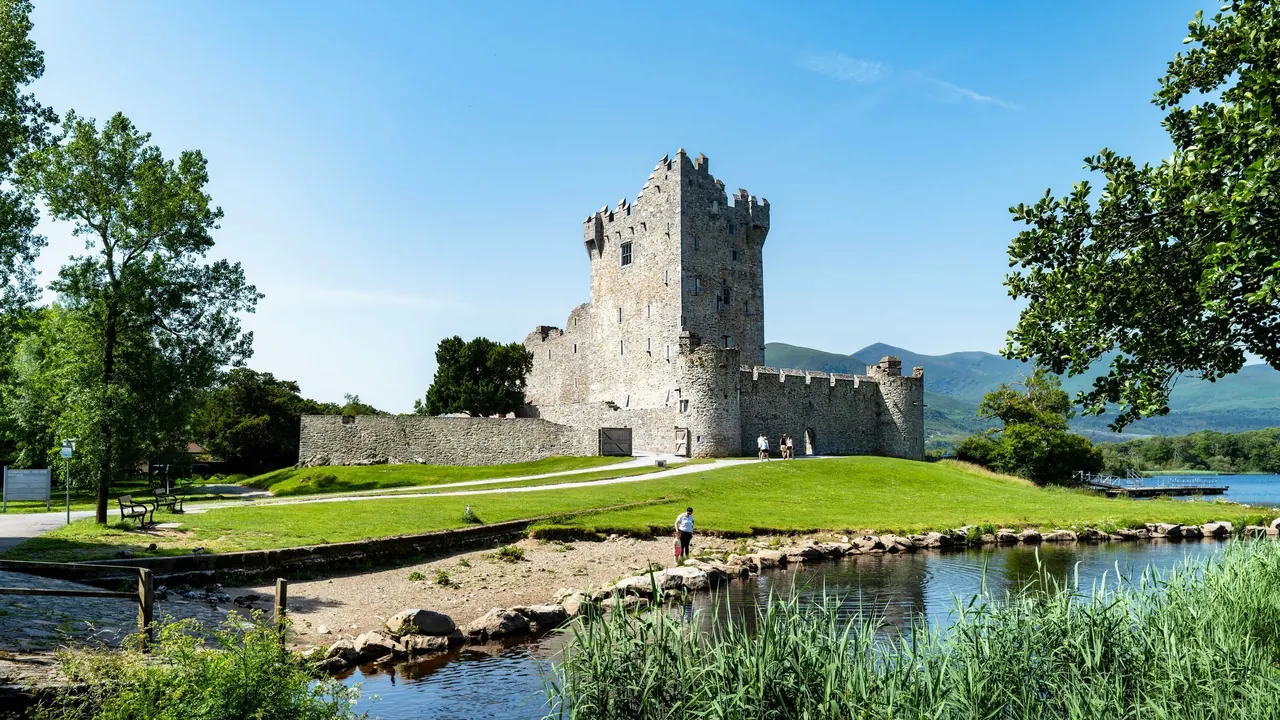
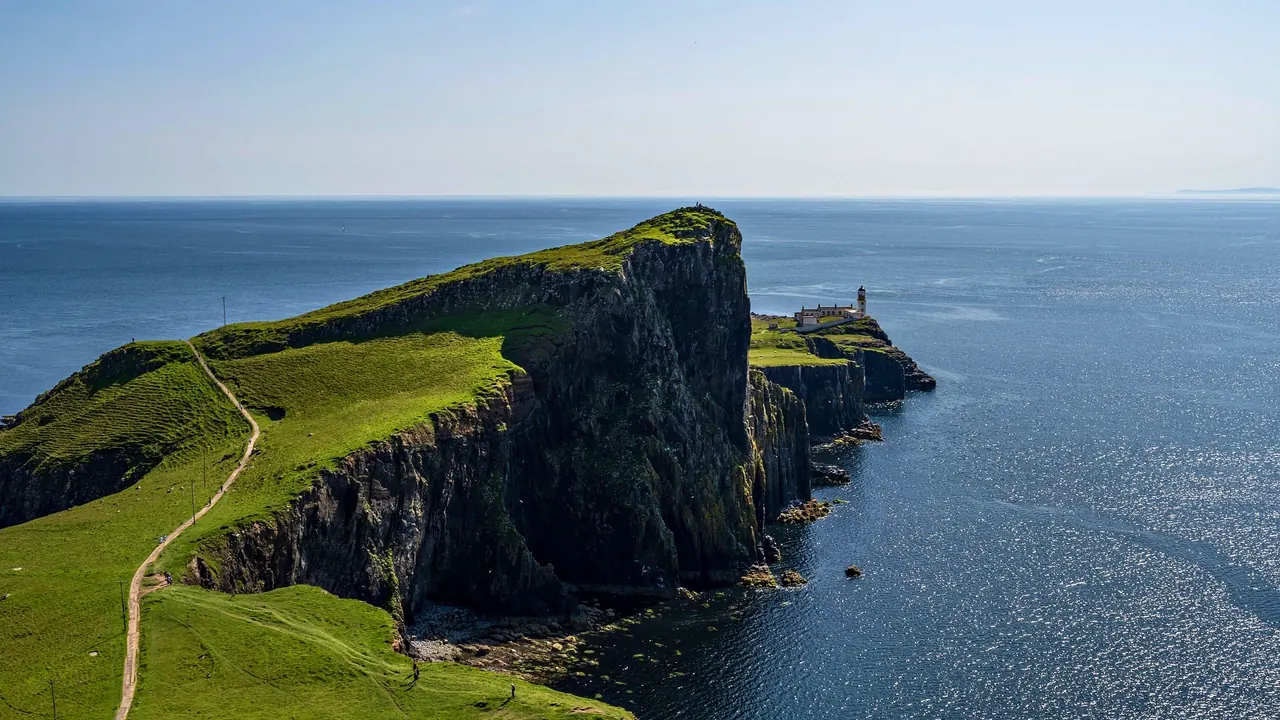
Photos: County Kerry by Bob Jenkin, Pexels License; Isle of Skye by Evelin Magnus, Pexels License.
County Kerry or Isle of Skye?
Our verdict in twelve categories, each scored against the same fixed benchmark cities, and the climate month by month, so you can choose for your trip.
Choose County Kerry for
- nightlife
- live music and the arts
- beaches
County Kerry is the better choice for a rounded trip through wild country. Its mountains, lakes and Atlantic peninsulas are matched by a real pub and music life in Dingle and Killarney, early Christian sites and Skellig Michael to explore, friendlier roads with a rail link, and towns where families and food lovers can settle in comfortably. It suits couples, families and first-time visitors who want scenery by day and a lively session by the fire at night.
Choose Isle of Skye for
- nature and the outdoors
Skye asks more of you and gives back one thing in greater measure: the most dramatic landscape of the two. The Black Cuillin ridge, the pinnacles of the Quiraing and the cliffs at Neist Point are a stronger draw for serious hillwalkers, scramblers, photographers and wildlife watchers. Go if the walking and the views are the whole point of the trip, and you are happy with quiet evenings, long single-track drives and a higher bill.
Scoreboard
Twelve categories on one fixed scale from 0 to 100. The shaded stretch is the gap between the two.
Your match
Pick a travel style or drag the sliders, and both match scores follow your weighting.
Wins on nightlife and live music and the arts with your weighting.
Wins on nature and the outdoors with your weighting.
What matters to you?
Category by category
What the scores mean for a trip.
Beaches & swimming
Kerry has real beaches that are worth planning a day around: Inch Strand's long dune spit, Banna Strand, and sheltered Derrynane, where families bodyboard and paddle through the summer. The water stays cool, but it is a few degrees kinder than Skye's.
On Skye the shore is something to look at more than a place to swim. The coral sand at Claigan and the black bays of Talisker and Staffin are lovely to walk. Swimming means a brief, icy dip, in the sea or in the Fairy Pools.
Food & drink
The county and the island cook from much the same larder of seafood and hill lamb, and they eat about equally well. Where you find it is what differs. In Kerry the good cooking gathers in two towns: Dingle, with its harbour seafood places, and Kenmare, with its short streets of serious restaurants. Elsewhere, a pub chowder is the reliable fallback.
On Skye the best tables are scattered: a few renowned country restaurants out around Dunvegan and Sleat, oysters from Loch Harport, and the distillery at Carbost for a dram. Outside Portree you need to book, drive and check whether a place is open out of season.
Culture & sights
Kerry has much more for a curious visitor. Skellig Michael is a monastic site of real international weight, the Dingle Peninsula is thick with early Christian stonework, and Muckross House, Ross Castle and Staigue Fort add variety around Killarney and the Ring.
Skye's story of clans, crofting and Gaelic comes through a smaller set of sites: Dunvegan Castle, the Clan Donald ruins and museum at Armadale, and the thatched cottages at Kilmuir. It is absorbing, but it takes a couple of days rather than a week.
Nightlife
Neither place has clubs, but Kerry has a proper night out. Dingle's old shopfront pubs fill on summer evenings, and Killarney's big bars and late venues keep going well after the villages have gone quiet.
On Skye, an evening is a pint and a dram with walkers in a Portree bar or at the inn at Sligachan. Most places are winding down long before midnight.
Nature & outdoors
Both are first-rate for the outdoors, and they differ in character. Kerry is softer and more varied. Lakes, oak woods and red deer sit right at Killarney's edge, and Carrauntoohil, Ireland's highest peak, is a serious full-day climb. There is surfing at Inch and Brandon Bay, and the Kerry Way and Dingle Way give days of walking with sea views.
Skye is the harsher, stranger landscape and edges ahead. The gabbro ridge of the Black Cuillin is Britain's most serious mountaineering, the Quiraing and the Old Man of Storr look barely real, and sea eagles, otters and minke whales work the coast. The price is the weather and the midges, which are fierce from June to August.
Day trips
From Kerry you can drive to real towns as well as villages: Cork city and Kinsale make a long day, and thatched Adare is closer. Dingle, Valentia and the Great Blasket keep the coast close at hand.
Skye's outings rely on the bridge and the ferries. Eilean Donan and Plockton are over on the mainland, Raasay is a short crossing, and the longer boat trip to Harris is rewarding. All of them depend on the weather and the timetables, and there is no sizeable town within reach.
Good for families
Wet days are the real test with children, and Kerry has answers to them: Tralee's indoor water park, Dingle's aquarium, and pony and jaunting-car rides in the national park. A base in Killarney or Tralee keeps all of these close.
Skye gives hardy families real adventures, such as hunting for dinosaur footprints on the shore at Staffin and taking boat trips to see seals and eagles. But nothing of any size is built for children, many of the famous walks are steep or run along cliff edges, and the drives between sights are long.
Getting around
Kerry is easier to get around. Trains run from Dublin and Cork to Killarney and Tralee, the main towns are walkable, and you can cover the national park by bike or jaunting car. You still need a car for the peninsulas, and coaches crowd the Ring in summer.
On Skye there is no train, buses are too sparse to get you to trailheads, and the single-track roads with passing places are slow going. In summer, the car parks at Trotternish and the Fairy Pools fill early.
Shopping & style
Neither is somewhere to shop seriously, but Kerry gives you a bit more. Dingle has a cluster of studios, and Kenmare has its needlepoint lace tradition and galleries. Killarney's sweater shops mostly sell the same things.
Skye's crafts are harder to reach: potters, silversmiths and weavers selling from workshops down farm tracks in Waternish and Sleat. Portree adds outdoor gear.
Affordability
Both are expensive in high summer, but Kerry hurts less. Family-run B&Bs and hearty pub lunches are easy to find, and there are more rooms to go round.
On Skye, accommodation is scarce, so even simple places cost a lot and book up months ahead, and cheap meals are rare outside Portree. Groups sharing a cottage or campers do best there. In both places, spring and autumn are easier on the budget.
Live music & performing arts
Kerry is much the stronger place for live music. Dingle's informal pub sessions run most nights in season, Killarney's are more polished, and Siamsa Tíre in Tralee stages folk music and dance as theatre.
Skye's tradition is Gaelic song, ceilidhs in village halls, and the concerts and summer courses at Sabhal Mòr Ostaig in Sleat. It is rewarding when you find it, but it is irregular outside summer.
Wellness & relaxation
Spa hotels decide this one, and Kerry has them. The lakeside and country-house hotels around Killarney and Kenmare have full spas, and Ballybunion on the north coast keeps up the old Irish cure of the hot seaweed bath.
Skye has only a handful of treatment rooms and the odd sauna on the shore. Rest there means a cottage on a sea loch in Waternish or Sleat and a long evening watching the weather.
When should you go?
Pick your month. The climate figures are measured averages, not a forecast.
County Kerry in July
Isle of Skye in July
Daytime high, °C
Rainfall in the month, mm
Where the figures come from
County Kerry's temperatures are measured 53 km from the centre, at Valentia Observatory.
County Kerry has no rain gauge within 25 km of the centre, so its rainfall comes from a gridded climate dataset read at the destination rather than from a gauge further away.
Isle of Skye's temperatures are measured 90 km from the centre, at Stornoway.
Isle of Skye has no rain gauge within 25 km of the centre, so its rainfall comes from a gridded climate dataset read at the destination rather than from a gauge further away.
Temperature and rainfall are climate normals, averaged over the years shown. County Kerry: 1991-2020 normals, Valentia Observatory (52.8 km from centre). Isle of Skye: 1991-2020 normals, Stornoway (89.7 km from centre).
Neither place ever gets too hot for walking, and neither is a beach destination, but Kerry is milder and drier throughout the year. Around Killarney and the peninsulas, summer afternoons reach about 18°C and the sea warms to 16°C by August, which is enough for a paddle or a bodyboard in a wetsuit. On Skye, summer highs stop at about 16°C and the sea barely passes 13°C, so a swim there is a brisk dip and nothing more.
On both, late spring is the sweet spot. May is the sunniest month, and from April to July rain is at its lightest. Skye stays wetter in every month, and from October to December its rainfall goes above 200mm a month, with short grey days. Kerry's winters are softer and a few degrees warmer, but they are still wet. For outdoor plans, choose May to September in either place, and expect a rain jacket to come out on most days.
Which traveller are you?
For a food and nightlife trip, choose Kerry. In Dingle, dinner, a pint of stout and a music session are all a short walk apart. On Skye the best tables and bars lie miles apart, so someone has to stay sober and drive.
On a family trip with young children, Kerry asks less of everyone. Rockpooling on the long strands, the open farms and the old Kerry Bog Village near Glenbeigh are all within a short drive. Skye suits older, hardier children who are happy scrambling around the Fairy Pools.
For an outdoors trip, Skye is the pick for scramblers and photographers. The Cuillin ridge needs a head for heights, and the boat from Elgol reaches Loch Coruisk, which no road touches. Kerry suits cyclists and walkers, through the Gap of Dunloe and along the Kerry Way.
Before you go
| Measure | County Kerry | Isle of Skye |
|---|---|---|
| Official language | English, Irish | English |
| Currency | Euro (EUR) | Pound Sterling (GBP) |
| Sockets | G230 V, 50 Hz | G230 V, 50 Hz |
| Driving side | Left | Left |
| Time zone | UTC, UTC+1 in summer | UTC, UTC+1 in summer |
| Emergency number | 112 | 112 or 999 |
| Main airport | Kerry Airport (KIR)10 non-stop destinations | Inverness Airport (INV)15 non-stop destinations |
| Public holidays this year | 11 days | 10 days |
By the numbers
| Measure | County Kerry | Isle of Skye |
|---|---|---|
| Population | 147,707 | 10,008 |
| People per km² | 31 | 6 |
| Swim season, months above 21 °C | None | None |
Where else could you go?
Every comparison below shares a destination with this one, so you can follow County Kerry or Isle of Skye somewhere new.
- Outer Hebridesvs Isle of Skye
- Connemaravs County Kerry
- Orkneyvs Isle of Skye
- Pembrokeshirevs County Kerry
- Isles of Scillyvs County Kerry
- Northumberlandvs Isle of Skye