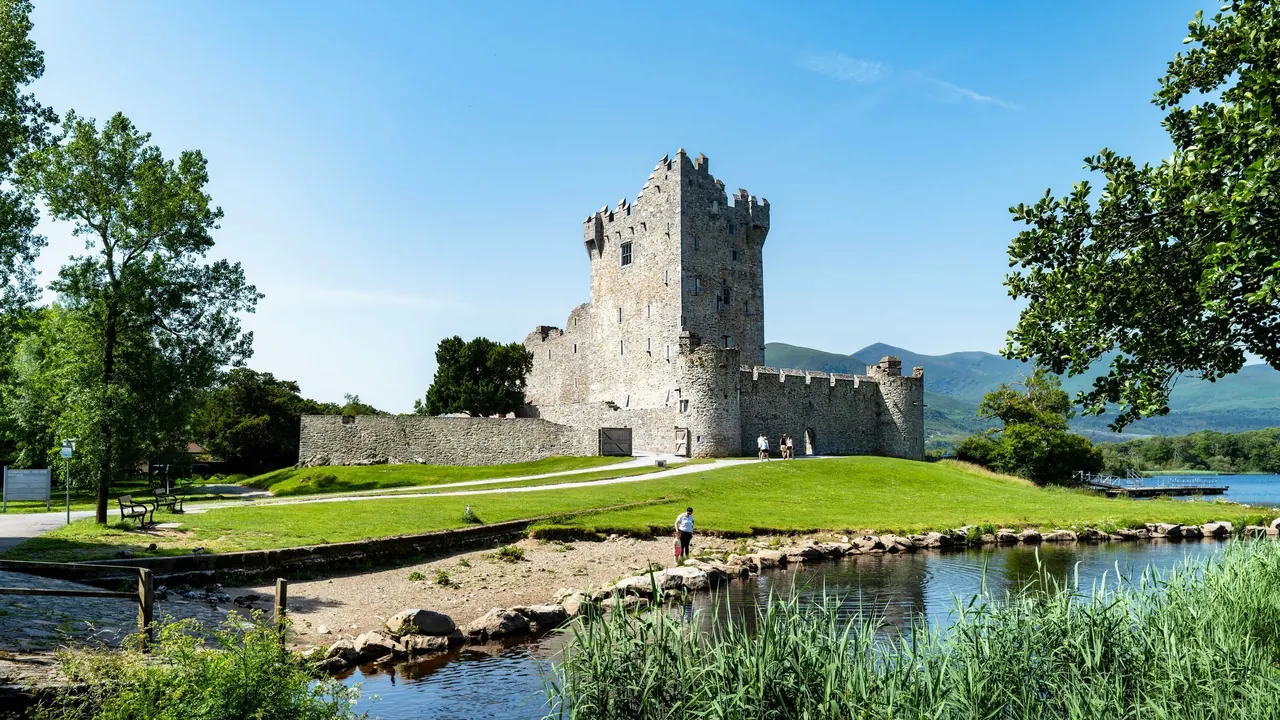
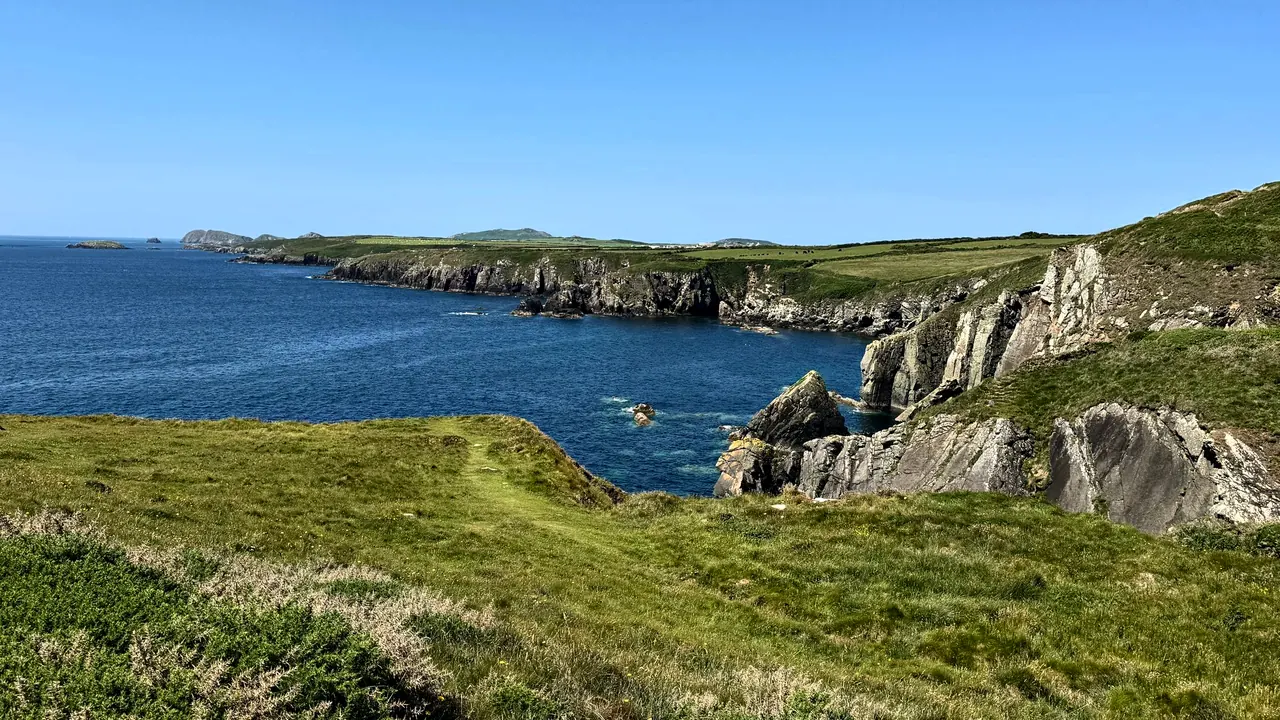
Photos: County Kerry by Bob Jenkin, Pexels License; Pembrokeshire by Petra Nesti, Pexels License.
County Kerry or Pembrokeshire?
Our verdict in twelve categories, each scored against the same fixed benchmark cities, and the climate month by month, so you can choose for your trip.
Choose County Kerry for
- live music and the arts
- nightlife
- wellness
County Kerry is the pick if you want mountains by day and music by night. Killarney National Park and the MacGillycuddy's Reeks give it high, rugged country that Pembrokeshire lacks. Dingle's traditional sessions and Killarney's later bars make the evenings fuller, and the spa hotels around Killarney and Kenmare give a slow touring trip a more comfortable end to each day.
Choose Pembrokeshire for
- beaches
- families
- prices
For a family week by the sea, Pembrokeshire is the better choice. The beaches are closer at hand, often lifeguarded in summer and easy to reach from walkable bases like Tenby and Saundersfoot. St Davids, the Norman castles and the seabird islands fill the other days. It also costs a little less. In return you get quiet evenings and very little live performance.
Scoreboard
Twelve categories on one fixed scale from 0 to 100. The shaded stretch is the gap between the two.
Your match
Pick a travel style or drag the sliders, and both match scores follow your weighting.
Too close to call, level with your weighting
Wins on live music and the arts and nightlife with your weighting.
Wins on beaches and families with your weighting.
What matters to you?
Category by category
What the scores mean for a trip.
Beaches & swimming
Both have fine, often empty sand and the same cold Atlantic, so neither suits long hours in the water. Even so, Pembrokeshire is the better place for beaches. The beaches are its main draw: Tenby's town sands, Barafundle's walk-in cove and the long open stretches of Newgale and Whitesands. Many have lifeguards in summer, and some are within walking distance of where you stay.
Kerry's beaches, Inch, Banna, Derrynane and Rossbeigh, are just as beautiful, but they are more spread out and more often rained off. They work better as a stop on a drive than as the centre of the trip. Derrynane and the inner reaches of Kenmare Bay are the calmest places to swim.
Food & drink
Neither has a food scene in the city sense. Both eat from the harbour and the farm, with crab, lamb and farmhouse cheese on either side of the Irish Sea. Kerry's best cooking is gathered in Dingle and Kenmare, and the pub plate with a pint of stout is central. Pembrokeshire's is spread more thinly across St Davids, Narberth, Fishguard and the harbour villages, and its farm shops and markets make it the easier place to self-cater.
Culture & sights
Pembrokeshire has more heritage to see. St Davids, with its cathedral and the ruined Bishop's Palace, is a single place of real weight. Pembroke Castle is the largest of a ring of Norman fortresses, and Tenby's medieval walls and the Pentre Ifan burial chamber add more layers.
Kerry's sights are older in spirit and wilder in setting: the monks' stone cells on Skellig Michael, the Gallarus Oratory and Staigue Fort, plus Muckross House and Ross Castle near Killarney. They are memorable but more scattered, and boats land on the Skellig only in calm summer seas.
Nightlife
Kerry's evenings can move from pub to pub, while Pembrokeshire's usually end with a pint at the local inn. Dingle has an unusual number of old shopfront bars for a town its size, and they fill on summer nights. Killarney, with its large bars, late venues and weekend groups, is where a night runs on longest.
Pembrokeshire's one real night out is Tenby on a summer weekend, around the harbour and the old town walls. Away from Tenby the county goes quiet earlier than Dingle or Killarney do in July and August, and a quiz or a folk session is about as busy as the evening gets. Don't expect clubs on either side of the Irish Sea.
Nature & outdoors
Both are first-rate for the outdoors. The difference is in the kind of landscape. Kerry has the mountains: the Reeks and Carrauntoohil, Ireland's highest peak, the lakes, oak woods and red deer of Killarney National Park, and the glacial pass of the Gap of Dunloe, with the Dingle coast as well.
Pembrokeshire is almost all coast. It has a cliff path of about 300km, the birthplace of coasteering, and offshore islands for puffins, seals and one of the world's great gannet colonies. Inland, the Preseli Hills are open moorland rather than real peaks.
Day trips
Kerry has the slightly wider choice of outings. As well as the peninsula villages, Valentia Island and the Great Blasket, it can reach Cork city and the harbour town of Kinsale, Adare's thatched cottages and the Beara Peninsula.
Pembrokeshire's best outings are Caldey's monastery island, Dylan Thomas's boathouse at Laugharne and the harbours of Cardigan Bay. The Gower and Swansea are about two hours away. These trips are pleasant but smaller in scale.
Good for families
Pembrokeshire is the easier family choice. In Tenby and Saundersfoot there is lifeguarded sand within walking distance of where you stay. For wet days there is a farm park and zoo with an indoor funfair, a wildlife park and soft-play centres.
Kerry is just as safe and welcoming, with jaunting cars in the national park, an aquarium in Dingle and an indoor water park in Tralee. But it depends more on long drives and hill walks, and the heavier rain means more time indoors.
Getting around
In both you will mostly drive on narrow lanes, and both are short distances on the map but slow on the road. Kerry has better train links, reaching Killarney and Tralee from Dublin and Cork. It also has the harder driving: single-track peninsula roads, tour coaches on the Ring of Kerry and the steep Conor Pass.
Branch lines reach Tenby and Fishguard in Pembrokeshire. Its summer coastal buses let you walk a stretch of the path one way and ride back, which is harder to do without a car in Kerry.
Shopping & style
Neither county is a shopping trip. The real difference is in the kind of thing you come home with. In Kerry the best buys come straight from the people who make them, in the workshops tucked along Dingle's streets and in Kenmare, where needle-worked lace is a craft with a long local history. Killarney is where most people pick up an Aran sweater, though one window there looks much like the next.
Pembrokeshire has more for an afternoon of browsing, because Narberth puts antiques, good food and things for the home within a few streets of one small town. Its signature craft is weaving, and a Welsh blanket from one of the county's working mills is to Pembrokeshire what lace is to Kenmare, only warmer and easier to use. For clothes or big stores, either county means a drive to a city.
Affordability
Pembrokeshire is the cheaper of the two, though neither is cheap in July and August. Self-catering cottages, campsites and moderately priced pub meals help keep the costs down.
In Kerry, meals and drinks cost what they do across Ireland, which is a lot by European standards. Summer rooms in Killarney, Dingle and Kenmare book up early, and a hire car adds a good deal. In both, spring and early autumn are cheaper, and the scenery costs nothing.
Live music & performing arts
Kerry has much more live music and performance. You can hear traditional music most evenings in season, at informal sessions in Dingle's pubs and nightly in Killarney. Siamsa Tíre, the National Folk Theatre in Tralee, stages music and dance drawn from rural tradition.
Pembrokeshire has the classical festival in St Davids Cathedral in early summer, two small theatres in Milford Haven and Fishguard, and the odd folk session or choir. That is thin by comparison.
Wellness & relaxation
Both are restful because of their slow pace rather than any bathing culture, but Kerry has more to offer on top. The country-house and lakeside hotels around Killarney and Kenmare have full spas, and Ballybunion offers the old Irish hot seaweed bath. Pembrokeshire has only a handful of hotel spas and a few farmhouse yoga retreats, so relaxing there mostly means a cliff walk and a room with a view.
When should you go?
Pick your month. The climate figures are measured averages, not a forecast.
County Kerry in July
Pembrokeshire in July
Daytime high, °C
Rainfall in the month, mm
Where the figures come from
County Kerry's temperatures are measured 53 km from the centre, at Valentia Observatory.
County Kerry has no rain gauge within 25 km of the centre, so its rainfall comes from a gridded climate dataset read at the destination rather than from a gauge further away.
Pembrokeshire's temperatures are measured 46 km from the centre, at Aberporth.
Pembrokeshire has no rain gauge within 25 km of the centre, so its rainfall comes from a gridded climate dataset read at the destination rather than from a gauge further away.
Temperature and rainfall are climate normals, averaged over the years shown. County Kerry: 1991-2020 normals, Valentia Observatory (52.8 km from centre). Pembrokeshire: 1991-2020 normals, Aberporth (46.2 km from centre).
Both coasts are warmest in July and August, at around 18°C. That is good for walking all day but never really beach weather, and the sea is at its least cold in August, about 16°C off Kerry and 17°C off Pembrokeshire. The big difference is rain. Where most visitors stay in Kerry it is much wetter, especially from October to January, and December brings 187mm. Pembrokeshire is drier and sunnier all year.
Late spring is the best time in both. May and June bring the most sunshine and the least rain, which suits the coast paths and the boat trips to the islands. In the darker months Kerry is milder but very wet. Pembrokeshire is colder then but less soggy, so it is the better of the two for a winter walking break.
Which traveller are you?
On a beach and sun trip, Pembrokeshire is the better bet. Its sands are the main reason people come, many beaches have lifeguards in summer, and its summers are drier and sunnier than Kerry's. Neither sea is warm, so take a wetsuit either way.
For a food and nightlife trip, choose County Kerry. The seafood and lamb are about as good on both sides, but Dingle's old pubs with fiddles in the corner and Killarney's late bars give you evenings that Pembrokeshire's village inns cannot match.
On a relaxing and wellness trip, Kerry has the edge. Both calm you with quiet roads and sea views, but Kerry adds the lakeside spa hotels around Killarney and Kenmare and a hot seaweed bath at Ballybunion for the hours between walks.
Before you go
| Measure | County Kerry | Pembrokeshire |
|---|---|---|
| Official language | English, Irish | English |
| Currency | Euro (EUR) | Pound Sterling (GBP) |
| Sockets | G230 V, 50 Hz | G230 V, 50 Hz |
| Driving side | Left | Left |
| Time zone | UTC, UTC+1 in summer | UTC, UTC+1 in summer |
| Emergency number | 112 | 112 or 999 |
| Main airport | Kerry Airport (KIR)10 non-stop destinations | Cardiff International Airport (CWL)32 non-stop destinations |
| Public holidays this year | 11 days | 8 days |
By the numbers
| Measure | County Kerry | Pembrokeshire |
|---|---|---|
| Population | 147,707 | 125,818 |
| People per km² | 31 | 78 |
| Swim season, months above 21 °C | None | None |
Where else could you go?
Every comparison below shares a destination with this one, so you can follow County Kerry or Pembrokeshire somewhere new.
- Cornwallvs Pembrokeshire
- Connemaravs County Kerry
- Snowdoniavs Pembrokeshire
- Devonvs Pembrokeshire
- Jurassic Coastvs Pembrokeshire
- Cotswoldsvs Pembrokeshire