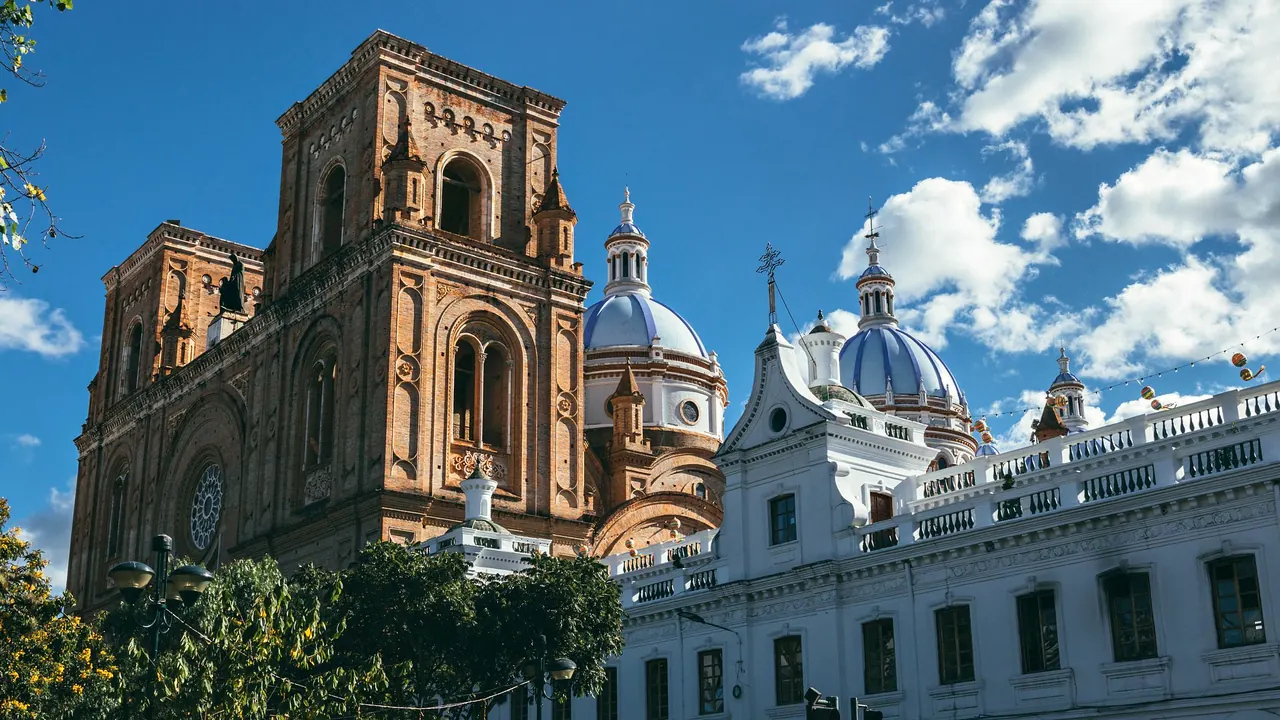
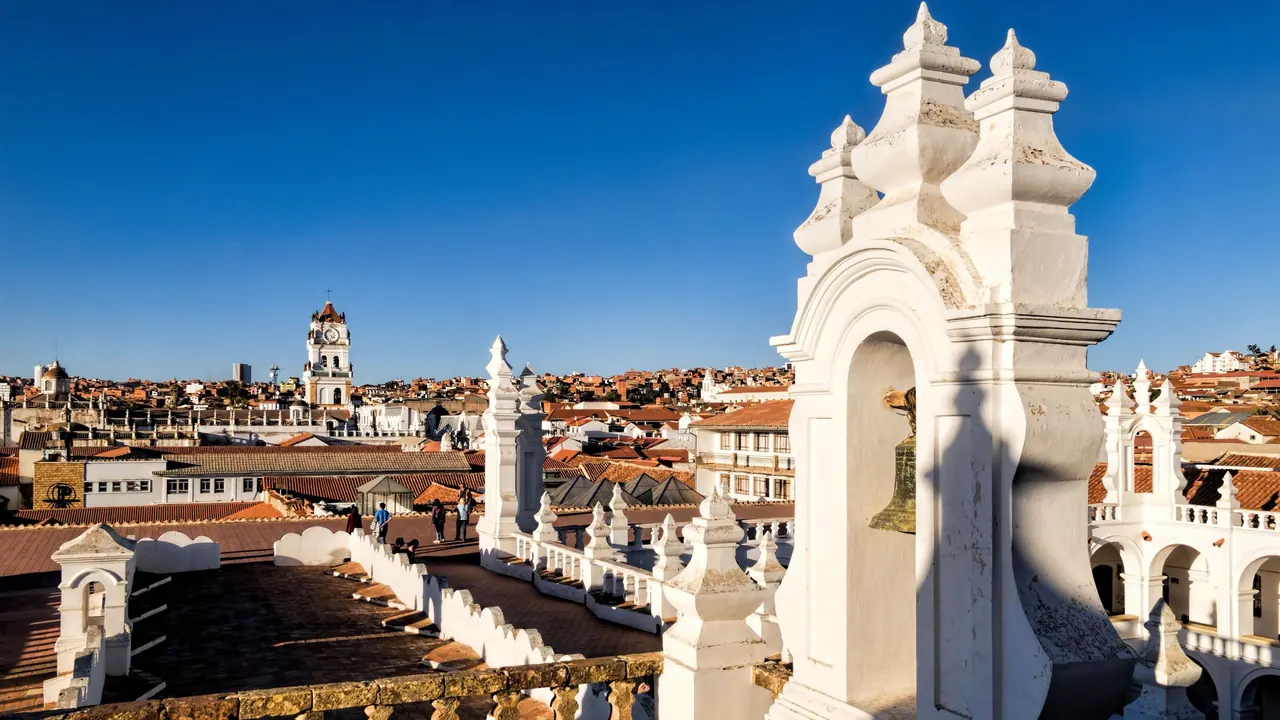
Photos: Cuenca, Ecuador by Charly Chacon, Pexels License; Sucre by Dan Lundberg, CC BY-SA 2.0, cropped.
Cuenca, Ecuador or Sucre?
Our verdict in twelve categories, each scored against the same fixed benchmark cities, and the climate month by month, so you can choose for your trip.
Choose Cuenca, Ecuador for
- wellness
- day trips
- nature and the outdoors
Cuenca is the better choice for travellers who want the mountains close at hand and a few comforts along the way. Cajas National Park starts less than an hour from the old centre, the hot springs at Baños make an easy half day, and the valley towns and the Inca temple at Ingapirca give you more to do on outings. If you want to come home with a fine Panama hat or some Chordeleg silver, this is the city for it.
Choose Sucre for
- prices
- getting around
For a slower, cheaper trip, Sucre is the one. Money goes even further here. Its long dry season runs from April to September, so those months are reliably good for walking, while Cuenca gets some rain in every month. Its history runs from Bolivian independence to dinosaur footprints, and its weaving traditions, from the Jalq'a villages to the Tarabuco Sunday market, reward anyone who likes textiles. It works best as a place to settle into for a week or more, rather than one for ticking off sights.
Scoreboard
Twelve categories on one fixed scale from 0 to 100. The shaded stretch is the gap between the two.
Your match
Pick a travel style or drag the sliders, and both match scores follow your weighting.
Wins on wellness and day trips with your weighting.
Wins on prices and getting around with your weighting.
What matters to you?
Category by category
What the scores mean for a trip.
Beaches & swimming
Swimming is not a reason to visit either city. Cuenca is at least a long drive over the Andes from the Pacific, while Sucre lies in a landlocked country with no coast to reach. In Cuenca the warm thermal pools at Baños are a pleasant substitute. In Sucre you are limited to a hotel or municipal pool.
Food & drink
Both cities serve hearty, inexpensive highland food with little fine dining, and the market halls are the best place to eat in each. In Cuenca that means hornado carved to order in the Mercado 10 de Agosto, mote pillo for breakfast, and weekend trips to Ricaurte for spit-roast cuy, with a cup of canelazo against the cold.
Sucre's day starts with salteñas eaten standing up. Spicy chorizos chuquisaqueños and the juice counters of the Mercado Central fill the rest of it. Its particular pleasure is chocolate from the old makers around the plaza, and singani takes the place of canelazo in the glass.
Culture & sights
These are two whitewashed colonial grids, both on the UNESCO list, and each fills two or three unhurried days. Cuenca's landmark is the New Cathedral's blue-tiled domes over Parque Calderón. Its best museum, Pumapungo, sits on the excavated Inca city of Tomebamba, and much of the pleasure is walking El Barranco above the river.
Sucre puts national history at the centre. The Casa de la Libertad holds the documents of Bolivian independence. The Museo de Arte Indígena shows Jalq'a and Tarabuco weaving, and at the edge of town a quarry wall carries thousands of dinosaur footprints, which has no equivalent in Cuenca.
Nightlife
Neither city is somewhere to plan a vacation around nights out. Cuenca's evenings centre on Calle Larga and the streets running down to the river, with craft beer and salsa or reggaeton from Thursday on. The cold sends most people home early. Sucre's students fill a couple of clubs near the plaza on Fridays and Saturdays until after midnight, though most visitors stop at a singani after dinner.
Nature & outdoors
Cuenca has the better access to the outdoors. Cajas National Park starts less than an hour west of town. Its páramo of glacial lakes and granite ridges climbs past 4,000m, and its marked trails let you walk alone for an hour or all day. Back in the city, the tree-lined Tomebamba and three other rivers give long paths for walking and cycling.
Sucre's country is dry, red and ochre. The Cordillera de los Frailes, with the striped Maragua crater and the Jalq'a villages, is striking, but it is usually done as a guided trek of one to three days, sleeping in community lodges. Closer to town there is less: the Siete Cascadas and short climbs above the Recoleta.
Day trips
Cuenca gives you more good outings. Ingapirca, Ecuador's largest Inca site, is about two hours north. A loop east takes in the Gualaceo market, the silversmiths of Chordeleg and the hat weavers of Sígsig, with adobe villages such as Susudel to the south.
Sucre's best outing is the Sunday market at Tarabuco, where Yampara people come in traditional dress. Add the eclectic Castillo de La Glorieta and the village of Yotala, and the list is nearly done. Potosí is far enough away that it works better as the next stop than as a day out.
Good for families
Both cities are calm and friendly with children, though neither has much made for them, and the altitude tires young children for the first few days. That effect is stronger in Sucre, which is higher. Cuenca has Bioparque Amaru with its condors and spectacled bears, plus the warm pools at Baños.
Sucre's highlight is the Parque Cretácico, where life-size dinosaur models stand in front of a cliff covered in real footprints. Medical care there is basic, so Sucre suits families with older children better.
Getting around
You will see both on foot, since almost everything is within a compact colonial grid. In Cuenca, the hard part is the steep steps down to the river, and its tram runs from the airport side through the centre. In Sucre, the effort is the climb to the Recoleta. Beyond walking distance you rely on taxis and on micros that come without maps. In both cities, getting into the countryside means a bus from the terminal or a hired driver.
Shopping & style
Cuenca has more worth buying. The toquilla straw Panama hat is finished in workshops all over town and sold in every grade up to superfine. There are also ceramics and embroidery, the flower market beside the New Cathedral, and filigree silver from Chordeleg nearby.
Sucre's shopping comes down to two things: textiles and chocolate. The dark Jalq'a weavings and bright Tarabuco designs in the fair-trade shops are beautiful, and fashion and design shopping is absent in both cities.
Affordability
Both are very cheap by any standard, and Sucre is the cheaper of the two. Its market lunches, salteñas and taxi rides cost almost nothing, and even its boutique hotels in restored colonial houses stay modest, which is why language students settle there for weeks.
Cuenca comes close if you eat in the market halls and from set lunches. Wine, foreign spirits and the international restaurants around the old centre push a day's spending up faster than anything in Sucre.
Live music & performing arts
Cuenca has slightly more on stage. The Cuenca Symphony Orchestra gives regular concerts, many of them free, in old churches and theatres, and Teatro Sucre runs a small season of its own. On Christmas Eve the Pase del Niño Viajero procession fills the streets with costumed children and decorated horses.
Sucre's performances are mainly folkloric: dinner shows of dances from around Bolivia and weekend peñas with charango and panpipes. The national symphony only visits the Teatro Gran Mariscal from time to time.
Wellness & relaxation
Cuenca has a real bathing culture. In Baños, a short ride from town, people have soaked in hot springs for generations, and the spa complexes there offer mineral pools, steam rooms and mud treatments. Massage in town is cheap too.
Sucre has no springs and only a handful of massage rooms. What it offers is rest: shaded courtyards, benches on the Plaza 25 de Mayo and sunset from the Recoleta arcade.
When should you go?
Pick your month. The climate figures are measured averages, not a forecast.
Cuenca, Ecuador in July
Sucre in July
Daytime high, °C
Rainfall in the month, mm
Where the figures come from
Cuenca, Ecuador has no weather station within reach, so its figures come from a gridded climate model rather than a measured record, and read a broad area rather than the city itself.
Temperature and rainfall are climate normals, averaged over the years shown. Cuenca, Ecuador: 2001-2020 normals, NASA POWER reanalysis grid, no weather station within 90 km. Sucre: 1991-2020 normals, Sucre (5.4 km from centre).
Neither city ever gets warm enough for beach weather, and neither ever gets truly hot. Cuenca stays cool and spring-like all year, with daytime highs around 17°C. Rain falls in every month. It peaks in March and April, at around 124mm in March, and is lightest from July to September, when mornings are clearest for Cajas. Bring a warm layer whenever you go, because evenings are chilly.
Sucre is a few degrees warmer, with highs of about 20°C to 23°C, and its year divides much more sharply. From April to September it barely rains, so this is the easy time for city walks and treks in the Cordillera de los Frailes. From December to February the rains come, reaching about 125mm in January, and the hills turn green. For a dry-season trip to both, July and August work well in each city.
Which traveller are you?
On an outdoors trip, Cuenca is the stronger base. Cajas, with its lakes, ridges and marked trails, starts less than an hour away by bus. Sucre's Frailes treks are memorable, but they need a guide and rough roads.
For a relaxing and wellness trip, choose Cuenca. The hot springs and spa pools at Baños are a short ride away, and the riverside paths suit slow evenings. Sucre offers sunny courtyards and a gentle pace, but it has no bathing tradition at all.
On a trip with a tight budget, Sucre stretches your money furthest. Market lunches, salteñas, taxis and colonial guesthouses cost very little, and many language students stay for weeks. Cuenca is also cheap, but imported food and drink add up there.
Before you go
| Measure | Cuenca, Ecuador | Sucre |
|---|---|---|
| Official language | Spanish, Shuar, Northern Quichua | Spanish, Aymara, Quechua, Guarani |
| Currency | US Dollar (USD) | Boliviano (BOB) |
| Sockets | AB120 V, 60 Hz | AC50 Hz |
| Driving side | Right | Right |
| Time zone | UTC-5 | UTC-4 |
| Emergency number | 911 | 911 |
| Elevation | 2,550 m | 2,810 m |
| Main airport | Mariscal Lamar Airport (CUE)2 km from centre3 non-stop destinations | Alcantarí International Airport (SRE)25 km from centre3 non-stop destinations |
| Public holidays this year | 11 days | 12 days |
By the numbers
| Measure | Cuenca, Ecuador | Sucre |
|---|---|---|
| City population | 361,524 | 360,544 |
| People per km² | 5,121 | 204 |
| Museums within 10 km | 4 | 4 |
| UNESCO World Heritage sites within 50 km | 2 | 1 |
Where else could you go?
Every comparison below shares a destination with this one, so you can follow Cuenca, Ecuador or Sucre somewhere new.
- Guayaquilvs Cuenca, Ecuador
- Quitovs Cuenca, Ecuador
- La Pazvs Sucre
- Punovs Sucre
- Saltavs Sucre
- Arequipavs Sucre