Cusco or Kathmandu?
Two destinations compared in twelve categories, each scored against the same fixed benchmark cities. Weight what matters to you and the verdict follows.
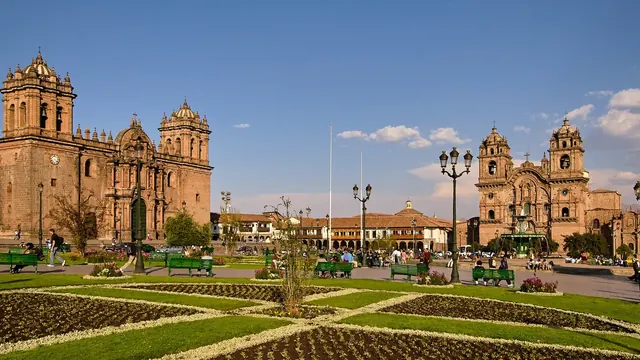
Photo: Pedro Szekely, CC BY-SA 2.0, cropped
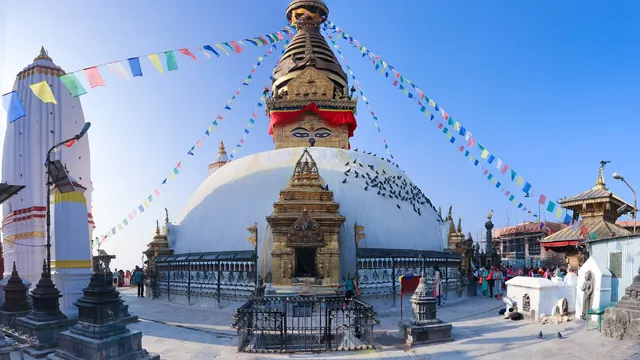
Photo: Nabin K. Sapkota, CC BY-SA 4.0, cropped
Your match
Too close to call, 1 point apart
Wins on getting around and day trips with your weighting.
Wins on prices and wellness with your weighting.
What matters to you?
Pick a travel style or drag the sliders. The match scores above update as you do.
The verdict
Cusco is the stronger choice if the mountains themselves are the point. The Sacred Valley lies just below the city, and Humantay, Rainbow Mountain and the Inca Trail all start within reach, so a week mixes Inca stonework in town with hard, high walking outside it. The centre is small enough to cover on foot once you have adjusted to the thin air. The trade-offs are altitude, which makes it a poor fit for young children, and the cost of Machu Picchu, which takes a large share of any budget.
Kathmandu suits the traveller who wants to watch a religion being lived rather than read about the past in stone. Pilgrims circle Boudhanath at dusk and cremations take place in the open at Pashupatinath. Daily costs are about as low as travel gets, and the monasteries offer meditation and yoga courses that Cusco cannot match. The Himalaya are more a gateway than a backyard, though, and traffic and dust make each outing slower and more tiring.
Scoreboard
Our verdict on each category, scored 0 to 100 against fixed benchmark cities.
Category by category
What the scores mean for a trip to Cusco or Kathmandu.
Beaches & swimming34
Neither city offers any swimming, so a beach has to be a separate leg of the trip. From Cusco that means a flight down to the Pacific. In Kathmandu the cold rivers are for rafting and the only realistic swim is in a hotel pool.
Food & drink5655
Both cities eat well at street level without being great food destinations, and the difference is in the type of cooking. Cusco is built on highland produce: many kinds of potato and maize, alpaca, trout and cuy, best explored at the San Pedro market. San Blas has Novoandino tasting menus that give it a more polished top end.
Kathmandu draws on more than one kitchen. You get Nepali dal bhat, Newari choila and yomari in the old bazaars and Patan, and Tibetan thukpa around Boudhanath, while momos are sold everywhere. Fine dining is scarcer here, and more care is needed with water.
Culture & sights8182
Both are outstanding, but they show very different things. Cusco is history you can read in stone. Inca walls without mortar run under Spanish churches, Qorikancha carries a monastery on its foundations, and the zigzag walls of Sacsayhuamán stand above the town.
Kathmandu's heritage is in daily use. The Kumari lives in Durbar Square, Tibetan pilgrims circle Boudhanath, and cremations burn by the river at Pashupatinath. Patan adds a finer Durbar Square and a museum that explains Newari bronze and woodwork better than anything in Cusco's modest collections.
Nightlife4236
Neither is a night out in its own right, but Cusco goes a little further. Its bars and clubs just off the Plaza de Armas stay open into the early hours at weekends, and San Blas adds quieter cocktail and craft beer bars. Thamel has the same trekker crowd on its rooftops and in its pool halls, but most of it closes around midnight, and the rest of Kathmandu is quiet after dinner. In Cusco, the altitude and pre-dawn tour starts keep many people sober anyway.
Nature & outdoors8670
Cusco puts you inside the high Andes rather than within sight of them. The Sacred Valley's farmed terraces lie below the city, with the snow peaks of the Cordillera Urubamba rising above them, and higher up the open puna is home to condors and vicuñas, with mountain bikers riding down off the plateau. Rafters head for the Apurímac, and the remote circuit around Ausangate offers days of walking far from any road.
Kathmandu's valley is gentler, ringed by forested hills, with oak and rhododendron trails in Shivapuri and a cable car up Chandragiri. From here the Himalaya are mostly a view, seen at sunrise from Nagarkot or Dhulikhel or from an hour's flight past Everest. The white water and the Langtang trek start hours away.
Day trips7856
Cusco has more good day trips. Pisac, Ollantaytambo, Chinchero, and Moray with the Maras salt pans fill several days in the Sacred Valley, and Tipón and Andahuaylillas make a quieter outing to the south-east. Machu Picchu, though it takes a very long day by road, train and bus, is the trip most visitors come for.
Kathmandu has one essential trip, Bhaktapur, which pairs well with Changu Narayan's carving. After that come small Newari villages and Pharping's cave shrines, all on slow roads. Both lists repeat a single theme, but Cusco's runs much deeper.
Good for families1020
Neither city is easy with young children, but Kathmandu is less of a strain. Cusco's altitude is a real health risk for small children, and its steep cobbled streets offer them almost nothing. Families often stay down in the Sacred Valley instead.
Kathmandu at least has monkeys at Swayambhunath, prayer wheels to spin at Boudhanath, a small zoo and the Garden of Dreams. Traffic, dust and care with food still wear parents down. Both suit older children best, especially those heading out on a trek.
Getting around4825
Cusco is the easier city to get around. Its historic centre is compact, and nearly everything is a walk from the Plaza de Armas, though the climbs to San Blas are hard in the thin air. Cheap taxis cover the trip back uphill at night.
In Kathmandu you share the lanes with motorbikes, pavements come and go, and the minibuses are hard for a visitor to work out. Taxis need a fare agreed first, and heavy traffic turns the trip to Patan or Boudhanath into a slow, dusty crawl.
Shopping & style5255
Both cities are for craft shopping, but in Cusco the craft is cloth: alpaca and baby alpaca knitwear, ponchos and blankets, with the best naturally dyed weaving coming from cooperatives such as Chinchero's. The San Blas workshops add ceramics, carved saints and silver. Around the Plaza de Armas, shop after shop carries the same factory-made stock, and an alpaca label is not always honest.
Kathmandu leans towards religious art and metalwork. Boudhanath has Tibetan carpets, thangkas and ritual objects, Patan casts bronze and copper statues in its own workshops, and Thamel adds pashmina, singing bowls and trekking gear, much of it copied. Bargaining is expected, the old bazaars of Asan and Indra Chowk are better for looking than for buying, and neither city has much in the way of fashion or design.
Affordability7397
Cusco is easy on a daily budget. Market lunches, set menus, taxis and plain guesthouses all cost little, and one combined ticket opens many of the churches and Inca sites. Comfort gets expensive quickly, though: the hotels in restored colonial mansions and the restaurants on the Plaza de Armas charge much what you would pay at home, and the Machu Picchu trip is a big cost that few visitors skip.
Kathmandu stretches the same money a good deal further, and it stays cheap even when you move up to a comfortable room in Thamel or near Boudhanath. Street meals and taxi rides barely register. The extras are smaller than in Cusco: foreigners pay entry fees at the main temple and palace sites, and imported drinks are dear. Most of the money goes on treks and mountain flights outside the city, and you can leave those out.
Live music & performing arts3028
Cusco's best performances belong to its festival year, while Kathmandu adds some contemporary music to its religious calendar. In Cusco, Inti Raymi re-enacts the Inca sun festival at Sacsayhuamán around the June solstice, and Corpus Christi and the Qoyllur Rit'i pilgrimage bring out masked dancers. On ordinary evenings there are folkloric shows, with panpipe and charango bands playing over dinner.\n\nKathmandu has masked dances at Indra Jatra and devotional singing at its temples in the evening. Thamel's bar bands play rock covers and Nepali folk most nights, and an autumn jazz festival gives the year one real programme. Formal theatre and classical music are scarce in both.
Wellness & relaxation3345
Kathmandu is the better place to slow down, mostly because of its spiritual side. Monasteries such as Kopan run meditation and Buddhist philosophy courses for foreigners, and yoga, Ayurvedic treatments and skilled massage are easy to find, even if the streets are loud.
In Cusco, rest is mostly something you look for outside the city. Cheap massage and hotel rooms pumped with oxygen help with the altitude, but the hot springs are far off, and calm really means a riverside lodge in the Sacred Valley.
Which traveller are you?
On an outdoors trip, Cusco is the better base. Glacial lakes, Rainbow Mountain, the Inca Trail and rafting on the Urubamba all start within a day's reach. Kathmandu's big treks and white water begin hours away, past slow traffic.
For a trip on a tight budget, Kathmandu stretches money much further. Guesthouses, momos and taxis cost very little, and the only large outlays are permits and flights you can choose to skip. In Cusco, the Machu Picchu train and entry are hard to avoid.
On a relaxing and wellness trip, Kathmandu offers more depth. The monasteries around Boudhanath run meditation courses, and yoga and Ayurvedic treatments are easy to find. Cusco has cheap massage, but real calm there means leaving the city for lodges in the Sacred Valley.
When should you go?
Pick the month you can travel and see both cities side by side. The climate figures are measured averages, not a forecast.
| July | Cusco | Kathmandu |
|---|---|---|
| Daytime high | 20 °C | 29 °C |
| Night-time low | 1 °C | 20 °C |
| Rainfall in the month | 5 mm | 384 mm |
| Sunshine | No figure | 4 hours a day |
| Daylight | 11 hours a day | 14 hours a day |
Cusco hardly changes temperature through the year, with afternoons near 21°C in every month, so the season you choose is about rain. May to September is dry, with clear skies for trekking and Machu Picchu but freezing nights. From December to March the rain is heavy, peaking around 159mm in January, and trails turn muddy while the valleys turn green.
Kathmandu works almost the other way round. The monsoon runs from June to September, when afternoons reach 29°C and July brings about 384mm of rain, along with the cloudiest skies of the year. October and November are the best months, dry and sunny with around 220 hours of sunshine and the clearest mountain views. December to February stays dry and pleasant for walking, though cooler and often hazy. Spring warms up steadily before the rains return.
The whole year
Each row is shaded against that destination’s own year, so the deepest cell is its best month for that figure and the palest its weakest. Shades are not comparable between the two rows.
Where the figures come from
Cusco's station stands 151 m below the city centre, so the centre is likely a little cooler than the figures say.
Temperature and rainfall are climate normals, averaged over the years shown. Cusco: 1991-2020 normals, Cuzco (3.7 km from centre). Kathmandu: 1991-2020 normals, Kathmandu Airport (4.7 km from centre).
Before you go
| Measure | Cusco | Kathmandu |
|---|---|---|
| Official language | Spanish, Aymara, Quechua | Nepali |
| Currency | Sol (PEN) | Nepalese Rupee (NPR) |
| Sockets | ABC220 V, 60 Hz | CM230 V, 50 Hz |
| Driving side | Right | Left |
| Time zone | UTC-5 | UTC+5:45 |
| Emergency number | 111 or 911 | Police 100, ambulance 102, fire 101 |
| Elevation | 3,399 m | 1,300 m |
| Main airport | Alejandro Velasco Astete International Airport (CUZ)5 km from centre6 non-stop destinations | Tribhuvan International Airport (KTM)4 km from centre38 non-stop destinations |
| Public holidays this year | 16 days | - |
By the numbers
| Measure | Cusco | Kathmandu |
|---|---|---|
| City population | 428,450 | 845,767 |
| People per km² | - | 17,121 |
| Museums within 10 km | 11 | 9 |
| UNESCO World Heritage sites within 50 km | 2 | 1 |
Where else could you go?
Every comparison below shares a destination with this one, so you can follow Cusco or Kathmandu somewhere new.