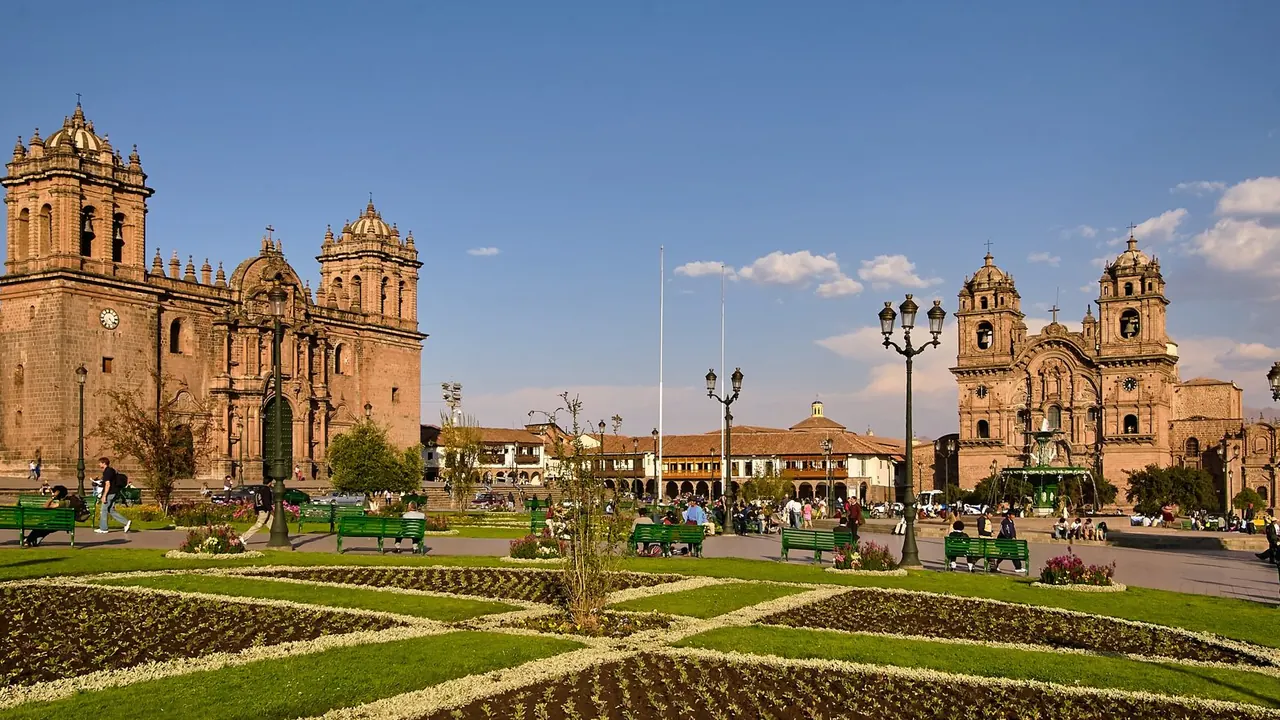
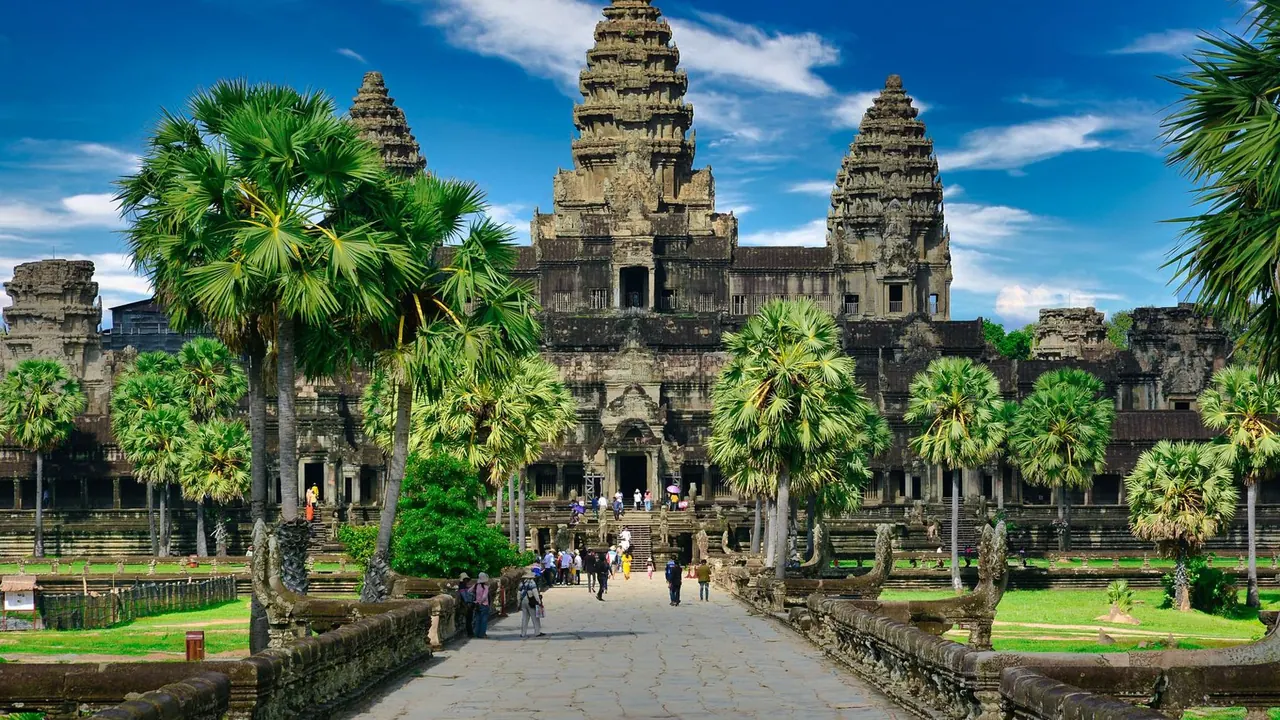
Photos: Cusco by Pedro Szekely, CC BY-SA 2.0, cropped; Siem Reap by allPhoto Bangkok, Pexels License.
Cusco or Siem Reap?
Our verdict in twelve categories, each scored against the same fixed benchmark cities, and the climate month by month, so you can choose for your trip.
Choose Cusco for
- nature and the outdoors
- day trips
- getting around
Cusco is the choice for travellers who want mountains as much as monuments. The Inca city, the Sacred Valley below it and the treks towards Salkantay and Ausangate make it a trip for walkers and history lovers who can cope with thin air, early starts and cold nights. Its highland cooking and alpaca weaving also give it more to eat and to bring home.
Choose Siem Reap for
- wellness
- families
- prices
Siem Reap suits a slower, warmer trip built around one overwhelming sight. The temples of Angkor are a short tuk-tuk ride away, and the days settle into dawn at the ruins, afternoons by the pool and a cheap massage in the evening. It is easier with children, gentler on the budget and far better for rest, though the land is flat and there are few outings beyond the temples.
Scoreboard
Twelve categories on one fixed scale from 0 to 100. The shaded stretch is the gap between the two.
Your match
Pick a travel style or drag the sliders, and both match scores follow your weighting.
Too close to call, 2 points apart
Wins on nature and the outdoors and day trips with your weighting.
Wins on wellness and families with your weighting.
What matters to you?
Category by category
What the scores mean for a trip.
Beaches & swimming
Neither city is a place to swim in open water. Cusco sits high in the Andes with glacial lakes and cold nights, so even a pool has little appeal. Siem Reap has only the muddy Tonle Sap and no coast within easy reach, but its heat makes the hotel pool a real part of the day in a way Cusco cannot match.
Food & drink
Cusco gives you more to eat. The highland larder of potatoes, maize, quinoa, river trout and alpaca runs from set lunches in the San Pedro market to Novoandino tasting menus in San Blas, though the choice thins quickly beyond Peruvian cooking.
Siem Reap has a fine core of Khmer dishes such as fish amok and num banh chok, plus a few tasting menus and training kitchens, but there is less of it. Pizza and backpacker menus dominate around Pub Street, so the better meals are a tuk-tuk ride away across the river.
Culture & sights
Both are built around a great ancient civilisation, but Angkor is the bigger draw. Siem Reap's temple park runs from Angkor Wat to the stone faces of the Bayon and the tree-split galleries of Ta Prohm. It needs several days and ranks among the world's great sights, even if the town itself has little beyond its museum and a few pagodas.
In Cusco the history is inside the city. Inca walls line the streets, Qorikancha carries a colonial monastery on its foundations and the cathedral holds Cusco School paintings. With Sacsayhuamán above, it is the better place to wander a lived-in colonial centre, but no single site matches the scale of Angkor.
Nightlife
Nights out are much alike in the two cities. Each has a small backpacker scene of cheap drinks with a few quieter bars to escape to, and early tour starts cut evenings short in both.
Where they differ is the setting. Cusco's bars and clubs huddle in the streets off the Plaza de Armas, and the altitude makes every drink hit harder. Siem Reap's Pub Street is a single neon strip of open-fronted bars spilling onto the road, with calmer cocktail bars along the river.
Nature & outdoors
Here Cusco is in another league. It is a base for serious Andean country: the terraced Sacred Valley under snow peaks, glacial Humantay, Vinicunca above 5,000m, rafting on the Urubamba and treks such as the Inca Trail and the Ausangate circuit, with condors and vicuñas on the high plateau.
Siem Reap's outdoors are gentle and flat. You can cycle between rice paddies, take a boat to the bird colonies of Prek Toal on the Tonle Sap and walk in the forest at Phnom Kulen and Kbal Spean. The heat rules out anything more strenuous for much of the year.
Day trips
Cusco has more good days out within reach. Pisac, Ollantaytambo, Chinchero, the terraces of Moray and the salt pans of Maras all lie in the Sacred Valley about an hour away. Machu Picchu is a long day by road, train and bus, but it is the excursion of a lifetime.
Siem Reap's outings are mostly more temples: the carving at Banteay Srei, the overgrown ruin of Beng Mealea and the far-off pyramid at Koh Ker, plus the stilt villages on the Tonle Sap. Neither city has another large town close by, but Cusco's valley offers more variety in villages, markets and landscape.
Good for families
Neither is easy with small children, but Cusco is the harder of the two. At 3,400m altitude sickness is a real risk for children who cannot say how they feel. Steep cobbles and narrow pavements add to the strain, so families often stay lower down in the Sacred Valley.
Siem Reap has heat and disorderly traffic instead, but no altitude, and an afternoon by the hotel pool helps tired children recover. Older children can clamber through Ta Prohm and take boats to the stilt villages, and Cambodians are warm towards children.
Getting around
Neither city has a metro or tram, but Cusco's compact centre is the more rewarding to walk, with almost every sight a short walk from the Plaza de Armas. The climbs to San Blas and Sacsayhuamán are tough in thin air, and taxis are cheap for the trip back uphill. Shared minibuses run to the Sacred Valley, and trains go to Machu Picchu.
In Siem Reap, broken pavements and heat mean you will be driven most of the time, by a tuk-tuk hired for the day or called by app, with a car for the distant temples. Cycling the flat Angkor circuits is the pleasant exception.
Shopping & style
Both are about crafts, and Cusco has the stronger offer. Alpaca knitwear, ponchos and naturally dyed weaving from cooperatives such as those in Chinchero are worth bringing an empty bag for, and San Blas adds ceramics and silverwork. Much of what is sold near the main square is factory stock, though.
Siem Reap's Old Market and night markets sell silk scarves, kramas and souvenirs. Its workshops for silk, carving and lacquerware are the best places to buy. Neither city has much in the way of fashion.
Affordability
Both are cheap day to day, but Siem Reap is cheaper. A hotel with a pool, a day with a tuk-tuk driver and Khmer meals at stalls cost very little, and the Angkor pass is the only large expense.
Cusco's everyday costs are low too, but its main attractions are not. The train and entry for Machu Picchu and guided treks such as the Inca Trail take up a large share of any budget. The hotels in colonial mansions also charge close to international rates.
Live music & performing arts
Neither city has theatre or classical music, so evenings depend on shows staged for visitors. Cusco offers folkloric dance and panpipe bands, and its festivals are the high points. Inti Raymi at Sacsayhuamán and the Qoyllur Rit'i pilgrimage fill the streets and hills with masked dancers.
Siem Reap offers classical apsara dance, best in the smaller and more serious performances, and a much-admired Cambodian circus under a big top. For a single good evening, the circus is the safer choice. Cusco is the better place if your dates fall on a festival.
Wellness & relaxation
Siem Reap is the far better place to unwind. Massage is everywhere, hotel spas use herbal compresses and yoga is easy to find. After a dawn at the temples, the hot afternoons slow the pace in garden hotels away from Pub Street.
Cusco works against rest. The altitude is tiring in the first days, nights are cold and tours leave before dawn. Massage is cheap and some hotels pump oxygen into the rooms, but for real calm visitors go down to the Sacred Valley lodges or out to the hot springs at Aguas Calientes or Lares.
When should you go?
Pick your month. The climate figures are measured averages, not a forecast.
Cusco in July
Siem Reap in July
Daytime high, °C
Rainfall in the month, mm
Where the figures come from
Cusco's station stands 151 m below the city centre, so the centre is likely a little cooler than the figures say.
Siem Reap has no weather station within reach, so its figures come from a gridded climate model rather than a measured record, and read a broad area rather than the city itself.
Temperature and rainfall are climate normals, averaged over the years shown. Cusco: 1991-2020 normals, Cuzco (3.7 km from centre). Siem Reap: 2001-2020 normals, NASA POWER reanalysis grid, no weather station within 90 km.
Cusco hardly changes in temperature, with daytime highs around 20°C all year, so rain decides the season. May to September is dry, with clear skies and freezing nights, and this is the time for the treks and Machu Picchu. The rain builds from October and is heaviest from December to March. January brings around 159mm, so trails turn muddy, though the valley is greener.
Siem Reap is hot all year. Its best months are November to January, when the rain has stopped and the heat has not yet built up. From February to April highs reach 36°C, which makes temple days punishing. The wet season from May to October brings heavy rain, peaking at about 231mm in September. The two cities' dry seasons fall at opposite ends of the year.
Which traveller are you?
On an outdoors trip, Cusco deserves a longer stay. Allow a few easy days to adjust to the altitude, then build the trip around a multi-day trek. In Siem Reap the outdoors is an early-morning extra, not the reason to go.
For a family trip with children, Siem Reap is easier to plan: one base, temples in the cooler mornings and no altitude to adjust to. Cusco is better kept for when the children are older and can manage long, early days.
For a relaxing and wellness trip, Siem Reap lets the whole stay slow down, with a few temple mornings and long, idle days between them. Cusco is an active trip, and rest there tends to be a day snatched between excursions.
Before you go
| Measure | Cusco | Siem Reap |
|---|---|---|
| Official language | Spanish, Aymara, Quechua | Khmer |
| Currency | Sol (PEN) | Riel (KHR) |
| Sockets | ABC220 V, 60 Hz | ACG230 V, 50 Hz |
| Driving side | Right | Right |
| Time zone | UTC-5 | UTC+7 |
| Emergency number | 111 or 911 | Police 117, ambulance 119, fire 118 |
| Elevation | 3,399 m | 18 m |
| Main airport | Alejandro Velasco Astete International Airport (CUZ)5 km from centre6 non-stop destinations | Siem Reap-Angkor International Airport (SAI)39 km from centre14 non-stop destinations |
| Public holidays this year | 16 days | 21 days |
By the numbers
| Measure | Cusco | Siem Reap |
|---|---|---|
| City population | 428,450 | 147,866 |
| Museums within 10 km | 11 | 6 |
| UNESCO World Heritage sites within 50 km | 2 | 1 |
Where else could you go?
Every comparison below shares a destination with this one, so you can follow Cusco or Siem Reap somewhere new.