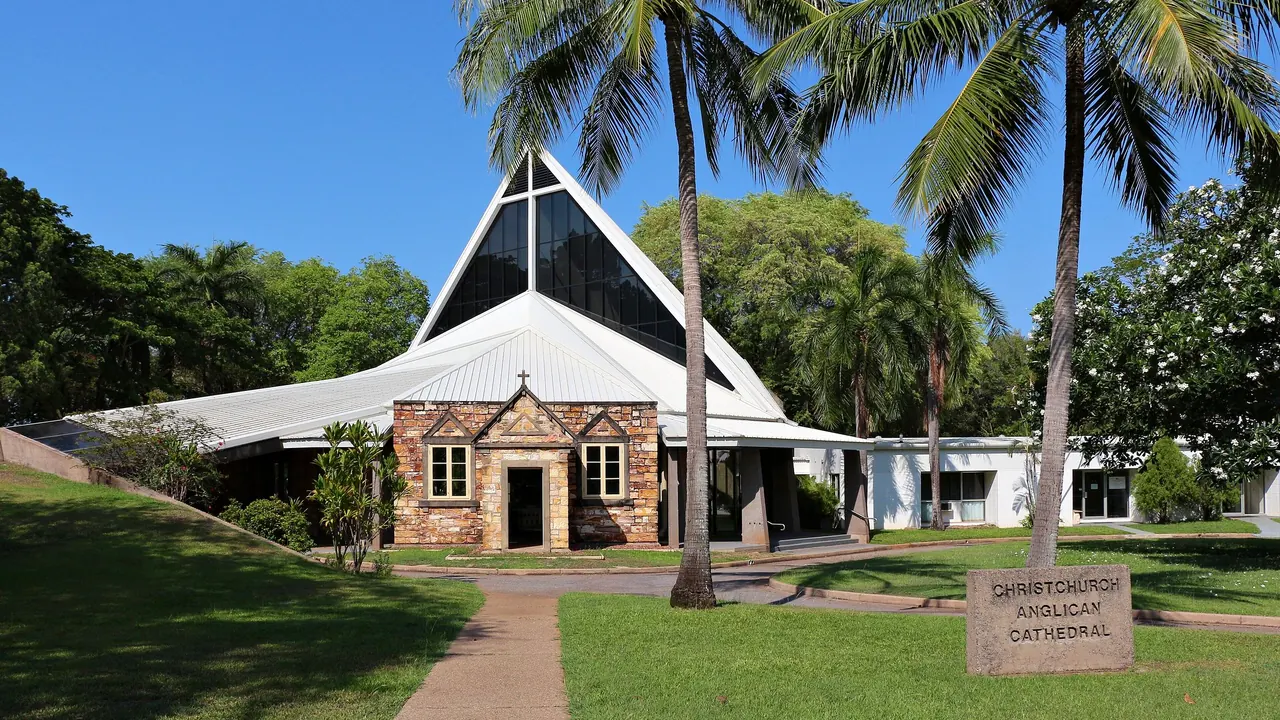
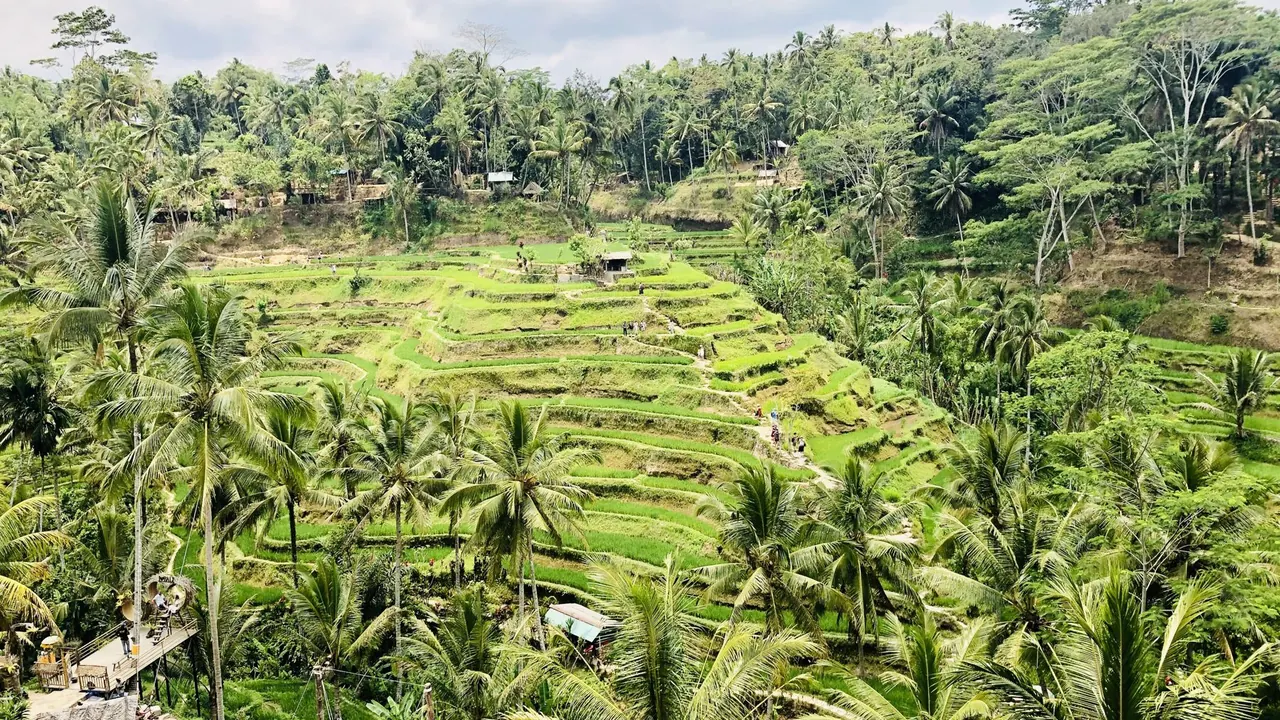
Photos: Darwin by Bernard Gagnon, CC BY-SA 4.0, cropped; Ubud by Pinterpandai, CC BY-SA 3.0, cropped.
Darwin or Ubud?
Our verdict in twelve categories, each scored against the same fixed benchmark cities, and the climate month by month, so you can choose for your trip.
Choose Darwin for
- getting around
- nightlife
- families
Darwin is the choice if you're coming for the wild north of Australia. You get crocodile cruises on the Adelaide River, the waterfalls of Litchfield, and wetlands full of birds, all within reach of a small, informal city. It also has the stronger Aboriginal art and Second World War history, livelier pub evenings on Mitchell Street, and easier swimming for young children. Expect a car, a bigger budget and steady heat.
Choose Ubud for
- wellness
- day trips
- prices
Ubud suits travellers who want to slow down and settle in. Yoga, massage and retreats are part of daily life there, and Balinese temples, dance and painting fill the days. The rice terraces start at the edge of town, and the food has more depth. It costs far less for the same comfort, with one condition: you'll be relying on drivers, because walking and public transport won't get you far.
Scoreboard
Twelve categories on one fixed scale from 0 to 100. The shaded stretch is the gap between the two.
Your match
Pick a travel style or drag the sliders, and both match scores follow your weighting.
Wins on getting around and nightlife with your weighting.
Wins on wellness and day trips with your weighting.
What matters to you?
Category by category
What the scores mean for a trip.
Beaches & swimming
Neither city is a beach destination, though Ubud does a little better for actual swimming. Darwin has long stretches of sand at Mindil, Casuarina and East Point, but box jellyfish and saltwater crocodiles keep almost everyone out of the sea. People swim in the netted Waterfront lagoon or drive out to the waterholes of Litchfield instead.
Ubud has no beach at all. Still, the calm water inside the reef at Sanur is a day trip away, and most villas have a pool looking over the rice fields. If the sea matters to you, spending a few nights on the Bali coast is easy to arrange.
Food & drink
Darwin's best eating happens at its markets: Asian and Greek stalls on the sand at Mindil at sunset, and Saturday laksa at Parap, with barramundi and mud crab on most menus. Beyond that there's little choice, and a week can start to feel repetitive.
Ubud offers more variety for a longer stay. You'll find babi guling counters at lunchtime, slow-cooked bebek betutu and family warungs serving nasi campur. On top of that sit plant-based cafés, Kintamani coffee and a handful of tasting-menu kitchens. The better cooking is usually a lane or two away from the main street.
Culture & sights
Darwin's story belongs to the twentieth century: the Japanese bombing raids of 1942 and Cyclone Tracy in 1974. It's told in the oil storage tunnels, at the East Point gun emplacements and in the museum at Fannie Bay, which also holds a fine Aboriginal collection. Very little old architecture survived either disaster.
In Ubud, culture is something you see every day. There are offerings on the doorsteps, processions on feast days, the royal palace with its lotus-pond temple, and the Puri Lukisan, Neka and ARMA museums tracing Balinese painting. The rock-cut Elephant Cave at Goa Gajah adds a thousand years of history.
Nightlife
Darwin is clearly the place for a night out. Mitchell Street's big open-air pubs and backpacker bars fill up at weekends and through the dry season, and stay loud past midnight. Quieter options include sunset drinks at the sailing club and the waterfront bars.
Ubud is quiet well before midnight. An evening there means a long dinner, a drink in a garden bar and perhaps a band. Anyone wanting clubs makes the long drive down to Seminyak or Canggu.
Nature & outdoors
Both are strong, in different ways, and Ubud is slightly ahead because its landscape is right on the doorstep. Darwin's nature is about wildlife and wide distances: crocodiles leaping beside cruise boats, the Mary River wetlands, and the magnetic termite mounds and waterfall pools of Litchfield. Most of it is best seen in the dry season, and Kakadu is worth an overnight trip.
In Ubud you can walk straight from town onto the Campuhan Ridge and into the paddies. Tegallalang's terraces, rafting on the Ayung and the jungle waterfalls are all a short drive away. A pre-dawn climb of Mount Batur for sunrise over the crater lake is the big outing.
Day trips
Ubud is much the better base for day trips. Darwin's excursions are nearly all into national parks. The main exceptions are a flight or ferry to the Tiwi Islands for their art centres and the war cemetery at Adelaide River. Katherine Gorge is a long day's drive.
From Ubud you can bathe at the holy springs of Tirta Empul, see the cliff-cut tombs of Gunung Kawi, and visit Besakih on the slopes of Mount Agung or the painted pavilions of Klungkung. The UNESCO-listed terraces of Jatiluwih are also within reach. Slow roads and a hired driver decide how much fits into one day.
Good for families
Darwin is a little easier with small children, as long as you plan around the heat. It has a netted swimming lagoon and wave pool, a free water park, huge crocodiles to see up close, the Territory Wildlife Park and fish feeding at Doctors Gully.
Ubud gives children a warm welcome, and a villa pool makes the afternoons easy. Older children enjoy the dance shows, gentle rafting and walks through the rice fields. Toddlers struggle more, though, with the broken pavements, scooter traffic and snatching macaques.
Getting around
Neither is easy, but Darwin is simpler. Its compact centre puts the CBD, the Esplanade and the Waterfront within a short walk of each other, and buses reach the coast. Beyond that you'll need a car or a tour.
Ubud has no public transport worth relying on. Pavements are narrow, scooters fill the roads and the river valleys make every route steep. Visitors use ride-hailing apps and hotel shuttles, and plan their days around a hired driver.
Shopping & style
Darwin has one strong reason to shop: Aboriginal paintings, bark art and weavings, which are best bought from galleries linked to community art centres. Beyond that there are malls and market souvenirs.
Ubud offers far more handmade goods. There's the Art Market opposite the palace, silver at Celuk, woodcarving at Mas, paintings at Batuan, and furniture workshops on the road to Tegallalang. In town, small boutiques sell linen clothing and yoga wear.
Affordability
Ubud costs much less. Homestay rooms with breakfast, warung meals, massages and a driver for the day all come at a fraction of Western prices. Luxury resorts above the gorges and imported wine are where costs climb.
Darwin is expensive by any measure. Dry-season rooms are pricey and drinks especially so, and the hire car or guided tours you need for the parks add a lot. The free museum, free outdoor sights and market food help, and rooms are cheaper in the wet season.
Live music & performing arts
Darwin's highlight is its August festival of theatre, music and Aboriginal performance on outdoor stages. For the rest of the year you'll find touring shows at the Entertainment Centre, local theatre at Brown's Mart and cover bands on Mitchell Street.
Ubud has a show of some kind almost every night. Legong, Barong and the chanting Kecak are performed to live gamelan in the palace courtyard and at the lotus-pond temple, by village troupes with their own traditions. It has no theatre or concert hall, though.
Wellness & relaxation
This is where the two differ most. Darwin's offer is a few hotel spas and the shady spring-fed pools at Berry Springs, and the heat of the build-up and the wet season wears visitors down rather than restoring them.
Ubud is built around wellness. Yoga pavilions sit among the trees, retreats last anything from a weekend to several weeks, and spas look down into the Ayung and Petanu gorges. Traditional healers and the purification ritual at Tirta Empul round it out, and the rice fields stay quiet a few steps from the main road.
When should you go?
Pick your month. The climate figures are measured averages, not a forecast.
Darwin in July
Ubud in July
Daytime high, °C
Rainfall in the month, mm
Where the figures come from
Ubud's temperatures are measured 29 km from the centre, at Denpasar / Ngurah-Rai.
Ubud's station stands 209 m below the city centre, so the centre is likely a little cooler than the figures say.
Ubud has no rain gauge within 25 km of the centre, so its rainfall comes from a gridded climate dataset read at the city rather than from a gauge further away.
Temperature and rainfall are climate normals, averaged over the years shown. Darwin: 1991-2020 normals, Darwin Airport (7.7 km from centre). Ubud: 1991-2020 normals, Denpasar / Ngurah-Rai (29 km from centre).
Darwin has two clear seasons. From May to September almost no rain falls, the skies are at their sunniest and the national parks and markets are in full swing. From December to March the monsoon arrives, with January bringing around 470mm, plus storms and flooded roads. Daytime highs hardly change, between 31°C and 34°C all year, so the middle of the day is always too hot for walking. The sea stays warm all year, but it isn't for swimming in any month.
Ubud is a little milder and never fully dry. August is its driest month, with about 36mm, while January brings close to 300mm. The months from May to September are the most comfortable for trekking and the rice-field paths. The rainy months are greener but muddier, and both places are best avoided at their wettest. At Sanur, under an hour from Ubud, the sea is warm enough to swim in all year.
Which traveller are you?
On a relaxing and wellness trip, Darwin has slow afternoons and sunsets on the foreshore, and not much more. Choose Ubud, where the whole town keeps early hours built around meditation, sound healing and vegetarian cafés, and many villas look out over quiet paddies.
On a trip on a tight budget, Darwin is hard going. The flights are long, and the parks worth coming for lie beyond any bus. Pick Ubud, where the ridge walk, the paddies and daily temple life cost nothing and entry fees stay modest.
On a family trip with young children, Darwin is slightly easier. The evening markets on the sand suit an early family supper, and a crocodile park on the city's edge fills a morning. Ubud's safari park and zoo mean time in the car, like most outings there.
Before you go
| Measure | Darwin | Ubud |
|---|---|---|
| Official language | English | Indonesian |
| Currency | Australian Dollar (AUD) | Rupiah (IDR) |
| Sockets | I230 V, 50 Hz | CF50 Hz |
| Driving side | Left | Left |
| Time zone | UTC+9:30 | UTC+8 |
| Emergency number | 000 | 112 |
| Elevation | 0 m | 210 m |
| Main airport | Darwin International Airport / RAAF Darwin (DRW)5 km from centre20 non-stop destinations | Denpasar I Gusti Ngurah Rai International Airport (DPS)29 km from centre63 non-stop destinations |
| Public holidays this year | 12 days | - |
By the numbers
| Measure | Darwin | Ubud |
|---|---|---|
| City population | 139,902 | - |
| People per km² | 3,446 | - |
| Museums within 10 km | 6 | 14 |
| UNESCO World Heritage sites within 50 km | 0 | 1 |
| Swim season, months above 21 °C | 12 months | 12 months |
Where else could you go?
Every comparison below shares a destination with this one, so you can follow Darwin or Ubud somewhere new.