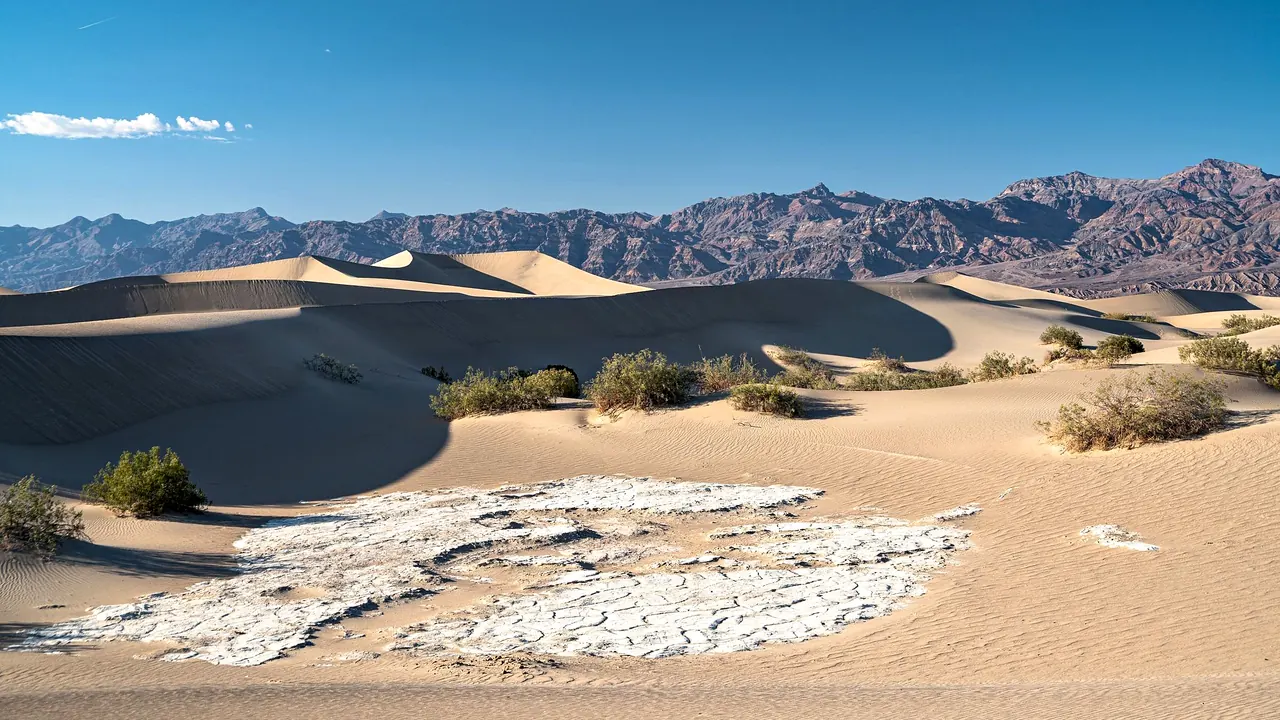
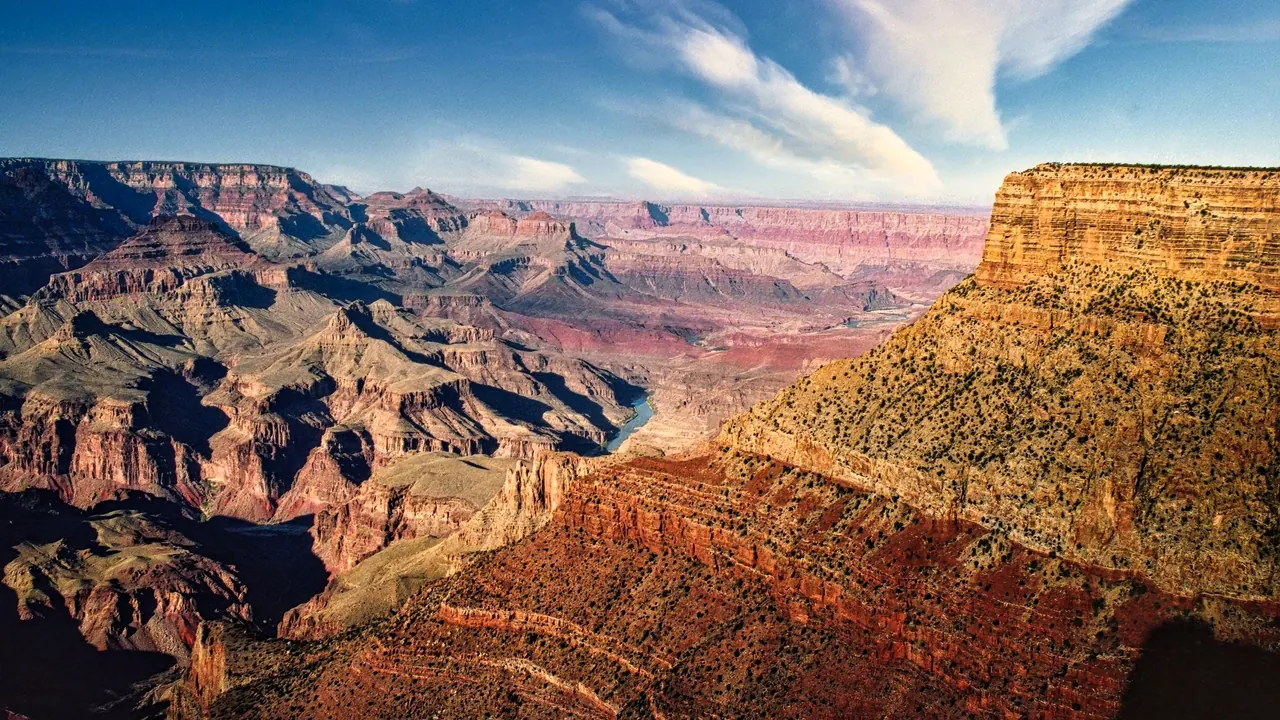
Photos: Death Valley by Anthony Brown, Pexels License; Grand Canyon by Tom Fisk, Pexels License.
Death Valley or Grand Canyon?
Our verdict in twelve categories, each scored against the same fixed benchmark cities, and the climate month by month, so you can choose for your trip.
Choose Death Valley for
- wellness
Death Valley is the stranger, emptier choice, and it suits a winter trip. When the Grand Canyon rim is cold, the valley floor is mild enough for hiking canyons and dunes. The warm spring-fed pools at Furnace Creek and the hot springs at Tecopa give tired legs somewhere to soak, and the silence is close to total. Choose it if you want salt flats, badlands and a dark sky more than towns or company. In return you accept long drives and very little to eat or do after dark.
Choose Grand Canyon for
- shopping
- families
- day trips
For most other trips the Grand Canyon is the better pick. The gorge is the more overwhelming sight, with rim walks anyone can manage, descent trails for serious hikers and shuttle buses that let you leave the car. There is also more around it: railway-era buildings on the South Rim, Native American craft, Flagstaff for a meal and a beer, and Sedona and the cliff dwellings within a day's drive. Families with school-age children will find it far easier going.
Scoreboard
Twelve categories on one fixed scale from 0 to 100. The shaded stretch is the gap between the two.
Your match
Pick a travel style or drag the sliders, and both match scores follow your weighting.
Wins on wellness with your weighting.
Wins on shopping and families with your weighting.
What matters to you?
Category by category
What the scores mean for a trip.
Beaches & swimming
Neither is a swimming destination, but the Grand Canyon at least has water. Lake Powell at Page, on its eastern edge, warms up in summer and has sandy coves, and the pools below Havasu Falls reward a long hike that needs a permit. The Colorado itself stays cold all year.
Death Valley has no open water at all. The salt flats are dry, and the only swimming is in the spring-fed pools at Furnace Creek, which are for resort guests.
Food & drink
At both places you eat to keep going, but the Grand Canyon gives you more choice. The South Rim has lodge dining rooms, including the historic El Tovar. Flagstaff's old downtown adds breweries, diners and Southwestern dishes such as green chile and Navajo frybread.
In Death Valley you rely on the lodge dining rooms and saloons at Furnace Creek, Stovepipe Wells and Panamint Springs, plus general stores, and most visitors bring a cool box. The one local treat is dates from the farm near Tecopa, which turn up in shakes and bread.
Culture & sights
The Grand Canyon has more to see beyond the landscape. On the South Rim there is Mary Colter's Desert View Watchtower, Hopi House and the railway-era village, and in Flagstaff the Museum of Northern Arizona and Lowell Observatory. Together they fill a couple of good mornings.
Death Valley's history is about mining and survival: the borax works behind the twenty-mule teams, the charcoal kilns at Wildrose and the visitor centre's account of the Timbisha Shoshone. Each is worth a stop on a drive rather than a morning of its own.
Nightlife
In both places the night belongs to the sky, and both have some of the darkest skies in the country. The Grand Canyon can fall back on Flagstaff's brewpubs and student bars, though they are too far from the rim if you want to be up for sunrise. Death Valley has only the saloons at Stovepipe Wells and Furnace Creek, which are quiet by mid-evening, and on winter nights the Milky Way is bright overhead.
Nature & outdoors
Both are among the great desert landscapes on earth, but the Grand Canyon is one overwhelming sight: a mile-deep gorge cut through nearly two billion years of rock. It has rim walks, steep trails down to the Colorado, rafting, and the forested North Rim for summer. Its best hiking seasons are spring and autumn.
Death Valley offers variety rather than one great view. It runs from the salt crust of Badwater Basin, below sea level, to the badlands at Zabriskie Point, the Mesquite Flat dunes, Mosaic Canyon and the Ubehebe crater. Its season is winter, and much of the best country needs a high-clearance vehicle.
Day trips
The Grand Canyon has far more within a day's reach. Sedona's red rock and the hillside town of Jerome, the cliff dwellings at Walnut Canyon and Montezuma Castle, the pueblos at Wupatki and Antelope Canyon near Page all make full outings.
From Death Valley the choice is thin and spread out: the ghost town of Rhyolite near Beatty, the hot springs at Tecopa, and Lone Pine and the Manzanar camp about two hours west. Most days are spent inside the park.
Good for families
The Grand Canyon is the easier place to bring children, and their first look over the rim tends to stay with them. Junior Ranger badges, ranger talks, paved stretches of the Rim Trail, the vintage train from Williams and a drive-through wildlife park all help. The unfenced rim and steep trails mean you need to keep a close eye on them.
Death Valley suits only older, adventurous children, and only in winter, when they can slide down the dunes at Stovepipe Wells and crunch across the salt at Badwater. Nothing there is built for children, and outside the cool months the heat is a real danger.
Getting around
You need a car for both, but at the Grand Canyon you can park it once you arrive. Free shuttle buses loop the village and run along Hermit Road, the Rim Trail links viewpoints on foot, and a historic train runs up from Williams. On the downside, car parks fill up in summer and the North Rim is a long drive round by road.
Death Valley has no public transport at all. It is an hour or more between areas, fuel stations are few, and back-country highlights such as the Racetrack and Titus Canyon are on rough dirt roads. The nearest big airport is in Las Vegas, about two hours away.
Shopping & style
The Grand Canyon has one real reason to shop, and that is Native American craft. Hopi House and the trading posts around Cameron sell Navajo rugs, silver jewellery, kachina carvings and pottery, and the staff know the makers and their styles. Death Valley sells little more than supplies, maps, borax souvenirs and dates from Tecopa, so stock up in Las Vegas or Pahrump on the way in.
Affordability
The two cost much the same, and for the same reasons. Lodgings inside each park are few, so rooms and meals are expensive, and camping with your own food is the cheap way to do it.
The savings work differently, though. Around the Grand Canyon, motels in Williams and Flagstaff are a manageable drive away, and the rim walks, shuttles and ranger programmes come with the entrance fee, but guided extras such as rafting and helicopter flights are costly. In Death Valley, staying in the cheaper motel towns of Beatty and Pahrump means long daily drives, and fuel inside the valley costs far more than outside it.
Live music & performing arts
Neither is a place for evenings out at a show, but the Grand Canyon has a little more. A long-established chamber music festival brings concerts to the South Rim in late summer, Native American dancers sometimes perform in the warm months, and Flagstaff has a small symphony orchestra and a historic downtown theatre. Death Valley's one stage is the Amargosa Opera House at Death Valley Junction, a small adobe theatre with an audience painted on its walls, and it is worth a look even when nothing is on.
Wellness & relaxation
Death Valley is the better place to slow down. At Furnace Creek, spring-fed pools stay warm through the winter and there is a resort spa. Tecopa's mineral soaking pools are simple and rustic, and best at night under the stars.
The Grand Canyon has no hot springs or bathhouses, and little in the way of a spa at the rim. Rest there means a quiet viewpoint at dawn or the slower pace of the North Rim, and for treatments and yoga you drive about two hours to Sedona.
When should you go?
Pick your month. The climate figures are measured averages, not a forecast.
Death Valley in July
Grand Canyon in July
Daytime high, °C
Rainfall in the month, mm
Where the figures come from
Death Valley has no weather station within reach, so its figures come from a gridded climate model rather than a measured record, and read a broad area rather than one spot.
Temperature and rainfall are climate normals, averaged over the years shown. Death Valley: 1991-2020 normals, TerraClimate 4 km grid at the town, no weather station within 90 km. Grand Canyon: 1991-2020 normals, Grand Canyon Park (1 km from centre).
Death Valley is at its best in winter. From November to March the days are mild, with highs from about 18°C in December to the mid-20s, which is ideal for walking canyons and dunes, and hardly any rain falls in any month. By May the heat limits walking to early mornings, and in July highs average 46°C, when hiking becomes dangerous.
The Grand Canyon runs much cooler and is at its best in spring and autumn. Winter highs fall to about 6°C in December, so the months that suit Death Valley are chilly here. April, May, September and October are the comfortable months for walking, and high summer climbs to about 36°C. Rain is spread through the year, but late summer into autumn is the wettest stretch, and October has the most.
Which traveller are you?
On a family trip with children, pick the Grand Canyon. The park makes an effort to involve children and one look over the rim does most of the work. Death Valley means long drives with little laid on for children, and outside winter the heat is risky.
For a relaxing and wellness trip, choose Death Valley, ideally in winter. Warm water to soak in and near-total quiet are part of the place. At the Grand Canyon, rest means early nights, and any pampering is a long drive away.
On an outdoors trip in spring or autumn, the Grand Canyon wins. It offers more ways into the landscape, from easy walks along the edge to multi-day descents and river journeys. Death Valley is the better choice in winter, especially if you have a high-clearance vehicle.
Before you go
| Measure | Death Valley | Grand Canyon |
|---|---|---|
| Currency | US Dollar (USD) | US Dollar (USD) |
| Sockets | AB120 V, 60 Hz | AB120 V, 60 Hz |
| Driving side | Right | Right |
| Time zone | UTC-8, UTC-7 in summer | UTC-7 |
| Emergency number | 911 | 911 |
| Main airport | Harry Reid International Airport (LAS)160 non-stop destinations | Phoenix Sky Harbor International Airport (PHX)149 non-stop destinations |
| Public holidays this year | 13 days | 12 days |
Where else could you go?
Every comparison below shares a destination with this one, so you can follow Death Valley or Grand Canyon somewhere new.
- Sedonavs Grand Canyon
- Zionvs Grand Canyon
- Sequoiavs Death Valley
- Bryce Canyonvs Grand Canyon
- Kings Canyonvs Death Valley
- Joshua Treevs Death Valley