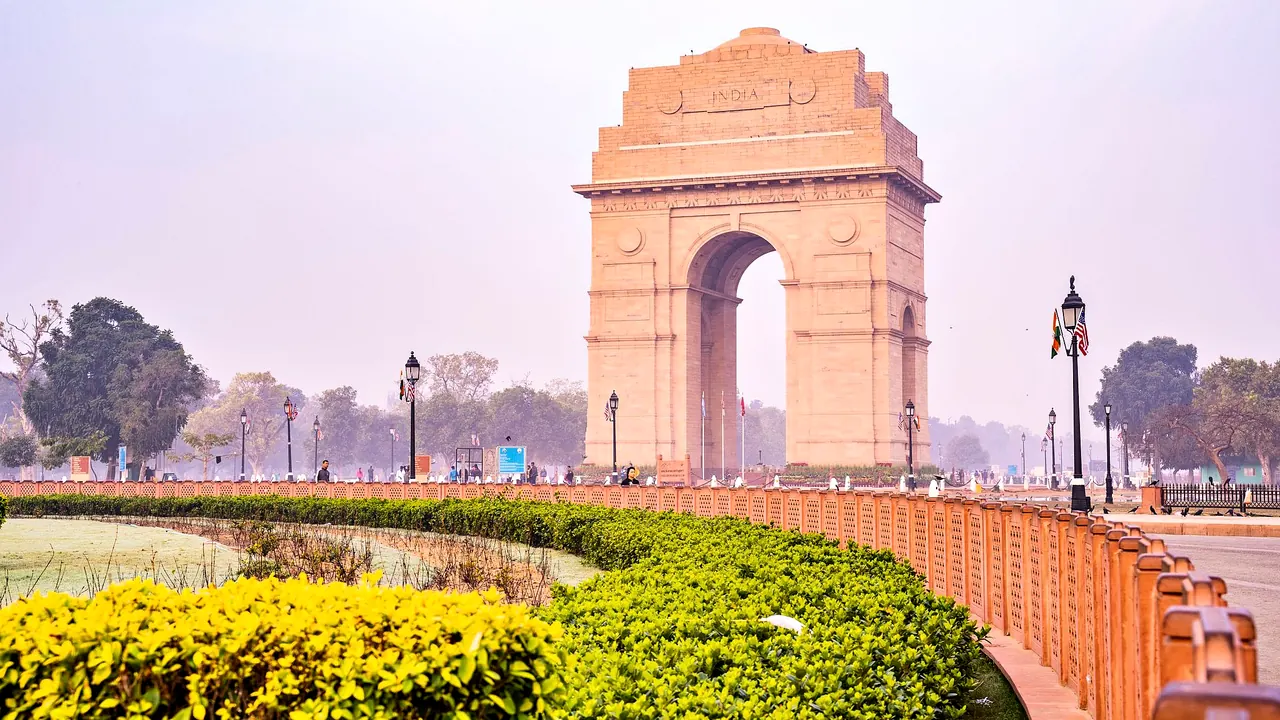
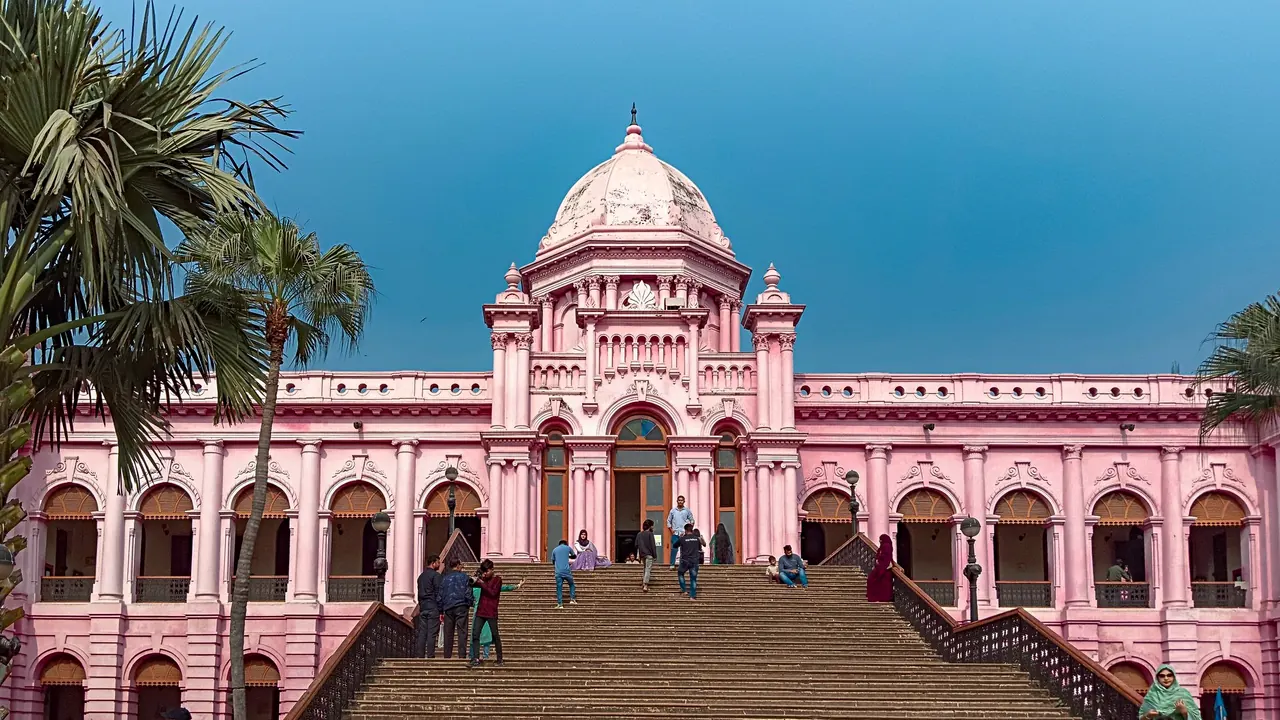
Photos: Delhi by shalender kumar, Pexels License; Dhaka by Riyad Hossain Hridoy, Pexels License.
Delhi or Dhaka?
Our verdict in twelve categories, each scored against the same fixed benchmark cities, and the climate month by month, so you can choose for your trip.
Choose Delhi for
- day trips
- getting around
- nightlife
Delhi is the stronger choice for most first trips to South Asia. Its Mughal tombs, forts and imperial avenues are among the finest on the subcontinent, Agra and the Taj Mahal are an easy train ride away, and the metro reaches most of the big monuments. Add one of India's great food cities, deep craft markets and a real evening scene, and it suits travellers who want a lot of sights and a lot of choice in a short stay.
Choose Dhaka for
- beaches
Dhaka suits a traveller who has already seen the classic sights of the region and wants a place that makes no effort to impress. Its rewards are Old Dhaka's river life at Sadarghat, Louis Kahn's Parliament House, Bengali fish cooking and some of the finest handwoven cloth in the world. Expect slow traffic, almost no nightlife and sights you have to work for. Go for the texture of the place, not for a packed list of landmarks.
Scoreboard
Twelve categories on one fixed scale from 0 to 100. The shaded stretch is the gap between the two.
Your match
Pick a travel style or drag the sliders, and both match scores follow your weighting.
Wins on day trips and getting around with your weighting.
Wins on beaches with your weighting.
What matters to you?
Category by category
What the scores mean for a trip.
Beaches & swimming
Neither city has a beach, and their rivers are not for swimming. What differs is where the sea lies. From Delhi it means a flight on to Goa or Kerala. From Dhaka, the long sand at Cox's Bazar is a domestic flight or most of a day by road. In both cities, a hotel pool is the only place to swim.
Food & drink
Both cities have old quarters built on Mughal-descended cooking, but Delhi's food goes much further. Around Chandni Chowk and Jama Masjid there are stuffed parathas, nihari and kebabs, butter chicken and dal makhani were invented in the city, and chaat carts are everywhere. Above the street, restaurants cover regional cooking from Kerala to Kashmir, and South Delhi has refined tasting menus.
Dhaka's strengths are narrower but distinct: kacchi biryani in the lanes of Chawkbazar, hilsa in mustard and the Bengali sweet shops with roshogolla and mishti doi. Smarter dining is mostly in Gulshan and Banani. Alcohol is hard to find, so meals are about food and tea rather than drinks.
Culture & sights
Delhi has far more to see. The Red Fort, Humayun's garden tomb and the Qutb Minar are all world-class, and New Delhi adds the ceremonial avenue from India Gate to the presidential palace. Lodhi Gardens, Agrasen ki Baoli and Akshardham fill several more days.
Dhaka's heritage is smaller and less looked after: Lalbagh Fort, the pink Ahsan Manzil and the Star Mosque in Old Dhaka. Its standout is modern, Louis Kahn's Parliament House. Its museums tell the story of the language movement and independence.
Nightlife
Delhi has a modest but real night out, spread across pockets such as Hauz Khas rooftops, the pubs under Connaught Place's colonnades and the clubs and brewpubs of Gurugram, with taxis between them. Dhaka has almost nothing comparable. Drinking is confined to a few hotels and private clubs in Gulshan and Banani, so an evening there means a long dinner, dessert shops and late markets.
Nature & outdoors
Both sit on flat plains with little wild country nearby, and heat and monsoon limit outdoor plans in each. The kind of green differs. Delhi has gardens set among ruins, the Ridge forest and good winter birdwatching at Okhla and Sultanpur. Dhaka's best outdoor hours are on the water, taking a country boat past green paddy fields to delta villages.
Day trips
Delhi has one of the great day trips anywhere. The Taj Mahal and Agra Fort are a little under two hours away by express train, and Fatehpur Sikri or the Krishna towns of Mathura and Vrindavan can fill other days.
Dhaka's outings are quieter and depend on traffic. Sonargaon, with the decaying mansions of Panam Nagar and its folk art museum, takes a couple of hours by car. Dhamrai's brass workshops make a smaller trip, and most visitors hire a driver for both.
Good for families
Both are hard work with children, though locals in each will make a fuss of them. Delhi has more to keep children busy: open-air steam engines at the National Rail Museum, the zoo by Purana Qila, a science centre, water parks and the Akshardham water show.
Dhaka offers its Mirpur zoo, a few amusement parks and play areas in the malls. Gridlock makes even these outings tiring, which is why families tend to stay in Gulshan or Banani and keep plans short.
Getting around
Delhi's large, air-conditioned metro, with an airport express line and stations near most monuments, makes a big city manageable. Autos and app taxis fill the gaps.
Dhaka has a single elevated line from Uttara to Motijheel. It is fast when it suits your route, but most trips mean sitting in some of the region's worst traffic, so many visitors hire a car and driver. In both cities, cycle-rickshaws are the way through the old quarter.
Shopping & style
Delhi brings together crafts from the whole country. Dilli Haat and the fixed-price state emporiums sell crafts from every Indian state, Old Delhi has its fabric and spice bazaars, and Shahpur Jat and Khan Market hold Indian designers and boutique fashion. Global luxury brands are in the South Delhi malls.
Dhaka is a specialist's city. It is the home of jamdani muslin and nakshi kantha, its tailors work fast, and its huge malls are among South Asia's largest. It has no luxury labels and little independent design.
Affordability
Both are very cheap, with street food, rickshaws and metro rides costing very little and mid-range rooms easy to find. The difference is in the extras. In Delhi, the spending goes on higher foreigners' fees at the big monuments and on grand hotels near Western prices. In Dhaka, a car and driver for the day is affordable, while alcohol is scarce and costly where it is sold at all.
Live music & performing arts
Delhi offers far more to see. In the cooler months, the Mandi House auditoriums and Lodhi Road cultural centres host Hindustani recitals and Kathak and Bharatanatyam dance, and the National School of Drama anchors the city's theatre. Thursday qawwali at the Nizamuddin shrine is free and unforgettable.
Dhaka's stage life is real but harder to find: Bangla drama on Bailey Road, the Shilpakala Academy, and baul and Tagore songs, most visible at dawn in Ramna Park on Pohela Boishakh.
Wellness & relaxation
Neither is a restful city, but Delhi gives you more ways to rest. Besides the hotel spas there are Ayurveda and yoga centres across South Delhi, and quiet comes early in Sunder Nursery or inside a gurudwara. Dhaka's options come down to international hotel spas and a few massage salons in Gulshan and Banani, with a lakeside park or a slow river boat for calm.
When should you go?
Pick your month. The climate figures are measured averages, not a forecast.
Delhi in July
Dhaka in July
Daytime high, °C
Rainfall in the month, mm
Temperature and rainfall are climate normals, averaged over the years shown. Delhi: 1991-2020 normals, New Delhi / Safdarjung (9.4 km from centre). Dhaka: 1945-2025, 18 years observed (sunshine 1991-2020, rainfall 1991-2020) normals, Dhaka (4.4 km from centre).
Both cities are at their best from November to February, when the rain all but stops. Delhi's winter is dry and distinctly cool, with January highs around 20°C, which makes long days at the monuments comfortable. Winter haze and smog dim the light, though, and December is the greyest month of Delhi's year. Dhaka stays warmer, nearer 25°C in January, and its dry season is sunnier than Delhi's, which makes walking the old quarter pleasant.
The two part ways in spring. Delhi gets brighter in March and then fiercely hot from April, peaking near 40°C in May, far too hot for walking the streets by day. The monsoon brings its heaviest rain in July and August, about 236mm in August, and October is dry and sunny again. Dhaka never gets as hot as Delhi, but its rains come earlier, building from April to around 375mm in July and lasting well into October. That gives Dhaka a much longer wet season, while Delhi has a shorter one with harsher heat before it.
Which traveller are you?
On a culture and arts trip, Delhi is the clear pick. It has three UNESCO monuments, the national art collections and a winter season of Hindustani recitals and Kathak dance. Dhaka's Mughal fort and Kahn's Parliament are rewarding, but there is far less of it.
For a food and nightlife trip, Delhi wins on both counts. Old Delhi's paratha and kebab lanes lead on to regional kitchens and tasting menus, and the evening can carry on in Hauz Khas rooftop bars. In Dhaka the evening mostly ends with dinner and tea.
On a shopping trip, Delhi offers more range: crafts from every Indian state, designer courtyards, spice bazaars and luxury malls. Dhaka is narrower but excellent for textiles. Buyers come for its jamdani muslin and nakshi kantha embroidery, and its tailors make clothes to measure quickly.
Before you go
| Measure | Delhi | Dhaka |
|---|---|---|
| Official language | Hindi, English | Bangla |
| Currency | Indian Rupee (INR) | Taka (BDT) |
| Sockets | CM230 V, 50 Hz | ACGK220 V, 50 Hz |
| Driving side | Left | Left |
| Time zone | UTC+5:30 | UTC+6 |
| Emergency number | 108 or 112 | 999 |
| Elevation | 221 m | 4 m |
| Main airport | Indira Gandhi International Airport (DEL)17 km from centre145 non-stop destinations | Hazrat Shahjalal International Airport (DAC)13 km from centre31 non-stop destinations |
| Public holidays this year | - | 7 days |
By the numbers
| Measure | Delhi | Dhaka |
|---|---|---|
| Population | 26,495,000 | 16,800,000 |
| People per km² | 18,962 | 45,652 |
| Museums within 10 km | 23 | 17 |
| UNESCO World Heritage sites within 50 km | 4 | 0 |
Where else could you go?
Every comparison below shares a destination with this one, so you can follow Delhi or Dhaka somewhere new.